Review: jhimm-Between the Waves


jhimm

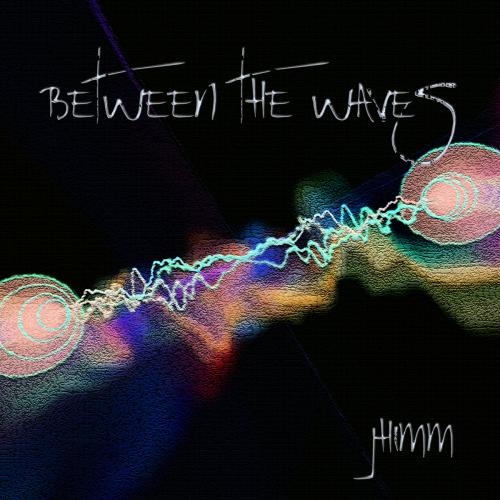
Some time ago I wrote a brief post introducing jhimm, a one man band from Connecticut (my home state), to Progarchy.  Jason Himmelberger, the man behind the project, has since contacted me, and I am now honored to review his debut album Between the Waves, which I have recently had the pleasure of listening to.  I hope this review does the album justice because I was thoroughly impressed.  Here is a brief description of each song:

Outside the Box: great Hackett-like guitar (slow and smooth); beautiful song about a man who believed he had everything, but realized he was missing the most important thing of all-human contact

Different Eyes: in my humble opinion, the catchiest song on the album; eerie piano and distorted guitar; sounds dark, but picks up the pace and is quite enjoyable

About to Fall: another excellent song with great keyboard work; builds up to an “explosion” of keys and drums about halfway through; features a minimalist guitar sound

Part of Nothing: eerie but beautiful acoustic opening (with solid bass and keys); darker song that picks up after about 4 minutes

Between the Waves: wonderful piano drive piece; similar in sound to some of Coldplay’s work

Waiting for the Tide: great keyboard/synth driven piece instrumental; shortest song on the album, but entertaining nonetheless

Everyday Dying: definitely a “radio friendly” song (if only radio recognized more prog!); similar again in sound to Coldplay or Elbow; nice gentle guitar work

Falling Down: touching song dedicated to the victims of the Newtown school shooting; great vocals filled with emotion; Pink Floyd-ish atmospheric sound

jhimm has certainly produced a fine album.  He is a gifted multi-instrumentalist and great songwriter, and I hope his talent does not go unnoticed for much longer.  In my opinion, jhimm sounds like a wondrous blend of Pink Floyd, Peter Gabriel, and Coldplay- a softer, mellow art rock that truly is a pleasure to listen to.  Even if you appreciate harder rock or metal, you will not be disappointed by this album.  And despite its rather serious tone, it does have a message of hope, hidden between the waves.

And here is the great song Outside the Box for your listening pleasure:
 

The Best Prog Bands You’ve Never Heard Of (Part Seven): Universe

Universe

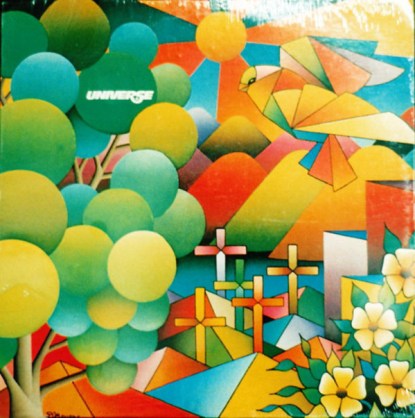
The world of prog is full of surprises. In my search for obscure prog bands I stumbled across Universe. Although not quite as profound or mysterious as the universe we inhabit, the band is by far one of the best in American prog. Mixing the sounds of Hawkwind and Syd Barrett-era Pink Floyd, Universe successfully created their own acid rock sound.  Formed in the mid 1970s in California by Gary Paul Van and Dennis Lee Askew, Universe released one eponymous album in 1977, and what an album it was.  Before you listen to the music, you should dedicate some time to appreciate the album cover in all of its psychedelic beauty.

Notice the dove and the crosses on the cover.  There are religious overtones on this album: “Rock in the Sky” and “Light from Above”, for example, refer to God. But they lyrics are far from preachy, and Van’s ethereal vocals only emphasize the brilliant cosmic vibe. Keys, synthesizer, and guitar dominate, and all are performed with equal dexterity.  Some highlights:

Touchdown features fine acoustic and electric guitar work.  It is the longest song on the album (about 10 minutes) and reminds me of the Yes masterpiece Awaken.

Dream is the “spaciest” song on the album and may remind some listeners of The Beatles’ psychedelic classic Tomorrow Never Knows.

Remember the Stars opens with a bang and transitions with cosmic delight to Light From Above; it is one of the best American acid rock songs I’ve ever heard and my favorite piece on the album.

This is another one of those albums that does not receive the attention it deserves.  Although Universe will appeal mostly to fans of acid and space rock, anyone who enjoys prog will appreciate at least some of the songs here.

https://www.youtube.com/watch?v=2VtxzyHTZYM

Tom Woods and Progressive Rock: A 30-minute Chat

Tom Woods is one of the foremost political philosophers and commentators.  He's also a proud progger.
Tom Woods is one of the foremost political philosophers and commentators in the United States today. He’s also a proud progger.

I had the great privilege of speaking with one of America’s foremost political commentators yesterday, Tom Woods, about progressive rock.  It turns out that Tom is a huge progger.  I shouldn’t be surprised.  I think we’re both the younger brothers of Neil Peart.  We really had a field day talking about CLOSE TO THE EDGE, SELLING ENGLAND BY THE POUND, THICK AS A BRICK, PASSION PLAY, IN ABSENTIA, and THE FINAL CUT.

We talked “third wave prog,” too.

Tom was especially interested in the founding and purpose of progarchy.  And, for what it’s worth, Tom is as smart and insightful as he is kind.  A true gentleman.  Here’s a link to our show yesterday.  Enjoy.

“The Episode of the Year”: Woods and Birzer talk prog.

Also, in September, Tom talked with Jethro Tull’s Ian Anderson.  Also worth checking out.

Here’s the link to Tom’s website: http://www.schiffradio.com/f/Tom-Woods

Andy John Bradford’s Oceans 5 “Return to Mingulay”

s_8a

Yes, the title is a mouthful, but Andy John Bradford and his band Oceans 5 are awesome. In fact, I think Return to Mingulay is my favorite album of 2013. Their sound hearkens back to the British rock of the 1970s, with a calmer, thoughtful progressive feel to it. The band is made up of Andy John Bradford, a British folk singer/songwriter/solo artist, on vocals and 12 string guitar, Colin Tench on lead guitars, Stef Flaming on bass guitar, Marco Chiappini on keyboards, and Victor Tassone on drums. Originally, these guys got together to just make one song, “The Mingulay Boat song.” This song is a 200 year old song that Andy John Bradford wanted to perform in a new and unprecedented way, and he certainly accomplished that. In doing so, they discovered that as a group, they really clicked. And so, Oceans 5 and Return to Mingulay were born. Their website describes the process of creating Oceans 5:

When you think of Progressive music, you are unlikely to imagine a 200 year old tune with sea shanty lyrics. However this is what Folk Singer/Songwriter Andy John Bradford had in mind when he approached Progressive musician Colin Tench from Bunchakeze and Corvus Stone with the idea. The band actually formed around this one song. Despite the fact that they were all busy with their own bands already, more ideas kept flying backwards and forwards. Andy has a great feel for songwriting and Oceans 5 have proved to be rather good at twisting those songs into a whole new form. From bouncy and silly to epic rock. The 9 songs add up to one hell of an album that even the band members never imagined at the start of this.

 The album flows out of “The Mingulay Boat Song,” with many images and themes from the sea evoked. The ocean themes are fitting, as Mingulay is an island off the coast of Scotland. Originally an island inhabited by fisherman, Mingulay was abandoned in 1912; thus the title, Return to Mingulay. Their sound recalls the sounds of the sea, and it also recalls the sounds of Pink Floyd, The Strawbs, David Gilmour, and even Big Big Train. There are many Gilmouresque guitar riffs and solos throughout the album. The biggest connection to Pink Floyd, however, is the appearance of Lorelei McBroom on arguably the album’s best song, “6000 Friends.” (Lorelei McBroom is known for touring with Pink Floyd, and is most recognizable on the Dark Side of the Moon’s “The Great Gig in the Sky.”) The song addresses the issue of technology and online “friends” versus reality and real friendships. While the song may feel out of place amongst the rest of the album, it fits by creating a juxtaposition of the older, sea shanty type songs with the problems of the new technological era. Overall, the music relaxes the listener, much like The Dark Side of the Moon or Wish You Were Here. The music probably fits best into the genre of Progressive Folk Rock, mainly because of its overall theme of the sea. Throughout the album, it feels like this music could not have been produced in 2013. Return to Mingulay honestly sounds and feels like something produced in the 1970s in what many consider to be the golden age of prog. It would not be out of the ordinary to hear Genesis, Pink Floyd, or even Jethro Tull play some of these songs. Andy John Bradford and Oceans 5 have created an excellent masterpiece that should be considered one of the best albums of 2013. I look forward to seeing more from them. 

portfolio2

portfolio1

A Progtastic Halloween

Goblin-Suspiria

A happy Halloween to all!  Considering this is the time to celebrate thrills and chills, I decided to compose a list of some of the creepiest prog rock songs and albums ever created.  As an avid fan of the horror genre, I have always enjoyed reading the novels of Stephen King and watching the movies of John Carpenter, but I had never thought about what could be classified as “horror prog.”  Here’s my list (albums first, in no particular order):

Premiata Forneria Marconi- Dracula Opera Rock (Italy’s greatest prog band released this creepy gem back in 2005)

Alan Parsons Project- Tales of Mystery and Imagination (Any album based upon the works of Edgar Allan Poe deserves a spot on this list)

Pink Floyd- The Wall (Think this isn’t scary? Check out the movie)

Aphrodite’s Child- 666 (It’s a concept album based upon the Book of Revelation; listen to The Four Horsemen and you’ll get the idea)

Mike Oldfield- Tubular Bells (It was used as the theme for The Exorcist. Enough said)

Goblin- Suspiria (The scariest prog album of all time. Sighs may be the creepiest song ever composed: just listen to it with headphones on before you go to bed)

Now the songs (in no particular order):

Jethro Tull- Sweet Dream (The music video features Ian Anderson dressed as a vampire.  If that’s not scary, then I don’t know what is)

Blue Oyster Cult- Don’t Fear the Reaper (A Halloween staple, but the song could use more cowbell)

Peter Gabriel- Intruder (Check out the Youtube video someone made to this song featuring Jason Voorhees of Friday the 13th fame)

Van der Graaf Generator- Darkness (An eerie song by an eerie band; whispered vocals add to the overall creepiness)

Atomic Rooster- Death Walks Behind You (A dark opening to an album featuring a crazed Nebuchadnezzar on the cover)

King Crimson- The Devil’s Triangle (Not only should the band’s name inspire some feeling of fear, but this song reminds me of a march into a deadly battle)

Talking Heads- Psycho Killer (This may not be prog, but Adrian Belew did play with them for a time; David Byrne sounds as paranoid as ever on this piece)

John Carpenter- Halloween Theme (Most recognizable horror theme of all time? Check. 5/4 time signature? Check.  How could I leave this off the list?)

Well there’s my list.  It is by no means exhaustive.  If you feel I am missing some songs, feel free to yell at me in the comment section.  I only had so much time to compile all of these songs; most of them just popped into my head yesterday.  If you haven’t listened to all of them, then today is the perfect day to spend some time with this list.  Have a terrifying (but fun) Halloween! (And to our Protestant friends, a happy Reformation Day!)

A Perfect Introduction to Prog: 2003. Or, was it 2002?

fk fpWell, not quite perfect, but I probably got your attention.  I’m becoming a marketer!  Dear Lord.  Help us all.

For much of my life, friends have asked me to explain progressive rock to them.  A decade ago (Or so.  It might have been more than a decade ago–probably sometime around 2002, now that I think about it), I decided to start burning CDs as a way of introducing the genre.  This morning, as I was cleaning an area that should’ve been cleaned a while ago, I came across a copy of the CD.

For whatever reason, I entitled it “Regressive Rock, Part I.”  I must’ve thought that was pretty funny at the time, though I don’t remember exactly why.  I assume that I didn’t want my friends thinking that “progressive” had something to do with crazy right-wing nationalists (such as Teddy Roosevelt and Woodrow Wilson from a century ago; or President Bush of 2002).  In the United States, “progressive” often recalls horrifically embarrassing memories of slaughtering Indians, interning Japanese Americans, and treating African-Americans inhumanely.

Well, regardless.

As I was making Sunday brunch, I popped the CD in and found myself quite happy with the selections.  Here they are.  Let me know what you think.


***

1.  Flower Kings, “Deaf, Numb, and Blind”

Here’s my own appreciation of this song: https://progarchy.com/2012/11/17/mini-review-deaf-numb-and-blind/

2.   Genesis, “Squonk”

3.  Rush, “Natural Science”

4.  Pat Methany, “The Roots of Coincidence”

5.  Pink Floyd, “Echoes”

6.  Spock’s Beard, “At the End of the Day”

The Spiritual Vision of Dimensionaut

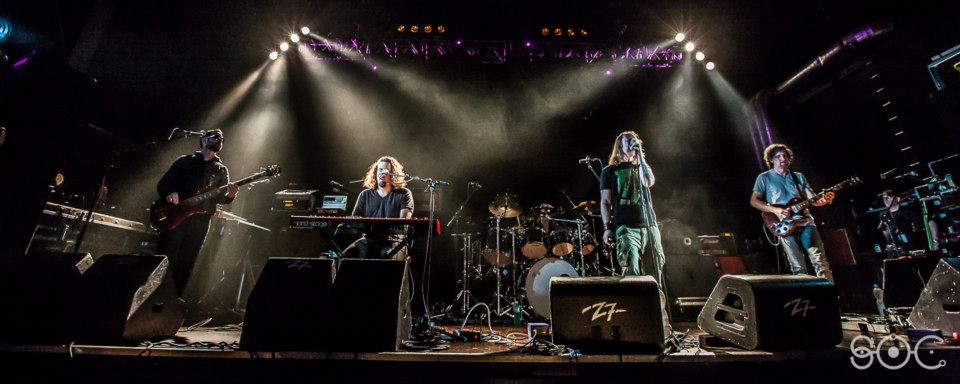
Sound of Contact LIVE at Z7 in Switzerland—Photo by Andy Wright

I have been contemplating the spiritual riches of Dimensionaut, the truly awesome prog masterpiece from Sound of Contact.

For me, the album does what prog does best, with that characteristically proggy ability to immerse the listener in a cosmic philosophical meditation.

To give another example: One of my absolutely favorite tracks from Big Big Train, “The Wide Open Sea,” does this sort of musical meditation stunningly well.

So, to encounter in Dimensionaut an album-length, equally successful exercise in that kind of philosophical and spiritual meditation, is a real thrill. And it’s an even more remarkable achievement if we consider that Dimensionaut is the equivalent of a vinyl double album.

Here is how I would slice it up for a deluxe vinyl gatefold edition:

SIDE 1:
01. Sound Of Contact (02:05)
02. Cosmic Distance Ladder (04:43)
03. Pale Blue Dot (04:44)
04. I Am Dimensionaut (06:25)

SIDE 2:
05. Not Coming Down (06:01)
06. Remote View (03:54)
07. Beyond Illumination (05:53)
[featuring Hannah Stobart]

SIDE 3:
08. Only Breathing Out (05:57)
09. Realm Of In-Organic Beings (02:52)
10. Closer To You (05:05)
11. Omega Point (06:30)

SIDE 4:
12. Möbius Slip (19:36)
I – In The Difference Engine
II – Perihelion Continuum
III – Salvation Found
IV – All Worlds All Times

If people approach Dimensionaut with an open mind, they will have to admit that this double album is an incredible achievement. Amazingly, it is prog that is accessible to everyone, and yet it does not shatter its integrity with any compromises.

All the negative reviews that I have read, and any reservations that I have heard expressed, stem simply from invidious comparisons, which are completely unfair.

Rather, if you clear your headspace of all preconceptions and genealogical obsessions, and just enter into the spirit of the music, the musical conclusion is inescapable:

With Dimensionaut, the Spirit ever lingers… undemanding contact in your happy solitude!

(I append below an interesting video in which Simon Collins and Dave Kerzner talk about the album’s story concept. They affirm that the musical journey explores not just dimensions of science fiction and romance, but most especially a serious spiritual dimension.)

Nosound Cover Pink Floyd’s Echoes

artworks-000011754621-tdrn2o-t500x500I know that I can get into all kinds of trouble for stating this, but, when covers are done well, they’re often even better than the originals.  And, I don’t mean to degrade the originals.  For example, I think NDV’s Rewiring Genesis does an even better job at LAMB LIES DOWN than did Genesis originally.  Heresy???  Maybe.  But, it’s true.

Here’s another example.  I love Pink Floyd’s Echoes.  I was probably 14 or so when my friend and sometime debate colleague, Darrin, showed me Pink Floyd’s Live in Pompei on laser disc.  I was blown away.

But, this version (linked below) is even better.  I’m sure production and technological advances have something do with it.  But, I also think it’s because the covers do come later, and the folks who cover them often have integrated the songs into their very being in ways the original writers probably didn’t.

Yes, start writing crazy things about me in the posts comments!  At 45, I’m thick skinned enough to take it!!!

So, here’s the cover and the masterpiece: Nosound’s version of Pink Floyd’s Echoes.  Makes me just sigh in wonder.  Erra is a genius.  And, he “just gets it.”

https://soundcloud.com/kscopemusic/nosound-echoes-pink-floyd-live

The Death of the Artist in Everybody’s Collection

Dan Flynn pays tribute to the greatest album cover artist ever, Storm Thorgerson, in “The Death of an Artist in Everybody’s Collection“:

His greatest critical if not commercial triumph may have come not with his pre-fame friends in Pink Floyd but with a similarly experimentally minded artist. Peter Gabriel didn’t name his early albums. Hipgnosis’s cover art did. The singer’s third solo effort, officially titled Peter Gabriel like the two albums preceding it, unofficially became “Melt” because of the arresting black-and-white image of the singer manipulated to look as though his flesh dripped off his face. Thorgerson created that one, as well as “Scratch,” in which Gabriel’s fingernails leave a trail of white streaks. Thorgerson’s car appears on—what else?—“Car” by Gabriel. Akin to The Beatles’ “white album,” Gabriel’s early releases go by the names the cover graphic bestowed upon them rather than their proper titles. …

If cassettes and CDs supplanting vinyl didn’t signal the end of cover art, then certainly digital downloads did. The LP record awarded Thorgerson a canvass a foot long by a foot wide. Steve Jobs reduced these visuals to roughly the size of a Starburst candy. Small is the new big. Something gained, something lost—what we reclaim in shelf space we miss in aesthetic beauty.

Storm Thorgerson understood visual for people who understood aural. He also knew when to die. Cover art, like the vinyl discs they protected, play about as vibrant a role in contemporary pop culture as the Victrola. Album art is sadly gone. So is the man who most excelled at creating it.

The Modern Condition: Cosmograf’s “The Man Left In Space”

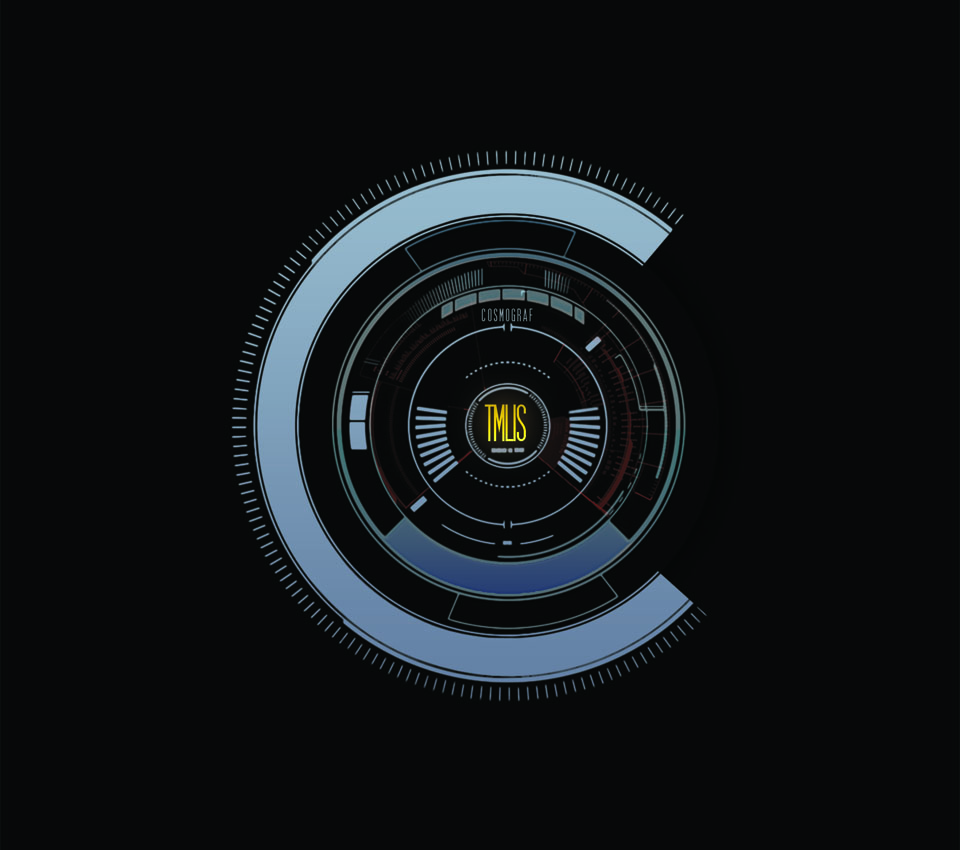
cdcover-tmlisFrom its cover image reminiscent of the all-seeing camera eye of 2001: A Space Odyssey‘s HAL computer, to the final track “When the Air Runs Out”, Cosmograf’s  new album, The Man Left in Space, is a profound meditation on the tragedy of modern man’s surrender to ambition and technology, and the ensuing isolation that results.  

Beginning with a bewildered astronaut, Sam, asking, “How did I get here?”, the listener is transported to the near-future, where Sam is questioning his motives for agreeing to a mission to “change the human race”. Can over-achievement bring satisfaction and happiness?

Ambition brought me here.

A winner in my field.

Dare to be a dreamer.

Find your fate is sealed.

Hidden truths revealed.

Through memory flashbacks, snippets of dialog with the ship’s android, and sampled audio of actual NASA space missions, we share Sam’s growing sense of melancholic disconnection with reality.

I take these pills. They help me numb the pain.

They stop me from feeling blue.

I feel the days getting longer now.

I’d like to dream, but I’ve forgotten how.

He’s even reduced to crooning a love song to his “beautiful treadmill” that will “keep my soul in grace”. Throughout, the ship’s android is monitoring Sam and vainly attempting to create a normal environment.  Earth’s Mission Control tries to contact him, but they cannot get through. Sam realizes that without human contact, he will eventually slide into madness. No simulation, no matter how realistic, can replace the touch of another person.

Eventually, the “man left in space” is forced to face his own mortality:

10 minutes more and the air will run out.

This craft will fall into the sun.

My chance of returning is none. None. None.

As the last chords of the final song fade away, the ship’s android repeatedly asks, “Please respond, Sam?”

Robin Armstrong, who is Cosmograf, has constructed a beautiful, allegorical warning for those of us who would replace face-to-face communication with all the technological means at our fingertips: emailing, texting, Tweeting, “liking” on Facebook, etc. Right on cue, Google is coming out with “Google Glass“, which will add even more distractions to our interactions with others. We must resist the temptation to withdraw into self-imposed isolation and foster real relationships, regardless of the risks.

The Man Left In Space would not be the success it is without having superb music to complement its message. Every track is extraordinary, and the album really must be listened to in its entirety. Highlights include “Aspire, Achieve”, which begins with a delicate acoustic guitar melody and vocal harmonies that shift into crunching metal worthy of Ayreon’s best work. “Beautiful Treadmill” has an indelible hook that will have you singing along in no time. The instrumental, “The Vacuum That I Fly Through”, featuring the marvelous Matt Stevens on guitar and Big Big Train’s Nick D’Virgilio and Greg Spawton on drums and bass respectively, rivals anything Pink Floyd ever committed to tape. Trust me, it’s that good.

Finally, some praise for the artwork. In this age of digital downloads, it’s worth it to get the physical CD. The booklet that comes with the album is essential to fully appreciating the  album. The illustrations remind me of the incredibly realistic sci-fi artwork Shusei Nagaoka did for Electric Light Orchestra’s Out of the Blue album from the late ’70s. The attention to detail is amazing: every page features readouts of various gauges, creating the feeling that you are involved in monitoring Sam throughout his doomed journey. The ship’s android is named ESA-1410-4MY, which pops up in several places and adds to the sense of technological surveillance and control of Sam.

Even though we have yet to finish the first quarter of 2013, Cosmograf’s The Man Left In Space is certain to be in many Top Ten Albums of the Year lists.

Enjoy “The Vacuum That I Fly Through”:

Update: A brief, but illuminating interview with Robin Armstrong.