
Big Big Train’s “Common Ground” – Album of the Year?

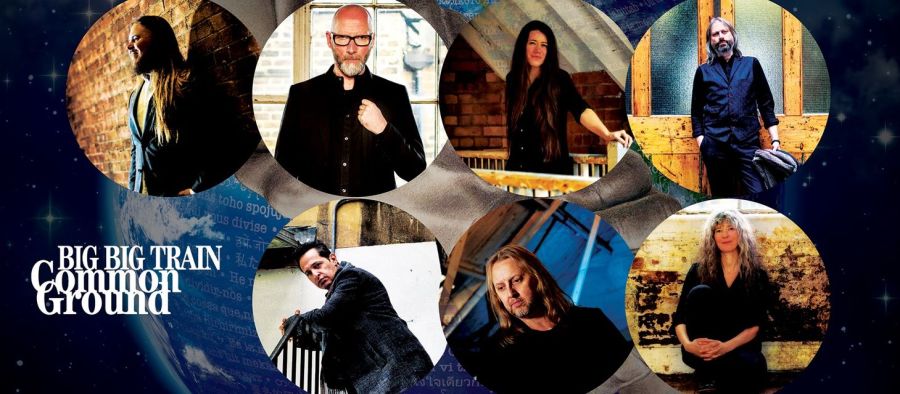
big big train common groundBig Big Train, Common Ground, July 30, 2021
Tracks: The Strangest Times (5:08), All The Love We Can Give (8:06), Black With Ink (7:23), Dandelion Clock (4:14), Headwaters (2:27), Apollo (7:50), Common Ground (4:54), Atlantic Cable (15:06), Endnotes (6:59)

I love writing about Big Big Train. In fact, they’re one of the reasons I was drawn into reviewing progressive rock on a more regular basis. They are also one of the reasons this website was founded back in 2012. Our founders understood that Big Big Train wasn’t your ordinary rock band, and the band deserved a more intellectual approach to reviews. I don’t know if I’ve been able to live up to the standard Dr. Brad Birzer set for us, but I try my best. Big Big Train makes it easier by providing such solid material to write about. Common Ground is no different. In fact it may be the best album they have released since I began writing for Progarchy. It is certainly the best record released thus far in 2021.

Common Ground gets off to a rousing start in the best way possible. I’ve never enjoyed the opening of a Big Big Train album this much. While I don’t dislike Big Big Train’s more mainstream pop-like tracks (“Make Some Noise,” “Folklore,” “Wassail”), they aren’t my favorite in the band’s catalog. While “The Strangest Times” might fall into that aspect of the band’s repertoire, I absolutely love this. The piano at the beginning is so bright and upbeat, reminding me a bit of some of the more popular artists the band site as influences on this record. However I think it reminds me more of the band’s work back in the days of English Electric. The guitar work is phenomenal, proving right away that even though brilliant guitarist Dave Gregory may have left the group, the group haven’t abandoned the unique sound he brought to the table. I imagine lots of credit should go to Rikard Sjöblom for maintaining that tone. 

https://youtu.be/i35_HcKjR18

Nick D’Virgilio absolutely hits a home run with his lead vocal sections on “All the Love We Can Give.” I was hoping we would get to hear more of his vocals on this record, and we do. Of course there is also his brilliant drumming throughout the album, which we probably take for granted at this point. This song has some blistering instrumental passages with heavy guitars and some face melting Hammond keyboards. We also get to hear a different side to David Longdon’s glorious voice, featuring the lower end of his register. The vocal harmonies at points in the song remind me of Gentle Giant and the Neal Morse Band, although this is nothing new for Big Big Train. They seem to have utilized it a bit more though throughout Common Ground than they have in the past.

As a matter of fact, the next track, “Black With Ink,” allows that to shine. We get a lead vocal from Rikard, Nick, and Carly Bryant, who joined the band for live shows, providing backing (and apparently lead) vocals, keyboards, and guitars. It’s a nice touch that the band included her on the recording, as well as Dave Foster (guitars on two tracks) and Aidan O’Rourke on violin throughout the record. 

Lyrically “Black With Ink” is somewhat close to my heart, since Greg Spawton was influenced by a trip to a museum (I work in the collections department of a history museum). After a BBT show in Birmingham, England, in 2019, Greg visited the local art museum and saw a label about the history of the collection, which suffered from a bombing raid during World War II. Spawton talks more about that song at the official Big Big Train blog for the album, but in summary it grew out of a frustration with the destruction of knowledge (book burning, destroying art, etc.). The song specifically looks at the destruction (many centuries and millennia ago) of texts at libraries in Alexandria and Baghdad. 

On the other side of the lyrical spectrum, Longdon keeps the band grounded in the present. “The Strangest Times” and “Common Ground” are influenced by the insanity the world has been going through over the last year and a half. In a recent interview, Longdon admitted to Progarchy’s Rick Krueger recently that he cannot wait for these lyrics to no longer be relevant, since we are all sick of quarantines, lockdowns, and other assorted nonsense. 

“Apollo” is an almost eight-minute-long instrumental track, and it is glorious. The song was contributed by Nick, and it grew out of material he had created at his day job at Sweetwater, a music gear retailer and production studio in Fort Wayne, Indiana. He describes this track as Big Big Train’s “Los Endos,” which I believe they achieved. It’s a beautiful song, and I can see them either closing a first set or closing a live show with it before an encore. The inclusion of Longdon’s flute was a really nice touch, which will most definitely be a hit live. It’s pure BBT, brass band and all. 

https://youtu.be/88HHhbD1vFE

“Atlantic Cable” has all the grandiosity of “East Coast Racer.” I don’t think I have enjoyed a Big Big Train song this much since ECR. Spawton’s booming bass is at Squire-esque levels of brilliance. The interplay of the guitars, violin when it is used, the myriad voices, the long instrumental passages – this is Big Big Train’s “sound” at its absolute finest. I hope when they play it live, they extend that guitar solo as it peaks toward the end.

Lyrically the track tells the story of laying the first telegraph cable across the Atlantic, formally linking the old world with the new. This song is much grander than that story, though. The story serves as a metaphor representing the commonality we all share, which supports the overall theme of the album. The track has calmer passages, but it still has the hard rocking sections that feature on the rest of the record and also hearken back to The Underfall Yard and English Electric

A song about laying a steel cable across the ocean floor was never going to be a pastoral piece of music. It needed some stormy moments, some grandeur. And it needed to be long enough to tell an epic tale. 
Greg Spawton

The video the band shared for this song in the blog for the album is hilarious. It’s a video of Nick trying to figure out how to play the complicated time signatures. It was only a matter of time before the expletives were directed at Greg (all in good humor, of course), but it’s quite entertaining. It also goes to show how technically complicated this music is and how good these musicians are that they can (eventually) play it.

The Dave Desmond brass band shines bright as ever on “Endnotes,” the final track. The hint of violin reminds us of where the band has been, but in a more subdued light.

The pastoral elements and folk elements in the band’s arsenal are pulled back throughout Common Ground in favor of a heavier rock sound, but it’s undeniably Big Big Train. It’s exactly what I wanted from the band moving forward. I never complained about the pastoral direction the band moved into because I enjoyed it, but I’ll admit that I was beginning to miss certain elements that were more prevalent on The Underfall Yard and English Electric. I don’t think any of us wanted them to start copying themselves, though. Instead they have progressed into slightly different waters, pulling together all of those elements into a truly astounding whole. The hard rock, the atmosphere added by the violin and Longdon’s flute, and those stunning vocal harmonies create a pure sound. 

Existing fans will almost assuredly love Common Ground. If you are new to Big Big Train, then this is as good a place to start as any. The album displays everything the band does so well.

Thanks Big Big Train. You’ve made a crappy year a little brighter. 

https://www.bigbigtrain.com
https://www.bigbigtrain.com/common-ground/
Album out July 30, 2021.
https://youtu.be/wIQnhCcI4gA


Album Review – The Catch – Excuses For Kings

The Catch Excuses For KingsThe Catch, Excuses For Kings, 2021
Tracks:
Daedalus And The Angel (3:14), Circus (3:19), Riches To Rags (6:03), Real Love In The Modern World (2:55), What In The World (3:59), Leviathan (7:49), Find Another Way (5:10), Excuses For Kings (8:05), Last One To Leave (2:01)

First off, I’ve been sitting on the debut album from UK band The Catch for too long, so my sincere apologies to the band, who graciously sent me their CD Excuses For Kings for review quite a while ago. I have been listening to and enjoying it ever since I received it. It has an aesthetic that reminds me of some of the music on the Bad Elephant Music label or music from Cosmograf (Robin Armstrong) and his new label, Gravity Dream Music. The vocals even remind me of Progarchy’s very own Dave Bandana. 

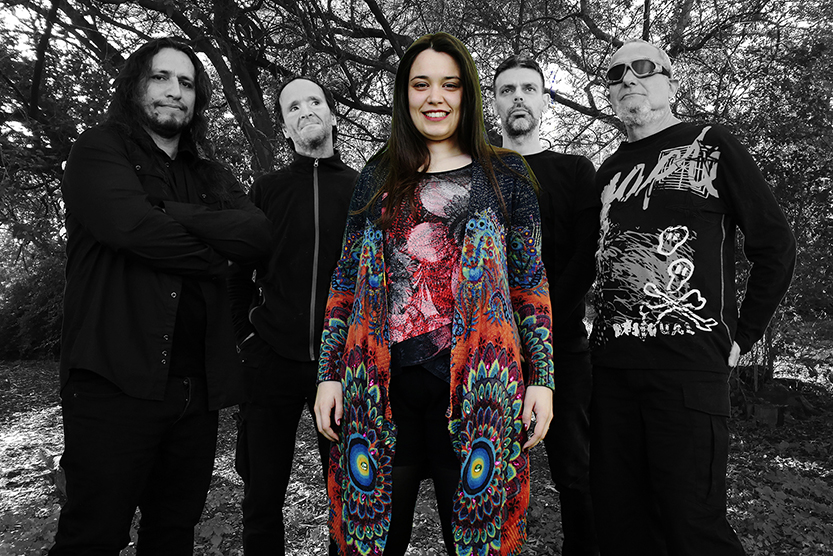
The music might best be described as a combination of the dominant progressive sounds of both the 1970s and the 1980s. There are synth overtones, but the electric guitar plays a primary role along with upbeat drums playing a steady rock rhythm. The band is a two person group made up of singer-songwriter Robert Williams and guitarist Donovan Baine.

Williams provides vocals, guitars, bass, and programming – presumably synths and drums. If the drums really are all programmed, then they are some of the better sounding programmed drums I’ve heard in a while. I’m not usually a big fan of programmed drums, but these didn’t stick out to me at all. They have a natural sound. With that said, I’ll always encourage a band to find a real drummer if at all possible. 

The combination of prog technicality with excellent songwriting make this an enjoyable record on repeated listens. The lyrics are dense, telling a stories that reflect on our crumbling society. Williams packs a lot into each song, and he often (but not always) sings rather rapidly, so there will always be more to uncover on repeated listens. Perusing the lyrics in the booklet will help in that regard. 

Real love in the modern world
Freedom from the cursed career of Albion
To live in the mortal realm
To feel the air and bless the ground we walk upon

An on, moving into the sun, seekers of the permanent one

 – “Real Love In The Modern World”

https://youtu.be/lWBenn7ECDY

The highly poetic lyrics are not only well-written, but they are also rather profound. There is a lot of religious, historical, and mythological imagery. We’re forced to consider how we think we’ve come so far, when in reality we’ve fallen from great heights:

Once we ferried stone
From Memphis to Cairo
Now we sit in traffic instead
Moving by stars and trash spewed from cars
Strewn up and down this highway tonight

– “Excuses For Kings”

This is just a taste of what you can expect in the musical and lyrical journey in Excuses For Kings. The fast-paced music whisks the listener away on this voyage, with upbeat rhythms and smooth guitars keeping your interest along the way. It’s a enjoyable listen from start to finish, and I highly recommend you check it out. 

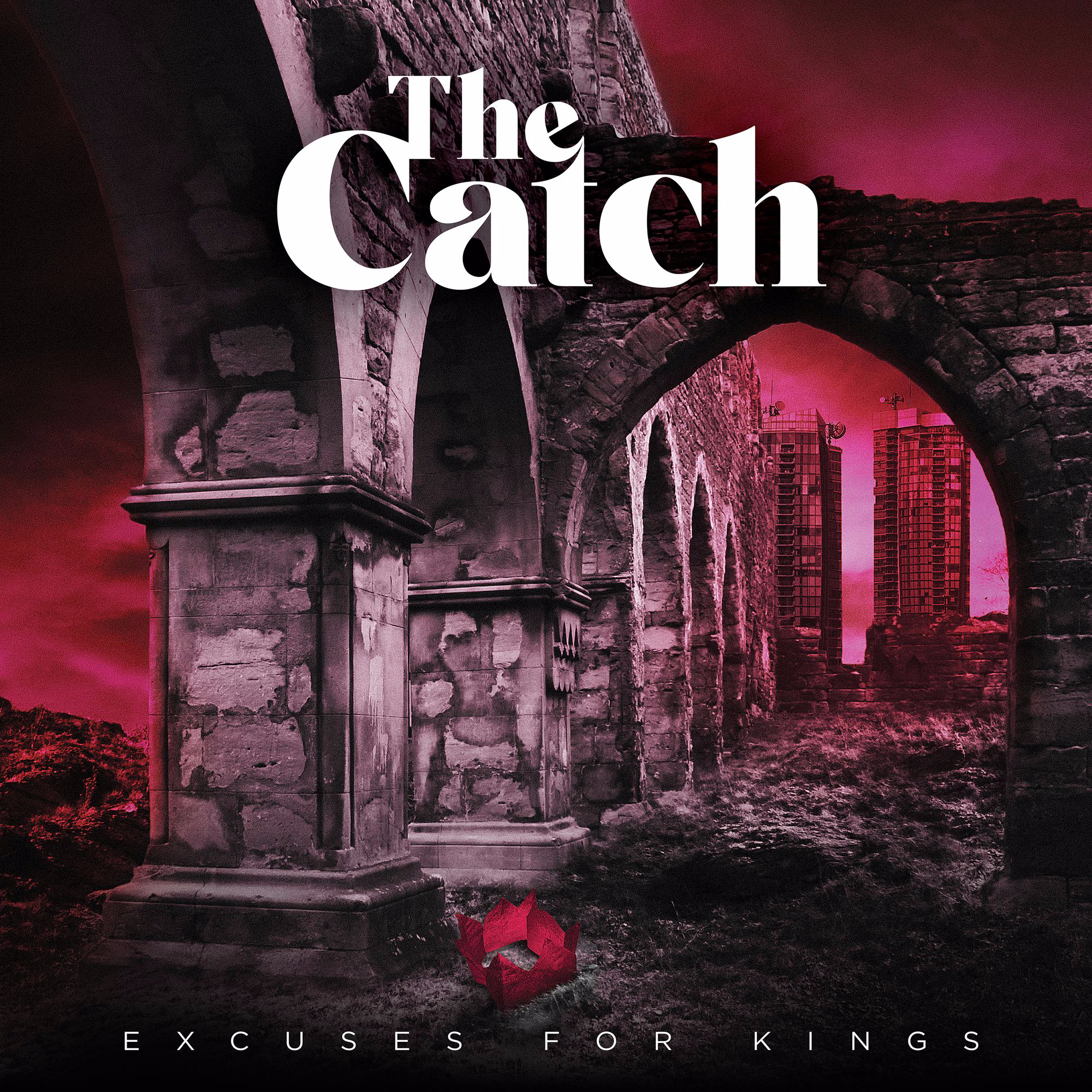
The best place to buy the record is from their website, where you can buy a CD-quality download or pick up the CD. The CD comes in a nice digipack with a bit of a mystical album cover showing ancient or medieval ruins morphing into the horrid-looking high-rise condos that desecrate modern cities. The disc also comes with a booklet featuring all the lyrics.

https://the-catch-music.com/home
https://www.facebook.com/TheCatchProg/

https://youtu.be/KpXWYlw82Xc

Album Review – The Rebel Wheel’s “Simple Machines”

The Rebel Wheel - Simple MachinesThe Rebel Wheel, Simple Machines, November 11, 2020
Tracks: 
Pulley (4:06), Hammer (5:21), Inclined Plane (4:48), Screw (5:40), Fulcrum (4:36), Switch (5:19), Wheelsuitewheel (11:37)

I’ve been sitting on the promo CD for Ottawa, Ontario band The Rebel Wheel’s latest album, Simple Machines, for a while, although I’ve been listening to it a fair amount. The album has been a pleasant surprise for me. I’ve enjoyed it every time I’ve listened to it. The Canadian three-piece is comprised of Andrew Burns (bass, keyboards, vocals, producer), David Campbell (guitars, keyboards, vocals), and Alex Wickham (drums, keyboards, vocals).

While The Rebel Wheel have several albums and several decades under their belt, Simple Machines finds them making a few changes, with every band member contributing to the writing and a different band member producing it compared to past records. Their overall sound is hard to pin down, as it is rather varied. I think Primus must be a major influence for Andrew Burns, who produced the record. Skimming through their discography on Bandcamp, I definitely recognize some similar musical ideas, but a Primus influence sounds much more prominent on Simple Machines. I hear this in some of the vocals, particularly on “Inclined Plane” and “Wheelsuitewheel,” as well as in the funk-influenced brand of metal on the album. That influence is present in the music and vocals, but not in the lyrics, which are rather simple in their construction, yet still deep with meaning. Not surprisingly I also hear a Discipline-era King Crimson influence in the guitars and bass.

With those two prominent influences there is still plenty of room for innovation. Some of the music almost approaches metal, if we’re going to call what Primus does a kind of metal. But it’s probably more accurate to call The Rebel Wheel progressive rock with heavy a jazz influence. The drums are distinctly jazzy. The bass drives the songs with guitars adding the flourishes and the keyboards filling the soundscape. There are experimental moments too, such as on the eleven and a half minute-long final track.

Even though I’ve made the connections to both Primus and King Crimson, the resulting record sounds quite unique and fresh. A King Crimson influence might be common enough in the prog world (I mean, who hasn’t been influenced by them to at least some degree), but Primus not so much. With the more progressive synth sounds, the record takes on its own life. The vocal harmonies add a nice touch. There’s even some blisteringly heavy guitar at points that remind me of Rush, but I’ll leave that to you to find those moments in the album.

I highly recommend The Rebel Wheel and their latest album. It’s a welcome departure from the Neo-prog territory common amongst most straightforward “prog” bands today. It’s got a crunch and a pleasant quirkiness that doesn’t blend into a symphonic backdrop. It grabs your attention. You won’t find too many other bands making music that sounds quite like this.

https://www.facebook.com/TheRebelWheel/
https://therebelwheel.bandcamp.com/album/simple-machines

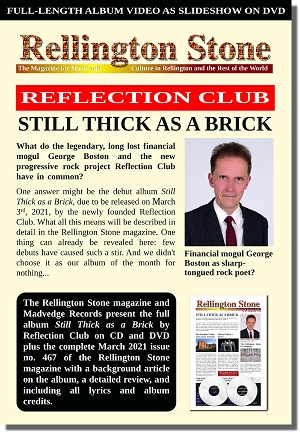
Reflecting Tull: Reflection Club’s “Still Thick As A Brick”

Reflection Club - Still Thick As A BrickReflection Club, Still Thick As A Brick, March 3, 2021
Tracks: Prelude (2:00), Time Out (4:03), Years on the Fast Track (3:31), Rellington Town (6:17), The Club of Hopeful Pinions (3:47), The Foray of the Sharks (5:45), Sentimental Depreciation (5:19), Nervesoothers (3:09), The Great Dance around the Golden Calf (3:36), Bedlam (5:48), Look Across the Sea (4:24)

Berlin-based progressive rock project Reflection Club have mastered the spirit and sound of the classic era of Jethro Tull. A frequent critique from some people regarding the current wave of progressive rock is that it often sounds like it’s copying the sounds of the 70s – particularly Genesis and Yes. Reflection Club avoid that critique by making it abundantly clear where they get their influence. They aren’t pretending to make their own unique sounds, but they place themselves out on a ledge by blatantly “reflecting” Jethro Tull, because in doing so they have to live up to the hype they’re creating. Thankfully, they do. 

Reflection Club is primarily the creation of German multi-instrumentalist Lutz Meinert together with German guitarist Nils Conrad, American flautist Ulla Harmuth, and English vocalist Paul Forrest. Not surprisingly, Forrest sings in a tribute band called Jethro Tull Experience. He expertly matches the tone and style of Ian Anderson’s voice circa 1972. Lyrics are written by one George Boston… Ok they’re really written by Meinert.

In the style of the original Thick As A Brick, the group created a beautiful hardcover booklet in a magazine style satirizing music magazines, album and concert reviews, and interviews. It’s really quite hilarious if you take the time to read it. The booklet comes with a CD and a DVD, which has the album on a 5.1 mix or a high quality stereo uncompressed stereo mix. The DVD has a slideshow to go along with the album, helping tell the story. The album is also available on vinyl. 

While this music certainly sounds like Jethro Tull, it in no way sounds like a copy of Thick As A Brick. It is a concept album like the original, and the lyrics are written in Anderson’s style. The album is split into 11 tracks, but it’s really one long song with seamless transitions between tracks. The lyrics deal with many of the issues we deal with in our complex modern world. Thankfully there’s no mention of the pandemic.

Continue reading “Reflecting Tull: Reflection Club’s “Still Thick As A Brick””

Album Review – The Weever Sands’ “Stylobat’s Travels”

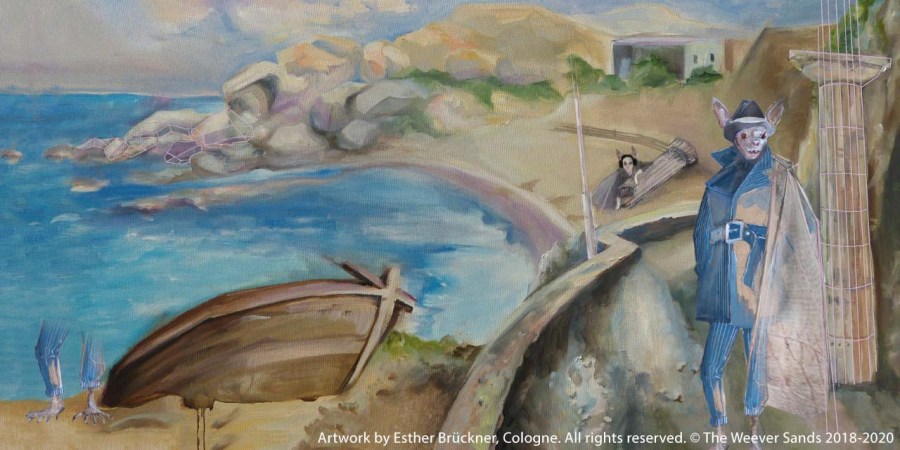
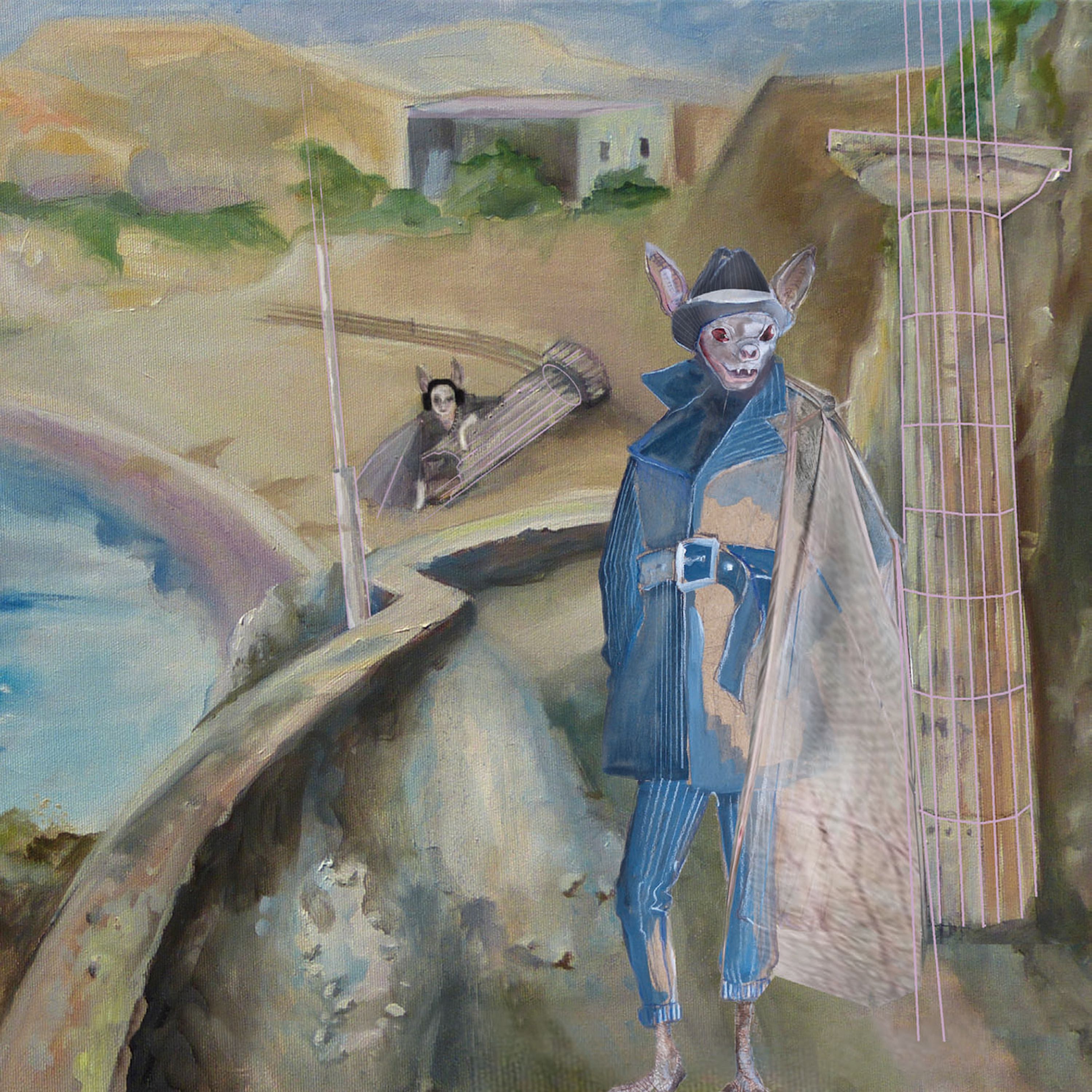
Weever Sands Stylobat's Travels album coverThe Weever Sands – Stylobat’s Travels, 2020

Tracks: 1. Intro/The Breakout Session (3:29), 2. And Aphrodite Took The Veil (7:03), 3. Stylobat’s Travels (25:27), 4. Acropolis (The Big Wave) (6:12) 

Cologne, Germany’s The Weever Sands combine the album format and experimental playfulness of the early 1970s with what could be considered post-rock or ambient rock. To be honest, I didn’t quite get it at first, but then the other day I was listening to Gentle Giant and it hit me. The synth and organ sounds that predominate in Gentle Giant’s music are very similar to what I hear on Stylobat’s Travels, The Weever Sands’ sophomore album. Add in some flute and strong bass and you have the makings of a classically inspired progressive album. But this is stripped back. The music isn’t as heavily layered as you might get on a Gentle Giant or Jethro Tull record, and that’s by design. The band are also heavily influenced by Mike Oldfield’s idea of a “powerful miniature,” where the songs aren’t as heavily developed yet still stretch out into varying sounds. 

The album opens with some spoken word that sets the stage for a concept that is told primarily through music, the wonderful cover artwork and other artwork included with the CD, and promo notes telling me what the story is about. The band describe the concept as a story about a bat (Stylobat) in Ancient Greece who goes on a quest to find his sweetheart. Most of the album is instrumental, so you’ll have to use your imagination, with some help from the artwork, to see Stylobat searching for his beloved. 

The first two tracks most closely resemble what we would call progressive rock, but the 25 minute “epic” is most certainly post-rock, with all of the elements that might make up a layered prog song spread out and played individually. A splash on the high hat here, a symphonic tone there, a synthesized beep. Four minutes in and I’m beginning to wonder what’s going on. The first five minutes of that track are subtitled “Flatlined,” so the musical scene is apparently meant to be at a hospital bedside. Things pick up after that with the next section, “Stereobat,” but I would still label it experimental. There’s melody, but the combination of different synth sounds keeps it sounding unique, although it still references the gentlest of giants.

The third section, “Ah! These Ionic Beams!” nicely builds to a combination of keyboard combined with a rock riff that’s a lot more traditional. An electrical guitar finally comes in, elevating the music by leaps and bounds. Not that there was anything wrong with the music before, but the guitar solo is quite nice and certainly welcome. This section of the song is the best music on the album. 

This is the point where I notice that the song has built gradually to this moment. The song began with disparate sounds, but they have gradually been brought together and build upon each other. The fourth section, “Introducing Fire Ghosts,” returns to some of the disparateness of “Flatlined,” but it never becomes that sparse again. It soon returns to the musical complexity of the previous section. The final section, “Underwater,” winds down with a synth sound that fills the musical space, perhaps suggesting being covered by water. The final song, “Acropolis (The Big Wave),” continues that nautical theme, but it builds and morphs into more of a rock song with heavier drums and heavier keyboards with a vintage 70s sound. 

Stylobat’s Travels isn’t your typical instrumental prog album. Usually instrumental albums feature a lot of musical noodling, but this record seems to focus more on telling a story through music. Personally I would’ve preferred a bit more guitar and fewer moments of sparseness in the long track. Some more spoken word sections beyond the opening track would’ve helped move the story along as well. The opening spoken word passage reminded me a bit of a radio drama, and I think a few more instances of that on the record could have helped tell the story more clearly and coherently.

The Weever Sands are quite unlike most of what you’re going to find in progressive rock these days. They don’t seem to be copying any particular sound, even though I made that Gentle Giant connection earlier. Rather they start with a more ambient base and build that up until it’s no longer ambient… if that makes sense at all. It isn’t quite rock, even though it does have rock moments (which I wish were more numerous). It’s a fun little journey that has a few bumps in the road, but it’s worth checking out if you’re looking something inspired by classic progressive rock that isn’t symphonic prog. 

https://www.the-weever-sands.com
Buy the CD from: https://shop.trommelfell-records.de/the-weever-sands/
Full album playlist on YouTube: https://youtube.com/playlist?list=PLRqGY_YLULtQlBHPovPjj8sGvM-4AX0y2

Interview with SAFFEK

Israeli alternative progressive rock act SaffeK, led by composer Oren Amitai, has just released an animated music video for the song “Mad,” taken from the group’s recent EP entitled “All Too Human.” In support of that launch, Amitai speaks for Progarchy about his beginnings, starting SaffeK, and more.

Let’s start from your early music beginnings. How did your musical career begin? When did you start playing? Which groups have been your favorites? Please tell us something more about your early life.

I started like many Rock lovers of my age group with the first album of Linkin Park when it was released, I was around 11. I found myself reading Manga with Linkin Park as a soundtrack and just exploding with awe and emotion. Life was felt so strongly and vivid. Quickly after I found out about System of a Down and The Doors, two bands that closed the deal for me – Music is my trigger, I am at another level of existing when the fire of it holds me.  

By the age of 15 I was doing my own adaption of Rock on a broken classic guitar. In those years I also got really deep into classic Prog and quickly after I found myself a part of my dream cast prog group made out of my best friends growing up. We named ourselfs Hanagaria (“The Carpentry”) after Dean’s dad carpentry where we used to sit every night. After Hanagaria released an LP we broke up. Dean went on playing Bass in SaffeK and the talented Ilan Barkani from the group also joined me for a couple of years on the drums. 

How did you go about starting SaffeK? Who was the most influential when the band started its musical journey?

After Hanagaria broke up I decided to dream my own musical voyage, leading my interpretation of Alternative Prog Rock. The project was originally named “Oren Amitai’s Stitches” but then I got around to the understanding that the name was a teeth breaker so I decided to change it to SaffeK, which means “doubt” in Hebrew. My experience of existeen is summed up in this word and it only made sense that my life’s project will be named the same. 

In the beginning, did you have some “fixed” tempo in composing songs or everything was a product of jamming, improvising?

All of SaffeK’s music started out in my bubbling head. I used to work out the main themes and different parts on guitar and vocals and then I went around meeting all of the band members individually, working with them on what I had in mind and using their talent and input in order to mold the best part with them for the song. Then, we went on the extraordinary and exciting sessions of finding out how the imaginary world turns to ecstatic insanity in the rehearsal room.

After the first couple of years I decided to make everything much more down to earth. Today I send out everything ready for everybody without us meeting, including the final draft of the song. Then, when we reach the rehearsal room, those talented basterds bring their amazing approach to the piece and we polish it all and find out what the finished song will be. 

How would you describe SaffeK music on your own?

SaffeK’s music is a mash of the ideas and musical influences that made me who I am with a focus on the rock & guitar elements. It’s music that turns me to an animalistic emotional madman. A music that steps on the core of existing for me, pushes the epicness of life is I feel it through music and comes with a message of acceptance to all the other weird souls who wander this earth with me and are confused but at awe as hell. 

Tell me about the writing and recording sessions for “All Too Human” EP.

Writing down “All Too Human” was a very deep and emotional journey for me. The E.P describes the main 4 elements in my character that make me suffer as a human, the 4 main features that separates me for the most part of what I feel and describe as divine. In order to really flesh them out I had to venture into my destructiveness and fill myself  with the sadness, anger, pressure and alienation. The best part of it, of course, is that I feel that the best way to describe these elements is to burn them out, scream them out, feel them to the maximum effort. And that is what I tried to do with the compositions themselves. The rec sessions were great, great flowing vibe and in awesome happy energetic accomplishment.  

What is the most important thing for the structure of your songs? Is it a riff, a melody line, vocal arrangement?

For me the most important thing is the story itself. I have to ask myself all the time if the story makes sense to me, if it works me out emotionally. If you listen to the song and you swim with the journey, not nodding your head going “…What?”.

Besides that, I find that what I usually work around with at first is the melody/riff to start me off. That’s the first thing that moves me. 

Recommend us some good progressive rock/metal acts coming from your area.

One of the most exciting, well developed and pecked with originality is Subterranean Masquerade. Their concerts are a must see! 

I have to recommend “Bzaat” as well. virtuoso guitar & drums insanity! 

Are you also involved in any other projects or bands beside SaffeK?

I used to float around and work with different projects, today I’m focusing on SaffeK as my passion. Otherwise, I work as a teacher at Just Music Academy in Israel and develop productions and mix & master for beautiful people that come my way. I find the work of teaching intense and inspiring. It’s a true beauty to see people transforming their passion and flare into an authentic creation.  

So, what comes next for SaffeK?

A new video is coming out in the next few weeks, a work of a lot of great minds which I am very proud of. It’s gonna take SaffeK’s visual presentation to a new level. 

Afterwards it’s all about counting down the days till summer when we will release a new album followed by a European tour. Beside that, truly, all we can’t wait for is to see the people, the crowds, what we live for. We can’t wait to break the lonesomeness, the dreadful silence of the music with you.

“All Too Human” is available from Bandcamp here. Follow SaffeK on Facebook and Instagram.

Debut Album From Portugal’s ARTNAT Out Now

Press Release:

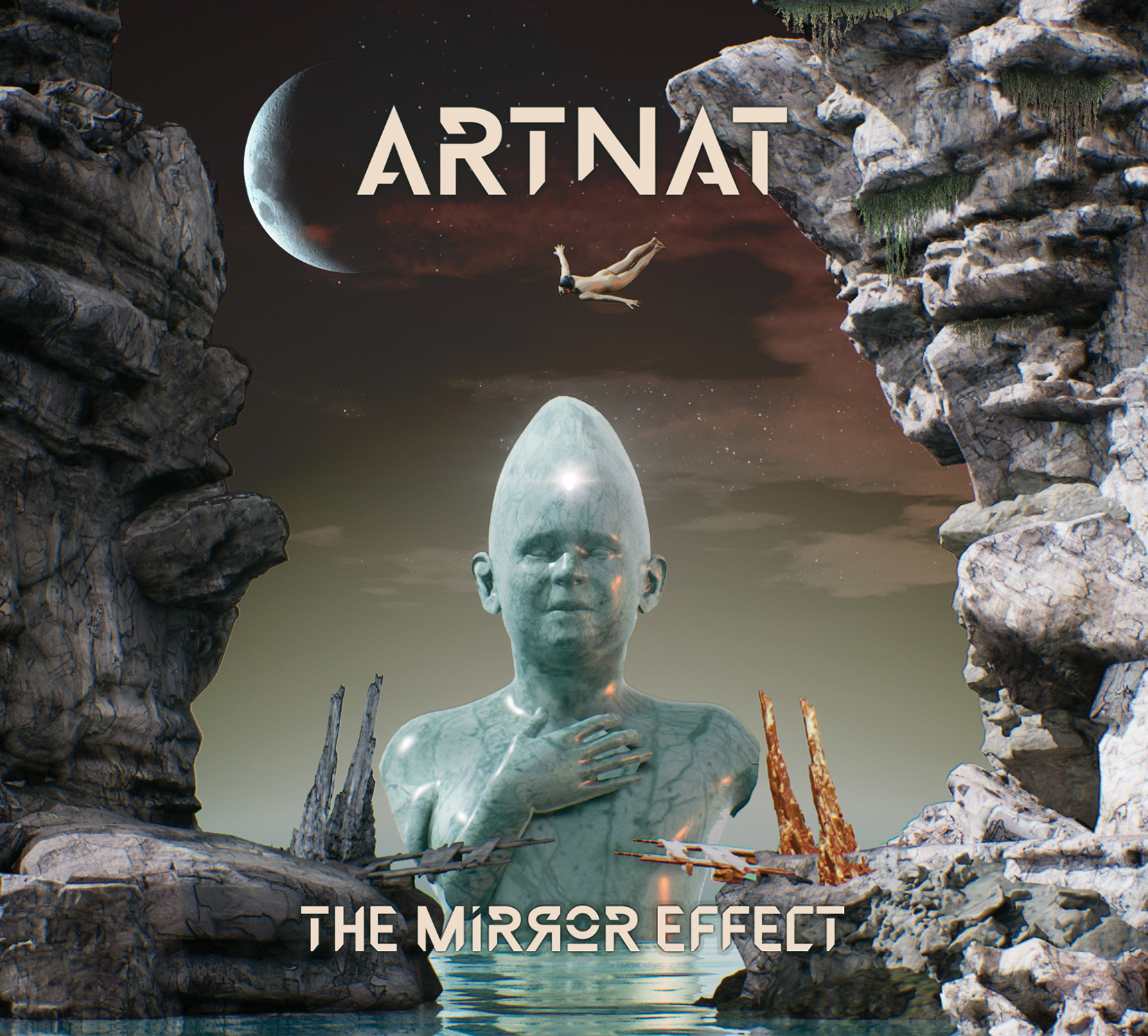
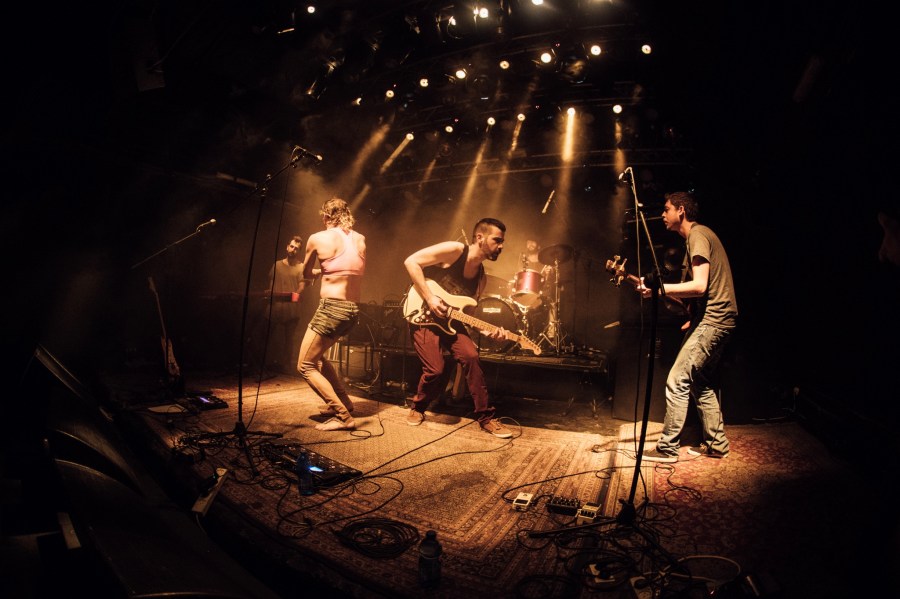
CoverARTNAT is a new progressive rock band formed by lead guitarist and founder of the known TANTRA prog group from Portugal, Manuel Cardoso. They recently released their first album, The Mirror Effect. The name reflects the continuity in symphonic prog style of music between TANTRA’s music and ARTNAT. With high compositional levels together with wild experimental themes, this is a colorful and multi ambiance work with top-level musicians, but with no technical show off.

Manuel Cardoso says about the project:

Well, after several excellent albums with TANTRA I felt that though in my heart and mind, I just felt like doing the same type of music, obviously with a natural evolution, being the only link to the original group I should use a different name. So ARTNAT just felt right… Mirrored word for an evolving music, like a mirrored dimension.

Still, to me, it’s just TANTRA´s evolution in the 21st century!”

Check out the album on Bandcamp: https://artnat.bandcamp.com

https://www.facebook.com/ARTNAT.Art.Prog.Rock/

Shining Pyramid’s Atmospheric Triumph

Shining Pyramid, Tree, December 29, 2020
Tracks: Transmitter C (9:18), Triskel (4:11), Campfire (3:03), Rain (4:58), Like Katriona (10:20), Weird Science (6:15), Joy? (5:32)

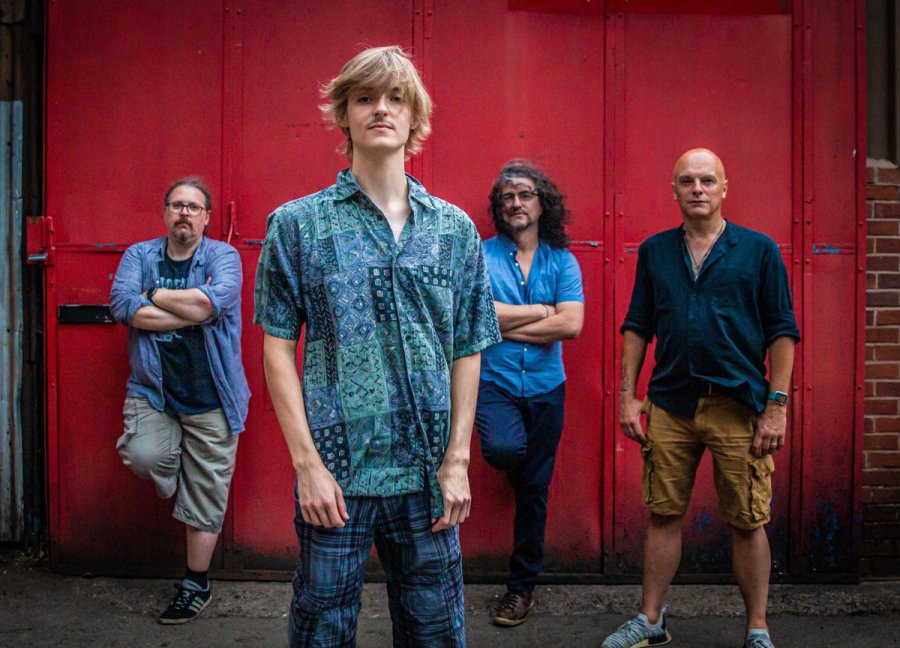
London’s Shining Pyramid released their third album back at the very end of December 2020. This follows 2015’s self-titled debut, loosely based on the 1895 Arthur Machen of the same name, and 2018’s Children of Stones. Their latest album, Tree, was my introduction to the band, as they generously sent me a CD to review. I was hooked from the opening electronic notes, which reminded me a little bit of Oak, who I seem to mention a lot around here. The duo is comprised of Nick Adams on guitars and Peter Jeal on keyboards. A page on their website offers a breakdown of the guitars and keyboards used on the album. I’m not a musician, but I found it interesting that Adams used such a wide array of guitars and basses on the record. They all sound wonderful.

Swirling synths set the stage on Tree, but the spacey guitar quickly steps into the spotlight, taking on a Floydian tone with a bit of the late Piotr Grudziński (Riverside) thrown in for good measure. It would be a mistake to describe this album as only ambient, or only atmospheric, electronic, or space rock. It contains elements of those things, but the guitar keeps the album rooted in rock territory, even if the album is on the sedate side of the rock spectrum. 

Shining Pyramid

Perhaps what I like most about Tree is the variety it contains, even though it’s only 44 minutes long. The opening track, “Transmitter C,” centers around a very spacey guitar with electronic synth sounds swirling around it. “Campfire” places an undistorted guitar seemingly just behind the bass in the mix, giving it a bit of a distant feel before the keyboards build and take the main spot in the mix. It isn’t particularly atmospheric. The next track, “Rain,” offers an ambient sound centered on a simple repeated piano refrain. That refrain, along with the bass, serves as a framework to support the varying synth sounds that keep the track interesting as it proceeds. Each track on the record sounds unique. They share common elements, but the band approach them in different ways. 

My favorite tracks are “Transmitter C” and “Like Katriona.” They’re both the longest songs on the album, allowing the music to build and grow. They also both feature a spacey Floydian guitar tone and appropriately proggy keyboards. These tracks sound the most musically focused and cohesive as well. A fun fact from their website: the ring of sound waves printed on the physical CD was taken from Adams’ guitar on “Like Katriona.” That’s a pretty cool little thing to throw into the physical product. 

I couldn’t help but feel a calming sense of peace when I listened to Tree with undivided attention. The music is calm and almost hypnotic at points. Frankly it was just what I needed. It gives you space to reflect, but it does so with interesting musical textures that make you want to return to it. For those into the atmospheric and ambient sides of prog, give Shining Pyramid a listen. They won’t disappoint. 

http://shiningpyramid.org
Bandcamp
Facebook
Twitter

Album Review – Rain’s “Singularity”

Rain, Singularity, November 23, 2020
Tracks: Devils Will Reign (7:02), Dandelion (7:01), Walkaway (12:51), Magician (11:17), Singularity (9:24)
Band Members: Rob Groucutt: Vocals, Guitar, Keys
Mirron Webb: Vocals, Guitar
Andy Edwards, Drums plus additional instruments
John Jowitt: Bass

Digging back into the end of 2020, we’ve come across another album from last year that’s not to be missed. UK-based Rain feature unique vocal harmonies, lush musical textures, and compelling lyrics. The band features two well known prog musicians in John Jowitt of IQ, Arena, *Frost, and Jadis and Andy Edwards of IQ and *Frost. Vocals and guitars are handled by Rob Groucutt and Mirron Webb, who both excel on the album. The talents of these four member mesh masterfully on Singularity

Right from the get-go on “Devils Will Reign” the band makes it clear that they aren’t going to limit themselves to any pre-cut style or expectations. The vocal harmonies are beautiful, and the musical shifts mirror the vocal shifts as the song bounces back and forth between Groucutt and Webb on vocals. The Spanish guitar passage was both unexpected and thoroughly enjoyable. Lyrically they pull no punches, but I’ll leave my interpretation out of it and let you absorb it for yourself.

“Walkaway” sounds like it could be a Haken b-side. It isn’t metal, but it sounds very much like Haken’s quieter moments, particularly on The Mountain. The combination of vocal harmonies and the abrupt way in which they sing the lyrics sounds very similar to Haken. Musically the song is more reminiscent of pre-pop Steven Wilson. Some instrumental passages remind me of Steven Wilson’s “Transience” off Hand. Cannot. Erase. Lyrically the song appears to rail against growing totalitarianism that many western countries are engaging in using the Covid-19 pandemic as an excuse. No conformity here. Rain think for themselves. The vocals take on a layered robotic sound about ten minutes in, which brings in the theme of growing technocracy that appears elsewhere on the album.

Your freedoms are old news
And lying is double truth
Your freedoms are old news
You’re missing the good times

You’re craving human connection
A new world is here before you
And no one knows what to do – no
 – Walkaway

“Walkaway” builds to a soaring guitar solo backed by a simple yet prominent bassline. The song then returns to the Haken-like chanting “walk away, hesitate, take a day, isolate, walk away, hesitate…” At just under 13 minutes, the song is epic in the traditional progressive rock sense. It has the space to move through different musical and lyrical themes. 

Rain shines with a truly unique sound on”Magician.” I suppose the vocal harmonies are a nod to Gentle Giant, but the varying musical styles the band moves in and out of throughout the song keep it sounding fresh. Lyrically the song seems to tap into that theme of growing technological overreach, and that gets reflected in the music as well through various keyboard sounds. Even the guitar work at points reminds me of a computer with a simple back and forth that could be interpreted as the 1s and 0s of a computer. The guitar takes on a bit of a Robert Fripp tone in those moments. 

The final track, “Singularity” is the most atmospheric and experimental song on the album. The vocals again remind me of Ross Jennings from Haken, but the music is much softer with swirling keyboards, airy guitar sounds, smooth jazzy drums, and steady bass. In the second half it start to sound experimental with various sampled sounds and lyrics repeated from earlier in the album – almost as if the band are sampling themselves.

In some ways the final song is a departure from the rest of the album, but at the same time it really isn’t because the band never limited themselves to any one sound. They try different things, and careful listenings will pick up new musical and vocal sounds on repeated listens. I appreciate the band’s courage in their lyrical content. In an era of mass conformity, Rain throw conformity out the window in both their stated words and their music.

Singularity would definitely have made my best of 2020 list had I heard it when it came out. It is incredibly interesting on all levels. The vocal harmonies really lift their sound by adding an extra layer of complexity to their already-complex musical soundscape. This band works really well together, and I hope they continue to release new music in the future. 

Buy the cd from: 
https://www.lasercd.com/cd/singularity
https://rainprogband.bandcamp.com/album/singularity

Youtube playlist of whole album: https://www.youtube.com/watch?v=hRM7BpZzvD0&list=PLp87vn7bPFfSYuGAvyaJSZYwwetwssmeg

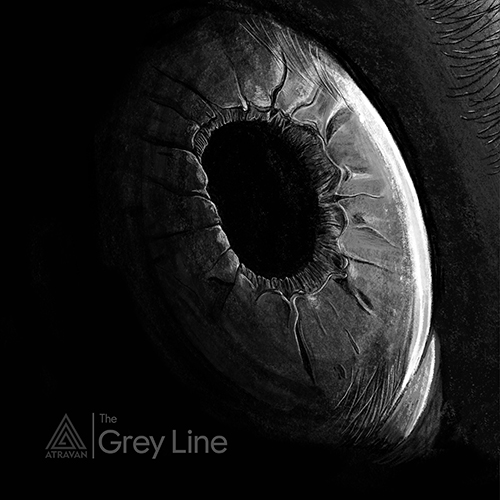
Metal Mondays: Iran’s Atravan – “The Grey Line”

Atravan, The Grey Line, 2021
Tracks: 
The Pendulum (2:35), The Perfect Stranger (6:45), My Wrecked House (6:05), Vertigo (5:09), Dancing on a Wire (6:01), The Grey Line (9:12), Uncertain Future (3:35)
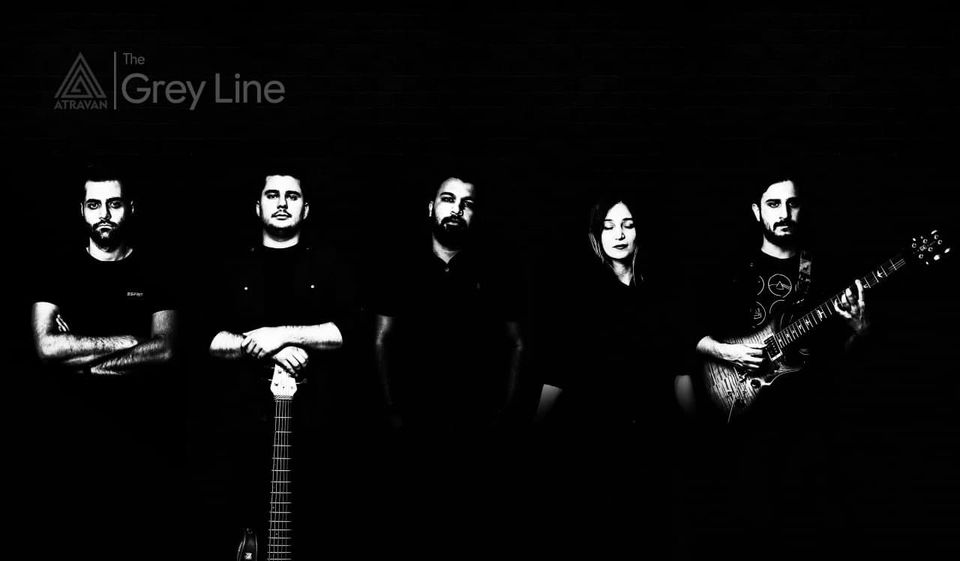
Line-up:
Masoud Alishahi – Vocals
Shayan Dianati – Guitars
Arwin Iranpour – Bass
Marjan Modarres – Piano, Keyboards
Shahin Fadaei – Drums
Pedram Niknafs – backing vocals (tracks 2, 4) 

There’s a first time for everything, folks, and I think today’s Metal Mondays review is the first time we at Progarchy have ever reviewed an album from an Iranian band. I know it’s the first time I have. Tehran’s Atravan released their latest album, The Grey Line, about a month ago, and it has quickly become my favorite new release of 2021. It’s absolutely phenomenal.

Atravan can be best described as a progressive metal band with atmospheric elements. The songs are incredibly well-written, with the instruments all played expertly. The bass plays a prominent role – arguably more prominent than the guitars. The Grey Line isn’t particularly heavy, although it has its heavier moments. “Dancing on a Wire” for instance leans on a synth sound with acoustic guitars and soaring vocals. “My Wrecked House” has the same elements, but it has a much heavier sound with heavier drums and electric guitars. By the end of “The Perfect Stranger,” the band is pounding away in full-blown metal.

All of those elements remind me most of Riverside, especially on the aforementioned track. The bass and keyboards also play a central role in Riverside, with spacey guitars layered over the top. There are also moments that remind me of the atmospheric aspects of Porcupine Tree or even Devin Townsend (think “Deadhead”), but Atravan strike me as being rather unique at the same time. Maybe it’s the warmth and depth of Masoud Alishahi’s vocals (yes, the lyrics are in English). Maybe it’s the stunning Floydian keyboards. Maybe it’s the way the band builds a song gently but gradually through the combination of guitars, bass, drums, keyboards, and vocals. The drums are intricate throughout. Shahin Fadaei always plays to whatever the song requires in the moment. Sometimes that requires rapid-fire double-bass pounding, and sometimes it requires a more sedate Nick Mason-style beat. Careful with that axe, Atravan.

The keyboards provide unique sounds throughout the album that set a melancholic and contemplative mood. The opening of the nine-minute title track is all keyboards. The song slowly builds with added vocals before a loud but simultaneously gentle bass takes center stage. The song continues to build with additional instruments picking up. It takes about five minutes before they return to a really heavy sound, but everything works so perfectly that you end up appreciating whatever and however the band plays. None of the songs feel rushed, which is rather surprising in an album that’s only forty minutes long.

The electric guitars on the opening of the final track, “Uncertain Future,” have a spacey Gilmour-esque sound to them. They’re used sparingly as the bass, drums, and keyboards begin to take over. It’s a three and a half minute-long track, yet it still doesn’t hurry. It asks the listener to slow down with it and just enjoy the moment. It’s an instrumental track to help you unwind at the end, even though the album is on the short side. In closing it out this way, Atravan bookend the album, since the opening track was also a spacey instrumental piece that served to warm up the listener for the rest of the record. 

Definitely give The Grey Line a listen. I’m so glad the band reached out to us, because I probably wouldn’t have come across this album otherwise. I certainly wasn’t expecting it to become my favorite album of the year thus far. There’s a lot of 2021 left to go, but Atravan have set a very high bar for everyone else in the prog world to hurdle. Every track on this album is fantastic. I look forward to more from the band in the future. 

https://www.facebook.com/atravanband
https://atravan.bandcamp.com
Apple Music
Spotify