Cosmograf news

Progarchists, our friend and ally, Robin Armstrong, just announced a slight delay in the release of the new Cosmograf album, The Man Left in Space.  The album will now be released at the end of January 2013, giving Robin a bit of cushion in the final production.  Robin’s full post (complete with wonderful Rush references in the title) can be found here:

http://www.cosmograf.com/launch-delayed-too-many-snakes-not-enough-ladders/

Also, Robin would like as many as possible to “like” Cosmograf on Facebook:

http://www.facebook.com/groups/552531094761535/

Of course, it should go with out stating that every Progarchist should own the first three Cosmograf albums as well as pre-order The Man Left in Space.  Sadly, the first one is very difficult to find, but let’s hope Robin reissues it.

Comograf’s music can best be described–if a comparison is necessary–as a cross between Ayreon and Big Big Train–theatric, eclectic, and totally prog.  Despite the comparison, Robin’s music is certainly original, and he is, no doubt, his own man and artist.  The new album will feature other Progarchy favorites, Greg Spawton and Nick D’Virgilio of Big Big Train and Matt Stevens of The Fierce and the Dead.  Additionally, our generation’s Phill Brown, Rob Aubrey, is helping with engineering.  And (yes, I’m incredibly proud of this), I have a few spoken lines on the album.  How cool is that?  Very.

One last treat: here’s the title track of the last release.  Enjoy.

Mark Hollis in Ecstasy, Live in 1986

In the spring of 1987, while browsing the new music at the Hammes Bookstore at the University of Notre Dame, I fortuitously came across an album called “The Colour of Spring” by a group I had previously dismissed as nothing more than a trendy New Wave band with the bizarre name of Talk Talk.

Though I knew next to nothing about Talk Talk or their music, I was quite taken with the cover, a James Marsh painting of a number of butterflies and moths with a variety of surreal designs on them.  Judging the album by its cover, I decided to take a chance and make a spontaneous purchase.

After a listen to “The Colour of Spring” back in my dorm room in Zahm Hall, I was a convinced Talk Talk fan, and I’ve been ever since.  Indeed, I’d never heard anything like the music or the lyrics.

In the opening track, Hollis sings with astounding conviction:

“Try to teach my children/To recognise excuse before it acts/From love & conviction to pray.”

In the concluding song, Hollis again brings in a religious theme–this time of the nature of evil, and the power of good to overcome it:

“As bad as bad becomes/It’s not a part of you/Contempt is ever breeding/Trapped in itself/Time it’s time to live”

With at least fifteen musicians and two choirs performing on the album, including Traffic’s venerable Steve Winwood, “The Colour of Spring” is complex, religious, and dramatic.  It was made by musicians who clearly love what they do and who enter into music as fully as humanly possible.  Even to this day, I feel chills when I hear the album.  It’s not lost any of its quality, even after twenty-two years.

Two years later, in the fall of 1988, when I was working at as a classical host and a rock DJ at WSND-FM, Talk Talk released its fourth album, “The Spirit of Eden.”  Now regarded as the foundation of the post-rock movement, the album might be one of the finest non-classical albums ever made.  Intense, moody, and deeply meaningful, the “Spirit of Eden” captures and propels the imagination for a little over a 40 minutes.  Costing an outrageous sum of money to produce, taking 14 months to make, and employing 16 musicians and a choir, the “Spirit of Eden” simply confused the music industry.

In a radio interview (available on the Talk Talk facebook page), Hollis acknowledged that the lyrics—based on the notion of creation and destruction, on the loss of real and traditional communities in the modern world, and on the disturbing absence of silence—have a profound meaning for him.  In the middle of the opening 18-minute song, Hollis sings:

“Summer bled of Eden/Easter’s heir uncrowns/Another destiny lies leeched upon the ground.”

Another song, “Wealth,” rewrites the famous “Prayer of St. Ignatius of Loyola.”

Talk Talk’s final album, “Laughing Stock,” has a similar feel to “Spirit of Eden,” in terms of music and lyrics.  On the fifth track, “New Grass,” Hollis sings:

“A hunger uncurbed by nature’s calling/Seven sacraments to song/Versed in Christ/Should strength desert me. . . . Lifted up/Reflected in returning love you sing/Heaven waits/Someday Christendom may come/Westward.”

*****

Photo from: http://skyarts.sky.com/talk-talk-live-at-montreux-1986

After twenty-two years, Talk Talk released its first live DVD.  Recorded July 11, 1986, in Montreaux, Switzerland,” the band—Mark Hollis, Lee Harris (drummer), Paul Webb (bassist), two keyboard players, and two percussionists—offers the small Swiss audience every single thing they have to offer over roughly 90 minutes.  The concert, consisting of 15 songs (fourteen listed, but the best song by far, the 1 minute 30-second long “Chameleon Day,” receives no official notice in the packaging) is nothing short of inspiring and heady, and the music—even the earlier poppier stuff such as “My Foolish Friend”—has an organic, impressionistic, jazzish, progressive feel.

Some songs unexpectedly come to life in fascinating ways, such as “Does Caroline Know,” a relatively weak studio cut.  In concert, though, it stuns and comes off as a progressive rock epic.

Every person on the stage seems to be enjoying himself immensely, each a professional and artist fully in sync with every other person.  Harris, especially, plays with such steady ferocity that I feared his drum kit might collapse during the concert.  It didn’t, and Harris played with passionate verve throughout.  He clearly holds the varied instruments and musicians into a centric and cohesive whole.

But, most importantly, Hollis sings as though he is standing before the court of God, afraid to squander any precious talent bestowed upon him.  As strange as this might read, he appears as though he is full ecstasy. I mean ecstasy in its original sense—not as something sexual, but as something divine.

He seems the perfect medieval saint, enraptured by the Divine.  There are moments during the concert when he walks back to a bench/seat in front of the drum kit and simply collapses.  Yet, even in these down moments, he is fully and completely one with the music, if his body movements, swayings, and motions are any indication of the state of his soul.  Indeed, from roughly the third song to the end, he seems to be completely immersed in the art and intensity of the music.

At the end of the concert, when Hollis says:  “Thank you very much.  Good night.  God bless.  Thank you very much,” he seems to mean every word of it.

Norwegian Visions of Purgation: The Eddas of Gazpacho

[Progarchists, I published a version of this about six months ago, but I’ve revised it significantly since then.  I’m also very much desirous of celebrating the re-release and bettering of a must-own (YES, a MUST-OWN ALBUM) album, “Night.”  I honestly didn’t think this album could get any better.  And, just to be clear, I rank it somewhere in my top ten albums of all time.]

Little things that make up her life

Watching them pick winners with her standing by

She read a tired pamphlet by a fire-starting freak

Campbell’s ice cubes, the drinks are unique!

But everything is cool as long as you dare

To bend a few taboos, to sacrifice pawns

Pockets filling up with gold

From the shades of his soul

Lost in the panic that she typewrote

Of lightbulbs that burn out in rain

And he saw his wife to be in someone

But she couldn’t see and she never cared

How small is your life

Is it too small to notice?

–Gazpacho, “Valerie’s Friend” (2007)

Nearly six years ago, I finally listened to a band I’d avoided for over half of a decade. Having been a part of various prog newsgroups (the “National Midnight Star” was the greatest of these in the 1990s), news feeds, and websites for the entirety of my adult life, I’d come across the name of Gazpacho numerous times, and the mention was always in a positive context.

For reasons which now elude me, I kept putting off purchasing one of their cds. I even consider their original patrons, Marillion, one of my favorite bands, and I have for nearly two decades now.

Still, even the praise and promotion of Gazpacho by Marillion didn’t convince me.  From my poor memory, I was a bit turned off by the name, and I’d assumed they were merely a Marillion cover band and tribute band.  “Gazpacho” is the name of one of Marillion’s songs from their album, “Afraid of Sunlight” (1995).

Then, almost half a decade ago, a friend I trust explicitly told me I had (yes, HAD) to listen to the latest album, “Night,” a single 53-minute song broken into five parts.  It’s as much a suite as it is a song.

Well, I’m certainly a huge fan of concept albums and albums without any breaks in the music. To me, if something is worth saying, it generally takes much longer than the traditional 3-minute pop song allows. As I posted here recently, the only real flaw in The Cure’s 1989 “Disintegration” is the few seconds of silence between songs.

But, 53 minutes?

Was this too good to be true?  Seemingly so. This would be akin to complaining to Costco that their 56lbs. (yes, I exaggerate. I think it’s 5 lbs., 6 ounces–but it’s huge and glorious!) of M&Ms for $8 isn’t enough.

Asking for more would just be sheer decadence and would probably require a quick jog down to the confessional at church.

With the prompting of my friend and my eagerness to hear a 53-minute song, I purchased “Night.”  To say this changed my life would be too much. To say it reshaped my taste in music and set my listening standards to a new level would not be an exaggeration in the least.  I was just on the verge of discovering Big Big Train at the moment I first listened to “Night,” and I think Gazpacho raised my understanding of what’s possible in music to a very high height.

“Night” is, to my thinking, a proper successor to Talk Talk’s “Spirit of Eden.”  Musically, there are certainly similarities, and I’d be rather shocked to learn that the shadow of Mark Hollis, Tim-Friese-Greene, and Phill Brown did not over over the work of Gazpacho.  Indeed, Talk Talk seems much more of a direct influence than does Marillion despite the name of the band.

“Night” has been in constant listening rotation now for as long as I’ve owned it, and I’ve never once gotten tired of it or felt I’d actually reached and understood it in all of its depth and breadth. As I’m listening to it now, writing this review, it’s almost as fresh to me as it was on the first listen or whatever number of listens yesterday’s was.

[I’m revising this article (November 21, 2012), which I first wrote about six months ago.  As I’m revising, I’m listening to it yet again–it’s just stunning.  So stunning, in fact, that heart is actually skipping a few beats.  No, unlike with the 56 lbs. bag of M&Ms mentioned above, I’m not exaggerating.]

“Night,” for me, ranks up with the greatest post-classical albums of all time. Indeed, it’s in a league with “Close to the Edge,” “Selling England by the Pound,” “Grace Under Pressure,” “Hounds of Love,” “Ocean Rain,” “Skylarking,” “Spirit of Eden,” “Disintegration,” “Brave,” and “The Underfall Yard.”

From the first listen of “Night,” I was hooked. The piano, the violin, the voice, the bass, the drums, the guitar–everything just fits, and it does so beautifully. It also does so as an organic whole, one note and one idea leading mysteriously, yet perfectly, to the next.

I knew fully well upon the first few moments of listening to “Night” that I would have to become a Gazpacho completist. My prediction has come true, and I rather proudly own their seven studio cds and two live ones.

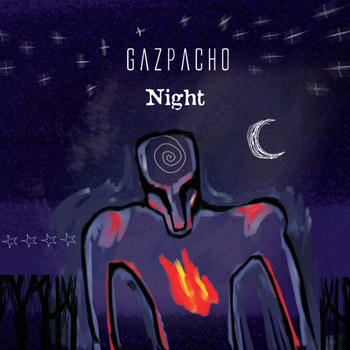
Rare for me, I even purchased the new re-release of “Night” from Kscope, despite already owning the original.  The new version comes with new artwork and typically beautiful Kscope packaging, but it also has new drums, a few new parts, and three of the five parts of “Night” recorded life.

And, did I mention the lyrics? These guys know how to write, and they know how to integrate the lyrics with the music and the music with the lyrics into something profoundly and seamlessly whole and good.

Despite its brilliant intensity, the album seems to come to a fitting denouement at around forty minutes into it, when Jan-Henrik Ohme sings one of the best and most haunting lines in all of rock music: “St. John got gunned down with a cold 38.” My mind reels every time I hear this. Am I in Norway, on the island of Patmos, or in some twilight realm of progressive/art rock bliss?

And, so, I’ve concluded, listening to a Gazpacho album is akin to every poetic description of purgatory I’ve ever encountered. It’s not the perfection of heaven, but it’s also not the twilight and long defeat of this earth, or, in any way, the pains of hell.

A Gazpacho album is purgatory in the best sense: a journey toward perfection, offering brief glimpses of the most beautiful things possible, reaching for that which the Platonic Celestial King reached: the Good, the True, and the Beautiful.

For those of you have had the blessing of reading Dante’s Divine Comedy, you know exactly what I mean.  No scene in literature touches me as much as Dante realizing he has escaped the Inferno and found himself staring at the stars of Purgatory.  Listening to this album is akin to this.

The touch of its hand is memory

A kiss to lead the blind

In water I hear slamming of doors

St.Christopher beneath the rocks

An empty dream of summer fields of daisies

Perfect endings

–Gazpacho, “River” (2010)

Gazpacho-esque Eddas

Despite the name, Gazpacho hails from the glorious northern Kingdom of Norway, home of many, many good and meaningful things, including one of the finest writers to ever grace this earth, Sigrid Undset, and one of the kings who actually gives monarchy a fine name, the courageous Haakon VII.

Oh, and let’s not forget, some of the best stories (the Sagas and myths) ever written come from this land as well.

Sadly, I’ve only visited once, and that was way back in 1988. Still, the memories of the intense and stark beauty of the Norwegian landscape inspire me to this day, and I happily keep a map of Scandinavia (dated 1815) framed above my desk as a reminder of what wonders can exist in creation.  Could I travel anywhere in the world at the moment, my first choice would be Norway and Sweden.

Interestingly, though we always associate the word with the Scandinavian mythic tradition, “Edda” is one of the most debated words in the history of Europe. No one is exactly sure of its etymology, but it’s generally agreed that it means “a soulful utterance” and is applied almost exclusively to northern myth. Whatever its history, it’s a stunning word, and the peoples of northern Europe (as the great English author and scholar, J.R.R. Tolkien, knew well) should be proud of it as an immense part of their cultural traditions.

Indeed, northern mythology is every bit as interesting, as complicated, and as developed as classical Mediterranean mythology. There are, understandably, similarities between the two polytheistic systems, but there’s a nobility and a will found in northern myth that is missing in the much more rationalistic and abstract realm of classical myth.

Whether the members of Gazpacho have intentionally embraced this northern Eddic tradition or not, it certainly seems to be in their very blood.

Formed in 1996 by Jon-Arne Vilbo, Thomas Anderson, and Jan-Henrick Ohme, Gazpacho has now released seven studio albums (recently adopted by Kscope Records) and two live releases. The seven studio: Bravo (2003); When Earth Lets Go (2004); Firebird (2005); Night (2007); Tick Tock (2009); Miss Antropos (2010); and March of Ghosts (2012). Each release is a delight, and while I find myself drawn back to “Night” more than the others, this is no small praise, and I find myself liking everything these men have produced.

Broken glass

The plan has failed

The silence knows

A man of faith

Everything that he knows, what a layman will do for diamonds

Fell on his knees gave in to sad overload

And all of the survivors shamed in the trench

Scrape up what’s left of his soul

Of his soul, of his soul

–Gazpacho, “Tick Tock” (2009)

Daughter of Night or of Zeus: Either way, mischief.

While the albums prior to “Night” are certainly artful and progressive, they are not part of a greater concept.

After “Night”, though, Gazpacho has produced three concept albums, each as progressive as progressive can possibly get. “Tick Tock” (2009) follows the story of a downed French pilot, trying to make it safety back to civilization in 1935. A number of separate stories comprise Gazpacho’s latest album, this year’s “March of Ghosts.” In a sense, at least thematically, this album best represents the very purgatorial idea of Gazpacho, literally following the souls of a variety of those who have passed from this existence.

Rather humorously (yes, I laughed for probably ten minutes solid), the lead singer describes his own theological beliefs on his Facebook page as “Frisbeetarianism”–the belief first proposed by comedian George Carlin that at death, the soul “goes upon a roof and gets stuck.”   Admittedly, I’m a Roman Catholic.  A pretty bad one, frankly.  But, I love the idea of Frisbeetarianism.

With “March of Ghosts,” however, the restlessness of souls pervades the album. I live across the street from a very large nineteenth-century graveyard, and, in ways I could never describe, “March of Ghosts” fits perfectly with the sense one gets walking around the cemetery at any time of the day or night. There are haunted and restless feelings present, but there’s also a calm that really can be found no where else but in a cemetery and, maybe, on a Gazpacho album.

As much as I love the driving qualities of “Tick Tock” and the pervasive certain uncertainties of “March of Ghosts,” I find their 2010 album, “Missa Atropos” the most interesting and most daring of their post-“Night’ concept albums.

The story of Gazpacho’s “Missa Atropos” is exactly what the title states: a Mass written for one of the three Fates. Little recorded remains of her. A quick glance at Hesiod’s Theogony reveals only a conflicting story. In the same work, Hesiod claims that she is one of the seven children of Zeus and Themis, the god’s second wife (Lines 901-906), as well as the offspring (alone; no father) of the horrific Night (Lines 217-219). In each version, however, Hesiod recorded that the Fates determined what good and what evil should be given to every man.

The protagonist of Gazpacho’s story, however, struggles to accomplish the writing and completion of a Mass. To write it, he disappears into the solitude of a light house. The conflicting ironies in Gazpacho’s story are simply brilliant. A “Mass” is meant to be a communal celebration, and a lighthouse is meant to aid those who cannot see clearly. Here, a man turns away from the world in a project to connect this world to the next, thus bridging the horizon with the heavens. By residing in a light house, he also guides the desperate to a safe haven, a port, thus bridging chaos and order. But, he also writes a Mass to appease the Fate–who, by definition, should be unappeasable–and thus bridges determinism with free will.

Struck down in the middle of

a little life

Star spangled by the wayside

As the trains roll by

Mercy, what can you do?

Try to be a saint?

Leaving cannot heal you

First try it with a kiss.

–Gazpacho, “Black Lily” (2012)

Summa Gazpacho-ia

If you’ve had the opportunity to listen to the beauty that is Gazpacho’s music, none of the above matters much–you already know exactly what I’m trying to write, and probably in a better fashion that I can communicate.

If you’ve not had the opportunity to listen to Gazpacho’s music, well, I’m incredibly jealous. I’d give a lot to be able to listen to them again for the first time–it would be an experience akin to reading Eliot’s “Four Quartets” or Tolkien’s Lord of the Rings for the first time, again.

Those first times are intensely precious.

Yet, as with Eliot and Tolkien, each new listen of Gazpacho reveals even more depth and more width and more breadth. As with Eliot and Tolkien, I’m sure I’ve not comprehended it all yet, not matter how many times I’ve heard or read.

I’ve yet to hear a note or a lyric by Gazpacho that is out of place. While everything they do is unpredictable, it’s never chaos; it’s always justice and harmony–but arrived at through the most artful of ways.

So, yes, Gazpacho’s music is brilliant, stunning, shattering, and healing. It is, truly, in the most Dante-esque sense, purgatorial, a purging of our imperfections through fire, and a reaching, searching journey toward all that is perfect.

After Summa

Please take my advice.  This is a MUST OWN (yes, I’m shouting at you!) album.  In the U.S., Amazon.com has it for $4.95!  What in the world?  Well, take advantage of it.  I can’t be held responsible for what happens after.  If you have any love of music–and how would you have made it through nearly 2,500 words if you didn’t???–you will end up purchasing all of Gazpacho’s releases.  Along with Big Big Train Matt Stevens, and The Reasoning, these are the absolute leaders of the new movement and embracing of progressive rock.

The official Gazpacho website is here.

Scam involving The Enid. Beware.

Dear Bradley,

SOMETHING SHABBY THIS WAY COMES?

ewcd03 390x390INNER SANCTUM IN ANOTHER REPACKAGING SCAM?
If past releases by these Tin Pan Alley scumbags purporting to be something special are anything to go by, this latest scam is very likely to be just another naff attempt to rip you off.

I can tell you now that Inner Sanctum does not possess the original masters for any of these tracks. Therefore recordings can only have been compiled from ripped retail products which in the past have included washed out cassettes and second hand vinyl served up as “digitally remastered”. We posses all the original masters here at Enid HQ.

Whatever may be the content of the claimed exclusive 2,000 word commentary on The Enid’s chequered history”, it has not been authorised by the band and could consist of almost anything.

So – If you do decide to buy this item from Inner Sanctum and it turns out not entirely to your satisfaction, send it back and demand a refund.


Yours as ever,

Robert John Godfrey


Latest from Matt Stevens/Tangent

Photo © TheChaosEngineers. For information: info@thechaosengineers.com

Great news this weekend.  First, from Matt Stevens:

Hello Brad

Hope you’re good. It’s been crazy here, a weird kind of post gigging come down. The Jazz Cafe gig was great fun, they treat you well there, blimey. Dressing rooms and beer!

I made a Spotify playlist with a “best of” my solo stuff. Is there any chance you can share it on your Facebook, Twitter, Groups or on any Forums you are a member of? This stuff makes a MASSIVE difference to obscure/DIY artists like me. The URL is:

http://open.spotify.com/user/1117036918/playlist/0uecTVxzs6d4dIBdWiOYDc

I know Spotify is controversial but for me at the moment the important thing is to grow the audience for the music. Your help is really appreciated, thanks loads.

Also if anyone is voting in the Prog magazine reader awards at:

http://www.progrockmag.com/news/vote-in-our-2012-readers-poll/

And fancies voting for for Fierce and The Dead or me it would be really appreciated 🙂 Exposure in these sort of polls really helps 🙂 Hopefully all the gigging this year has raised the profile a bit…

I’ve no more gigs booked now so the next months will probably be a bit quiet while we write and record  the new Fierce and The Dead record and plan my new solo record. Busy busy. The new Fierce And The Dead demos sound really good. They may be some sort of Pledge Music type pre-order. I’ll let you know.

Also we’re planning to tour outside the UK so please let us know where you’d like to see us. Thanks 🙂

Speak soon,

Matt Stevens

News from the invisible world

http://www.mattstevensguitar.com

http://www.spencerparkmusic.com

mattstevensguitar@btinternet.com

 ***

And, I had the great privilege of listening to about 75 minutes of Geoff Banks’s Prog Dog Radio Show this afternoon.  He announced some exciting news from The Tangent.  Pre-sales for their next album will be open beginning tomorrow afternoon.

On Friday, The Tangent released this on their Facebook page:

OK Folks the wait is over here is the very first chance to hear BRAND NEW work (in progress) from THE TANGENT. email workday@thetangent.org to get updates and find out how you can be part of a pre-pre order campaign to support this project. http://www.youtube.com/watch?v=wkOgivtLy_U

So much good coming out of the progressive rock community right now, it’s more than a bit overwhelming.  Of course, it’s the kind of overwhelming any lover of the genre craves.


Mini-review: “Deaf, Numb, and Blind”

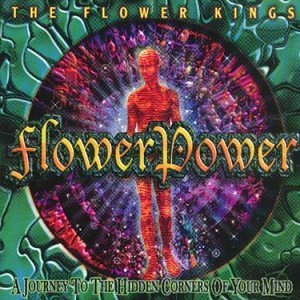
Over a decade ago, one of my brightest students introduced me to The Flower Kings.  He lent me his copy of the two-cd “Flower Power: A Journey to the Hidden Corners of Your Mind” over a Thanksgiving break.  I was rather blown away from the first listen.  And, not just because of the truly psychedelic cover or the name of the band (those hippie Swedes!).  I fell in love with the whole concept and packaging of the album.  Since then, I’ve been a rather faithful fan of the band, searching out every track ever recorded by them and by the various members in each of their associated bands.

This post, though, is not meant to be a retrospective or analysis of The Flower Kings.  Just a small appreciation.  Despite the fact that I have a field day listening to disk one of “Flower Power” (the concept part of the concept album), I’m quite taken with a track that seems to have gotten lost in memory, even among fellow Flower King fans.  That track, the first song of disk two, is one penned by Roine Stolt, “Deaf, Numb, and Blind.”

For several years after I first heard it, I considered it the finest and most perfect prog song ever written.  Yes, I’m comparing it–as a song–to any single prog song written up to roughly 2000.  So much has happened in the prog world since then, that I wouldn’t place it quite this high.  But, still, it’s a nearly perfect song.  If any non-progger ever asked me what progressive rock is, I wouldn’t hesitate to introduce them to “Deaf, Numb, and Blind” first.

The song builds for the first three minutes, with symphonic guitars, driving drums, keys, and bass swirling.  I’m especially taken with the bass playing, though all of it is good.  Stolt’s voice fits perfectly with the urgency of the song when he first comes in at 3:30.  The song lyrics appear to be a plea to put away delusions and embrace the highest things in life.  The consequences for maintaining the delusions seem apocalyptic–with the dogs of war and nuclear weaponry being loosed upon the world.

At 5:45, the song pauses.  We breath.  It slowly comes back in, with Stolt proclaiming the things lost, offering a tone of immense regret but perhaps resignation as well.  “There’s so much we could’ve learned. . . .”  But, we failed.

By 8:20, we’re in the demented, twisted world of Led Zeppelin’s Kashmir.

Learn how to rebuild Babylon

Where the whores will drain our blood

Where the giant mushrooms grow

Where the truth is left untold

Where the ravens rip your soul

Where the poison rivers run

where the deadly game is gold

We find ourselves in no paradise, but in the realm where “the dead don’t dance.”  We are in Hell, having earned it through our delusions and our pride.

The song ends with more soaring guitar, but the tempo has slowed down considerably, and the urgency of 11 minutes ago is gone.

As an aside, I recently saw The Flower Kings labeled somewhere on the web as “Retro-prog.”  Admittedly, I laughed.  I have no idea what this means.  They use guitars, bass, drums, and keyboards.  They tend to focus on rather positive topics (sometimes poetically religious and mythic), despite the lyrics just quoted.  And, they make beautiful music.  I tried to use common English in this post, inheriting a gorgeous medium from the Anglo-Saxon peoples of the British Isles.  Does this make my language retro-English?

Back on topic: here’s a youtube link to “Deaf, Numb, and Blind.”  Enjoy.

http://www.youtube.com/watch?v=72b5h7rWGCY

My student who first loaned me his copy of “Flower Power,” by the way, is now one of my colleagues in the philosophy department.  I owe you a lot, Lee.  Thank you.

A Beginner’s Guide to Big Big Train

Dear Progarchists,

My apologies for the absence of posts yesterday, November 15.  I’m in the middle of round two of grading freshmen papers and midterms, and life overtook me this week.

It’s late Friday afternoon as I type this in Michigan, but I still have one more academic event today.  At six (in about 2 hours), I’m giving a lecture on The Killing Fields, the sublime 1984 movie about the holocaust in Cambodia, 1975-1978.  As I think about watching that movie for the first time, I get chills.  What horrors humanity creates for itself.  But, that’s a different topic.

As the sun streams into my office window, I’m in the mood for much more pleasant things.

In particular, I’m thinking about the majesty and wonder that is Big Big Train.  I saw a Twitter post two days ago from a friend who expressed shock at the intensity and greatness of BBT.  In a way, I’m incredibly jealous those who have yet to experience BBT for the first time.  So, for those who have not had the grand pleasure that is listening to BBT, here’s a guide.

And, just so I make myself as clear as possible: the new BBT album, EEP1, is the equal in greatness of Talk Talk’s 1988 “Spirit of Eden” and Genesis’s 1973, “Selling England By the Pound.”  This is, without question, a must own for any lover of music, progressive or otherwise.

As many times as I’ve heard it, there are several tracks that still make me what to blaze a path toward social justice and there are several that just make me smile, for the opening note to the last.

But, certainly, nothing on this album is frivolous.   Each track is fraught with meaning.

***

On September 3, 2012, Big Big Train released its latest best studio album, English Electric Part One.  It is a thing of truth, beauty, and goodness in every way.  Part Two arrives in March.  From what I’ve seen on the web and through brief correspondence, it looks as though Part Two will be every bit as intense and glorious as Part One.

Thank to the good will of webeditors, Winston Elliott, Josh Mercer, and Carl Olson (the last, being a full fledged citizen of Progarchy), I’ve had the joy of writing about BBT a number of times..  Last summer, the band released an epic single dealing with the life of St. Edith.  To see this, click here.  http://www.catholicvote.org/discuss/index.php?p=19315

If you’re new to the genre of progressive rock, which its fans rightly consider every bit as good if not better than the best of jazz (equal in musicianship, but superior in inventiveness and, of course, lyrics, since jazz is generally without vocals), I’ve tried to explain and defend the genre to specialized audiences here: http://www.nationalreview.com/articles/299126/different-kind-progressive-bradley-j-birzer

And, here: http://www.ignatiusinsight.com/features2011/bbirzer_progrock_may2011.asp

On my personal blog, Stormfields (www.bradleybirzer.com), I’ve had the great pleasure of writing about some of my favorite bands: Big Big Train, Matt Stevens and his The Fierce and the Dead, Talk Talk, the Cure, Rush, The Reasoning, Arjen Lucassen, Tin Spirits, and XTC.

At my main professional site, TIC (founded by Winston Elliott, the main editor and brain behind it), I’ve also had the good fortune of writing extensively about Big Big Train:http://www.imaginativeconservative.org/search/label/Greg%20Spawton

While I couldn’t even come close to calculating how many words I’ve employed in writing about progressive rock over the years, the same would be even more true regarding my favorite, Big Big Train.

The latest BBT release, English Electric Part One, is not only BBT at its best, it is art at its absolute best.  Best described as pastoral, Georgian, and bucolic, the new album is also eccentric (without ever losing its center), intense, brooding, meandering, reflective, joyous, and deeply vernal.  This is something new, as BBT has traditionally explored the more autumnal aspects of life.

It’s also simply hard not to love these guys on a personal level.  I started corresponding with Greg Spawton several years ago, and he responded immediately and with what I quickly discovered was his characteristic wit and kindness.  After all, who was I–just some goofy guy from the U.S. who happened to fall over myself explaining why I loved BBT.  I once wrote something similar to Neal Peart.  I got a nice postcard back two years later.  But, from Greg, a friendship emerged.  Now, my kids even color pictures for him and ask how my “English rock star friend” is doing.  I have found that all of the members of this band are similar in this regard, and it’s very, very clear by their art that they love one another in a way only brothers can.  Indeed, they face the world not as individual artists, each pulsating with radical individuality, but as a band, ready to leaven all that is good in the world.

A quick look at the wide-ranging debates on the BBT FB page shows how many wonderful and meaningful folks gravitate toward this band and remain to talk some more!  Some of these people have also become good friends, though I’ve yet to meet a single one, face to face.

Greg Spawton and Andy Poole formed the band in the early 1990s, and they’ve since added some of the absolute finest musicians of our day: American drummer Nick D’Virgilio (rivaled in drumming only by Neal Peart of Rush and Mike Portnoy, formerly of Dream Theater), guitarist Dave Gregory (formerly of XTC and currently of Tin Spirits) and flautist and singer, David Longdon, a music professor and folklore and folk music expert.  Augmented by a professional team, in particular engineer and producer, Rob Aubrey, BBT makes music that reflects not only the woes, sufferings, and glories of this world, but without timidity, of the next world.  Imagine the three parts of The Divine Comedy come to life, and you’ll get a sense of what BBT is doing.

Spawton and Longdon, the two main writers of the lyrics, are clearly well read and articulate.  Listening to a 2-hour interview with David “Wilf” Elliott (no relation to the famous Texan cultural critic, Winston Elliott) this past weekend reminded me once again how excellent true conversation among friends and professionals can be.  I would give much for our loud talk show (Mike Church excepted, as always) and TV show hosts in this country to take notice of what educated and purposeful English gentlemen can do.  To here the interview, go here: http://www.theeuropeanperspective.com/?p=1764.  I would not be surprised if these five would’ve been welcomed in the Thursday evening discussion in the 1930s in C.S. Lewis’s rooms at Oxford.

It’s also worth calling Rob Aubrey, who engineered the album, a sixth member of the band.  Aubrey is the Phill Brown of our generation.

To conclude this late Friday afternoon piece, let me encourage you to purchase a cd from Big Big Train. http://www.bigbigtrain.com/ This is a band that not only pursues, as mentioned above, the Good, the True, and Beautiful, but they are entrepreneurs, each trying to make his way in this rather fallen world.  For over twenty years, they have chosen not to pursue the commercial path of pop culture sensations and corporate conformity.  Every writer for and reader of Progarchy knows too well that the once successful system of patronage is long gone.  We must be willing to support culture and art where it emerges.  I promise you, the music of Spawton, Longdon, and Co. will not disappoint, and the band is well worth supporting.

If you’re still not convinced, try one of their many songs for free here: http://www.bigbigtrain.com/main/listen

They’ve certainly changed my life and only for the better.

Sins of the Father

Ok, readers, I have a confession to make.  I have been indoctrinating my two-and-a-half year old son into prog fandom.  In fact, on my iPhone, I have a playlist for this very purpose.  The playlist has the oh-so subtle title of “Subversive Indoctrination to Prog”.  When I give my son his nightly bath, music from this playlist is usually playing in the background.  In fact, sometimes I even time his bath using music from this playlist.  Tonight’s bath was rather long – one Underfall Yard and a Firth of Fifth, to be precise.

Am I doing the right thing?  I wonder.  This could end up causing my son to never be able to sit at the ‘cool kids’ lunch table.  And then there is the problem of the odd time signatures being imprinted into his impressionable little brain.  Will it affect his ability to dance – and could this in turn affect his ability to find a mate later on in life?  Will he be trying (awkwardly) to dance to 7/4 time while a potential girlfriend is gracefully moving to 4/4 time?

On the other hand, as a concerned parent, how can I not do something like this?  Should he really be turned loose in the wasteland of pop music of the present and the future as it continues its descent?  Should some future Lady GaGa, some future Jay-Z, or some future Justin Bieber be allowed to shave points off of his IQ (if you’ll pardon the neo-prog pun).  And living here in Texas, I could be faced with a prog parent’s worst nightmare – that he will spend his 21st birthday line dancing in a bar that exclusively plays country music.  The horror … the horror.

In the end, I think I must continue.  It’s a parent’s job to guide their offspring, is it not?

Son, if you are reading this someday in the future, I apologize for short-circuiting your dancing ability and whatever distress that may cause you in the dating game.  May I suggest you search for a mate that doesn’t like dancing, as I found with your mother?  Please know though, my son, I did this with the best of intentions, trying to keep you from polluting your musical taste with “music” created by record company executives catering to the lowest common denominator in pursuit of the highest possible profit.  Art should be more than that.  As Neal Peart once wrote (and you will know him soon), “glittering prizes and endless compromises shatter the illusion of integrity.”   As your father, I’m going to do my best to keep your integrity intact.

Love,

Dad

🙂

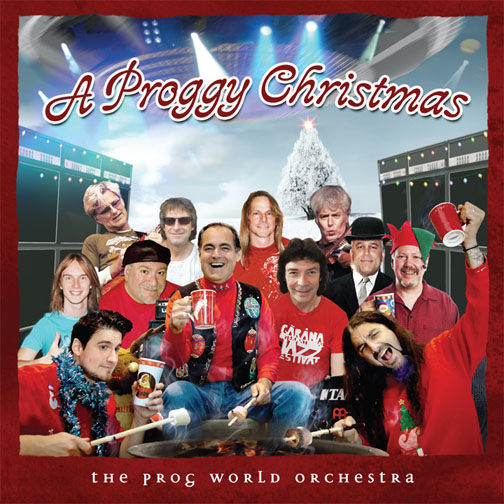
Neal Morse/A Proggy Christmas

Review of Neal Morse/Prog World Orchestra, A Very Proggy Christmas (Radiant Records, November 20, 2012)

Every Thanksgiving night, we watch “Home Alone,” knowing perfectly well how successful Kevin’s antics will be.  This little ritual of laughs inaugurates the annual Christmas season for the Birzers.

From that showing of Home Alone until the arrival of the Three Wise Men on Epiphany, we celebrate the season of Christmas rather vigorously in our house.  Though we don’t put up the tree until the 24th of December, we certainly let the house ring with festive music–operatic, pop, classical, jazz, and rock.  Indeed, such music plays almost the entire season.

I must admit, I’m a big fan of Christmas albums.  There’s something about such familiar and comforting music being reworked in some kind of new fashion that almost always hits me in particular but probably predictable ways.

I am always especially impressed with artists who rework these Christmas classics, knowing that their songs will be judged by enduring and relatively rigorous standings.  In particular, I especially enjoy the Christmas music of George Winston, Vince Garibaldi, Sixpence None the Richer, Sarah McLachlan, and Loreena McKennitt.

This year, joining this impressive list is Neal Morse’s Christmas band, “Prog World Orchestra.”  Arriving on November 20 (Tuesday, a week from tomorrow) from one of the finest record labels around (Radiant), “A Proggy Christmas” offers a wonderful take on a number of holiday classics.  Not surprisingly–as this comes from the mind of Mr. Progressive himself–the production is rigorous, the music is serious but tinged with Morse’s humor, and a number of pleasant surprises await the listener.

The name of the group, “Prog World Orchestra,” is appropriate.  All of the members of Transatlantic (Portnoy, Trewavas, and Stolt), Steve Hackett, Steve Morse, and Randy George.  Portnoy is even “The Little Drummer Boy”!  Jerry Guidroz does his usual extraordinary mixing and engineering.

Songs include “Joy to the World,” “O Holy Night,” “Hark! The Angels Sing,” “Carol of the Bells,” and the aptly named “Shred Ride.”

While I’m thoroughly enjoying the entire album (breaking my rule of not listening to Christmas music until Thanksgiving), my favorite track is “Frankincense,” an absolutely brilliant collision of Edgar Winters and “Deck the Halls.”  I can’t help but smile for all 3 minutes and 53 seconds of the song.  I would love to know the story behind this song–especially how Morse came up with it.

The video featuring a rough-and-tumble Santa (is that Portnoy dressed as St. Nick?) fighting a mischievous Frankenstein is pretty great as well.  My kids and I have enjoyed watching it on Youtube several times.  

My second favorite track is Morse’s rendition of “Carol of the Bells,” perhaps the most purely prog song on the album.  At almost eight minutes long, keyboard solos abound.

As I listen to this song, I can help but be reminded of Kevin running to his home after the conversation with the “South Bend Shovel Slayer” in the church in his neighborhood.  The clock tower bells are tolling nine.

Please don’t get the image that this album is in any way sacrilegious, as I’m afraid some of my above descriptions might very well seem to make it.  The music is certainly playful, but it’s never in bad taste.  Not in the least.  This is Neal Morse, after all.  Neither, though, is the album as a whole evangelical in the sense that, say, Morse’s excellent “God Won’t Give Up” is.  Perhaps the closest Morse gets to evangelical is in his delivery of the traditional lyrics of “Hark! The Angels Sing.”  Of course, if this song can’t be pro-Christian and evangelical, no Christmas song can!

Again, the album is done in good and respectful taste, but with definite prog and metal arrangements.  There’s an equal amount of jazz, pop, and big band in here as well.

If you have even the slightest love of prog (and, you probably wouldn’t be reading this unless you do), “A Proggy Christmas” is a must own.  Even if you only pull “A Proggy Christmas” out with your other Christmas albums once a year, it’s still a must own.

My guess is that even non-proggers will immensely enjoy Morse’s take on Christmas as well.  Remember how wildly popular the Mannheim Steamroller/Fresh Aire Christmas albums were in the 1980s?  Some of Morse’s arrangements have that same feel, but “A Proggy Christmas” is much, much better.  The same is true, of course, of the Jethro Tull Christmas album.  Still, Morse’s is better.  This album might even be a great way to introduce a non-progger to prog.

Arranging and recording these ten Christmas classics, Morse’s efforts reveal how much more can be done.  Here’s hoping the Yuletide spirit possesses Morse for years to come.  Take my advice.  Run–don’t walk–to the Radiant Records store and treat yourself to a copy in preparation for Thanksgiving, Advent, Christmas, and Epiphany.

Merry Christmas, Neal.

From Prog Magazine.

Prog Dog 6 with Geoff Banks

Dear Progarchists, fabulous dj (despite what he says about himself!) and prog master, Geoff Banks, has a weekly radio-internet show called the Prog Dog show.  I’ve thoroughly enjoyed his program over the last several weeks.  For those of us in EST, it begins at 2pm.

http://myradiostream.com/progdog

His own description of today’s show: “Join me for 2 hrs of scintillating music courtesy of IQ, The Plastic People Of The Universe, Thomas Dolby, Siddhartha, PFM, Public Image, Hatfield and The North, Hawkwind, FPOA, Pink Floyd, Sigur Ros and much much more.”

At the same website as the stream, you can also join in the chat room, upper right corner of the screen.  Banks and followers are as witty as they are knowledgable.  Enjoy!