The Divine Ascension of The Fierce and the Dead


While the varied Progarchists have every right to be as critical as each so desires about music, books about music, art, etc. on this site (after all, a world that seeks conformity is already a dead and failing world), I will freely admit my profound if not also extreme fanboy love for several current acts: Big Big Train, Neal Morse, Gazpacho, The Reasoning, Cosmograf, Tin Spirits, The Flower Kings, The Pineapple Thief, and Arjen A. Luccasen.


I happily add older (meaning pre-1992) acts such as Rush, Talk Talk, and The Cure to this list.


Catching up quickly for me: IZZ, Coralspin, and Roswell Six.


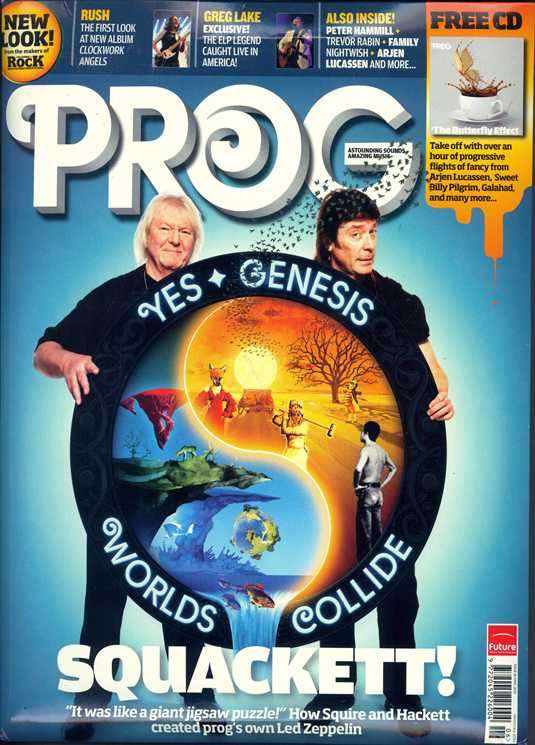
But, certainly among the best of the best stands The Fierce and the Dead and every project (solo or otherwise) of Matt Stevens.  Prog magazine recently promoted Stevens as a future “prog god.”  I would declare him, happily, already a member of the pantheon.  But, of course, I remain a mere priest, having no power to change the inner workings of the heavens, only to declare who resides there!


I originally wrote the following article last May.  If I changed it,I would only more descriptives and more praise of Matt.  Happily, in the last several months, I’ve gotten to know Matt through correspondence a bit.  I can assure the readers of Progarchy that Matt is every bit as kind and witty as he is piercingly talented.


Rumors from good sources abound that The Fierce and the Dead might make their way to North America in 2013.  I can guarantee Matt, Kevin, Stuart, and Steve that Progarchy will do whatever it can to promote them to every North American possible.  The New World not only welcomes you, Matt, it beckons with fulsome praise.


***


About a year ago, Facebook recommended that I “like” a progressive rock band called “The Fierce and the Dead.”  Rarely do I follow such suggestions.  A few months ago, I liked “Jesus,” then I had to defriend him, as the relationship got awkward very quickly.  This Jesus kept claiming the words of St. Paul or St. James as his own, and I began to doubt this Jesus as a being of high moral character.  Where I teach, a student can plagiarize twice before being set adrift, permanently, from the school.  I actually gave this Jesus three chances.  Then, he was gone.


Well, anyway, you get the drift.


But, when FB asked me to “like” The Fierce and the Dead, I did so out of curiosity.  I immediately loved the name.  The Fierce and the Dead (TFATD) reminded me of my saying the Creed throughout my life: “He shall come again to judge the quick and the dead,” a personal favorite use of language.  I also thought of my hero Sam Gamgee, wielding the elven blade Sting against Shelob: no onslaught more fierce was ever seen, Tolkien wrote.  Two wonderful associations for me.  Whether the members of TFATD had either of these things in mind when coming up with the band name, I have no idea.  They might not have  a religious inkling in their blood.  They might not even like Sam Gamgee!


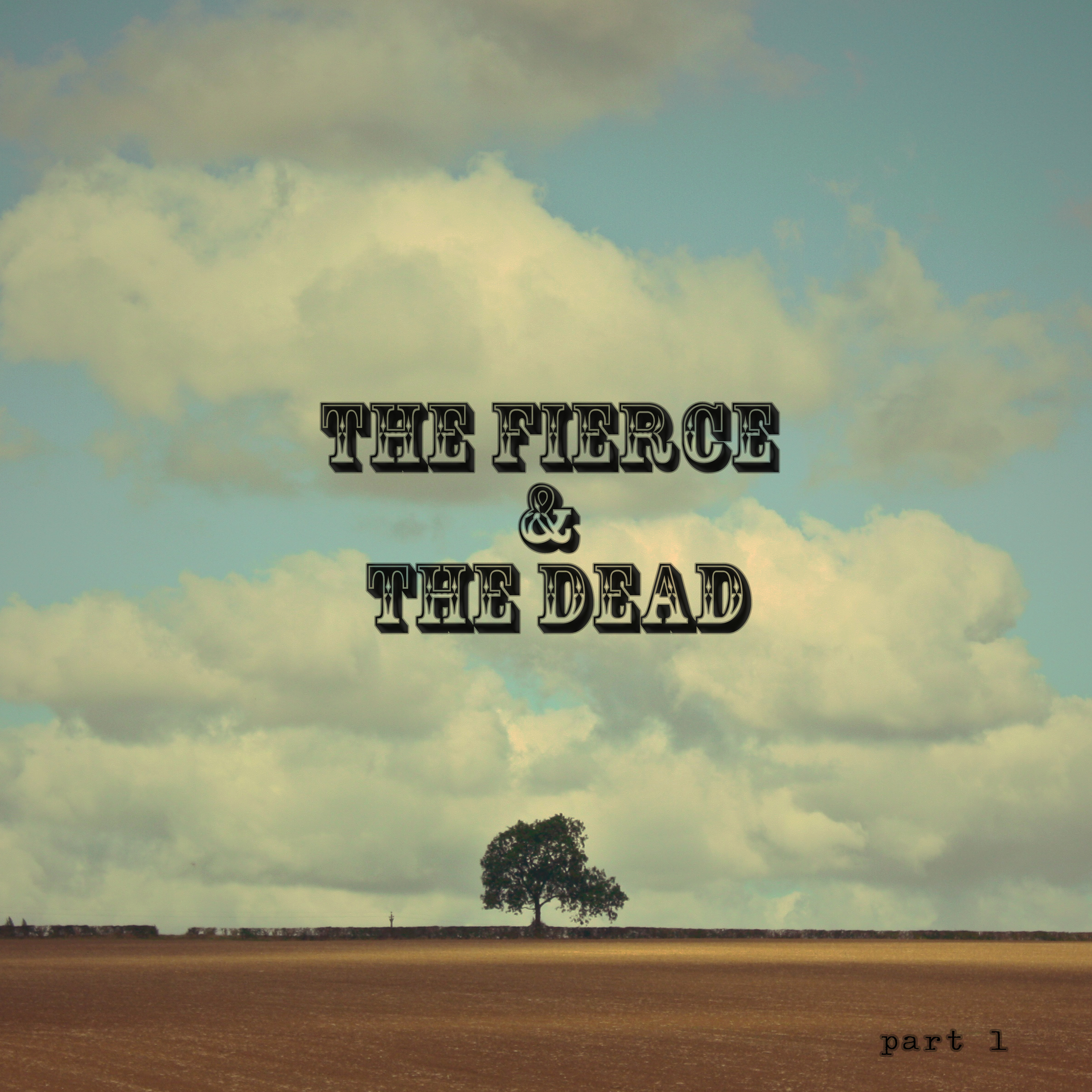
The picture associated with the group on FB was an image of a lone tree out in the plains.  It could’ve been taken anywhere near where I grew up.  It might be a hanging tree.  Regardless, at the moment I saw the picture, I’d assumed they were from my neck of the non-woods, somewhere near Kansas.  As it turned out, I was off by several 1,000 miles.


Most importantly, the song, “Part I,” was a song out of a dream.  Nineteen minutes of prog bliss–soaring, circling, hovering, and spacey guitars, moods and moods and moods, steady, hypnotic drumming, more moods, an aggressively supportive bass, and still more moodiness.  I have no idea how many times I’ve listened to the song over the past twelves months, but I’ve never grown tired of it, and it continues to reveal new things to me with each listen.


“Part I” is also just really inspiring.  From this first song, the listener knows this band is out for art–real art–not commercialized and superficial art, but true and good and beautiful art.


Needless to write, from the name to the music, I was immediately taken with TFATD, and I knew that relationship would continue no matter what the band released.


I then found out that the leader of the band, Matt Stevens, was not only equally talented and gifted on his own, but that–through FB and Twitter–he was an incredibly nice, intelligent, and witty guy.  Indeed, I’ve not only heard his playing, but I’ve seen his prose writing.  I’ve also read his commentaries on commerce, art, and the unholy alliances that often go on in the music world.  From everything I’ve seen, the man is terribly gifted!  He’s also loaded with integrity, and, as a father and husband, he worries about being able to support his family.  Yet, if I can be religious for a moment (not in the mocking way up above with FB Jesus), Matt Stevens was meant to be a guitarist and produce some of the most interesting art of our times.  Yes, he was MEANT to do this.


I now proudly own the first three solo albums Matt made: “Echo,” “Ghost,” and “Relic.”  Each is quite profound, variegated, and eccentric.


The first proper TFATD LP, “If it carries on like this. . .” is less spacey than the “Part 1,” but equally good.  The more I listen to it, the more I think this must be some kind of supergroup.  Imagine Robert Fripp and David Gilmour on guitar, Geddy Lee on bass, and Mike Joyce (from The Smiths) on drums.  That’s what “If it carries on. . .” seems to be.  A prog/post-New Wave supergroup, but without the pretensions of most supergroups.  Needless to write, these four members of TFATD–Matt Stevens, Kevin Feazy, Stuart Marshall, and Steve Cleaton–play as one very tight unit.


Brilliantly so.


In the last several months, TFATD released a new EP, “On VHS,” an excellent successor to their previous releases.  Just as punctuated in its energy, “On VHS” hits the listener with a meaningful intensity from the first listen.  While it’s obvious that these are the same guys who did everything else under the TFATD name, it’s equally obvious they want to keep their music moving in new directions.  In this sense, they are progressive at that noble term’s best.


As the name of the title of the opening track, Six Six Six.Six, suggests, the introduction is deceptively spacey.  For a few moments, the listener might well imagine a sequel to “Part I.”  That spacey-ness ends as quickly as it begins, and the song drives deep into the eternal; guitars, drums, and bass each drilling with a logical madness toward some uncertain and illogical end.  It is madness, but it is Ken Kesey-type of madness,  appreciated and respected and perhaps more real than what we see around us at any moment of our lives.


The second song, “Hawaii,” is nearly as driving as the first track.  While there’s an element of progressive surf music in this, the song is beautiful in its execution.  This seems the most King Crimsonish of the songs (not that it’s in any way derivative; it’s original.  Frankly, I can’t imagine Matt and gang doing anything that didn’t have meaning in and of itself).


The third song, “On VHS,” is probably my favorite of the EP (and, this is saying a lot, for all of the songs are excellent).  While there’s still a King Crimsonish feel on the guitar work, the rest of the band could be playing a really great Smith’s instrumental.  Indeed, the whole song feels a bit like a progressive version of a post-New Wave song by the likes of Echo and the Bunnymen or Simple Minds (before they went bad).
 

The final original song, “Part 3” is the longest on the LP.  Grumbling bass becomes spacey and, at times, soaring guitar, awash in colors of sound.  The drums hold everything together, as the listener floats and drifts away before a real determination emerges about two minutes into the song.  As this point, I feel I could be enjoying a Tin Spirits song.  There’s an American Western kind of feel to the middle section, especially.  That is, I can envision Clint Eastwood or John Wayne slowly coming to the conclusion that justice must prevail.  At a bit past the midpoint of the song, justice now rages, and evil is being taken out.  The EP concludes with an immensely satisfying feeling of truth and goodness prevailing.


While I’m merely guessing, I would assume this final song is meant to be a sequel of some kind to “Part 1.” [And, yes, it is: Parts I, II, and III).


For those reading this review, I hope you’ll forgive me for the comparisons to other groups.  TFATD is definitely its own band, and I can’t imagine them any other way.  Their TFATD-ness is a huge part of what makes them lovable.  It’s also what make the listener (dare I say the fan?) want to support them in anyway possible.


Matt and Co., please keep fighting the good fight for art with meaning and integrity.  I’m already eagerly awaiting the followup.
 

DPRP: Interview with Edgar Froese of Tangerine Dream

Excellent interview at DPRP.net with Tangerine Dream’s Edgar Froese.

http://www.dprp.net/wp/interviews/?page_id=3212

Enjoy.

Dancing About Architecture

Some of you reading this might be old enough to remember that the actor Steve Martin also made a name for himself as a stand-up comic, releasing two albums of stand-up in the late 1970’s.  On one of those albums, Martin remarked that “talking about music is like dancing about architecture.”  Martin may indeed be a wild and crazy guy, but I must respectfully disagree with him.  After all, what would we be doing here on a blog dedicated to progressive rock if we agreed with him?  Are we not here to have a conversation about prog (and other music as well)?  The only difference is that our conversation here is not in real time, but instead is conducted through the written word.  This brings me to the main topic of this post: books about prog.

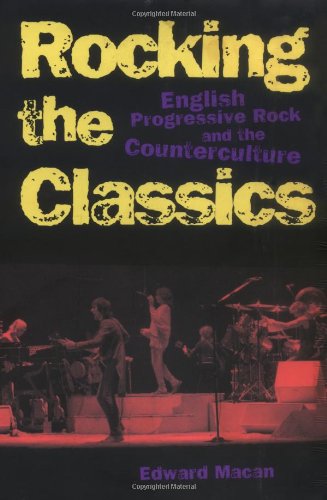
My hands-down favorite progressive rock book is ‘Rocking the Classics’ by Edward Macan.  In my opinion, this is a must-read for any dedicated progressive rock fan.  Make no mistake about it though, this is not a fan-boy book, this is a serious critical study of prog.

What is best about Macan’s book is that he treats progressive rock as serious art – in other words, as it should be.  Macan takes an academic point of view in his study of prog, and views it from several different angles – the music itself, the lyrics, the visuals (both album artwork as well as live presentation), and the culture that gave rise to the initial wave of prog.  A more in-depth study of four different works of prog – ELP’s Tarkus, Yes’ Close to the Edge, Genesis’ Firth of Fifth, and Pink Floyd’s Wish You Were Here (the entire album) is also provided.

Finally, Macan delves into related styles, the sociology of prog’s fan base, the critical reception of prog, and closes with a discussion of prog after 1976, as the first wave subsided.  I particularly enjoyed his dissecting of the critics of prog, as I always found it ironic that they, of all people, were labeling prog as pretentious.  As the old saying goes, projection ain’t just a river in Egypt … (it seems I might have garbled the translation here).

My only quibble is that Macan seems to believe that prog had played itself out following the advent of Discipline-era King Crimson and the neo-prog movement of the 80’s.  Perhaps he can be forgiven though, since the internet was relatively new then, and thus like many of us, he was not aware that we were on the cusp of a second and more enduring golden age of prog.  All things considered though, I cannot recommend this book strongly enough to those of you who haven’t read it.

On a different level, there is ‘The Progressive Rock Files’ by Jerry Lucky.  This book is more of a mini-encyclopedia of prog up to the time of its publication (in the case of my copy, 1998, when the fourth edition was published).  Lucky’s book includes a history, discussion of the definition of prog, a discussion of the critics, and then brings the reader up to date (or at least up to 1998!) with the goings-on of prog.  That chapter, along with the listing of prog bands that follows, was the first realization for me that prog wasn’t dead but was actually alive and thriving, if one knew where to look.

Bill Martin’s ‘Music of Yes’ is a book with which I have a love-hate relationship.  The love part is the analysis of Yes music, with its particular focus on ‘the main sequence’ of Yes – ‘The Yes Album’ through ‘Going for the One’.  This is the period where Yes really made their name as one of the leading lights of the first golden age of prog, and thus Martin’s focus on this area is well justified.  The hate part?  Martin far too often lets his own politics work its way into the discussion, and it becomes very annoying.  Agree or disagree with his views, it seems that their insertion into the discussion is often contrived, and where it occurs, it really takes away from the discussion.

Finally (if you’ve made it this far), there is ‘Pink Floyd and Philosophy’.  I am a sucker for the pop culture and philosophy books from two different publishers (Wiley and Open Court Books) – particularly when it a band like Pink Floyd is the focal point (As a quick aside, there is a ‘Rush and Philosophy’ out there now – has anyone picked up a copy yet?).  For those unfamiliar with these books, they are divided into a series of essays, usually about 15-20 or so, by different authors.  While not every essay is a good one, many are more than worth the time and will make you do the same thing that listening to prog does – think.  Among the essays included ‘Pink Floyd and Philosophy’ includes a series on the topic of alienation – a theme that runs through the lyrics of most of Pink Floyd’s work in the 70’s.  That section alone makes it well worth the price of admission.

There are a number of other prog books out there that I haven’t read, including the aforementioned ‘Rush and Philosophy’, ‘Progressive Rock Reconsidered’, and “Beyond and Before – Progressive Rock since the 1960’s.  If any of you reading this have suggestions, you would be doing many of us a great service if you were to further this discussion in the comments.

Did you make it this far?  If so, let’s go put some Frank Lloyd Wright on the stereo and hit the dance floor.

Mini-review: Radiohead, “Kid A”

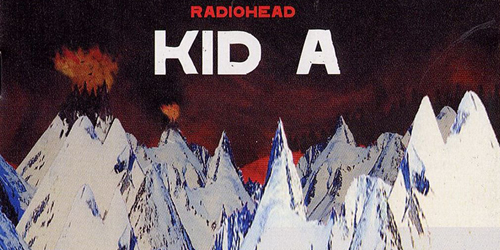
ImageRadiohead, Kid A (2000).  While I don’t worship at the altar of Radiohead or Thom Yorke, I very much appreciate them.  While Ok, Computer did a wonderful job of bringing a 1990s feel to 70s Alan Parsons and other proggish-bands of the mid 1970s, Kid A offered something radically new and mesmerizing in the world of music.  Intense lyrics about the problems of post modernity and scientism only add to the haunted and haunting quality of the album.  Though Ok, Computer has better moments, punctuating the imitative proginess of two decades earlier, Kid A has no flaws as it explores a fascinating new realm of bleak soundscapes.  The lyrics of Kid A, however, remain unimportant, ultimately, as Thom Yorke’s voice serves as another instrument on the album.  The producer, Nigel Godrich, deserves credit for being an equal member of the band.  The opening track, “Everything in its right place,” sums up the production, the album, and its place in history.  A masterpiece.

High praise from a brilliant man, Blake McQueen

From Blake McQueen of prog outfit and class act, Coralspin:

Progarchy is a new US prog site that’s made a big splash already in only a few days of existence. This is not surprising as it’s headed up by that indefatigable trailblazer for modern prog (especially British modern prog) Brad Birzer. There’s even a review there of us…

http://coralspin.com/2012/10/16/progarchy/

Thanks, Blake!  I’m eager to tell my students about the trailblazer part.

Inheriting Fine Words

Image[I sent this to PROG magazine last May; sadly, the magazine chose not to print it.  So, here it is, now safely lodged at Progarchy.–Brad]

May 24, 2012

Dear PROG,

Kudos for yet another brilliant issue (#26). I’m amazed and inspired by the sustained excellence in writing, photography, graphics, and layout. I even like the ads. Every thing in its right place and always accomplished with characteristic British taste, intelligence, and wit.

Having listened to progressive rock for four decades, I am firmly convinced that we are now living in the glory days, built upon the traditions and experiments of the past. Raised on a healthy diet of lyrics by Neil Peart and Mark Hollis, I’m especially taken with the quality of lyric writing in recent years. How can we listen to Big Big Train’s “Underfall Yard,” Gazpacho’s “Dream of Stone,” or Tin Spirits’ “Broken” and not realize that these artists are the heirs not only of Dvorak, Brubeck, and Davis, but also of Coleridge, Wilde, and Eliot?

Yours, Brad Birzer (Hillsdale, Michigan, USA)

First uses of “Progressive Rock” in English

ImageAmerican music critics rejected the progressive rock genre as pretentious and over-the-top, a regression of culture, almost from its very beginnings.

Though “progressive jazz” had been used as a term of approbation of and for non-trendy, non-danceable jazz since the late 1920s, the term “progressive rock” saw print only for the first time in the English language (and, I presume, anywhere) in 1968 in the Chicago Tribune.  This first mention of prog carried no deep disgust or glorious praise, just a simple and descriptive recognition that this was not regular pop or rock.

In the fall of the same year, the New York Times (August 4 issue date) lamented that by making “the leap from sewer to salon, pop music has ceased to be an adventure.”

While certainly “ musically advanced,” the Times continued, progressive rock had made its art “emotionally barren.”  Even the most intellectual of critics, the paper continued, could see that the “new, cerebral audience has endangered that raw vitality” of rock.

A few months later, the Times (November 24 issue date) again proclaimed that the “rock hero (who is almost always a social outcast)” should be nothing less than “a liberator in musician’s drag.  His sexual display in the face of institutionalized repression becomes an act of rebellion. . . . It is immune to the censorship of ideas because its dialectic is purely rhythmic.  To do away with revolution in rock, one would have to ban the music itself in its nature as a charged version of blues.”

Music and Me

Me, sophomore year of college, fall 1987.

A few days ago, Progarchist and classical philosopher Chris Morrissey asked about our first introductions to music.

The youngest of three boys, born in the summer of love (September 6, 1967—only 3 months and five days after the release of “Sgt. Pepper’s Lonely Hearts Club Band” by the Beatles), and coming of age in the late 1970s and early 1980s, I grew up on progressive rock: Yes, Kansas, Genesis, and the Moody Blues.  We faithfully shunned the 3-minute pop format and we sought mightily the 20- and 30-minute epics of European (usually liturgically derived) symphonic music with rock instrumentation and bizarre time signatures.

I remember hearing lots of longish, prog songs as early as 1971 or 1972.  Though I’ve never played an instrument with any degree of passion, I’m assured by my mom and two older brothers that I was obsessed with music even as a toddler.  Somehow, I figured out how to crawl out of my crib and down the stairs to the family stereo.  Even as a one-year old, I would wake the entire household up, blaring the Banana Splits or Snoopy and the Red Baron at 3 in the morning.

My first great awakening came, though, from seeing the sleeves of YesSongs.  I spent hours trying to figure out how the animals made it from one floating island to the next.  And, I’ll never forget the first time I played side one of YesSongs—I was overwhelmed by the depth and complexity of it.

As is now well recognized, the prog lyrics as well as the cover art tended to be fantastic, pretentious, overblown, and theological.  There have even been some interesting scholarly articles about progressive rock thriving in the western and midwestern states of America, mostly among middle-class, conservative kids.  And, of course, we, with great confidence, derided disco and top-40 music through junior high, high school, and college.  Disco and top-40 music, as we understood it, were decadent and vacuous.  As far as we were concerned, progressive rock artists (and some New Wavers) were the only real musicians outside of the classical and jazz world.

In many ways, progressive rock helped define my own childhood and teenage years.  I will never forget seeing abolitionist John Brown on the cover of a 1974 Kansas album (it sparked all kinds of historical questions re: Kansas, abolitionism, and the American Civil War); hearing Pink Floyd’s “The Wall” at the University of Notre Dame in the fall of 1979; being introduced to Rush’s 1981 “Moving Pictures” in the Liberty Junior High School library in Hutchinson, Kansas; or listening to Yes’s “Fragile” over and over again and trying to figure out the “deep” meaning of the lyrics.  In high school, I worked as on overnight D.J. at a local rock station (KWHK), which doesn’t exist anymore.  And, while in college at Notre Dame, I had a Friday-night progressive rock show (WSND) my junior and senior years, often playing two hour blocks of Rush or other groups.

As powerful as any of the albums just mentioned, though, was my first listen to Talk Talk’s Colour of Spring in the spring of 1987 and, even more so, my first listen to Talk Talk’s Spirit of Eden in September 1988.

My comrade in arms in college was the singer of the most popular band on campus, St. Paul and the Martyrs.  They even opened for Phish when Phish played on campus, spring 1990.  The leader singer, Kevin McCormick, even became my oldest son’s godfather!  Now, he’s a well-known classical guitarist and even a Progarchist.

But, I’ll never forget the two of us listening to Spirit of Eden for the first time.  We were just stunned and in complete silence as we explored every note and every silence of the album.

Having turned 13 in the autumn of 1980, I also, of course, grew up with New Wave: Thomas Dolby, Kate Bush, The Police, The Cure, Oingo Boingo, XTC, Siouxie and the Banshees, and Echo and the Bunnymen.  Over the Wall!

Our local Kansas radio station—KWHK—had briefly been formatted for New Wave, so I was able to get every new album sent by the record labels.  The one that hit me hardest was XTC’s Skylarking.

My college radio show at Notre Dame focused on progressive rock, as mentioned above, but I threw in a lot of New Wave.  New Wave just seemed the more radio-friendly version of progressive rock.  And, by the early 1980s, progressive rock seemed to have run its course.  Could Asia really claim to be the successor of Yes?  Or, could Genesis without Peter Gabriel or Steve Hackett really be Genesis?  We answered with a resounding “no.”  That left us with New Wave.

After all, in 1990, we still had a few years before Dream Theater and Spock’s Beard re-introduced—in the states—a new wave of Progressive Rock.

A quarter of a century later, I realize that music took on religious significance for me and my friends.  Those who embraced disco, pop, or top 40 music were heretics, and we supporters of progressive rock were the orthodox.

***

A year or so ago, some former students asked me to write about my listening tastes in the 1980s.  Here’s what I wrote for them:

High School was a long time ago for me, but I still remember it well.  During the summers, I had one of the best jobs in the world–I was a DJ at our local AM-station, KWHK.  Not only did I DJ, but I also got to write and produce commercials, and I served as a liaison between the sheriff’s department and the National Weather Service.  I grew up in central Kansas, so we had tornados and tornado warnings quite frequently.  Great job.  I’ve also been into collecting music (mostly progressive and alternative rock, some jazz, and a bit of classical) since second grade.  I started young, and, for better or worse, I’ve never stopped.  My kids (13 and under) can name bassists, singers, and drummers of the major progressive bands.  And, yes, I’m proud of them.

Freshman year of high school, 1982-1983.  It was freshman year that I really discovered New Wave.  I had been listening, almost exclusively, to progressive rock and what’s now called classic rock during the 1970s and earliest part of the 1980s.  The father of a friend of mine owned a record store, and we were introduced to all kinds of music through the store in 9th grade.  In particular, I listened to Thomas Dolby’s Golden Age of Wireless (favorite song: One of Our Submarines is Missing).  I had this on one side of a tape and ABC’s The Lexicon of Love (favorite song: 4 Ever 2 Gether).  Also lots of U2’s War (favorite song: Sunday Bloody Sunday).  Progressive Rock was never far from my heart, and I listened to Rush’s Signals (favorite song: Subdivisions) pretty much non-stop, Peter Gabriel’s IV (favorite song: Lay Your Hands on Me), and Roxy Music’s Avalon (favorite song: Take a Chance with Me).

Sophomore year of high school, 1983-1984.  This was a huge year for music.  Genesis released their self-titled album (favorite song: Home by the Sea, Parts I and II); the Police released Synchronicity (favorite song: Synchronicity II); and Yes released 90125 (favorite song: Cinema).

Junior year, 1984-1985.  Rush’s Grace under Pressure (favorite song: Between the Wheels) dominated every other album that year.  Frankly, this was THE album.  If I had to name a favorite album of high school, this would be it.  My sophomore year in college, I wrote a paper using only the lyrics from the album.  I even got an A.  I also listened a lot to The Smiths’ Hatful of Hollow (favorite song: Please, Please, Please), Oingo Boingo’s Dead Man’s Party (favorite song: same as title), and Thomas Dolby’s second album, The Flat Earth (Favorite song: same as title).

Senior year, 1985-1986.  Another great year for music, but mostly for former proggers going pop.  Albums that year included, at the top of the list: Sting, Dream of the Blue Turtles (favorite song: Fortress Around Your Heart), Peter Gabriel, So (favorite song: In Yours Eyes), Tears for Fears, Songs from the Big Chair (favorite song: Broken), and XTC, Skylarking (favorite song: The Man Who Sailed Around His Soul).  The other album I played constantly was the soundtrack to To Live and Die in LA (a pop band, Wang Chung, playing a very proggy style).  Lots of Kate Bush, Hounds of Love, too (favorite song: Hello Earth).

It wasn’t until my freshman year (1986-1987) of college that I really got into Talk Talk, the Cure, and Echo and the Bunnymen.  I also really liked Blancmange (kind of a really smart Talking Heads) and New Model Army and a few others.  That year, U2 released “The Joshua Tree.”  I’ll never forget sitting in the car with a friend, being about 1/2 through the album and just breaking down (not something I did very often) because of the beautiful intensity of the album.  Crazy.  At the time, I was horrified by RATTLE AND HUM.  Now, I think The Joshua Tree as a whole is really good, not brilliant.  Side two, maybe, is brilliant.  Side one has a brilliant moment–bullet the blue sky.  And, RATTLE AND HUM seems better than it did to me then.

In high school, I also remember listening to some A-ha, B-Movie, b-52s, Erasure, Depeche Mode, and Communards.  I don’t think I would’ve chosen to listen to these groups, but they would’ve been pretty hard to escape then.  I would’ve always preferred something prog–unless we were dancing.  Had an all night party at my house once my senior year when my mom was out of town.  Late, late into the evening, a group of us were trying to analyze a 1977 Genesis concert we’d taped off of PBS!  I’ll never forget that night.  Lots of analyzing Pink Floyd, too.

On The Futility of Genres

OK, confession time. After seeing this admission, you might decide to stop reading, thinking that I’m a little odd (and in that you’d probably be right). It’s my hope that some of you will be kindred spirits. Here goes:

After purchasing digital music from iTunes or Amazon, the very first thing I do, even before my first listen, is to right-click on the downloaded files and delete the genres that have been assigned to them. I do the same thing when ripping a CD; my first move, after CD details have been acquired from Gracenote or some other media identification service, is to delete the genre information.

There, I’ve admitted it. Is that weird? Do you do something similar?

In my case, this behaviour stems from early frustrations with digital music purchases. I would buy some Tangerine Dream and would be baffled by its classification as ‘Dance Music’, or I would download some classic Mike Oldfield and be astounded to see it labelled ‘New Age’. Besides such obvious travesties, I’ve downloaded many tracks where there is genuine ambiguity: a track labelled ‘Pop’ that I would tend to think of as ‘Rock’, or vice versa.

Just what is the difference between ‘Pop’ and ‘Rock’, anyway? I’ve never been clear on that; indeed, I no longer think it is possible to be completely clear on that.

The Amazon/iTunes model of music classification would have us believe that genres are an orderly array of rigid boxes, into which any given piece of music can be neatly placed. As prog fans we know better than anyone how flawed this model is. The boxes, such as they are, are not rigid. Their boundaries are fuzzy, very fuzzy – and these ill-defined boundary zones are precisely where the most interesting and rewarding music is to be found!

It is a familiar problem for any prog fan. Prog, with its tendency towards experimentalism and the effort it makes to draw upon many influences, invariably seems to lie at the intersection of some weird multi-dimensional Venn diagram of genres. And that point of intersection is difficult to pin down, as if a musical version of the Heisenberg uncertainty principle were at work, affecting our observations. The easy way out is just to define prog as its own genre and abandon any attempt to relate it to anything else – but that’s a question I shall explore in another blog post!

In my more facetious moments, I often think that there are only three meaningful genres of music: stuff you like, stuff you don’t like and stuff you haven’t heard yet. Or perhaps Tim Hall (@Kalyr) had it right when he suggested on Twitter and his blog that genres should be regarded as recipe ingredients rather than pigeonholes.

I’m not sure what the answer is, but for now I’m going to keep on deleting.