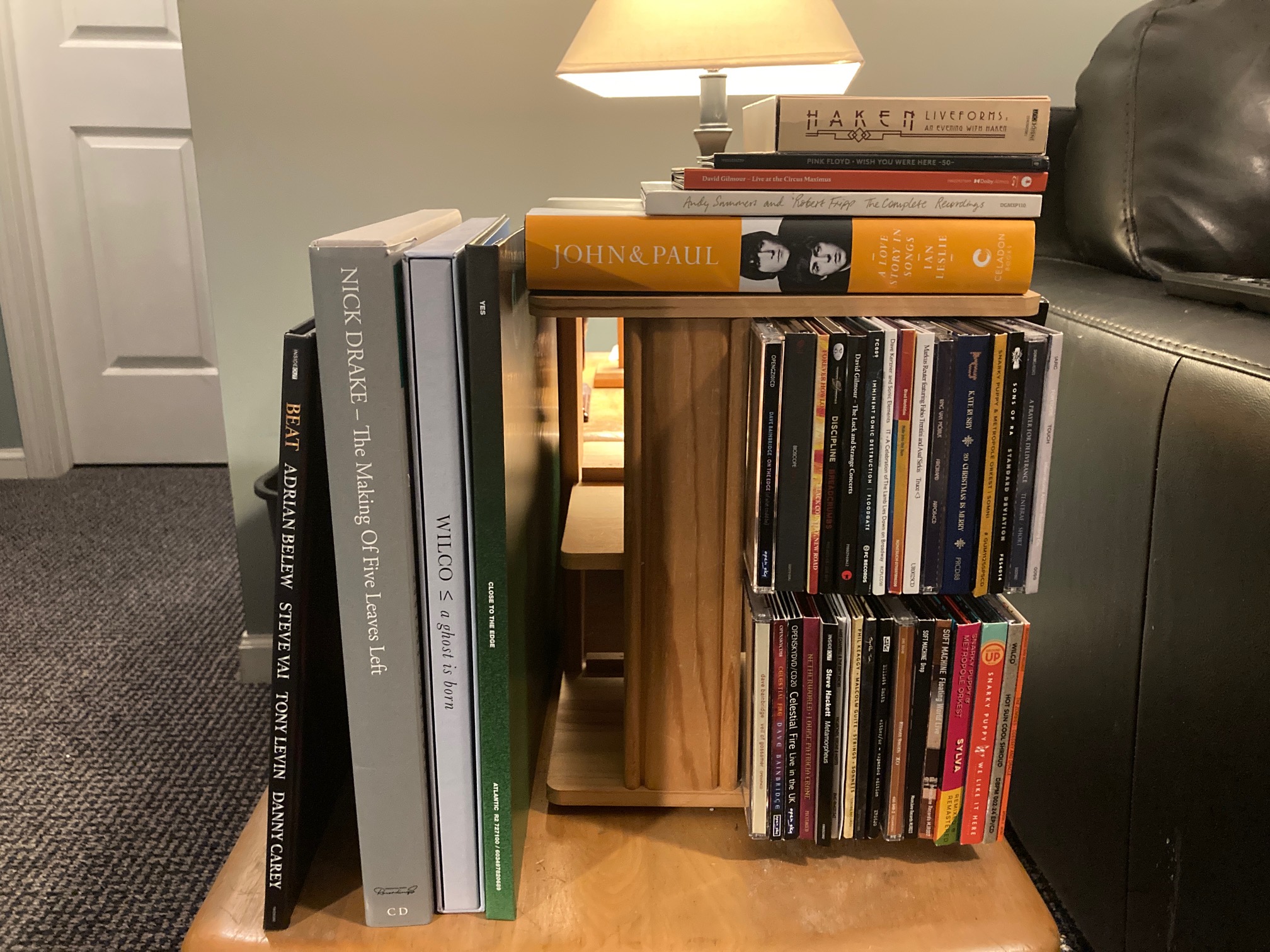
Rick’s Quick Takes: 4th-Quarter ’24 Lightning Round!

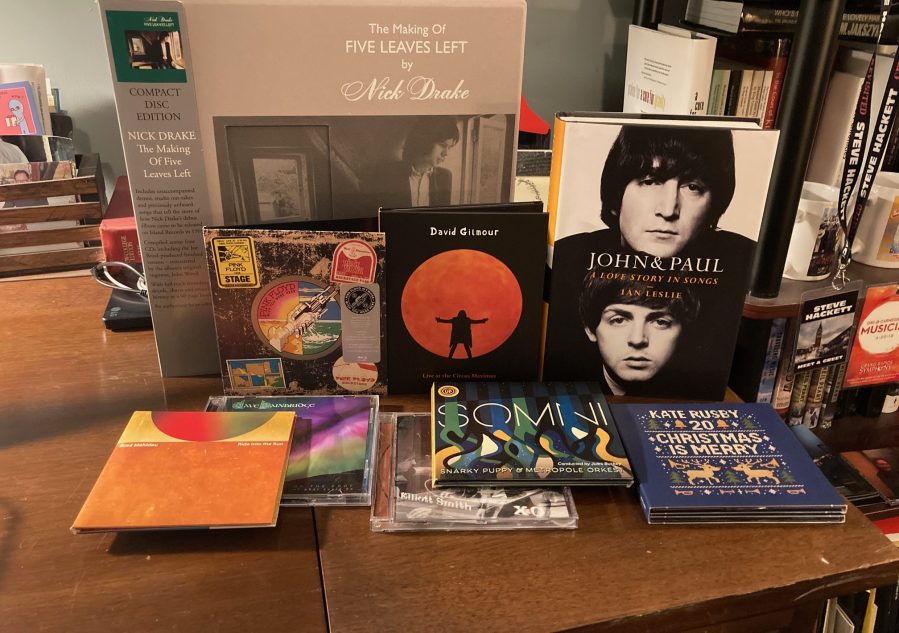
Where have the last two months gone? And how many new releases have I enjoyed in the interim? Enough that I’ll be shooting to summarize each one included below in two to four sentences, max! (Though I can’t guarantee they’ll be short sentences.) Purchase/streaming links embedded as usual, so here we gooo . . .

New Music

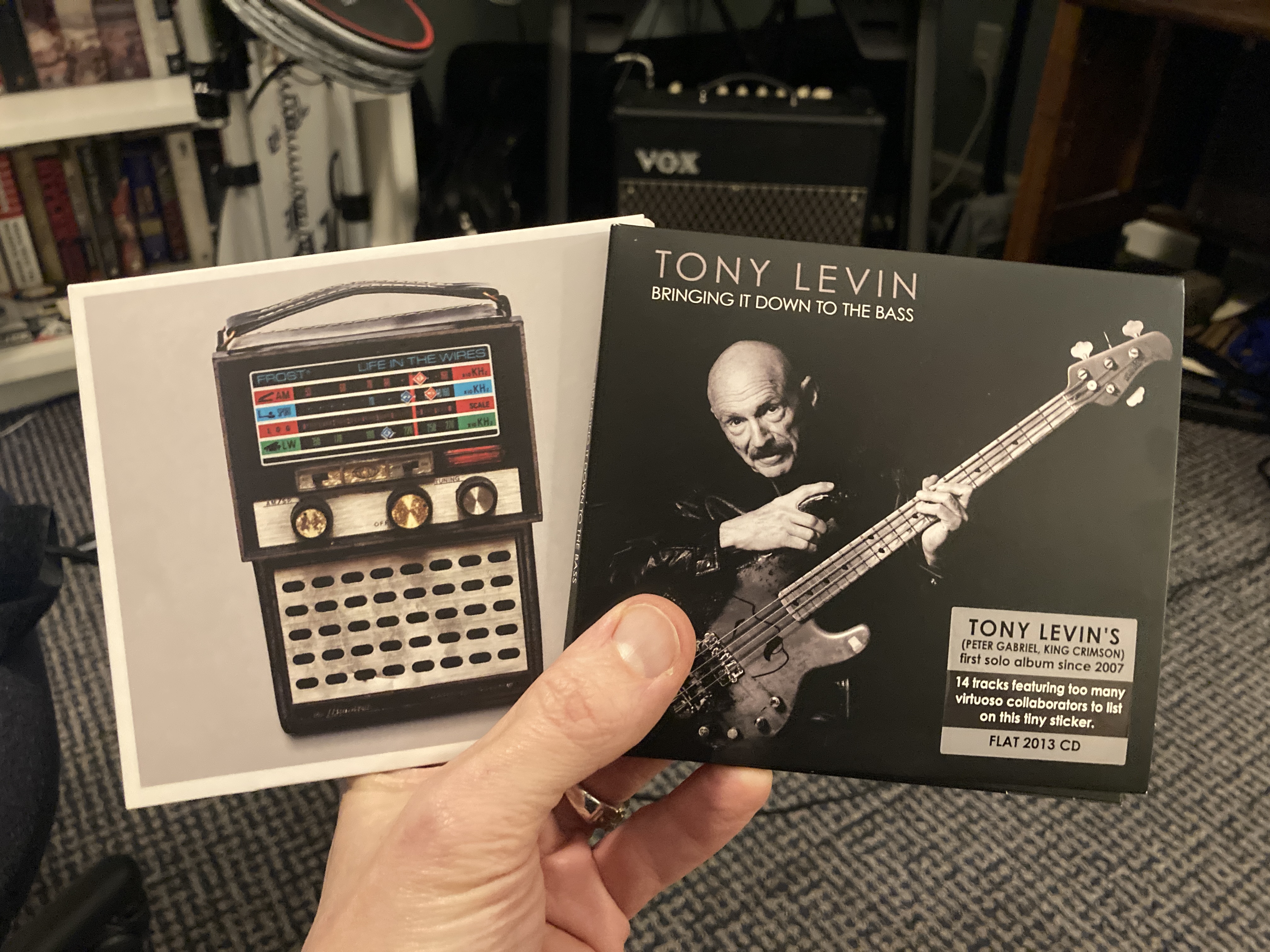
As teased in our October interview with mainman Jem Godfrey, Frost*’s Life in the Wires (listen here) is the conceptual album of a prog fan’s fondest dreams; the storyline is vintage dystopia (1984 meets Who’s Next), the music a full-on sonic assault from the get-go (replete with widdly synthesizer solos). Pitted against the required cybernetic supervillain, in search of freedom out there in the fields, can Godfrey’s protagonist Naio escape permanent lockdown in teenage wasteland? The ultimate answer is well worth the winding journey; powered by the heady backing of John Mitchell, Nathan King and Craig Blundell, Godfrey easily conjures up the equal of previous band high points Milliontown and Falling Satellites.

On his fresh solo album Bringing It Down to the Bass, Tony Levin launches 14 low-end odysseys with (to quote the hype sticker) “too many virtuoso collaborators to list.” But whether proving that “Boston Rocks” with Bowie guitarist Earl Slick and Dream Theater drummer Mike Portnoy, “Floating in Dark Waves” below Robert Fripp’s soundscapes, or reuniting with fellow Peter Gabriel bandmembers on multiple jams, Levin always grabs the ear with his supremely melodic bass, Stick and cello work. And his low-key, half-spoken vocals prove surprisingly effective, especially on dry barbershop throwbacks “Side B/Turn It Over” and “On the Drums” and the moving John Lennon tribute “Fire Cross the Sky.”

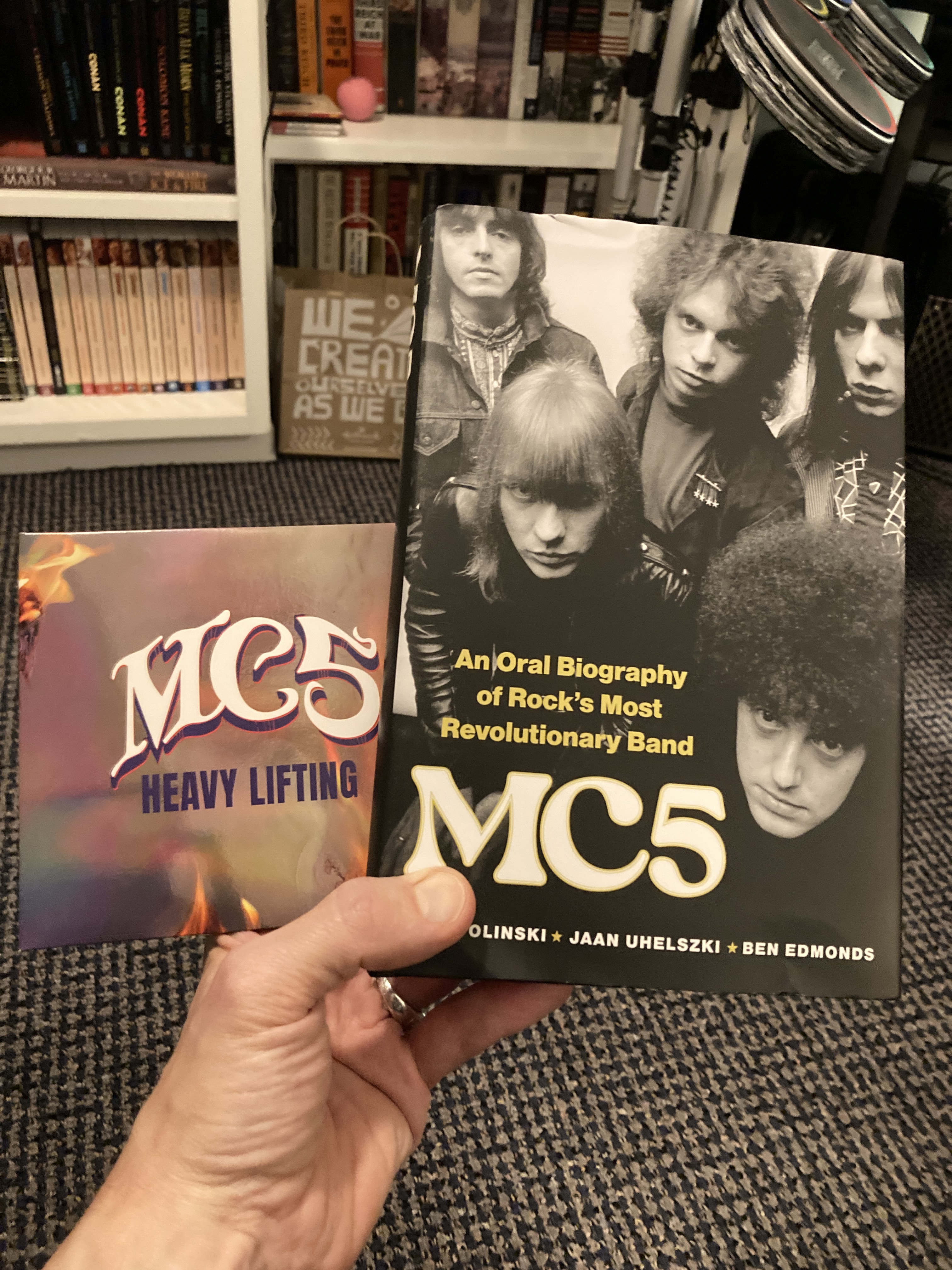
Pioneer garage rock guitarist Wayne Kramer had one more winner in him before his passing earlier this year. Credited in tribute to Kramer’s seminal Detroit collective MC5, Heavy Lifting (listen here) rages against the political and cultural machines still standing since the band’s original heyday, agitating for a better deal with 13 brash, irresistible helpings of punk (“Barbarians at the Gate”), rock (“Edge of the Switchblade”) and soul (Edwin Starr cover “Twenty-Five Miles”). For the full skinny on why Kramer & company finally snuck into the Rock & Roll Hall of Fame through the back door this year, the new MC5: A Oral Biography of Rock’s Most Revolutionary Band is essential reading.

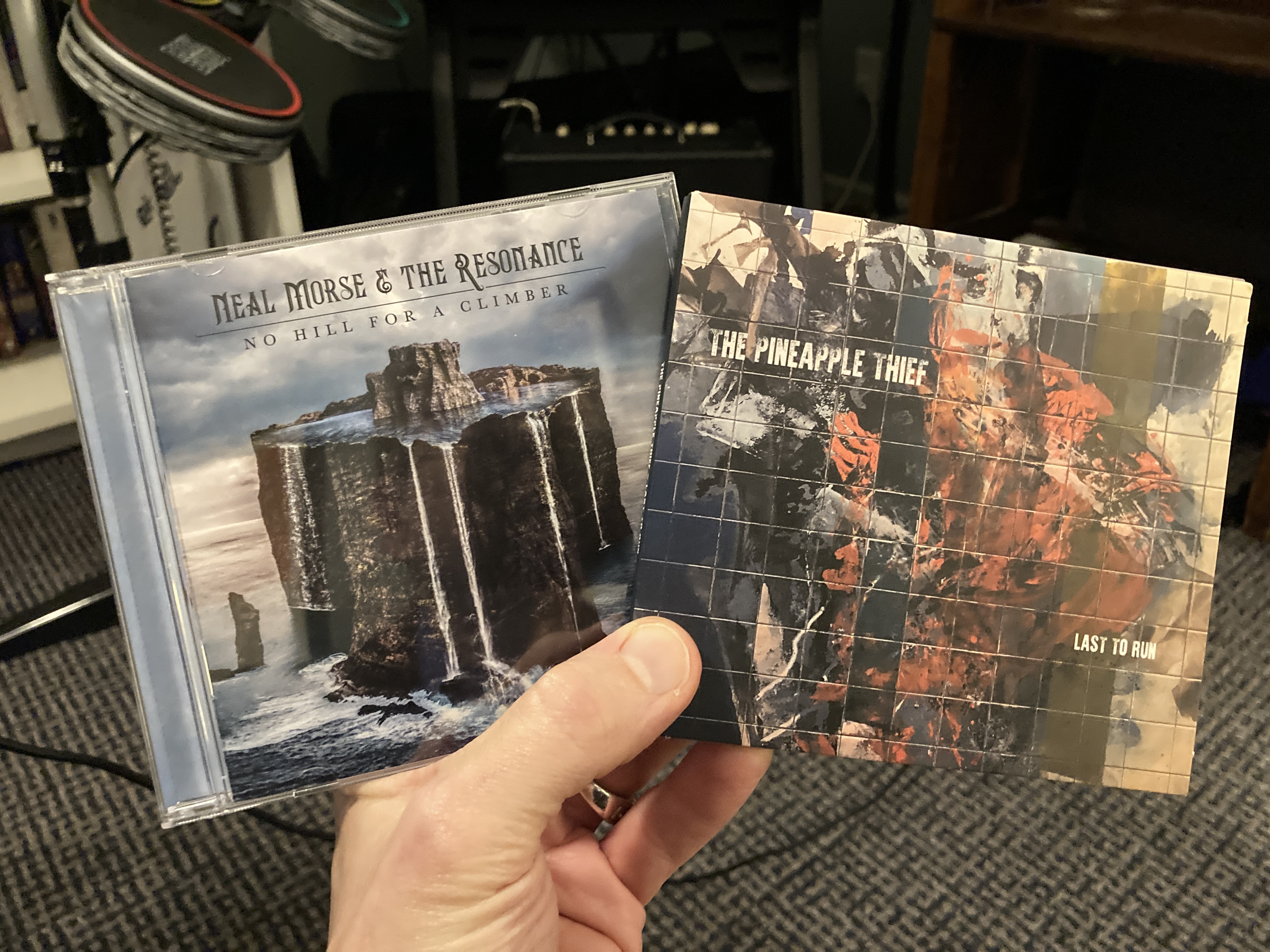
As his long-time collaborators spin off in other directions, Neal Morse just keeps on keeping on! Teaming with The Resonance, a purpose-built quartet of young Nashville hotshots, Morse’s latest No Hill for a Climber (listen here) is a bit of a throwback; instead of full-blown rock opera, Morse builds a multi-faceted album, sandwiching creepy swinger “Thief”, head-down rocker “All the Rage” and melting ballad “Ever Interceding” between twin epics (opener “Eternity in Your Eyes” and the closing title suite). The more straight-on vibe Morse embraced on his Joseph duology predominates here, but with enough detours to keep long-time listeners coming back and intrigue new hearers.

Straight-on is a pretty good description of the new The Pineapple Thief EP Last to Run (listen here) as well; far more than leftovers from the fine It Leads to This, the five songs included here strike hard and deep. As Gavin Harrison weaves enticing rhythmic illusions on drums, Bruce Soord spins up dark, pensive vignettes of personalities in crisis (“All Because of Me”), relationships snarled by dysfunction (“No Friend of Mine”) and societies on the brink (“Election Day”). Another band that mines a familiar vein repeatedly, yet consistently leaves listeners craving more.

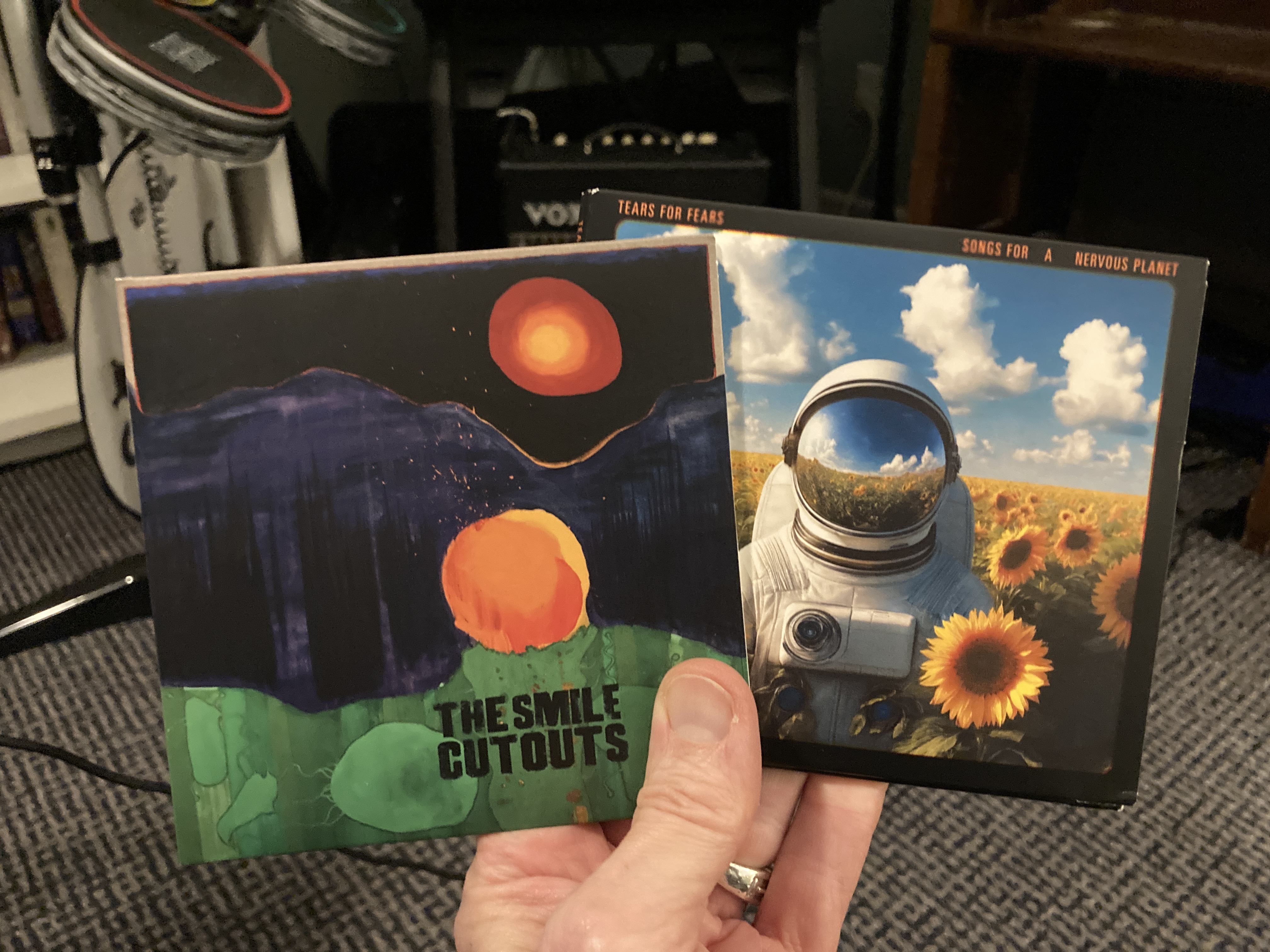
Speaking of dysfunction, The Smile’s Cutouts (listen here) resembles nothing so much as a numbed comedown, trailing the apocalypses unflinchingly depicted earlier this year on their Wall of Eyes. Thom Yorke’s nonsense lyrics and bleached-out vocal affect sound light-years away from the redemption Radiohead intimated even at their most jaundiced; Jonny Greenwood spins up orchestral/electronics, evoking distant, forgotten nightmares; Tom Skinner holds down the spare, spacey beat, blithely driving into nothingness. If not as gripping as this trio’s first two albums, Cutouts can still compel with its chill.

But where The Smile chills, Tears for Fears seeks warmth; the four fresh tracks on TfF’s mostly-live Songs for a Nervous Planet (listen here) home in on healing (“Say Goodbye to Mom and Dad”), lasting love (the lush “The Girl that I Call Home” and the psychedelic “Emily Says”) and self-actualization (the quirkily glib “Astronaut”). And there’s plenty more catharsis in concert, as Roland Orzbaal, Curt Smith and backing band blast out the hits of yesteryear and revisit the highlights of their fine 2022 comeback The Tipping Point, all with plenty of enthusiasm and aplomb.

(Live albums and archival releases – box set time! – follow the jump.)

Continue reading “Rick’s Quick Takes: 4th-Quarter ’24 Lightning Round!”

BEAT In Concert: Elephant Talk for the 21st Century

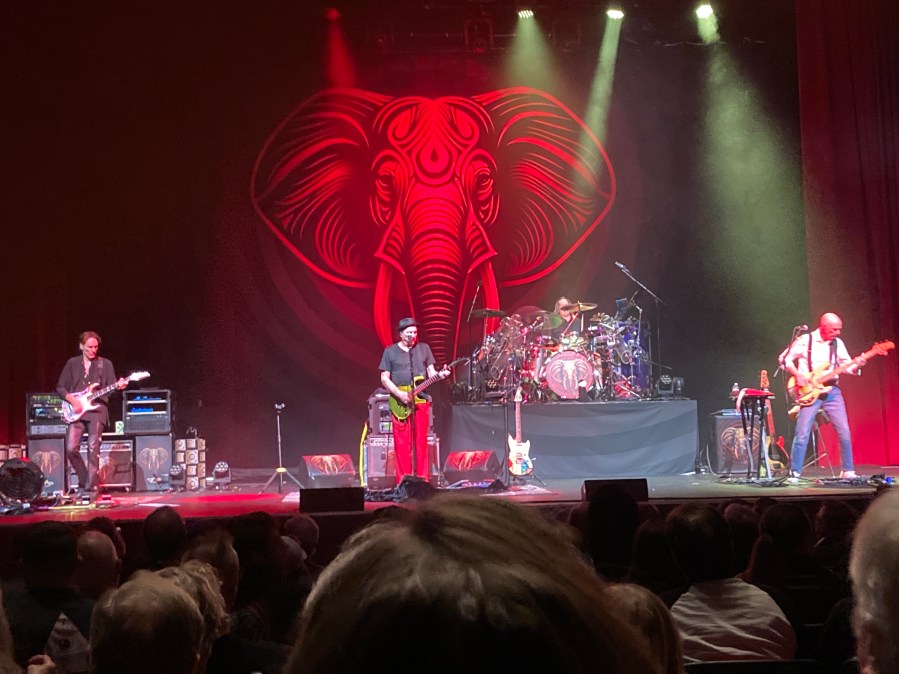
BEAT, Copernicus Center, Chicago, Illinois, Friday, November 1st, 2024

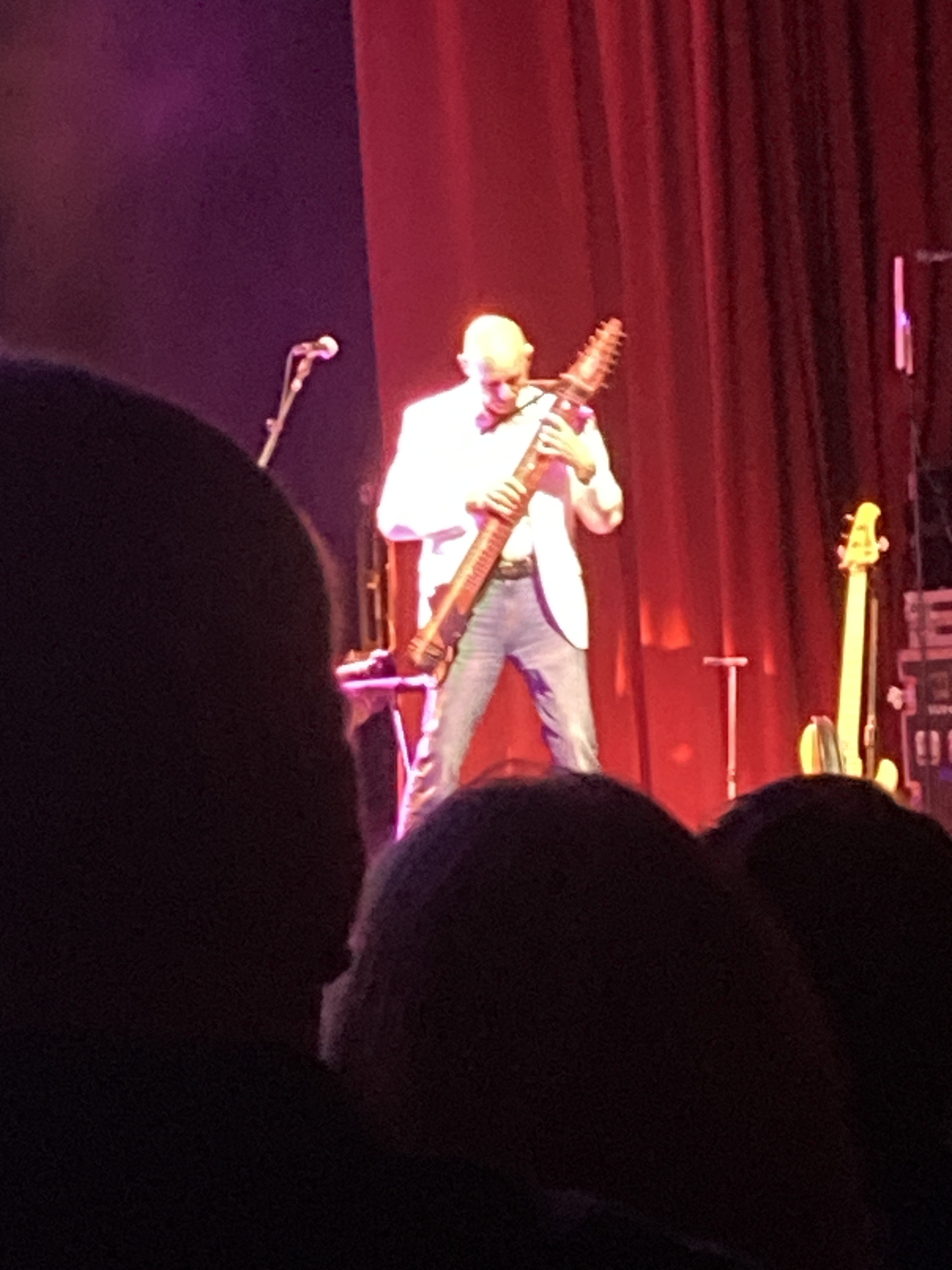
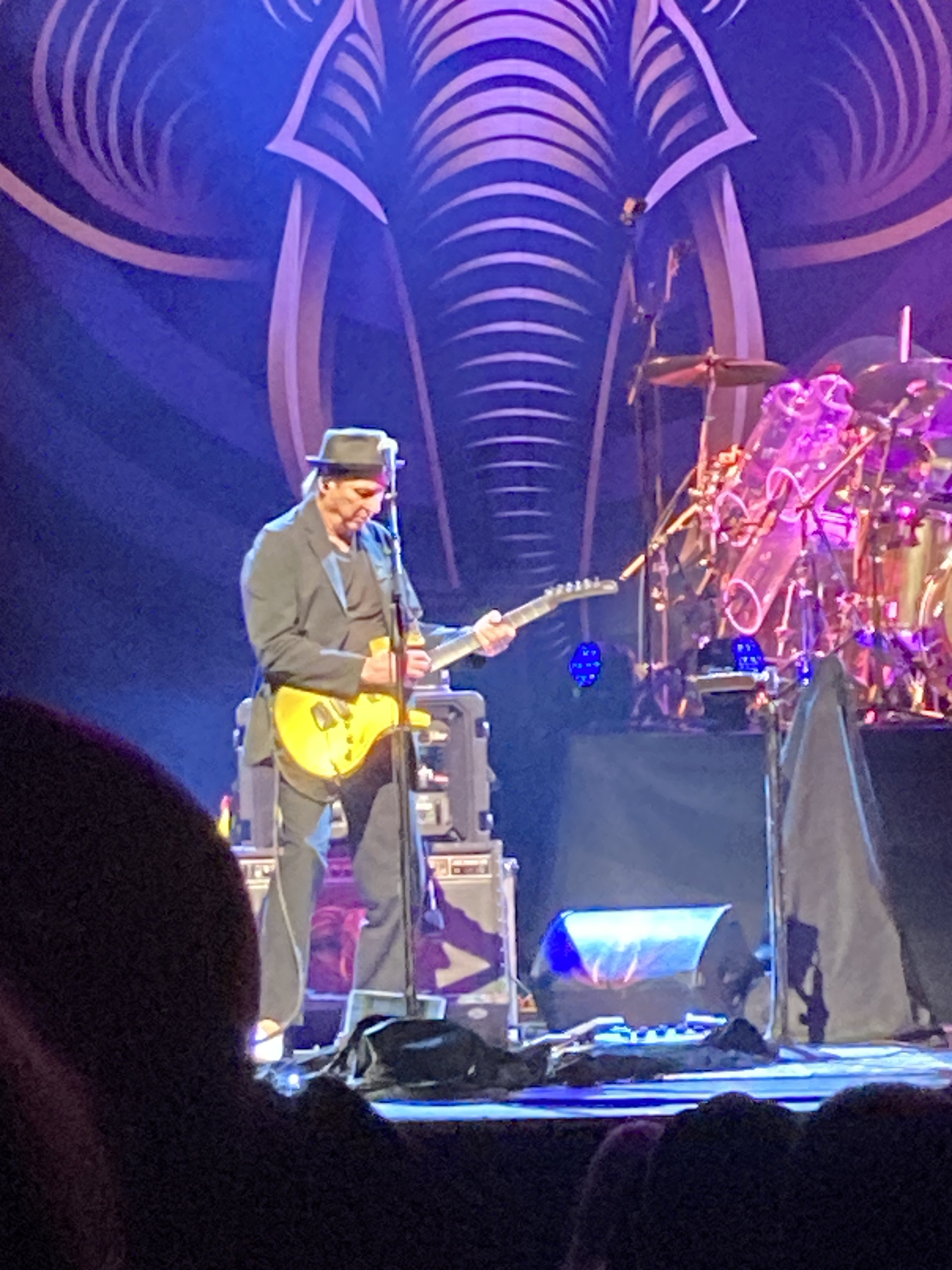
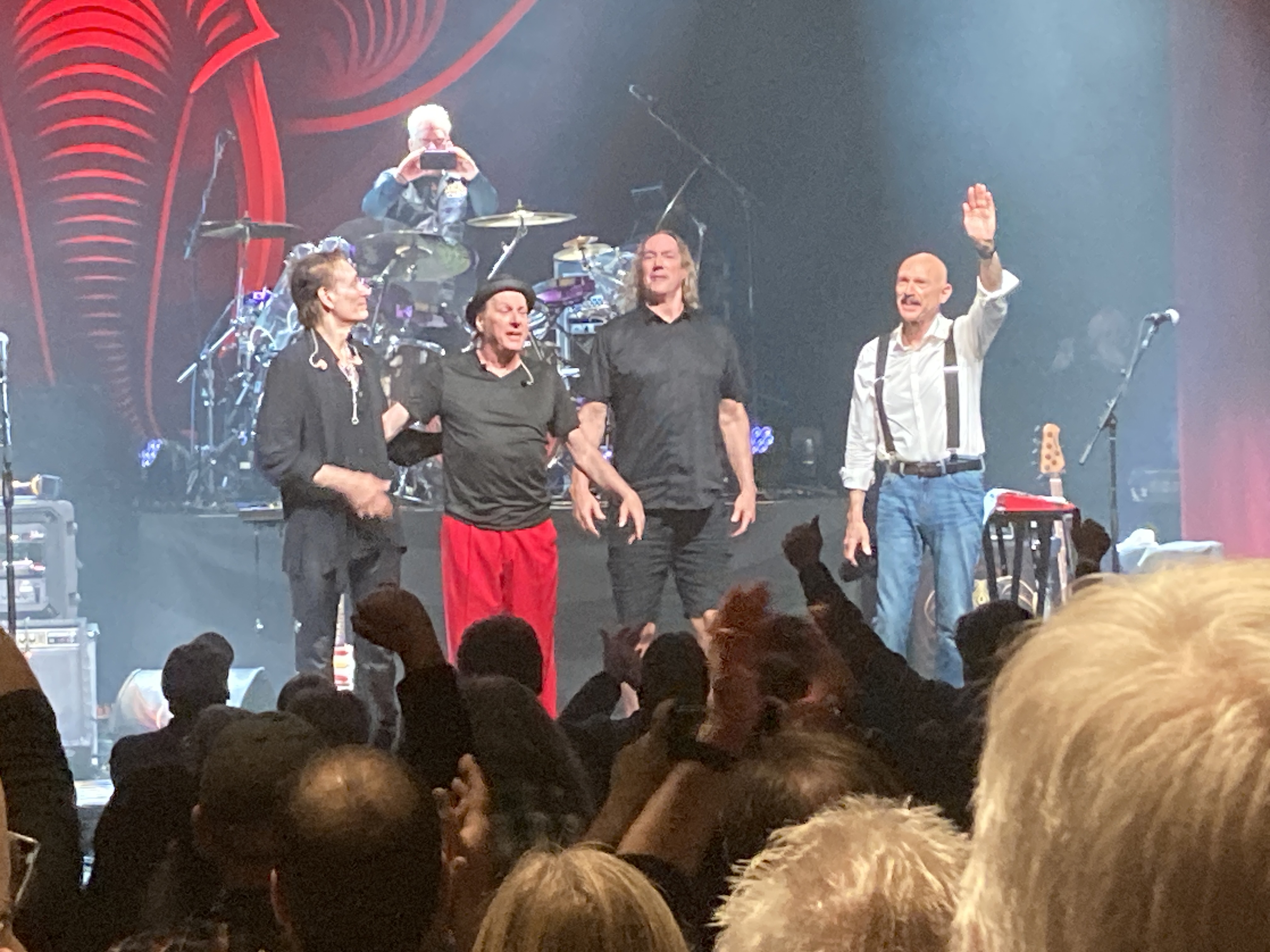
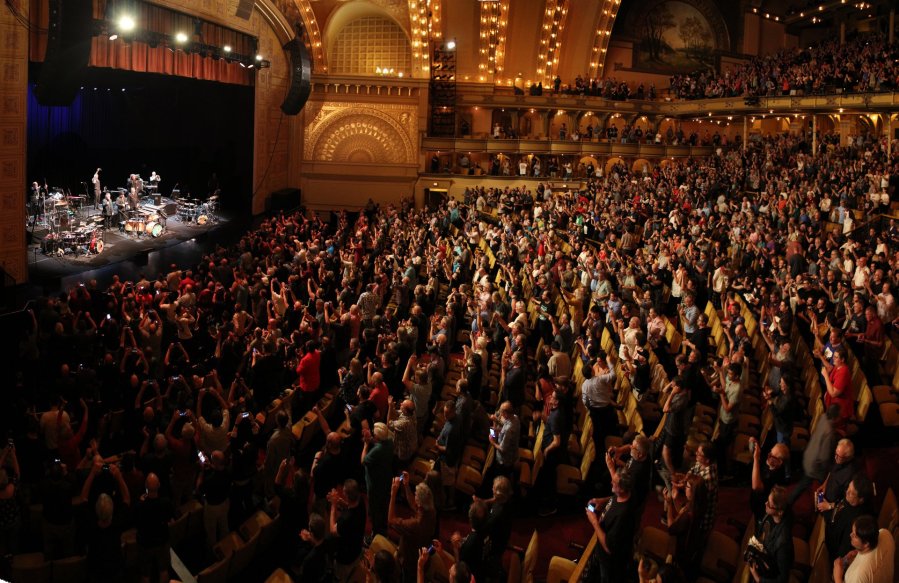
Halfway through a three-month North American tour, Adrian Belew and Tony Levin’s 40th anniversary remount of 1980s King Crimson readily commanded the stage of this vintage Art Deco theater, slamming into the ecstatic audience like a truckful of bricks spontaneously rearranged as abstract sculpture. BEAT’s reinvention of this cutting-edge music offers much more than fresh trim on a classic chassis; with virtuosi Steve Vai and Danny Carey at the stations originally manned by Robert Fripp and Bill Bruford, there was power to spare under the hood, and the edgy thrill of exploration that Belew and Levin’s previous celebration (first known as Two of a Perfect Trio, then as the Crimson ProjeKct) only mustered intermittently back in the early 2010s.

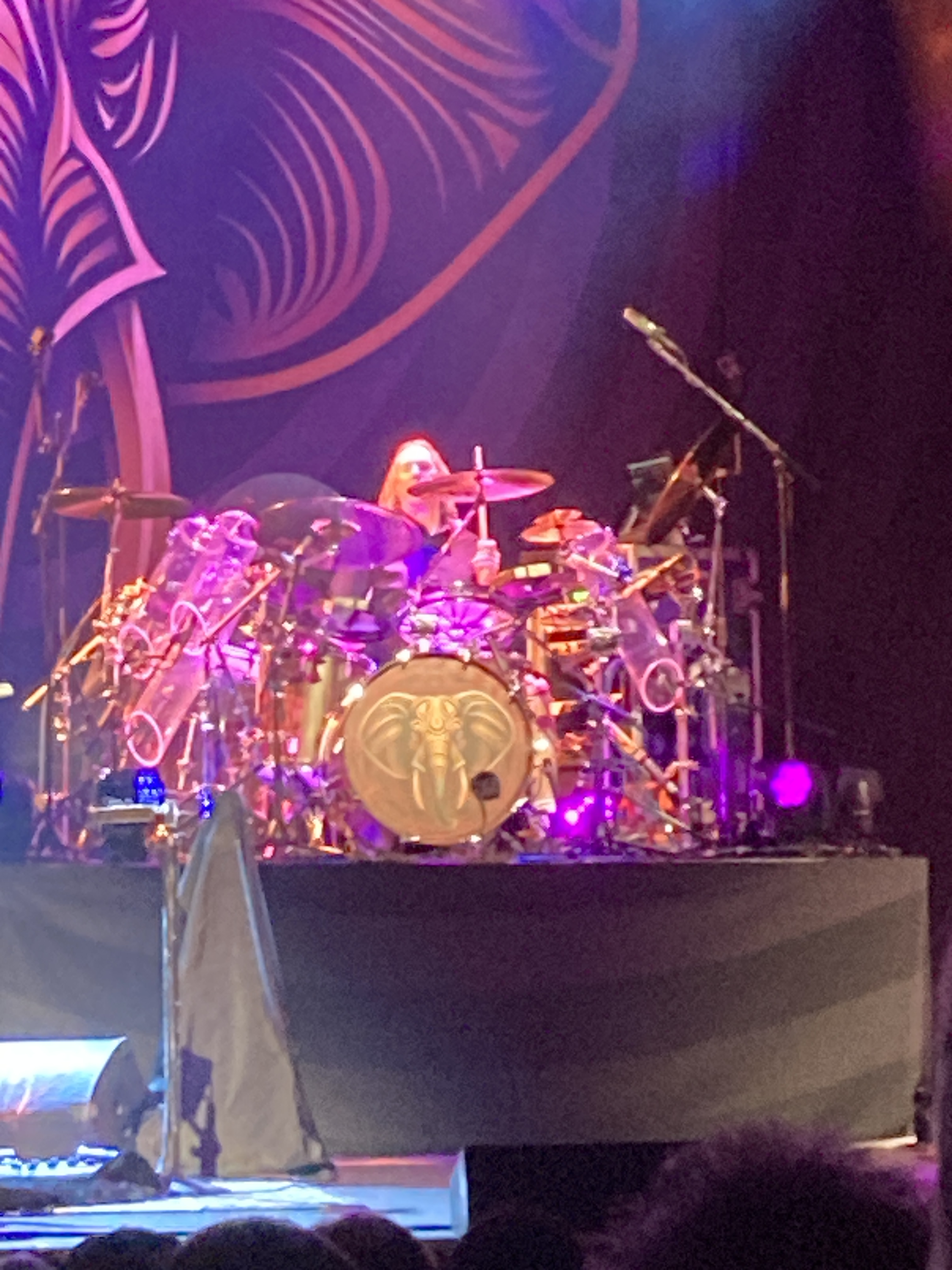
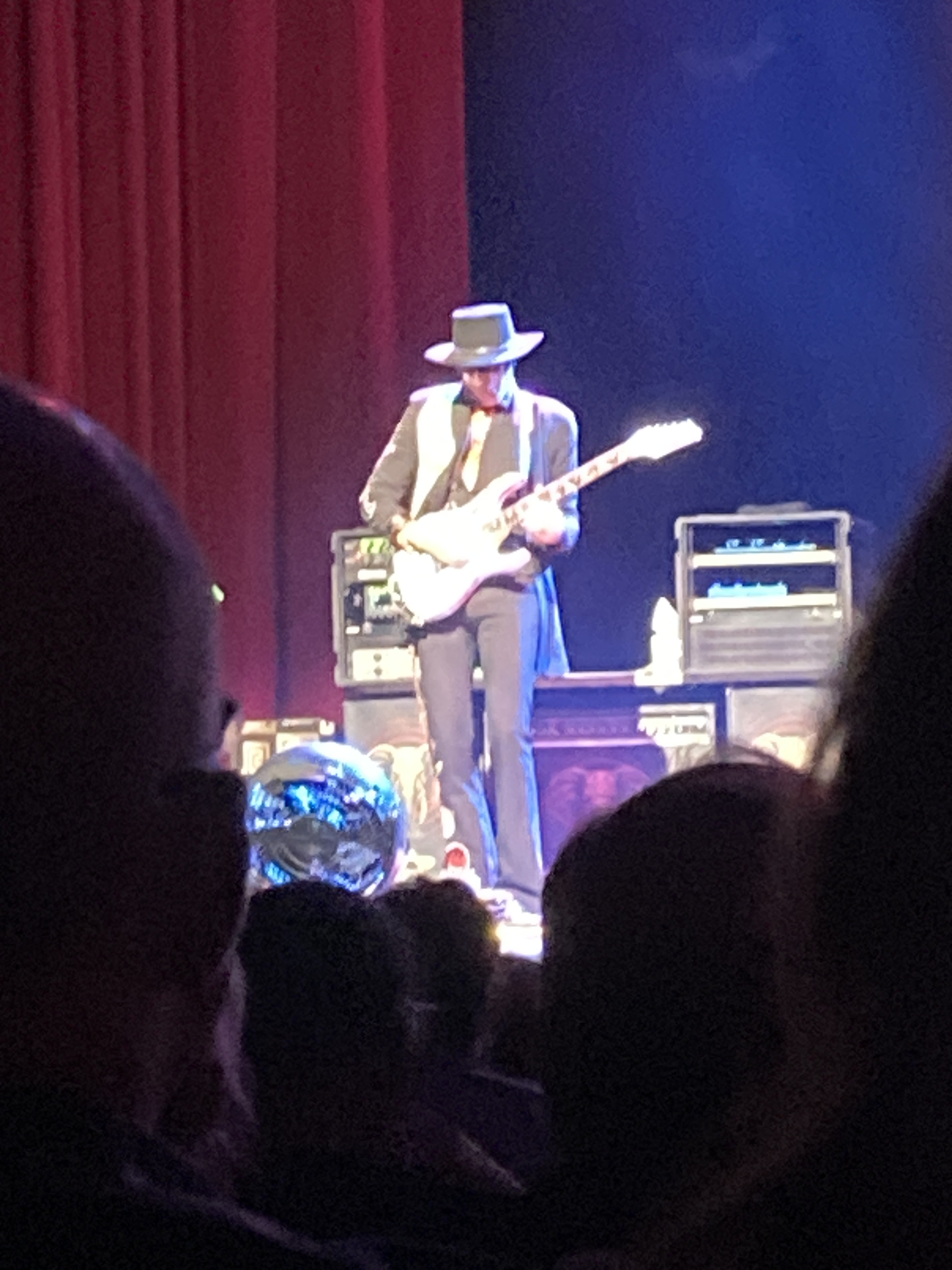
With both Fripp and Bruford retired from Crimson (and publicly supporting this venture), the new recruits leapt into their roles with gleeful abandon. At stage left, Carey straddled his monolithic drum set, cutting loose with both the confident drive he brings to Tool and the innovative riot of percussive colors Bruford brought to bear. The overall effect was devastating: electronic drums, boo-bams, rototoms, and more danced in head-spinning polyrhythmic patterns above rock-solid odd-time grooves. To Carey’s right, Vai’s stage presence couldn’t have been more different than Fripp’s buttoned up demeanor — leaning into the riffs with an easygoing strut, taking the original finger-busting licks to the next level, topping ferocious solos with distinctive, showy flourishes beloved by fans since his days with Frank Zappa. For all its fearsome complexity, the music was remarkably free and exceptionally fiery — to the extent that the newbies even accelerated a bit ahead of Belew and Levin on a few occasions!

But if the Crimson veterans were surprised by occasional mess-ups, they really didn’t seem to mind, grinning and bopping away as they caught up, Carey and Vai decelerated, and everyone locked in to the mesmerizing weave once again. I’d argue that Levin’s role in 80s Crimson was both essential and underrated, and this show offered fresh evidence for my case; alternating between Chapman Stick and bass, he simultaneously dished up both the low-end foundation and the hypnotic rhythm figures that give these pieces shape and harmonic direction. And with the beautiful noise of the other three players to carry him along, Belew was in his element. Duetting with Vai on fiendish bursts of counterpoint, wrestling every possible noise made by animal or power tool from his cubist array of guitars, yelping out proto-rap or firing off riveting arcs of vocal melody, the man was eager and energetic throughout the night, obviously delighted to do his thing, committed to keep the fun going.

When I saw King Crimson live for the first time back in 1984, “fun” would not necessarily have been the descriptor that sprang to mind; Fripp and Bruford were publicly feuding in the music press, Levin had programmed a click track to keep everyone in sync onstage, and Belew was doing tour publicity pretty much on his own. It was no surprise when Fripp declared that innovative incarnation finished at the end of the run, so I’ve always considered the subsequent regroupings across the decades unpredictable bonuses. And in the same way that the “chamber ensemble plus drum corps” Crimson of the 2010s gave Fripp a final run at the band’s entire history with a simpatico crew of colleagues (including Levin), I’d argue that BEAT gives Adrian Belew the version of Crimson that suits him best, focused on the slice of repertoire he values most. Belew, Levin, Vai and Carey are far from uptight or perfectionist, yet they’re unquestionably up to the demands this mighty music presents them, and absolutely dedicated to giving its fans their due. The results in Chicago were every bit as satisfying to me (now a 12-timer in catching KC’s various versions) as they were for long-time fans who’d never got to see the 1980s team in action (like my eloquent concert buddy Cedric Hendrix – check out his take here). If you’re ready to have your face melted, mind blown and heart stirred, catch BEAT while you can!

BEAT is on tour through December; click here for tour dates. Click here to rent a stream of BEAT’s November 10 concert, recorded live in Los Angeles.

— Rick Krueger

Setlist:

  • Neurotica
  • Neal and Jack and Me
  • Heartbeat
  • Sartori in Tangier
  • Dig Me
  • Model Man
  • Man with an Open Heart
  • Industry
  • Larks’ Tongues in Aspic Part III
  • Waiting Man
  • The Sheltering Sky
  • Sleepless
  • Frame by Frame
  • Matte Kudasai
  • Elephant Talk
  • Three of a Perfect Pair
  • Indiscipline (including drum solo)
  • Red
  • Thela Hun Ginjeet

Rick’s Quick Takes: Across the Great Divide

This month’s connecting thread: grizzled veterans connect with high-powered talent from younger generations; the chemistry fizzes, fuses and pops — and some excellent new music is the result! (Of course, there’s an outlier or two in this month’s stack as well.) Let’s get down to it, shall we? Purchase links are embedded in the artist/title listing, with album streams or samples following the review.

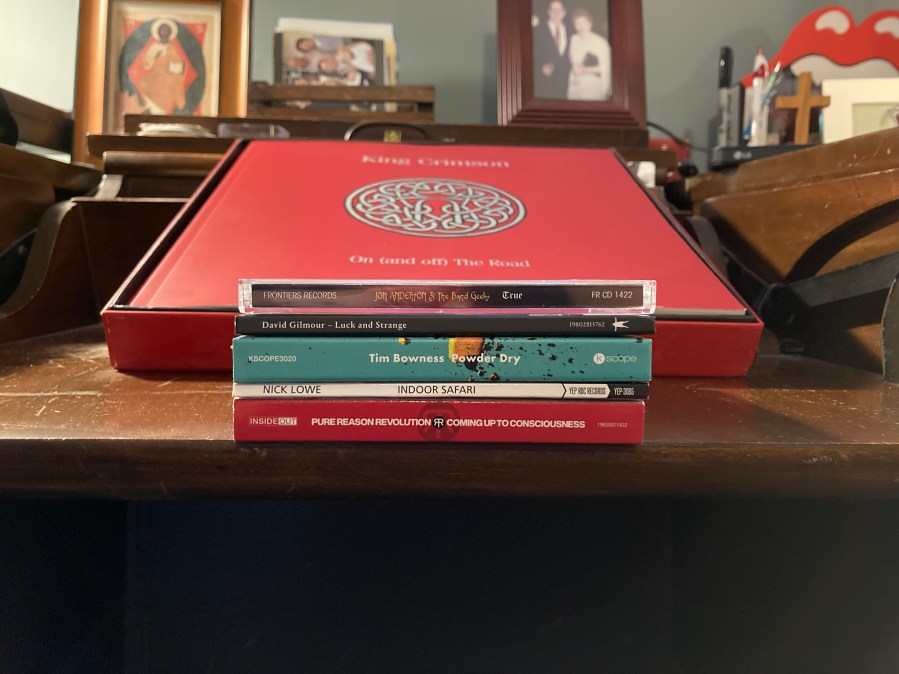
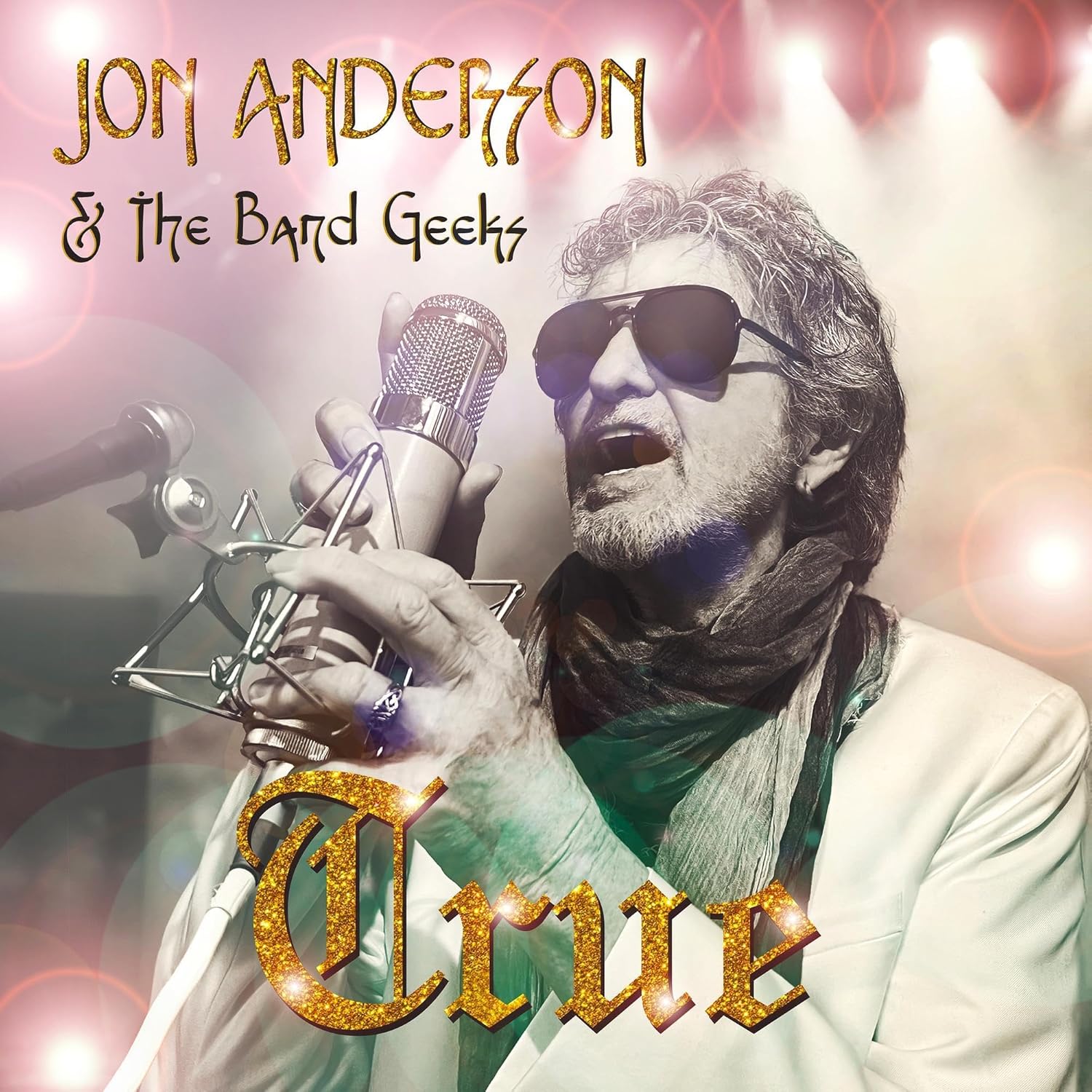
Jon Anderson and The Band Geeks, True: Anderson (going on 80, and as seemingly immortal as Keith Richards) has consistently worked with little-known yet impeccable virtuosos since his abrupt exit from Yes; watching him front a high-impact big band from the 10th row in 2019 was a thrilling experience. Now, teaming with a quintet of killer players half his age, he delivers the album fans have desired for decades. Sure, there are times when The Band Geeks (bassist Richie Castellano, guitarist Andy Graziano, keyboardists Christopher Clark and Robert Kipp and drummer Andy Ascolese) seem a little too eager to ape their counterparts in the classic Yes lineup, but overall they lean into epics like “Counties and Countries” or “Once Upon a Dream” and shorter romps like “True Messenger”, “Shine On” and “Still a Friend” with full commitment, fresh creativity and chops galore. Then there’s Anderson, still soaring into sub-orbit with that unmistakable voice, still preaching peace, love and understanding with his trademark New Age word salads. (Is there no way this man could run for U.S. President? At this point, he’d get my vote.) At first, I thought Time Lord’s full review was a bit over the top — but repeated hearings are bringing me around. Most hardcore Yes-heads will flip over this, and casual listeners will find plenty to lure them in.

Tim Bowness, Powder Dry: the exception to this month’s rule, Bowness’ first-ever “solo solo project” hits the speakers like a cold slap in the face. Instead of the languorous widescreen ruminations of previous albums, we get brusque, sparse song sketches (rarely more than 3 minutes); a disorienting mix of natural tones, machine rhythms, bracing industrial grit and gnarled lo-fi samples yields shocks, disturbances and wake-up calls aplenty across these 16 tracks. Well practiced in the dark arts of ineffable yearning and melancholy, here Bowness hones and refines his lyrics to bare-knuckled, highly charged haikus, whether staring down decadent cultures (opener “Rock Hudson”), devolving psyches (“This Way Now”, the title track), disintegrating connections (“Heartbreak Notes”) or the unholy conjunction of all three (“Summer Turned”, “Built to Last”). With his stoic vocals bearing the brunt of this emotional tangle, Bowness’ voice plumbs fresh depths, flickering in desperate hope one moment, driven to sublimated fury and fear the next. If you’re already a Bowness fan, stow your expectations — but whether he’s familiar or brand new to you, don’t hesitate to strap in for a compelling, cathartic ride.

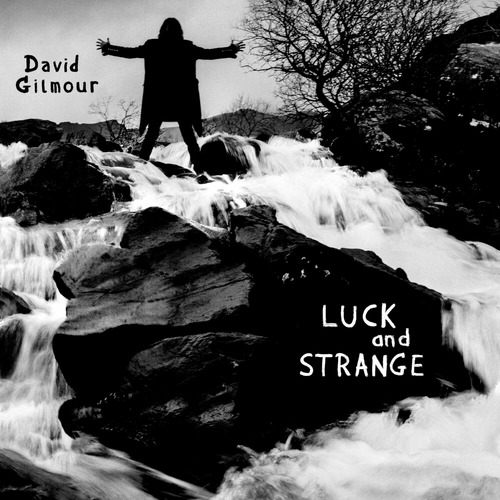
David Gilmour, Luck and Strange: another prog legend who can sound like nobody but himself cranks up one more time. But the canvass Gilmour paints on here accents different tones and tints, with youthful co-producer Charlie Andrew shaking up instrumental backgrounds and song formats to good effect. There’s a sense of lightness, air and space this time around, a less obviously Floydian palette that both complements and contrasts with Gilmour’s craggy singing and singular take on blues guitar. Polly Samson’s lyrics level up as well, tackling well-worn topics (nostalgia on “Luck and Strange”, spirituality on “A Single Spark”, love as refuge on “Dark and Velvet Nights” and “Sings”) from newly contemplative angles, sounding absolutely right coming out of Gilmour’s mouth. (Oh, and daughter Romany Gilmour totally enthralls in her vocal turn on The Montgolfier Brothers’ “Between Two Points”.) By the time Gilmour hearkens back to which one’s Pink, firing off a final round of Stratocaster fireworks on orchestral closer “Scattered”, he’s taken us on the most varied – and I’d argue, most sheerly enjoyable – ride of his solo career; this one’s already a 2024 Favorite.

King Crimson, Sheltering Skies: OK, so this one isn’t “new” new. But when Crimson sherpas Robert Fripp and Bill Bruford teamed with American upstarts Adrian Belew and Tony Levin back in the 1980s, the result was a revitalized second reign for the King, swapping out trademark Mellotrons and prodigious pomp for raucous noise, limber polyrhythms and surging, seething energy. With Belew and Levin now touring this music again as BEAT, this issue of a 1982 show previously released on video couldn’t come at a better time; opening for Roxy Music on the French Riviera, Crimson pulls the unsuspecting audience right into the clinches for the hottest of hot dates. From the subdued intensity of “Matte Kudasai” and “The Sheltering Sky” through the dynamic clatter of “Indiscipline” and the hypnotic guitar weave of “Neal and Jack and Me” to Bruford and Belew’s ecstatic percussion duet that kicks off “Waiting Man”, this is that rare live album of nothing but highlights. Banter, bicker, balderdash, brouhaha, ballyhoo — whatever their desired flavor of elephant talk (including some 70s throwbacks), Crim devotees will find it here.

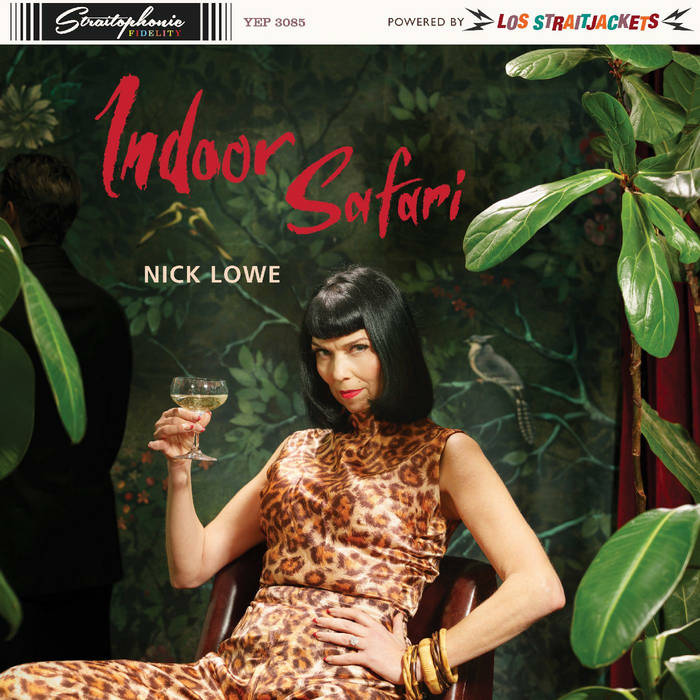
Nick Lowe, Indoor Safari: almost 50 years on from his solo debut at the crest of the New Wave, Lowe’s pure pop for now people remains pin-sharp and on point. Who else can still pump out breezy rockers like “Went to A Party” and “Jet Pac Boomerang” (the latter complete with high-culture similes and a Fab easter egg), ring wry changes on the battle of the sexes in “Blue on Blue” (“You’re like a mill, you run me through”) and “Don’t Be Nice to Me”, then capture the emotional devastation of the quietly crooned “A Different Kind of Blue”? Masked surf-rockers Los Straitjackets (currently celebrating their 30th anniversary) prove crucial here, laying down swinging retro grooves for Lowe’s originals and hoisting just the right backdrops as he nails the blue-collar aspiration of Garnet Mimms “A Quiet Place” and the innocent romance of Ricky Nelson’s “Raincoat in the River”. Lowe’s smart-aleck satire has always entertained, but his later embrace of pre-rock stylings deepened his songwriting and singing; now, even at his jauntiest, his aim for the heart is true. This is a real charmer that’s gone straight onto my 2024 Favorites list.

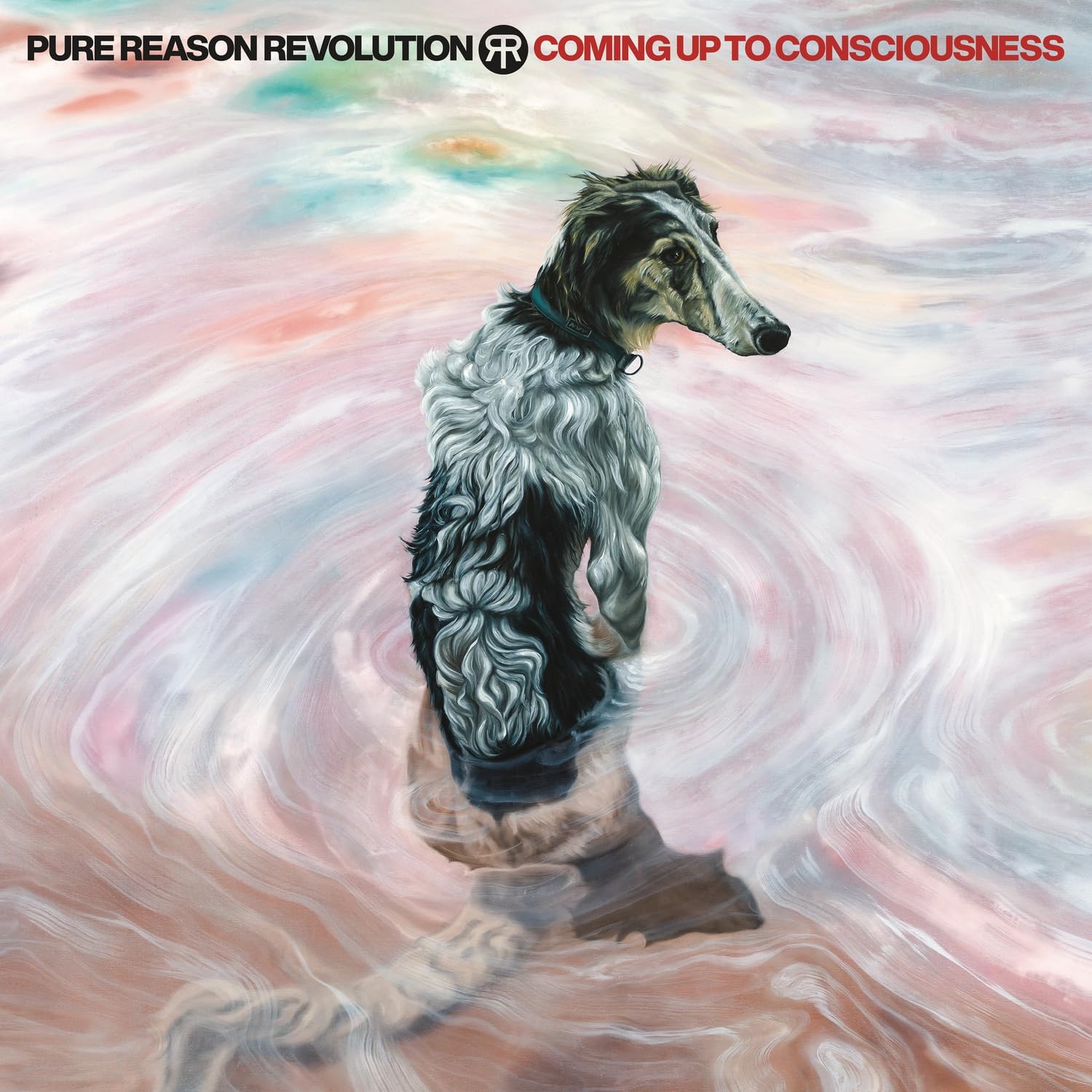
Pure Reason Revolution, Coming Up to Consciousness: a variation in reverse of this month’s theme, as long-time Pink Floyd/Gilmour bassist Guy Pratt brings extra low-end oomph to the latest from Jon Courtney, Greg Jong and their fellow electroproggers. As Time Lord ably spells out in his full review, once again PRR relies on the proven recipe of previous high points like 2006 debut The Dark Third and 2022’s Above Cirrus: float in on low-key ambience, keep the verses chilled out, ramp up on the bridge, kick hard into the chorus! (While seasoning to taste with lush harmonies, towering guitar riffs and slamming club beats, whipping up maximum tension and release before serving.) Here the results are consistently yummy, not least because the soundscapes’ ebb and flow echo Courtney’s perennial lyrical themes. As Courtney, Jong and Annicke Shireen’s voices entwine, splinter, and reunite, there’s a serene insistence on transfiguration, on something more than material, beyond the harsh realities of eros (“Dig til You Die”, “Betrayal”), fear (“The Gallows”), and death itself (“Useless Animal”, “As We Disappear”). Pure Reason Revolution isn’t giving us answers, but Coming Up to Consciousness points us toward the mystery they’ve pursued all along.

— Rick Krueger

Rick’s Quick Takes: Come On, Feel the Noise!

This time around, a cross-section of mostly new, mostly instrumental albums that may start in one genre but willfully refuse to stay there — with frequently bracing results. Purchase links are embedded in the artist/title listings, with any additional purchase links for physical media at the end of a review and streaming access following.

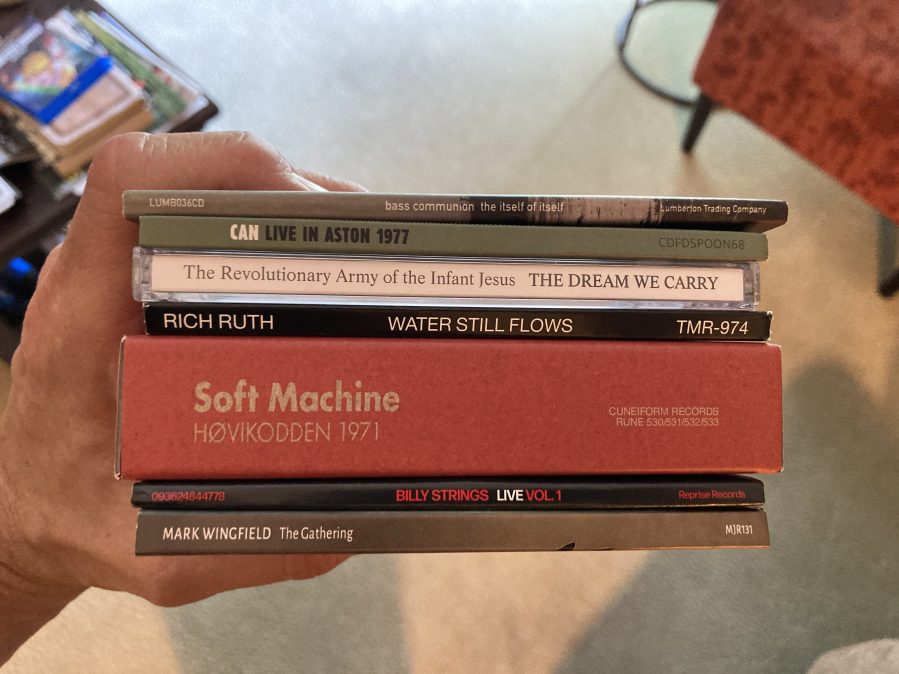
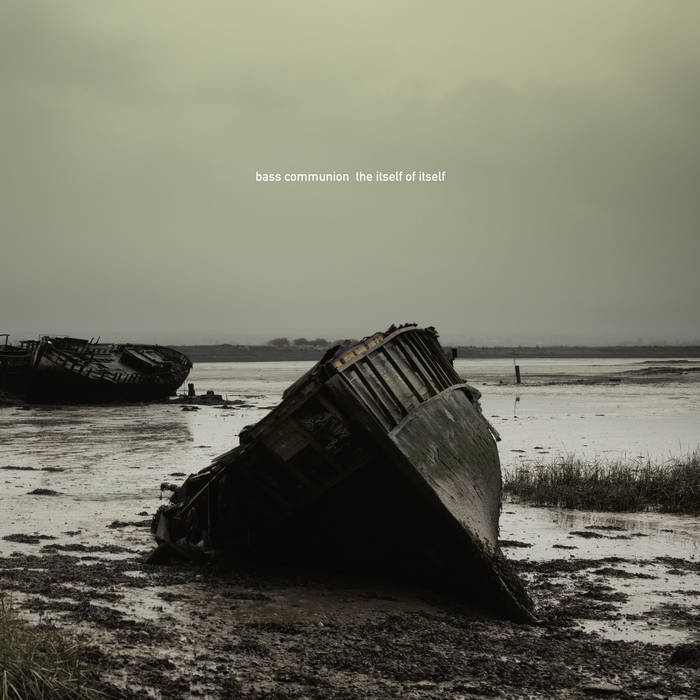
Bass Communion, The Itself of Itself: We can’t say Steven Wilson doesn’t warn us on the album sleeve: “audio artefacts and noise such as tape hiss, wow and flutter, vinyl crackle, distortion and earth hum are (probably) deliberate.” Delving into his longstanding experimental/electronic doom-drone persona, Wilson once again abandons melody and rhythm to slap down raw sonic textures and grind them together across extended time spans. The results range from arresting (the relentless build of horror-soundtrack opener “Unperson”, the uneasy, alarming stasis of the title piece) to utterly forgettable (when my dehumidifier kicked in during “Study for Tape Hiss and Other Artefacts”, I really thought it was part of the track). Am I finally sussing out (as some have theorized) Wilson’s extended con of the prog world? Getting a sneak peek of his 2025 solo album The Overview? Or hearing the latest from an artist who just does whatever he wants and doesn’t particularly care how possessive fans get about him? I’m a diehard Wilson fan, but when it comes to Bass Communion, your guess as to his motivation is probably as good as mine. (Order the CD from Burning Shed here.)

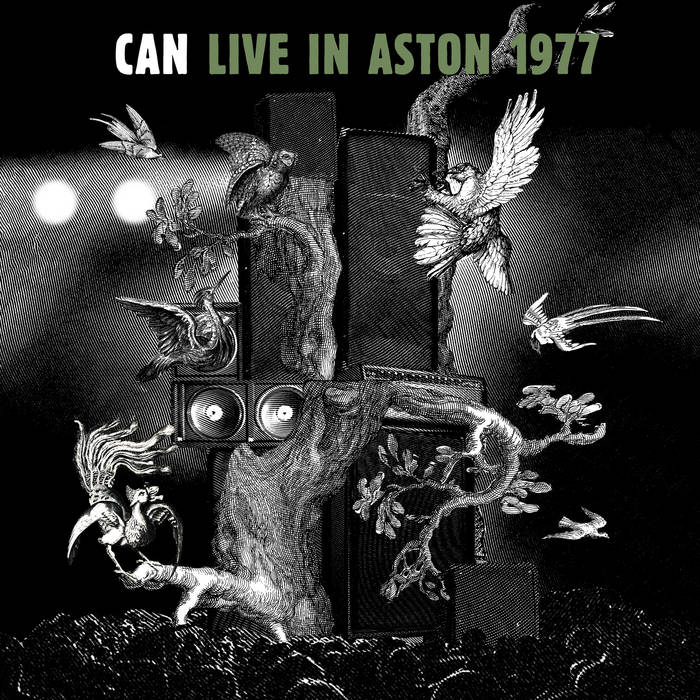
Can, Live in Aston 1977: Krautrock’s most thoroughly improvisational outfit got thoroughly funky in the late ’70s, courtesy of Rosko Gee, Jamaican bassist of no mean ability. With Gee powering the beat and previous bassist Holger Czukay dialing up snippets from shortwave radio and tape libraries, this version of Can is rhythmically tighter and tonally looser at the same time. That means Michael Karoli has more room to howl on guitar, Irmin Schmidt can conjure thicker clouds and launch edgier thunderbolts from his keyboards, and drummer Jaki Liebezeit can drill down into his unstoppable, drily metronomic groove. The clangorous solo section of “Drei” (enticing in its ambiguity – who’s playing this crazy thing that sounds like a bell choir in hyperdrive?) and the insistent, stonking, organ-led groove of “Vier” are high points. A solid addition to this fine archival series of vintage concerts.

The Revolutionary Army of the Infant Jesus, The Dream We Carry: RAIJ’s 2020 effort Songs of Yearning was my Top Favorite album of that strange year; I called it “a sacramental transmission from, then to, the heart of creation.” The Liverpool “experimental arthouse collective” has reduced its core personnel and pared back its weirdness ever so slightly, but their inviting mélange of reflection and insistence, sacred and profane persist. Jesse Main’s vocals and Eliza Carew’s cello gracefully arc over Paul Boyce and Leslie Hampson’s lush instrumental backing; on multi-track suites like “Les Fils des Etoiles” through “Object of Desire”, fragments of multilingual poems, songs and spoken word rise from nowhere, become incarnate, declare their tidings, then disappear into a wistful bed of chamber and orchestral tone color. Like RAIJ’s entire catalog, The Dream We Carry testifies to mystery tucked within the mundane, exemplified by album ender “The Song of Wandering Aengus”; it’s an eloquent yet elusive invitation to encounter the Spirit active at the heart of the fields we know.

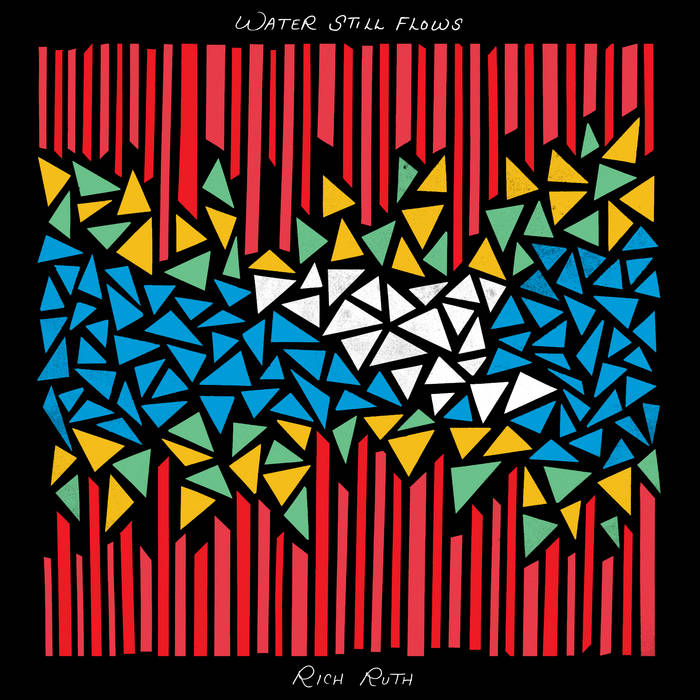
Rich Ruth, Water Still Flows: Reviewing 2022’s I Survived, It’s Over, my thumbnail sketch of Nashville guitarist Rich Ruth pointed to him as RAIJ’s American counterpart — but on the evidence of his latest, that assessment sells him short. For Water Still Flows, Ruth adds massive slabs of dark metal riffage to his already potent mix of cosmic ambience, celebratory spiritual jazz, and slow-crawling post-rock. Opener “Action at a Distance” feels like a heftier “Won’t Get Fooled Again”; marauding power chords choke off the luxuriant strings of “God Won’t Speak”; the blissful comedown of “Somewhere in Time” sticks a soft landing after the devastating climax of “Aspiring to the Sky”. With an eclectic ensemble of sax, harp, and pedal steel plus Ruth’s frenetic axework anchored by Reuben Gingrich’s crashing drums, this album is a mighty, impeccably shaped tone poem that once again journeys through pain and catastrophe to refreshment and renewal. (Order the LP or CD from Third Man Records here.)

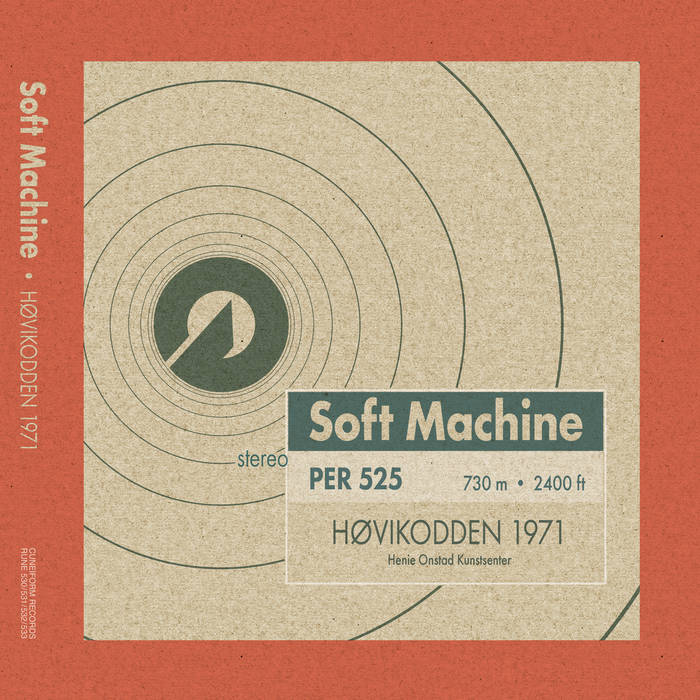
Soft Machine, H​ø​vikodden 1971: The seminal British jazz-rock band at its creative peak, recorded over two nights at a Norwegian arts center. At each show, Mike Ratledge’s inimitable fuzz organ takes command; multi-saxist Elton Dean lets loose with an unending stream of raucous Coltrane licks; Hugh Hopper’s bass swarms, clambers and climbs, refusing to stay on the low end; Robert Wyatt’s limber drumming seethes, weaving through the tonal murk at will. Sometimes locking together in breathtaking unison, sometimes scattering to widely separated corners, the Softs approach classic material like “Facelift”, “Fletcher’s Blend” and “Out-Bloody-Rageous” from vastly different perspectives at different shows; the first night is a anarchic fireworks display, gobsmacking in its sweep, while the second night channels the quartet’s energy into a thrilling, thrusting sense of unified drive (albeit with laid back interludes). There’s tons of live Soft Machine available, but this newly released box set is a genuine high point of their already formidable discography.

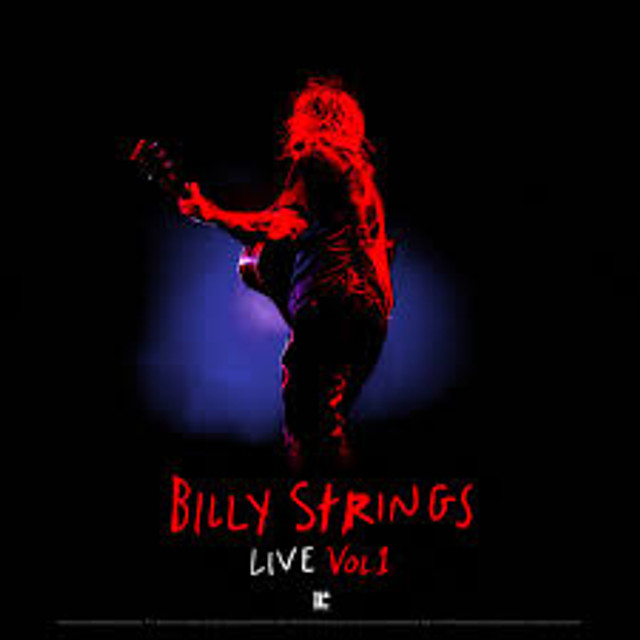
Billy Strings, Live Vol. 1: I’ve gotta admit, I’m late to the party here; before a recent sojourn in Nashville and a resulting reacquaintance with all things Americana, I had missed out on the mightiest musician to hail from Michigan in a long, long time. Strings is, without a doubt, the real deal: a virtuoso guitarist, a first-rate singer and a songwriter who’s already shown signs of true, durable greatness. On his first live release, he and his band turn gritty evocations of small-town vice (“Dust in a Baggie,” “Turmoil and Tinfoil”) and poetic contemplations of the bigger picture (“Long Forgotten Dream”, “Fire Line/Reuben’s Train”) into unabashed, dynamic bluegrass brilliance, stirring in proggy interplay and psychedelic seasoning, stretching out their jams for maximum tension and impact, but with nary a wasted note or a thoughtless lick. This is an absolutely smashing major label debut, a snapshot of a phenomenon in perpetual motion, the music grounded in Strings’ heart as well as his fearsome chops, and already on my Favorites list for this year. (Strings’ next studio album, Highway Prayers, has just been announced for a September 27 release.)

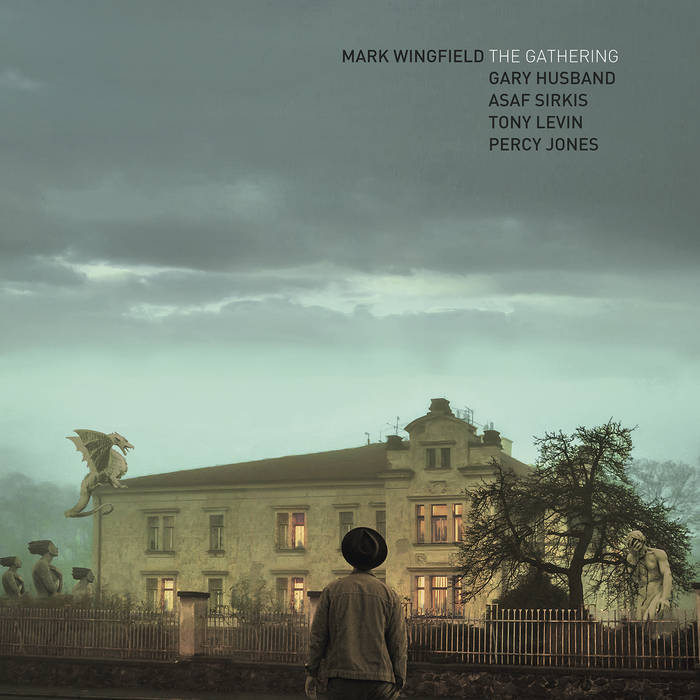
Mark Wingfield, The Gathering: Nightmarish complications severely curtailed MoonJune Records’ ability to sell this beauty on CD — which is a shame, because it may be British fusionist Wingfield’s most accomplished and focused effort to date. Languorous, enticing compositions like “Apparition in the Vaults”, “A Fleeting Glance” and “Cinnamon Bird” consistently take flight here: Wingfield’s guitar traces ecstatic melodic parabolas and sparse changes; Gary Husband colors the soundscape with juicy pads, inspired atmospheres and choice accents on piano and synth; Asaf Sirkis lays down a spacious, unshakeable polyrhythmic grid to propel things forward. What makes this even more of a killer session is the overdubbed bass contributions of King Crimson’s Tony Levin (focusing on active, rich-toned counterpoint) and Brand X’s Percy Jones (bubbling under with his unique tone and angular comping). It’s daring and delightful from start to finish, as an all-star lineup of truly great players work with total concentration and dedication, and make this sophisticated yet accessible music their own.

— Rick Krueger
BEAT (Belew, Vai, Levin, Carey) Tour 1980s King Crimson This Fall — Full Details Below

As Kevin McCormick posted two weeks ago, Adrian Belew & Tony Levin of King Crimson will be performing that band’s innovative 1980s repertoire live with pioneering shred guitarist Steve Vai (Frank Zappa, David Lee Roth, G3) and drummer Danny Carey (Tool). More than 40 US/Canada dates (listed below and at www.beat-tour.com) have been announced; a presale begins April 2nd at 12 noon EDT (password BEATTOUR), with sales to the general public starting April 5th.

To say I’m stoked for this tour is an understatement! I became a fan of all things associated with King Crimson founder Robert Fripp after hearing him live at a local record store in 1979,then devouring his articles about the creative process and the travails of the music business in Musician magazine. So I was primed when Fripp, Belew, Levin and drummer Bill Bruford launched a re-envisioned KC with 1981’s breakthrough album Discipline. In addition to the striking use of cutting-edge tech like Simmons electronic drums and Roland guitar synthesizers (along with a New Wave sense of texture and space), I loved how all four players were constantly interweaving; there was no real precedent for the sound in rock or even prog, but Balinese gamelan music, classical minimalists like Steve Reich & Philip Glass, and some of Talking Heads’ contemporaneous experiments came to mind. This was just the noise for a heady, more than slightly pretentious listener like me!

1982’s Beat turned out to be my favorite of the albums the band released, but I didn’t see the mighty Crim live until the Three of a Perfect Pair tour in the summer of 1984 – by which time they had throughly assimilated their new music and stomped audiences flat with it! It was the first of 10 times I heard Crimson in concert over the decades, and still it’s vividly memorable.

Shortly afterward, Fripp put Crimson on one of the band’s numerous indefinite pauses, but Belew has always had a soft spot for this music, even publishing an online appeal to Fripp, Levin & Bruford for a 30th-anniversary reunion in 2011. This only happened in truncated form: Belew’s Power Trio hooked up with Levin’s Stick Men for a series of Two of A Perfect Trio dates (I caught the Detroit stop of the tour late that year) eventually becoming the Crimson ProjeKct and opening for Dream Theater on a lengthly tour.

And while I absolutely adore Fripp’s Belew-less version of KC that ran from 2014 to 2021 (see my reviews here, here and here), I’m no less ready to lose it for a Fripp-less take on this classical material like BEAT. Given Vai & Carey’s impeccable credentials, this should be some show.

— Rick Krueger
BEAT Tour dates:

  • 9/12 SAN JOSE, CA @ SAN JOSE CIVIC
  • 9/13 NAPA, CA @ BLUE NOTE SUMMER SESSIONS at MERITAGE RESORT
  • 9/14 LOS ANGELES, CA @ THE UNITED THEATER on BROADWAY
  • 9/15 ANAHEIM, CA @ CITY NATIONAL GROVE of ANAHEIM
  • 9/17 SAN DIEGO, CA @ HUMPHREY’S CONCERTS
  • 9/18 PHOENIX, AZ @ CELEBRITY THEATRE
  • 9/20 AUSTIN, TX @ THE PARAMOUNT THEATRE
  • 9/21 HOUSTON, TX @ BAYOUS MUSIC CENTRE
  • 9/22 DALLAS, TX @ MAJESTIC THEATRE
  • 9/24 ATLANTA, GA @ THE EASTERN
  • 9/26 FORT LAUDERDALE, FL @ THE PARKER
  • 9/27 ORLANDO, FL @ HARD ROCK LIVE
  • 9/28 CLEARWATER, FL @ RUTH ECKERD HALL
  • 9/29 CHARLESTON, SC @ CHARLESTON MUSIC HALL
  • 10/01 CHARLOTTE, NC @ KNIGHT THEATER
  • 10/02 DURHAM, NC @ CAROLINA THEATRE of DURHAM / FLETCHER HALL
  • 10/04 WASHINGTON, DC @ WARNER THEATRE
  • 10/05 NEW YORK, NY @ BEACON THEATRE
  • 10/06 GLENSIDE, PA @ KESWICK THEATRE
  • 10/08 RICHMOND, VA @ CARPENTER THEATER in DOMINION ENERGY CENTER
  • 10/09 RED BANK, NJ @ COUNT BASIE CENTER
  • 10/11 BOSTON, MA @ SHUBERT THEATRE
  • 10/12 HAMPTON BEACH, NH @ HAMPTON BEACH CASINO BALLROOM
  • 10/14 HALIFAX, NS @ REBECCA COHEN AUDITORIUM
  • 10/15 MONCTON, NB @ CASINO NEW BRUNSWICK
  • 10/17 MONTREAL, QC @ THEATRE MAISONNEUVE
  • 10/18 TORONTO, ON @ MASSEY HALL
  • 10/19 ROCHESTER, NY @ KODAK CENTER
  • 10/21 ALBANY, NY @ THE EGG
  • 10/22 GREENSBURG, PA @ PALACE THEATRE
  • 10/23 READING, PA @ SANTANDER PERFORMING ARTS CENTER
  • 10/25 CLEVELAND, OH @ AGORA THEATRE
  • 10/26 CINCINNNATI, OH @ TAFT THEATRE
  • 10/27 ROYAL OAK, MI @ ROYAL OAK MUSIC THEATRE
  • 10/28 NASHVILLE, TN @ RYMAN AUDITORIUM
  • 10/30 INDIANAPOLIS, IN @ MURAT THEATRE
  • 11/01 CHICAGO, IL @ COPERNICUS CENTER
  • 11/02 MILWAUKEE, WI @ PABST THEATRE
  • 11/03 MADISON, WI @ ORPHEUM THEATER
  • 11/04 MINNEAPOLIS, MN @ STATE THEATRE
  • 11/06 DENVER, CO @ PARAMOUNT THEATRE
  • 11/08 LAS VEGAS, NV @ THE THEATER at VIRGIN HOTEL

The Peaceful Beauty of Nad Sylvan’s “Spiritus Mundi”

album_coverNad Sylvan’s latest solo album, Spiritus Mundi, is one of the finest records released thus far in 2021, and I expect it to be one of the top albums of the year come December. Sylvan brought his vampirate trilogy to a close with 2019’s The Regal Bastard. Spiritus Mundi, which is Latin for “spirit of the world,” departs from the more classic prog sound on his previous three albums, but it hasn’t quite set sail for new genres. Rather it explores different musical territories, including classical, folk, acoustic, and rock, all befitting the beautiful poetry of William Butler Yeats which serve as the lyrics. The musical elements from his previous albums are all here, but they are interpreted in a different way. In an interview with Progarchy’s very own Rick Krueger, Nad expands upon the development of the record and his collaboration with Vermont-based musician Andrew Laitres, so I’ll direct you to that for more info about how the album came to be. 

As it should be, Nad’s voice is the centerpiece on the record. All of the musical elements serve to frame his voice and the lyrics, bringing the poems to life through varying sounds. The baroque elements found on Nad’s vampirate trilogy pop up now and again, such as on “Cap and Bells” and “The Realists,” which I think adds a flavor that is uniquely Sylvan. Laitres also provides some lead and backing vocals, which adds some variety.

Musically the album is more open and relaxed than Sylvan’s previous records. It doesn’t have the heavier rock moments that those albums had, but the lyrics don’t call for it. Nad plays most of the keyboards, as well as some of the acoustic, electric, and bass guitars, and the orchestration. Jonas Reingold and Tony Levin also appear on bass, along with Steve Hackett on the 12 string. The Flower Kings’ Mirkko De Maio appears on drums. There are a few other guests too, but this should give you a sample of what to expect. It seems fitting that Nad, who’s become well-known for his work with Steve Hackett’s touring band, releases this sort of more acoustic and classically inspired record soon after Hackett released a beautiful acoustic album, Under a Mediterranean Sky

I’ll readily admit I’m frequently skeptical when an artist says they’re going in a new direction on their next album. While I didn’t have particular reservations about this album going into it, I was admittedly curious about what that different sound might be. I didn’t expect him to move into some sort of techno-pop trash like Steven Wilson, and thankfully he didn’t. Instead he leaned more heavily into the folk and classical elements that already existed in his music. At times the music is reminiscent of Big Big Train, and at other times I hear bits that remind me of Jethro Tull. The rock is still there though, with a fantastic bass line and slide guitar on “The Fisherman.”

Spiritus Mundi is a well-rounded album that offers a breath of fresh air in a very dark time in our world. Perhaps that is fitting since many of Yeats’ poems offered a similar freshness to the broken and hurting world of the early twentieth century. Nad Sylvan may have taken an unusual path to rock stardom in his 50s and early 60s, but that seems to have brought a maturity to the music he makes. This album is well-crafted, and it is both a fitting tribute to Yeats’ poetry and a wonderful introduction of that poetry to new audiences a century after it was written.

Sylvan is one of the most creative people working under the broad umbrella of progressive rock today. He seems to get better with each passing record. I only hope he gets the chance to tour his own music someday. Check out Spiritus Mundi along with his other solo albums. You won’t be disappointed. 

https://www.nadsylvan.com
https://www.facebook.com/Nadsylvanartist
https://twitter.com/sylvanofficial

Signed albums available from Nad’s webstore: https://www.nadsylvan.com/cd-shop
Or purchase from Burning Shed: https://burningshed.com/tag/Nad%20Sylvan&filter_category_id=261

King Crimson: Celebrating 50 Years of Hot Dates in Concert

King Crimson, Auditorium Theatre at Roosevelt University, Chicago Illinois, September 10, 2019.  (Featured photo by King Crimson manager David Singleton.)

“Expectation is a prison.”  Robert Fripp says that a lot.

He said it again this past Tuesday in Chicago.  Specifically, to about sixty fans who had paid a lot of cash for a King Crimson pre-concert VIP package.  Even more specifically, to one particularly zealous fan, who nervously, repeatedly begged Fripp to reveal if “Cat Food” was on the evening’s setlist.

Fripp wasn’t biting.  Having already pivoted from reflections on music’s ability to change the world and the necessity for presence in the musical event (like an abbot exhorting his monastic chapter) to “wittering” on the disadvantage of playing guitar while seated (“pimples on my arse”, spoken with the endearing delivery of a bawdy rock-and-roll Mr. Magoo), his response was firm, but simple: when you don’t know what’s coming next, consider it a challenge to pay more attention.  And to be more present.  Then Fripp let us take his picture while he took ours; manager David Singleton teased another possible US tour next summer (he deliberately doesn’t look at the setlist); and bassist Tony Levin engaged in a much lighter Q&A session (but he wasn’t telling, either).

As blunt as Fripp frequently is, his admonition came in handy Tuesday night.  This is the third time I’ve seen the current version of King Crimson live, and the personal temptation to tune out in anticipation of repetition from previous years (even seated in the center of the sixth row) was surprisingly persistent.  Fortunately, Fripp and friends weren’t about to let the sold-out, 4000-strong audience off the hook; the evening swiftly turned into another hot date with one of the best working bands in the world.

Continue reading “King Crimson: Celebrating 50 Years of Hot Dates in Concert”

Stick Men with David Cross, Panamerica

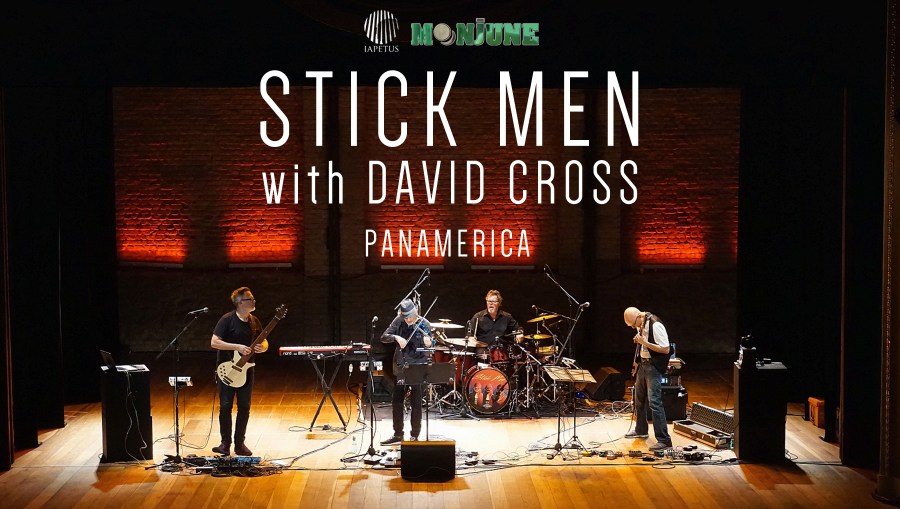
Stick Men — touch guitarist Markus Reuter, bassist/Stick player Tony Levin and percussionist Pat Mastelotto — have been expanding the frontiers of progressive music since 2007.  With a repertoire that encompasses Levin & Mastelotto’s legacy in King Crimson, Reuter’s innovative soundscapes and searing improvisations, 4 studio albums as a group and even Igor Stravinsky’s Firebird, they are the real deal, whether as a self-contained unit or joined by other groundbreaking musicians.  I heard them live in 2011 when they toured with The Adrian Belew Power Trio, both performing their own music and joining Belew’s band for an awe-inspiring set of Crimson classics.

In August and September 2018, Stick Men teamed with violinist David Cross (best known for his contributions to King Crimson from 1972 to 1974), touring ten countries in Latin America.  The results are documented on the new Panamerica, due for release in September.  Expanding on previous live Stick Men releases Midori (recorded with Cross in Japan) and Roppongi  (recorded with saxophonist Mel Collins), the set will include:

  •   A complete show recorded live in Costa Rica
  • “Pan America Specials” recorded live in Argentina and Brazil
  • “Pan America Suites” recorded live in Peru, Chile, Argentina, and Uruguay
  • “Fire Starters”, a continuous mix of selected Cross/Reuter show opening pieces

While Panamerica will be available for download at Stick Men’s Bandcamp store, pre-orders are now being taken for a collectors’ 5-CD set, limited to 500 copies and sold by invitation only, with all proceeds going directly to the band.  Interested? Go here for all the details!

— Rick Krueger
LMR – Back to the Machine

The first music video from the Law Offices of Levin Minneman Rudess.

You can order the new album here: http://www.lazybones.com

From The Law Offices Of…

lmrDue to be released on July 15, you can pre-order the album now at http://www.levinminnemannrudess.com. This should be a great album from three of prog’s finest.

lmralbumjune