When it comes to music, you can’t beat a hypnotic bass line or an electrifying drum solo, something that songwriters and musicians take pride in delivering the best of the best to create songs that can live on forever. However, did you know that as well as making some incredible music that some of our favorite musicians and singers have many other strings to their bows in the shape of some not-so-secret skills that you may not have necessarily known?
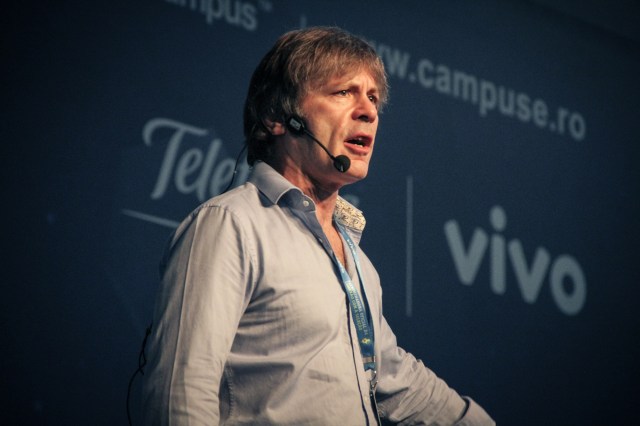
When you think of Bruce Dickinson from Iron Maiden, you think of a rock legend, but as well as flying high in the charts, Bruce also flies high in the skies, too, as a qualified pilot. After having a trial flying lesson in Florida, Bruce got the “flying bug,” and he now could be your pilot on your next private flight!
Are you impressed? As well as being a pilot and a rock legend, Bruce is also a talented fencer, too, and historically, Great Britain’s seventh-best fencer.
Rock stars have a reputation for their outrageous acts and outlandish behavior, so you may be surprised to learn that these days, Blur bassist Alex James has swapped his wellies from performing at Glastonbury to wearing his wellies on his own cheese farm. Alex has dedicated a significant amount of his time to developing his dairy range, and, in fact, you might be surprised to know that his own brand of cheese was voted “Best Goats Cheese” at the 2008 Cheese Awards.
What goes quite well with cheese? Wine, of course! If there ever was a dream collaboration, then for sure Alex should do this with the American rock band Train, who have developed their own brand of wine. They developed the Save Me range in conjunction with the San Francisco Wine company. There are links to their songs in their wine range, which includes a red wine named after their top hit, “Drops of Jupiter.”
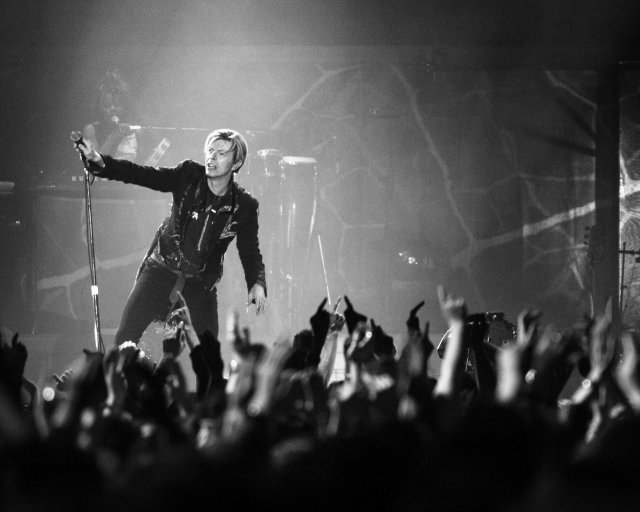
As well as achievements in the food and beverage industry, many of our favorite singers and musicians also demonstrate their talents in other areas. Singer-songwriter and musician Imani Coppola is also a talented artist and has seen her work exhibited in New York. Imani is not alone when it comes to talented musicians who paint. The Rolling Stones’ Ronnie Wood and Bob Dylan are both incredible artists, and the late great David Bowie was also a prestigious painter and sculptor, too. Rock legends The Eagles are a celebrated band all over the world for their incredible back catalog, which includes possibly their best-known hit, the legendary “Hotel California.” As well as being a great lyricist, Glenn Frey developed quite the reputation for his card skills and often used to participate in games of poker. According to legend, Glenn, along with Don Henley, were “avid card players,” playing on a regular basis — not necessarily in their own homes, but elsewhere in the likes of tour buses, hotel rooms and even backstage at concerts.
One other singer known for his poker playing hobby was Lemmy, who was the lead singer of Motörhead. His band created the “Ace of Spades,” which is an absolute rock classic and widely considered to be a song that inspires professional poker players before a game.
These musical stars reinforce that, in fact, regardless of age, that it is never too late to try and learn something new or indeed develop existing talent. It also demonstrates that age should never be a barrier to starting a new career. Hands up for those who want to become a prog-rock musician as a new career! It would mean we would have to review your album, though! Still interested in changing your life? Form an orderly queue now!
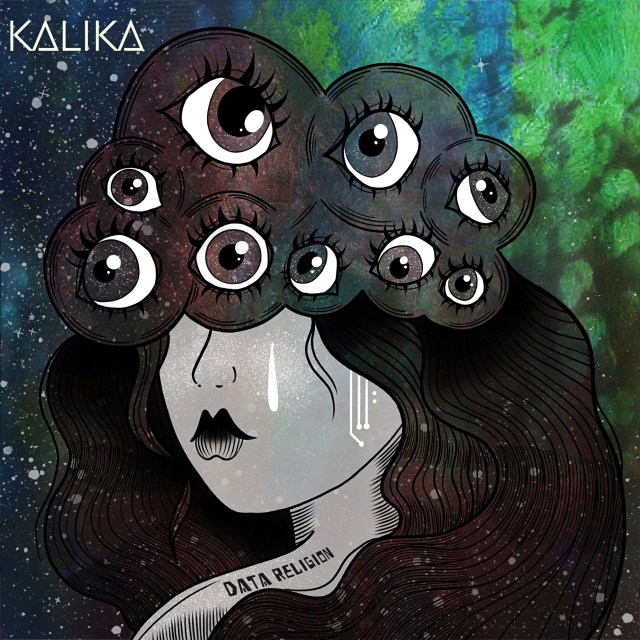
Maastricht, the Netherlands-based experimental rock quartet Kalika are releasing their sophomore EP “Data Religion” via Progarchy. Stream the EP in full below.
Named after the Hindu goddess Kali, on “Data Religion” Kalika tackle the theme of technology as a tool which can manipulate people pretty effectively. Singer and guitarist Prannay Sastry previously commented: “Today, personal data is freely available to the big data hoarders and is regularly misused. The EP examines a world in which things have gone wrong and there is a divide between the haves and have-nots of all this data. This divide is one of ownership – the data horders own the have-nots, leaving them powerless.“
Transferring a myriad of emotions through the six-track release, Kalika depicts the moments of darkness, happiness, as well as melancholy. About the EP’s flow, Sastry had to say the following:
“We wanted to subvert the narrative arc that a lot of albums have by starting with the darker songs and ending on a lighter note. We carefully curated the order and the flow of the tracks so that the listener can go on their unique journey.“
“Data Religion” is out today; stream it below. Follow Kalika on Facebook and Instagram.
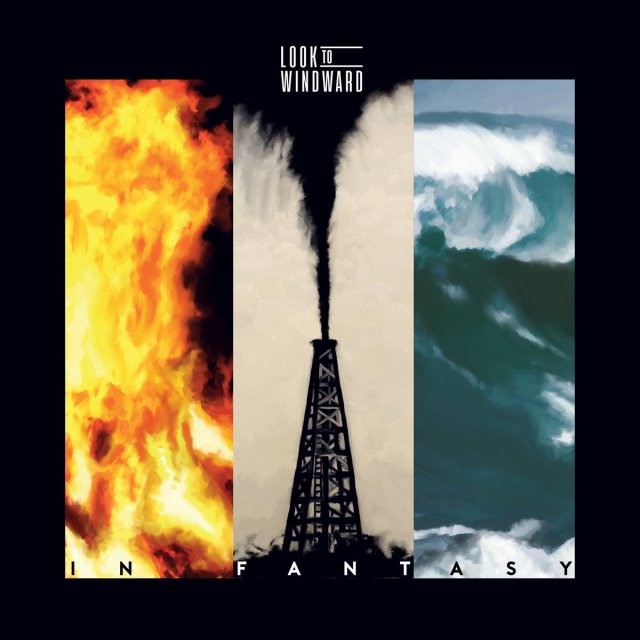
Look to Windward is a progressive rock/metal studio project by London-based musician Andrew McCully who has released two studio albums, two EP’s and a single since 2010. The latest release is this year’s full-length album entitled “In Fantasy.”
In an interview for Progarchy, McCully talks about his project, the scene, and more.
Let’s start from your early music beginnings. How did your musical career begin? When did you start playing? Which groups have been your favorites as a young man? Please tell us something more about your early life.
My earliest memories of performing music were learning the recorder and clarinet before receiving a birthday present of an electric guitar in my early teens. That started it all really. I was also singing in choirs throughout school. I grew up surrounded by music performance. Then around the age of 11 I connected with a close friend over mutual music tastes and we continued to share and listen to music together leading to writing and performing on our own in high school when we recruited a drummer from my jazz group, Jono Sawyer.
I have rather distinct memories of 4 albums from my youth that really started to define my interests and passion for rock music. The first was Mellon Collie and the Infinite Sadness by The Smashing Pumpkins (which was the first album I ever bought). I still regularly listen to this masterpiece. Then came Metallica’s Reload (a strange one to start with I know) and Ok Computer by Radiohead (which remains my favourite album). And then I can’t leave out first hearing Dream Theater’s Scenes from a Memory when I was 15. I don’t listen to them anymore really but it opened up an entire world of prog related music to me.
How did you go about starting Look To Windward?
LTW began as some basic riff experiments with my friend and collaborator Ben Morley, and we created our first track out of that (which I believe was Forest Is Moving from the first album Fortunes Haze). We were looking for a way of exploring all the epic prog-metal ideas we were talking about and without the ‘restrictions’ of having a band to play it live we went nuts. The first album grew over 2 years of messing around and I’m proud of what we made. There was a lot of self taught music production done along the way.
In the beginning, did you have some “fixed” tempo in composing songs or everything was a product of jamming, improvising?
A bit of both I think. Sometimes I might tackle a song with a specific feel in mind or I might just be jamming with my guitar and find something I like. Then it’s a case of slowly building up the layers and melodies on top of this.
How would you describe the music from your new album “In Fantasy” on your own?
Progressive Rock with elements of Metal, Alternative Rock and Pop I think. I was trying to focus more of clarity and structure for this album, not to say I don’t value the unrestrained, layered intensity of my first 2 releases.
What was your approach to writing the album like?
Much like it has been in the past. Just lots of exploration. I would say that I threw out more ideas this time around though. Either because it was harder to generate ideas I was happy with or because I was being stricter in regards to my desired sound for the album.
You pay attention to atmospheric and ambient elements in your music. How important it is for the structure of your songs?
Dynamic contrast is integral to Look To Windward’s sound. I love creating the flow between great intensity and ambient calm. I’d say the structure of the songs in this regard is what I pay attention too the most!
How do you see the prog rock/metal scene today?
I have mixed feelings about it. There are artists doing genuinely interesting things but a lot of what is called progressive is rather stagnant and derivative. Particularly in metal, where copying a certain sound has become quite widespread. I’m guilty of it myself. When the technique of locking your kick drum in with a de-tuned guitar chug works so effectively it’s hard not to dip into that well. When you look back at how far the genre came from the 80’s into the 90’s and early 2000’s you want to see that kind of innovation now. There are small pockets of innovation but it isn’t genre wide yet.
Do you consider yourself a part of any specific cultural movement, however peripheral?
I’m probably part of the movement of DIY musicians creating fully realised music at home. The tech allows 1 person to take on the role of a full band. That’s why it was important for me to get as many guest musicians performing on the album as I could. It elevates the music beyond what I could do myself. Devin Townsend is the model I aspire too here.
Are you also involved in any other projects or bands?
At the moment I’m not. Look To Windward fully scratches that itch for me. That being said I’d like to collaborate more on the songwriting for the next album, too add some new flavours to the palette.
So, what comes next for you?
I’m taking a break from writing and recording for a while, but I already have some ideas brewing for the next release.
“In Fatnasy” is out now and is available from Bandcamp. Follow Look to Windward on Facebook.
Progressive-rock and jazz-rock often share a common bond, yet many artists either tilt the scale towards technical gymnastics or focus on strong song-form and fine-tune the balance of justice with judicious soloing spots. “Unsafe Places” marks the first album by Italian guitarist and songwriter Emanuele Bodo, who gathered a line-up of highly skilled musicians to help him with his musical vision.
The musicians uphold a well-defined, group-centric line of attack, consisting of foot-stomping fuzoid rockers, often tempered by Bodo’s sonorous phrasings. His zinging crunch chords and soaring single note leads are contrasted by keyboardist Davide Cristofoli’s fluidly streaming lines. Moreover, the band integrates catchy themes into these impacting works. Thankfully, the group attains an equilibrium, where dynamics are acutely employed among the swirling interludes and off-kilter time signatures that instill a sense of adventure into the grand mix.
A portion of their sound is designed with brief nods to the days of progressive-rock yore, with a manifesto that transmits a hip group-centric disposition, tinged with modernist tendencies. Overall, the material reigns supreme, and it’s easy to discern that this is not an album that was recklessly slapped together. Emanuele Bodo’s self-titled recording debut is a persuasive one, indeed. Get if from here.
You may think, “here’s another prog rock concept album; nothing new here,” but Whiteside’s Daughter from Jackson in Mississippi are set to launch their full-lenght “The Life You Save” this June, a record “about James, the gay son of an Alabama Pentecostal preacher, who in high school rebels and falls in with John, his ex-Baptist atheist classmate and guitarist for a high school death metal band called Village Witch.” Putting together progressive rock and proto-metal makes things even more bizarre, but that’s what we love about prog, anyways.
Read an interview with multi-instrumentalist Steve Deaton.
Alright, first thing is first. Before we dive into all the music stuff, how’s life?
All is well. Busy, but good.
Speaking of new music, you have an upcoming album. What can people expect from “The Life You Save”?
Well, it is a concept album, so I hope they can expect a compelling story set to some adventurous music. It is a dark story about religious indoctrination, guilt, depression, and suicidal thoughts. But in the midst of all that, too, is a joyous celebration of teenage rebellion. So the music has many moods, and therefore many styles—from minor key prog rock and prog metal, to major key power pop, and a bunch of stuff in between. It has elements of the Southern Gothic literary tradition which explores the dark, taboo, grotesque elements in traditional Southern culture—in this case, hellfire preaching, suppressed sexuality, casting out demons—basic “snake handling” sort of stuff. But it is set somewhere in 80’s or 90’s. Anyone, especially rock and metal fans, who lived through the “Satanic Panic” in the U.S., predominantly in the South, will certainly get that vibe.
What was it like working on the album?
All in all, it was fun. I’ve known and worked with Brian, the drummer, and Poff, the vocalist, for years, so we always seem to be on similar wavelengths and the creative process goes pretty smoothly. The only thing that made the process long and difficult is that this was a long distance collaboration—I live in Mississippi, and the two of them now live in Alabama—Brian in Birmingham and Poff in Montgomery. So a lot of file sharing and hashing things out in a Dropbox folder.
Are there any touring plans in support to “The Life You Save”?
Not touring so much, but we are working up a live performance of the concept, and we plan to stage it periodically, more like a theatrical performance than a club show. Plus, we all have other pursuits that make sustained touring impossible.
While we are on the subject of touring, what countries would you love to tour?
It would be awesome to stage the show in the UK or Scandinavia. Mainly because so much of the music that I like comes from that part of the world, but also because our social media seems to get a lot of traffic from there—it seems there is a devoted audience for progressive music all concentrated in a small geographic space. We have a lot of prog heads in the US, but we are scattered all over a vast expanse.
Who and what inspires you the most?
Any artist or musician who isn’t afraid to explore and do something that may not be popular—even though if they do it well, they often DO become popular, even if it’s with a smaller niche of fans. So my heroes are diverse—David Bowie, Rush, King Crimson, Black Sabbath, Fishbone, even Waylon Jennings and Willie Nelson.
What other genres of music do you listen to? Have any of the other genres you listen to had any impact on your playing?
So, as I alluded to, I listen to a lot of music. Though I’ve always gravitated toward rock and metal, I love classic country (Hank Sr., Willie, Waylon, Buck Owens, Johnny Cash), psychedelic So Cal country like the Flying Burrito Brothers, and great pop or folk music—I love the Mamas and Papas for instance and Simon and Garfunkel, too. But a lot of Southern influences creep into this prog rock project—especially Southern rock like Molly Hatchet or even the Allman Brothers. I’ve played in alt-country bands and even some that do straight up honky tonk. So I guess that can’t help but influence what I write and play.
I really appreciate you giving us your time today. Is there anything else you would like to tell us and the fans before we wrap things up?
Well, we obviously really hope you dig the concept and the music when the full album comes out in June. If you really dig it, we are always more than grateful to those who spread the word. That’s how independent music has always made the rounds. Our local rock stations here in Jackson, Mississippi, aren’t going to play a prog rock concept album about the gay son of a Pentecostal preacher. Ha!
You can preview the Act I of “The Life You Save” on Bandcamp. Follow Whiteside’s Daughter on Facebook and Instagram.
Human Brain is a project by composer and guitarist Adam Green who has been teasing his upcoming debut album with the release of “Spaces” single. In an interview for Progarchy, Adam talks about the project, and he sheds light on the album.
Hey Adam! Thanks for responding to this interview. How have you been lately?
Been great, thanks!
How might you introduce yourselves to new potential listeners?
I like to write for everyone with multiple musical tastes. If you like super hard-hitting, energetic and emotional music, you’ll love Human Brain!
What inspired the name of the project — Human Brain?
Brain dump basically. I have quite a bit of emotion and passion flowing through my brain on a daily basis that I wanted to release into my writing.
How did Human Brain initially form?
Human Brain essentially started about 3 years ago when I began getting more serious about my writing in general. I decided it was time to put an official name to it and yearned for the fulfillment of it being heard by others. I’ve been inspired by many of the great metal artists on YouTube and wanted to get my brand out there in a similar fashion.
You are about to release a debut album. What can you tell me about it? Where did the inspiration for it come from and how did you go about the whole process of writing and recording it?
10 songs spanning multiple genres including everything from alternative rock to metal. Inspiration for the album basically came from the answer above for what inspired the project as a whole.
What can be expected from the upcoming album? Would you say the released single for “Spaces” is an accurate sample?
Yes, Spaces is for sure though I will say every song has it’s own thing going on. Some are more mellow than others and many different guitars were used throughout.
What’s your songwriting process like?
My typical approach is to flesh out a track that incorporates all of the musical styles I love most (metal, rock, progressive) while taking the listener on a roller coaster of a ride with meaningful changes throughout. I wrote all of the parts in my head and laid them down in iPhone voice memos initially. From there, I tracked everything in Logic using my Kemper Profiler Power Rack, Apollo Twin and Toontrack.
What are your ultimate hopes for Human Brain?
For the music to be heard and resonate with people across the world on multiple levels just like it does for me.
Do you have any bigger plans for the future?
TV, Film, Label with some gigging sprinkled in.
The last words are yours.
I’m beyond excited to give everyone a glimpse inside my Human Brain!
Finnish dark prog debutants Endworld Halos have launched their self-titled full-length album back in October, which in the trio’s own words is “a versatile and abitious slab of Finnish prog-infused rock.” Kimmo Utrianen spoke for Progarchy about the release.
How do you usually describe your music?
The most common description is dark prog (with a highly versatile range). An aural projection of the world as seen from these cold northern regions anno 2019.
What is your writing process like?
Me and Toni both come up with ideas we wish to incorporate to this project, passing them on to each other frequently (mostly digitally) and occasionally taking them to the practice space for a guitar jam-out session. With the guitar parts or just the melodies sorted, we start to figure out the vocal patterns and melodies, then the drums and the rest of the arrangement as a whole band. Quite a few of the songs are by either one of us, but some tunes are the fruit of our musical symbiosis.
Who or what is your inspiration, if you have any?
Older prog and non-generic music, people and musicians who dare to do whatever they please artistically, without caring about trends or standards. Other than that, my inner tracts, subconscious thoughts and conflicts I cannot deal with though any other means than music. Those are my primary source of inspiration. Through this assembly, my music connects to the outside world, hopefully leaving a mark from my point of view. The chance to (attempt to) do that is also very inspiring.
What is your favourite piece on “Endworld Halos” and why?
Adjusting to Light perhaps. It represents my scale of writing really well, as it ranges from weird and psychedelic passages to peace and harmony. One of the best tunes I’ve ever written, not to forget there’s some significant co-writing value to be considered, too. I also like Toni’s bizarre percussion on that song, including some household items, but let’s not go further into that topic here.
What makes “Endworld Halos” different?
In the nowadays array of progressive music, I feel we don’t play as much “safety” as quite a few bands. Even though we are not the most uniform or the easiest band to listen, or one with a smooth and conventional modern soundscape, we have managed to squeeze quite a bit of heart’s blood and even madness to our music. I’m very happy about that, even though I’m not referring to us being the only band that’s capable of doing that in 2019. The world needs a little grit, and we’ve got just that.
What should music lovers expect from “Endworld Halos”?
Songs and compositions that don’t bow to anyone in the field of modern prog music. Hard work by three Finns now manifested through digital medias such as Spotify and Bandcamp, not to forget the CD version we released, including a striking 12-page booklet with lyrics colorful photography by the band. Music that goes where ever it needs to go, and in this case, from the twilight of man to metropolitan chaos, to turbulent skies and barren wastes and deserts, eventually to a sundown and silence.
What kind of emotions would you like your audience to feel when they listen to your music?
I’d leave that for the listener to decide, but realizing how small we are is a good pick. Confusion, too, if all else fails.
Are there any plans to promote the album live?
No, not at this point. So far we work as a designated studio act, so no tour or show plans in the horizon.
Pick your three favourite albums that you would take on a desert island with you.
Genesis: Foxtrot, Mercyful Fate: Don’t Break the Oath, Pearl Jam: Ten.
“Endworld Halos” is out now and is available to order from Bandcamp.
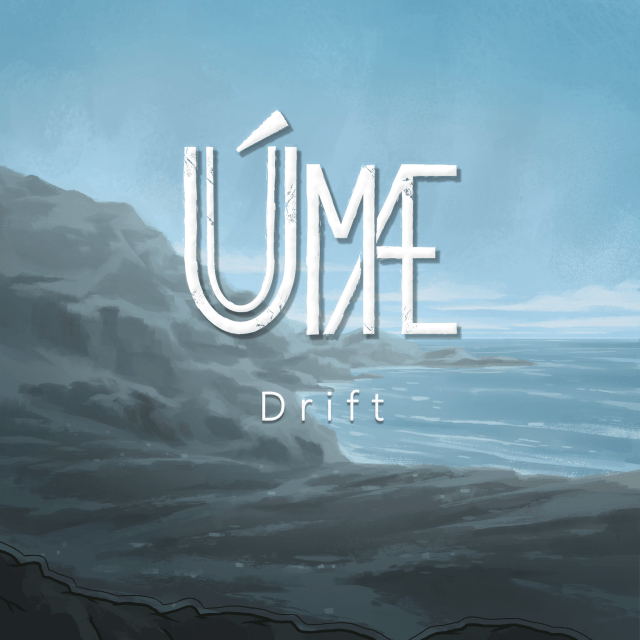
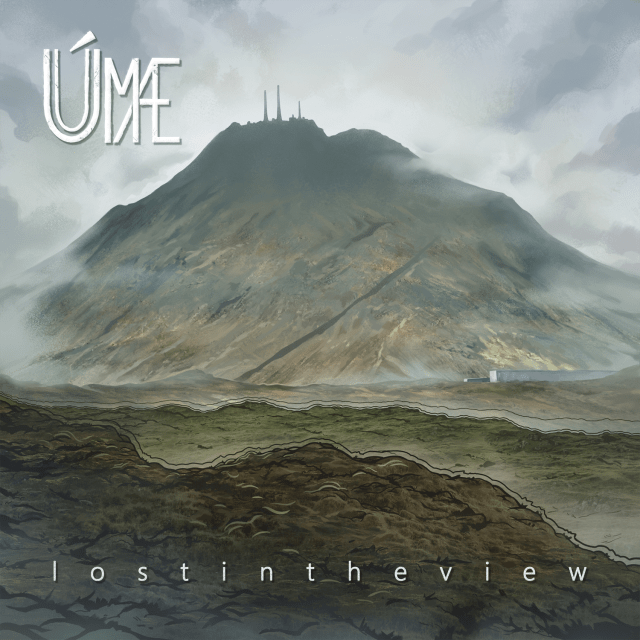
International progressive rock outfit UMÆ have previously launched two singles via PROG Magazine and Prog-Sphere.com, and coming today exclusively via Progarchy is the third single from the upcoming full-length debut “Lost in the View.” A new single titled “Drift” can be streamed below.
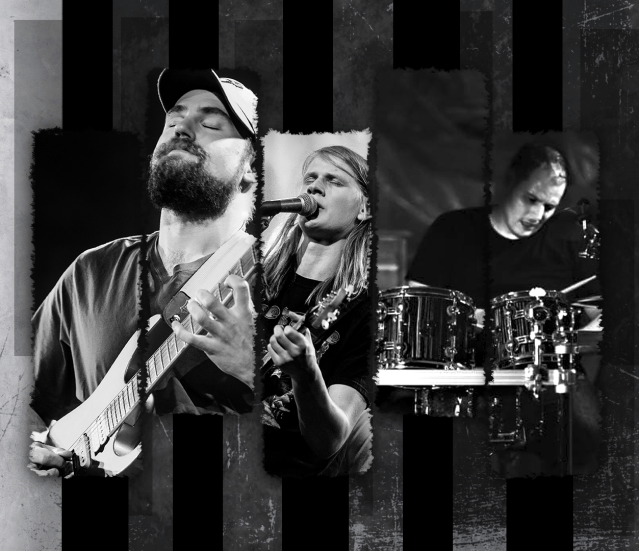
Vocalist and guitarist Anthony Cliplef, guitarist and backing vocalist Guðjón Sveinsson, and drummer Samy-George Salib have gathered a line-up of guest musicians for the debut album, with singer John Wesley (solo, Porcupine Tree), guitarist Eric Gillette (Neal Morse Band, Mike Portnoy’s Shattered Fortress), keyboardist Adam Holzman (Steven Wilson, Miles Davis), and bassist Conner Green (Haken) being the most prominent names.
About “Drift,” Anthony Cliplef commented: “I wrote the outro section years ago, on guitar. The outro and the rest of the song remained as two separate pieces for a long time, until I coincidentally played them back-to-back. From there, this became the seed of another track which Guðjón and I would collaborate on. I had lyrics for the outro, which were never used, however, the melody was still viable. We ended up putting in an ebow line using that very melody I had in mind, which G’s string arrangement would echo towards the end. In this track, Conner returns on bass, with an inspired bass line, brilliantly reflecting some of the vocal melody in the verses, and bolstering the building power of the outro. Jamison Smeltz, lays down an amazing sax solo towards the end, backed by a powerful string arrangement and rising tension on all instruments.“
Guðjón Sveinsson adds: “Compared to the previous singles, this track displays more of the melancholic feel that is strewn around the album. Building up from stripped down verses to a grand ending, it gives off a range of related, yet distinct emotions.“
“Lost in the View” is to be launched on January 3rd. Stream “Drift” below, and visit UMÆ’s official website for more information. Follow the band on Facebook and Instagram.
Now here is an interesting and promising new Prog band. UMÆ is an internation trio featuring guitarist Guðjón Sveinsson, singer/guitarist Anthony Cliplef, and drummer Samy George-Salib. The band has recently launched a debut single “Turn Back Time” via Prog Magazine which features guest contributions by John Wesley (Porcuine Tree) and Haken bassist Conner Green. Their debut album “Lost in the View” is out in December, and beside mentioned gentlemen it also features Adam Holzman (Steven Wilson, Miles Davis) and Eric Gillette (Neal Morse Band).
Read an interview with Anthony and Guðjón below.
Hello! Thanks for responding to this interview. How have you guys been lately?
G: We’ve been great thank you! Excited for the release, and hard at work preparing for it.
How might you introduce yourselves to new potential listeners?
A: UMÆ is an experience; emotional; meaningful; energetic; somber; melancholic. We are all over the board, but I swear it is cohesive. [laughs]
What inspired the name of the band — UMÆ?
A: Guðjón and I were spitballing a lot of ideas during the demoing phase, some more jokingly than others, but we settled on this one, which uses Icelandic characters, but doesn’t mean anything in Icelandic. I like the idea of a word that isn’t already defined. It gives us the opportunity to define it by the music and artwork we create and associate with it.
How did UMÆ initially form as a creative unit?
A: Well, I went on a trip to a prog festival, where I ended up meeting and playing music with Guðjón, Samy, and many other people. We all had similar interests in music, and we all enjoyed sharing the stage together.
After I returned home from the trip, I was inspired by the jamming, so I decided to contact Guðjón about possibly collaborating on some music. I sent some rough demos, he shared some examples of his own, we shared bands with each other. From there, we laid out plans for me to travel across the ocean to Iceland and start writing. Very soon we sent demos over to Samy and convinced him to commit to the project.
You are about to release a debut album titled “Lost in the View.” Where did the inspiration for it come from and how did you go about the whole process of writing and recording it?
G: In essence it just comes down to our love of music, and willingness to create. It’s hard to pinpoint a specific inspiration for the exact music featured on the album. Some of it was written well before we started working on it together, as far back as 10 years, which was the case for the already-released single “Turn Back Time”. The lyrical concept came as a sort of reaction to the music, and we soon found ourselves writing around that concept.
Over the 6 initial weeks that Anth spent in Iceland, we recorded and arranged demos for the whole album. We started in my living room; plugged in a guitar and played whatever was on our minds. In about three weeks we already had the basis to all the songs. The remaining three weeks were spent arranging the song structures, filling in blanks and sculpting the general vision for the sound of the record. Some of these early demo recordings even made it into the final product. We focused on retaining the initial feeling we got from each and every part, and enhancing it further with the arrangements, and later on lyrics.
The recording process took place literally over the world. We recorded drums with Samy in Toronto over an intense 3 day session. Over the course of a year, we’ve built the layers on top of these bed tracks, with recording taking place in 4 locations in Iceland, 5 different home studios in the US, and more recently, in Sweden. We’ve been tweaking and adding stuff along the way down to these very last days.
UMÆ is a trio in its core but the upcoming full-length release features quite a number of guest musicians, including John Wesley (Porcupine Tree), Conner Green (Haken), Adam Holzman (Steven Wilson) and Eric Gillette (Neal Morse Band). How did the collaboration with each of them come about? How much did they actually contribute in the writing phase?
G: Once the music started coming together, we soon started looking at people that we thought would be a good fit for various parts of the album. We had a good feeling about the music, and decided to aim high from the get-go.
Fairly early in the process we reached out to Conner, who was up for the task, and eventually played on most of the album. At that time all the foundations to the songs were already laid out on guitar and drums, along with some of the main melodies. We left it up to him to interpret the bass parts, and were really happy with the end results.
On the keyboard front, most of the album features Magnús Jóhann, a brilliant young player from Iceland who we worked closely with. On two of the heavier songs however, we wanted to try a little different “flavor”, and figured Adam Holzman might be good fit. So we contacted him; thankfully he was up for it and was able to find a time within his touring schedule to record it. Similarly there the songs were already laid out, and we presented our rough idea of the sounds we were going for. His take on it ended up being just right.
We wrote and recorded all the vocals initially, but didn’t feel our voices were the right fit for certain songs. Samy had encountered John Wesley around the time we were exploring options for these songs, and presented the idea of his involvement. He was up for giving it a shot, and when we heard his take on “Turn Back Time” we were immediately sold.
On one of the tracks we entertained the idea of having a guest solo spot. Eric Gillette responded quickly to our inquiry, and before we knew it we had a killer solo in our hands! He’s such an amazing player, and we’re really stoked to have him appear on the track.
What can be expected from the upcoming album? Would you say the released single for “Turn Back Time” is an accurate sample?
G: Yes and no. The track contains some of the main themes from the album, and lyrically is somewhat representative of the concept, but definitely does not cover the wide range of influences we tap into throughout the album. It’s a good start of the journey that gets a nod here and there, but the atmosphere shifts to a bleaker tone as the album progresses.
What’s your songwriting process like?
A: Guðjón kind of touched on that already, but I’ll elaborate a bit. When I compose a piece from beginning to end, like our aforementioned single, I typically work from a melody and or chord idea, and sometimes just a rhythmic idea. I like to use programming software to document the guitar I’ve come up with, then build the other instruments around it. It’s all midi programmed, but it gives me a good sense of what the song could sound like.
When Guðjón and I were co-writing songs, there were many times where he had a riff or two, I had a riff or two, we placed them in order, and basically connected the dots by filling in the middle. Sometimes we had no idea how we were going to make two parts connect, but we managed to pull them together. So that’s a bit of a deeper glimpse into the process.
What are your ultimate hopes for UMÆ as a band?
G: Hopefully we’ll eventually manage to make a living out of making and performing music. Anything beyond that is a bonus really.
I’m kidding, world domination of course.
Do you have any bigger plans for the future?
G: Bigger? For sure, although we can’t really say much at this point, other than that these plans are currently in formation.
The last words are yours.
A: To keep up with UMÆ, our single releases, album release, touring plans, and all other major news, go to https://www.umaeband.com/
Indian prog rockers Rainburn return on November 7th with the release of a new album “Insignify” (read our review here). In an interview for Progarchy, singer and guitarist Vats Iyengar tells us about the meaning behind the band’s name, their working process, new songs, and more.
Hello! Thanks for responding to this interview. How have you guys been lately?
Thank you for hosting us! We’ve been good. Gearing up for the album release, and also starting rehearsals for the tour soon.
How might you introduce yourselves to new potential listeners?
I’d say our music covers a lot of ground and touches upon many different styles without sounding forced or gimmicky. We also have a nice mix of the old and the new, some modern music and some classic influences. If you like emotionally-heavy music that is creative and diverse, you should check us out.
What inspired the name of the band — Rainburn?
We wanted an oxymoron, to suggest that we cover a wide spectrum of music, from soft to heavy, moments of light and darkness – and everything in-between – in our music, so we went with this name. Our drummer, Praveen, came up with the name. It’s a pretty established tradition as far as band names go. Like Black Sabbath, for example.
How did Rainburn initially form as a creative unit?
We had a keyboard player in the beginning and only one guitarist (me). It was actually his idea that we form a band together. We added a bassist and a drummer soon after, played quite a few gigs with that lineup, even recorded a couple of demos. But as we started finding our sound, we decided two guitars worked better.
You are about to release a new album titled “Insignify.” Where did the inspiration for it come from and how did you go about the whole process of writing and recording it?
‘Insignify’ has been a two-and-a-half-year labour of love that started as a seed in my head. It took a long time to take shape and form fully but once it did, the music was created very quickly, because the concept was so clear and detailed. I think it’d take a few listens, at least, to fully digest and “get” the album. The record was mixed by Thejus Nair, a brilliant young engineer who operates Eleven Gauge Recordings in Bangalore, our hometown. Mastering was done by Tony Lindgren at Sweden’s Fascination Street Studios, where so much good progressive music comes out of these days.
What can be expected from the upcoming album? Would you say the released singles (“Suicide Note” and “Mirrors”) are accurate samples?
They’re fairly good samplers but as to whether they’re completely representative of the album – not by a long way. Apart from what’s in those songs, we have moments of funk, fusion, a bit of jazz, even a vocal fugue on the record. No two songs really sound alike.
What’s your songwriting process like?
It’s usually me writing and making demos at home that I then present to the band, and they tailor or modify their parts according to their style. But for some stuff, we changed the formula. Like, ‘Someone New’ started with Praveen composing an entire drum track that I then wrote riffs and melodies over. That was a very interesting way to write!
What are your ultimate hopes for Rainburn as a band?
To be an internationally touring band, to make some great records so we can leave a musical legacy behind and – the holy grail – to be able to sustain ourselves, financially, with our music.
Do you have any bigger plans for the future?
Well, we’ll be going on a national tour early next year – our second one. And hope to play some gigs outside India next year as well.
The last words are yours.
To your readers – If you’ve somehow managed to read this far, I hope you’ll check out our album when it’s out (November 7th). Listen to the two singles for a taste, and also to the snippets we’ve been posting on our Facebook page of various songs from the record.
To Progarchy – thank you for supporting our music.










 Progarchy
