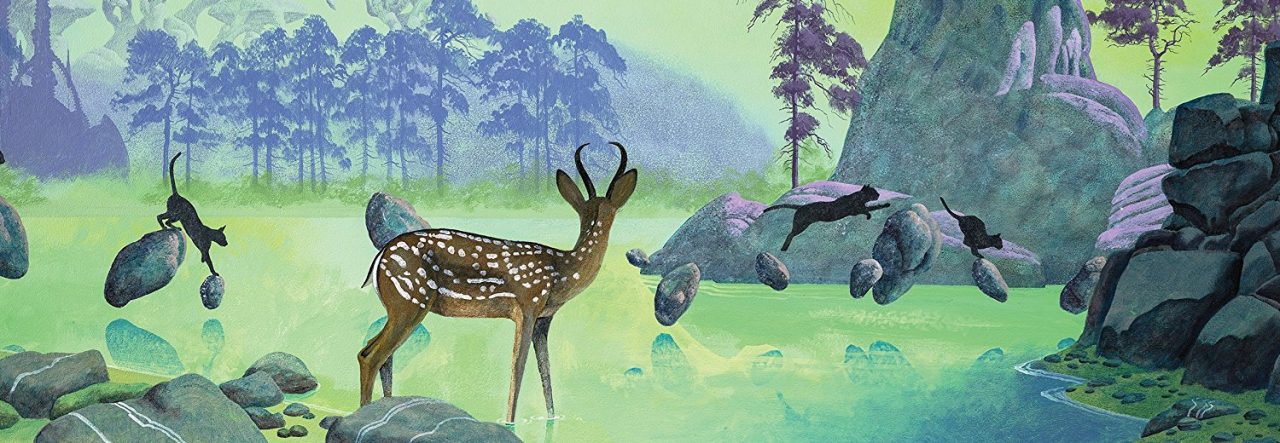
Muse recently announced their upcoming album, “Will of the People,” will be released on August 26. Musically the singles released thus far are a mixed bag, with “Won’t Stand Down” being by far the best. Parts of it are some of the best hard rock the band has ever made – even approaching metal at points. “Compliance” has more of the electronic edge the band has dabbled with in the past, especially on Simulation Theory. The title track has a typical Muse power ballad groove, but there are elements that sound like they were ripped straight from Marilyn Manson’s “Beautiful People.”
With all that said, I’m cautiously excited about the record. The anti-establishment anti-tyranny concept for the album is right up my alley. The band has long been known for such themes, and now is certainly the time for more music in that vein while it’s still legal in the west. Matt Bellamy comments,
‘Will of the People’ is fictional story set in a fictional metaverse on a fictional planet ruled by a fictional authoritarian state run by a fictional algorithm manifested by a fictional data centre running a fictional bank printing a fictional currency controlling a fictional population occupying a fictional city containing a fictional apartment where a fictional man woke up one day and thought ‘f*** this.’
You can pre-order the album from the band’s store: https://usstore.muse.mu. The album will be available on vinyl, CD, and even cassette. No 8-track? Bummer.
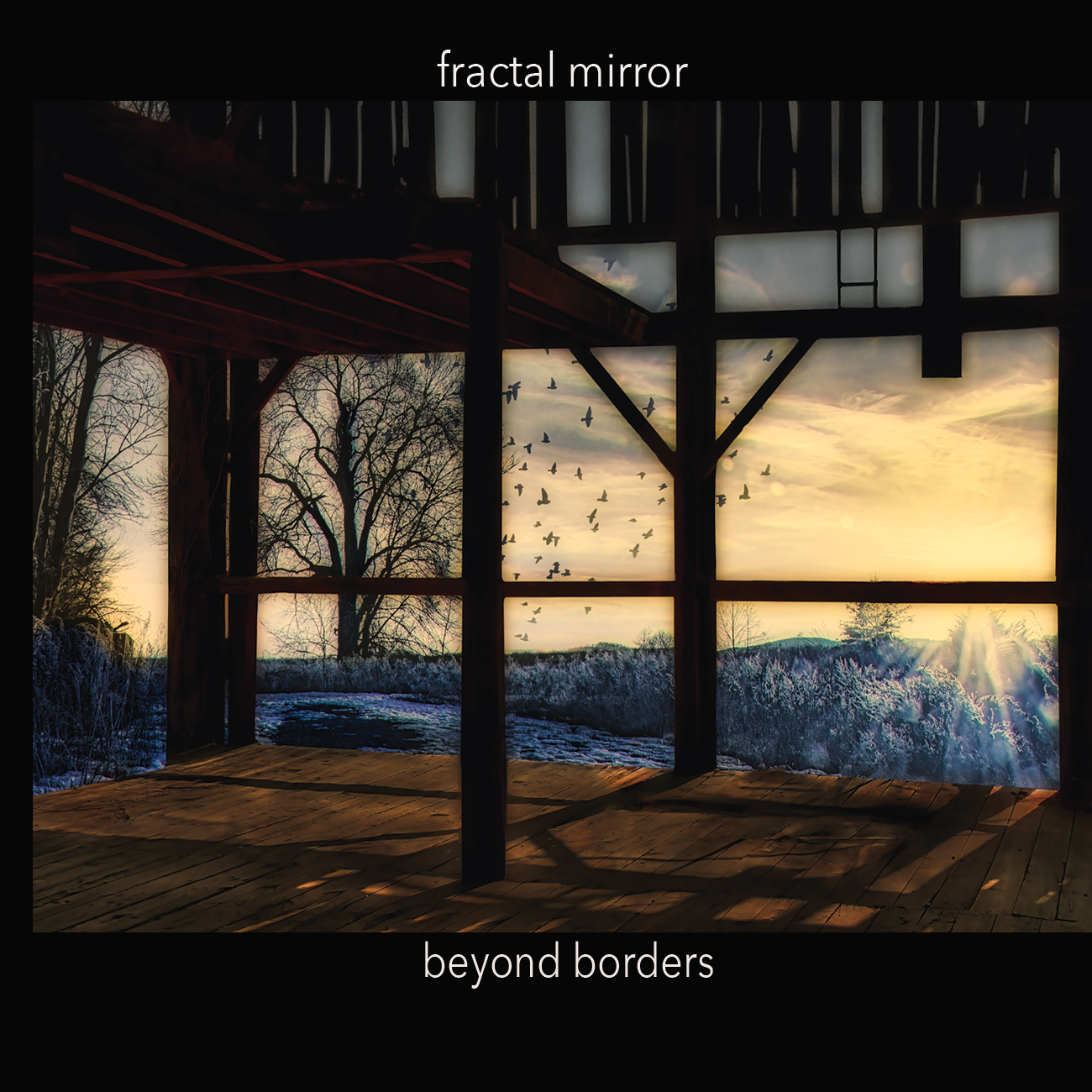
Fractal Mirror, Beyond Borders, Bad Elephant Music, October 15, 2021 Tracks: Beyond (4:28), Ashes (17:12), Slip Away (4:18), Shadow Man (5:46), Kingdom of the Lost (4:18), Borders (12:46)
Ok, so I’m almost 8 months late to the party on this one, but better late than never. We’ve been covering Fractal Mirror for a long time here at Progarchy, and I didn’t want that to stop. The international (The Netherlands, UK, USA) group has an eclectic blend of styles that can easily be called progressive and melodic, yet they’ve always had a bit of a pop influence.
For those not in the know, Fractal Mirror is signed to Bad Elephant Music and features Leo Koperdraat on vocals, keyboards, and mellotron; Frank Urbaniak on drums; Ed Van Haagen on bass, and Gareth Cole on guitars and backing vocals. Like many of their records, Brett Kull (who I had the great pleasure of interviewing a few years ago) mixed Beyond Borders, and he also provides some backing vocals. Marking a change, Frank Urbaniak created the artwork this time around after Brian Watson had done their album art in the past. Urbaniak’s skill as a photographer is remarkable, as some of his work on the band’s facebook page will attest to.
Their latest record, Beyond Borders, marks a bit of a directional change, not so much in sound, but in the long-form nature of two of the tracks. In past albums most of the songs were on the shorter side, with 8 minutes being a long song for them and the albums having 10 or 11 tracks. Beyond Borders has a stronger instrumental side, allowing the 17-minute “Ashes” and nearly 13-minute “Borders” to grow and breath. The other songs are shorter, but with only six tracks, its the longer ones that really stand out. The opening song, “Beyond” acts as a nice little instrumental prologue or overture.
The mellotron creates a moody soundscape throughout the record, as it has on their past albums. The keyboards in general create walls of sound. Cole’s guitars really stand out to me on this album. They steal the show, as he does in the other bands with which he’s involved. Urbaniak’s drums and Haagen’s bass create a groovy rhythm section. I love Urbaniak’s playful cymbal work, which makes a pleasant foil to the more melancholic mellotron and keyboards, as well as the deeper tone to Koperdraat’s haunting vocals. Said vocals have always been a hallmark of Fractal Mirror’s sound, for me anyways, with its unique tone and mournful quality. The resulting sound on the record is beautifully balanced.
Another element I love about this record is the vocal harmonies and layering of the backing vocals. The melodies often have pop hooks that work quite well, but then again that’s always been one of Fractal Mirror’s strong points.
Lyrically there’s a lot to digest. I wish I had a printed or digital version of the CD booklet to dive into, but from what I’ve absorbed, the lyrics have a contemplative feel. What are they contemplating? Seems to be the ills of today, but they’re digging deep below the surface. They aren’t commenting on politics or events. They’re using images to paint pictures that are colored in by the instrumentation.
Beyond Borders may very well be Fractal Mirror’s best album to date. Their melodic prog sound has grown and matured with each passing record. I appreciate the longer songs on this album, which really allow their musical and lyrical ideas to develop. Definitely not an album to be overlooked.
Earlier today Big Big Train released a video promo for their upcoming September tour in the UK and parts of Europe. I believe this is the first listen we get of new singer Alberto Bravin singing Big Big Train tracks. Check it out:
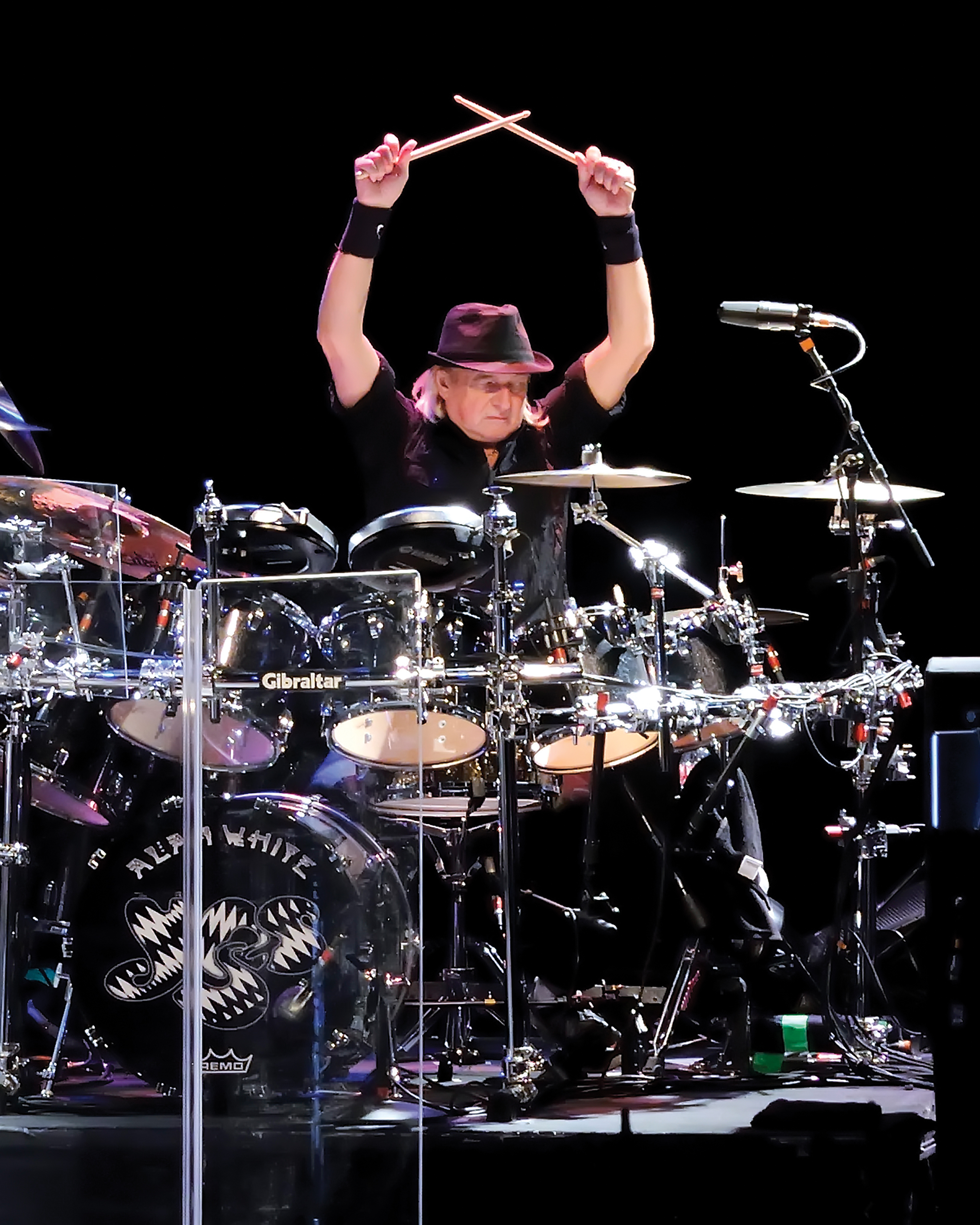
Just days after Yes announced that Alan White wouldn’t be able to play on the band’s upcoming tour due to health concerns, today the band announced that he has passed away at age 72. White has been a mainstay behind the drum kit for Yes since 1972. In an interview for Progarchy back in 2015, White commented on playing with the band for so long, “When I joined the band I said, ‘I’ll give you guys three months and see if I enjoy it and you give me three months and see if you enjoy it as a band.’ And I’m still here forty-three years later, so there must be something working.”
Health issues the past several years have limited how much Alan played with the band, with Jay Schellen filling in, but that still hadn’t stopped him from coming out towards the end of the concerts and showing the audience he still had it. I saw Yes on their 50th anniversary tour a few years ago, and they were phenomenal.
RIP Alan.
Here’s the full press release from the band:
It is with deep sadness that YES announce Alan White, their much-loved drummer and friend of 50 years, has passed away, aged 72, after a short illness. The news has shocked and stunned the entire YES family.
Alan had been looking forward to the forthcoming UK Tour, to celebrating his 50th Anniversary with YES and their iconic Close To The Edge album, where Alan’s journey with YES began in July 1972.
He recently celebrated the 40th Anniversary of his marriage to his loving wife Gigi. Alan passed away, peacefully at home.
Alan was born in 1949 in County Durham. A number of health setbacks, since 2016, had restricted Alan’s time on stage with YES on recent tours with Jay Schellen filling in and Alan joining the band, to great applause, towards the end of each set.
Alan was considered to be one of the greatest rock drummers of all time and joined YES in 1972 for the Close to the Edge Tour. He had previously worked with John Lennon’s Plastic Ono band after a call, in 1969, to play at the Toronto Rock Festival. Alan continued working with Lennon including on the Imagine album and with George Harrison on All Things Must Pass. He also worked with several other musicians, over the years, including Ginger Baker’s Air Force, Joe Cocker, Gary Wright, Doris Troy and Billy Preston to name but a few. Alan White was inducted into the Rock and Roll Hall of Fame as a member of YES in 2017.
YES will dedicate their 50th Anniversary Close to the Edge UK Tour in June to White.
I’m very sad to see that Vangelis has passed away at the age of 79. What a legend, and what a loss. Whether it was his work with Aphrodite’s Child or his work on movie scores such as Chariots of Fire or Blade Runner, he made an unforgettable mark on the music world.
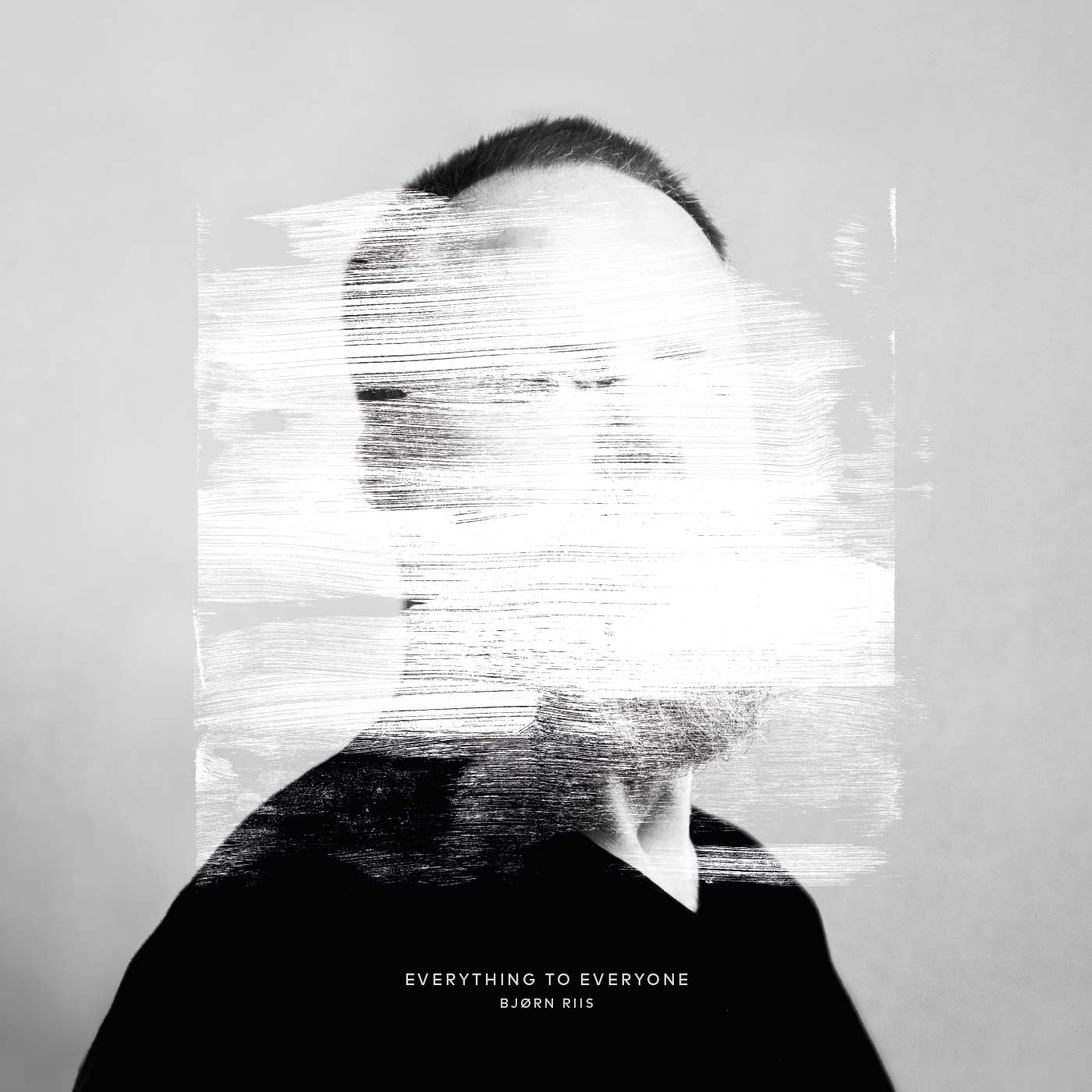
Bjørn Riis, Everything to Everyone, Karisma Records, April 8, 2022 Tracks: Run (5:56), Lay Me Down (11:40), The Siren (7:20), Every Second Every Hour (13:20), Descending (4:33), Everything to Everyone (7:28)
At the risk of throwing objectivity out the window, I’ll start this review by saying I absolutely love this album. I think it’s the best music I’ve heard in a long time. But it’s Bjørn Riis! By this time I expect no less than the best from him.
While I still haven’t quite gotten into Airbag, the band for which Riis is most well known, I love his solo albums. They’re all excellent, and they seem to get better with each record. His 2019 album, A Storm is Coming, was brilliant, and it made my year-end best-of list. I expect Everything to Everyone will be near or at the top of that list this year. To make a contemporary comparison, Riis’ style reminds me most of Steven Wilson, both his more progressive solo albums and his work with Porcupine Tree. Riis is on that same level, as well.
Rather fascinatingly, Riis says the influence for the concept behind this album came from Dante’s Inferno. He comments,
A bit pretentious perhaps, but I’ve always been fascinated by that very personal journey and the search for some kind of peace or redemption, while being both mentored and hurt along the way. Musically, I wanted to take the listener on that journey, experiencing both hope and anxiety.”
The lyrics are filled with emotion, reminding me at times of Mariusz Duda’s lyrics. Riis is clearly a very thoughtful man, and I’ve found his lyrics always resonate with me. There’s a lot of depth in them, which allows for reflection on repeated listens. The music is often melancholic, which I especially enjoy, and this is frequently reflected in the lyrics.
The opening instrumental track acts as an overture for the rest of the album. With a careful listen you’ll spot musical themes from this track throughout the album. Parts of “Run” are on the heavier side, which sets a nice stage for the record, which has both its heavier rock sides and its spacier contemplative moments. Both are equally alluring.
“Lay Me Down” may start off a bit slow, and admittedly it is a bit of a jarring transition from the heavy rock of the opening instrumental track. The song really catches its groove a minute 20 seconds in, though, when the drums kick in. A little later female vocals come in to back Riis’ soothing voice, and the result is very [don’t say Floyd, don’t say Floyd, don’t say Floyd] spacey. The song is almost 12 minutes long, so it ebbs and flows through various passages, some of which do indeed remind me of Pink Floyd. David Gilmour is obviously an influence on Riis’ guitar playing, and Riis lives up to his musical influences. The song also has its heavier parts, reflecting the opening track.
“The Siren” was one of the singles for the record, complete with its own video. It’s a haunting track on the relaxed side of Riis’ musical spectrum. The lyrics are from the perspective of someone sitting in the audience at a dance performance, where the dancer performs for both you individually and for everyone all at the same time. It’s an interesting dynamic, but the lyrics are also written in such a way that deeper meanings can be inferred. I’ve found mine own rather personal meanings in it, and as such the song has grown on me to the point where I find it very moving.
I’m not the biggest fan of the artificial vocal distortions on parts of “Every Second Every Hour,” mainly because I think Riis’ voice is great and shouldn’t be hidden, but it doesn’t take away from the song too much. Just a minor quibble. I have to keep my enthusiasm in check somehow. Overall this song is epically wonderful. It’s over 13 minutes long, and like the other similarly long song on the album, it ebbs and flows along the range of Riis’ styles. The acoustic guitar and piano passages with simple singing abound, but these also give way to soaring guitar solos and walls of drums. The synth soundscapes help create a wall of sound that isn’t particularly dense, but it lays a beautiful background to the song.
“Descending” is another instrumental track that has an interesting name because the music actually appears to ascend rather than descend. It starts out quiet and gradually gets louder and heavier as more elements are layered onto the song. If we go back to the inspiration from Dante’s Inferno, however, I think we get our answer to that question. In Inferno, Dante is given a tour of Hell by the poet Virgil. Hell is depicted as a ring of concentric circles, with each circle filled with increasingly brutal punishments for increasingly heinous sins. As such, the story gets more intense the further Dante and Virgil descend into Hell. When viewed in this light, “Descending” makes sense for this particular song on this particular album.
The title track is a quintessential Riis track, featuring the spacey electric guitar solos, walls of acoustic guitars, and emotion-filled vocals. There’s also more female backing vocals. The song gradually builds as it closes out, with a wall of sound created through guitars, drums, and piano. It’s very Porcupine Treeish in the best of ways. The lyrics talk about reaching out for help as we stumble through the dark parts of life.
Put simply, Bjørn Riis’ Everything to Everyone is a thing of beauty in very dark times. The album reflects the good and the bad we experience through our emotions, and it tells a beautiful story through music and words. Do yourself a favor and buy this record. Dwell with it. Let the music and lyrics wash over you. You won’t be disappointed.
Steven Wilson (with Mick Wall), Limited Edition of One: How to Succeed in the Music Industry Without Being Part of the Mainstream, London: Constable (imprint of Little, Brown Book Group), 2022, 361 pages
Steven Wilson – the most famous contemporary artist that no one has ever heard of. Well, certainly the most talented. After many years of maintaining a veil of mystery between his public persona and his personal life, Wilson recently published a book (in the UK – it comes out in the US in July). I believe the audiobook and digital versions are both available for purchase in the US right now.
The book comes in three versions: regular hardback, special edition in a slipcase with 128 pages of additional material plus a 70-minute CD featuring music pulled from old cassettes made very early in his career, and an artist’s edition that has long since sold out of its limited 125 copies. Wilson also read the audiobook version, for those so inclined. I bought the hardback regular edition from Burning Shed in the UK and had it shipped to the US because I didn’t feel like waiting the extra few months. That was expensive enough. I would’ve liked the special edition with the additional written material and CD, especially now after having read and thoroughly enjoying the book. I’d love more material, but it just isn’t in the budget. Alas, the life of a non-profit employee early in his career, especially during the worst inflation in 40 years.
I hesitate to call Wilson’s book a memoir. While it contains a lot of passages one would include in a memoir, it is so much more than a memoir. It has chapters dedicated to Wilson’s pastime of creating lists of favorite music, books, movies, and even a list where he debunks common myths about himself. Since Wilson was aided by music journalist and author Mick Wall in writing Limited Edition of One, there are some interesting elements where Wilson “breaks the fourth wall” and includes the transcriptions of some of the conversations they had in the development of certain chapters. There are chapters of memories, in no particular order. He talks about his childhood, certain parts of his career, how his musical heroes influenced his musical development, how his dad’s electronic tinkering and making equipment for Steven influenced the development of the experimental side of his music… and so much more.
One of the primary themes of the book is the recurring idea of a struggling artist trying to make it big, but not quite getting to the level of which he initially dreamed. Arriving somewhere, but not here. While he can live comfortably on what he’s done, it hasn’t been easy. While most in the pop world hit it big, with help from the record labels, in their late teens (or even earlier!) or early 20s, but it’s all over by the time they’re 30. Wilson is 54, and he’s more famous now than he’s ever been. As such, this book is the story of an atypical musical career, which I think makes it much more fascinating than a “tell-all” memoir from a music legend from 40-50 years ago who has long since ceased innovating musically. I think Wilson’s struggles as a musician have helped fuel his driving spirit of innovation.
Perhaps had he been born 15 years earlier, Wilson could’ve been as big as his musical heroes. But then again, the Wilson we enjoy (or complain about) wouldn’t have been the same artist if he had been operating in the same musical milieu as his heroes rather than chewing on their sounds years later as he strives to create his own art. Music as a whole did progress, and Wilson saw to it that it did. Porcupine Tree took progressive music into uncharted territory, creating new soundscapes while still incorporating the best elements of the past. Sadly the public, or the media elites, wanted music that was easy, simple, that didn’t make you think too hard.
Anyone who’s heard any of Wilson’s diverse discography knows full well that “dumb” music isn’t part of his repertoire. Even when he “goes pop” as he started to on To the Bone and as he certainly did on The Future Bites, the end result asks much of the listener. I may have roasted The Future Bites, but I did so with upmost respect for Wilson as an artist. My critique came from a position where I don’t particularly like pop music or many of the varied artists that heavily influenced that side of Wilson’s work. I named my review “Steven Wilson Bites the Future… and the Fans?”, partly as a form of clickbait, but also because Wilson made a conscious decision to expand his audience, perhaps at the expense of an existing fan base, much of which would rather see Porcupine Tree be the main focus of Wilson’s career. He talks about this in the book, but he also sees it from the perspective of an artist having to make the music that excites him at that particular point in time. As such Wilson’s advice to other artists is to ultimately be true to yourself, your art, and what you want your art to say, even if people get upset about it.
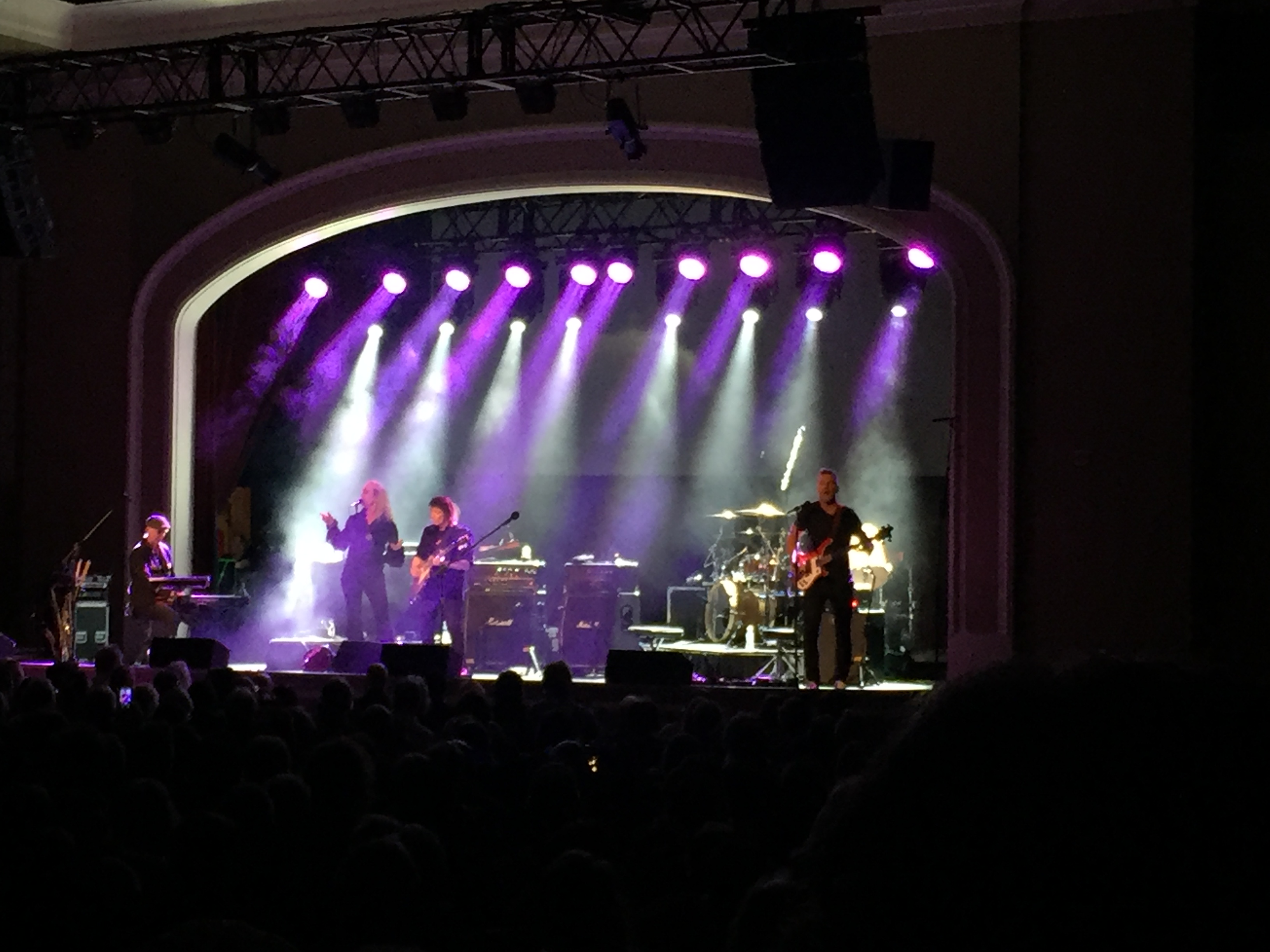
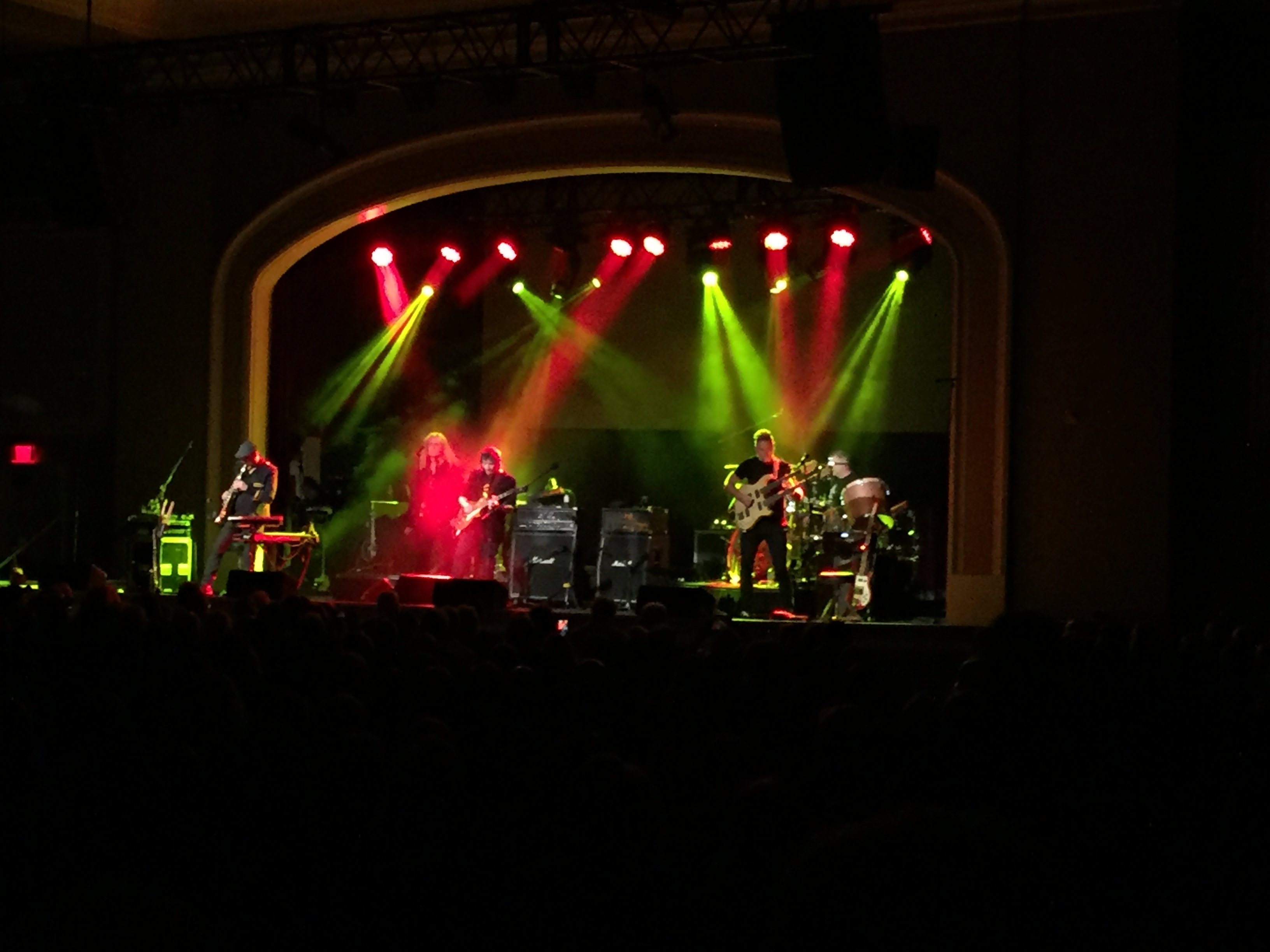
Steve Hackett – Genesis Revisted – Seconds Out + More – Saint Louis, Missouri, April 26, 2022 Set 1: Clocks – The Angel of Mons, Held in the Shadows, Every Day, The Devil’s Cathedral, Shadow of the Hierophant (instrumental version) Set 2: Squonk, Carpet Crawlers, Robbery, Assault & Battery, Afterglow, Firth of Fifth, I Know What I Like, The Lamb Lies Down on Broadway, The Musical Box (Closing Section), Supper’s Ready, Cinema Show, Aisle of Plenty Encore: Dance on a Volcano, Drum Solo, Los Endos Players: Steve Hackett, Nad Sylvan (vocals), Rob Townsend (all things blown), Roger King (keyboards), Jonas Reingold (bass, twelve string), Craig Blundell (drums)
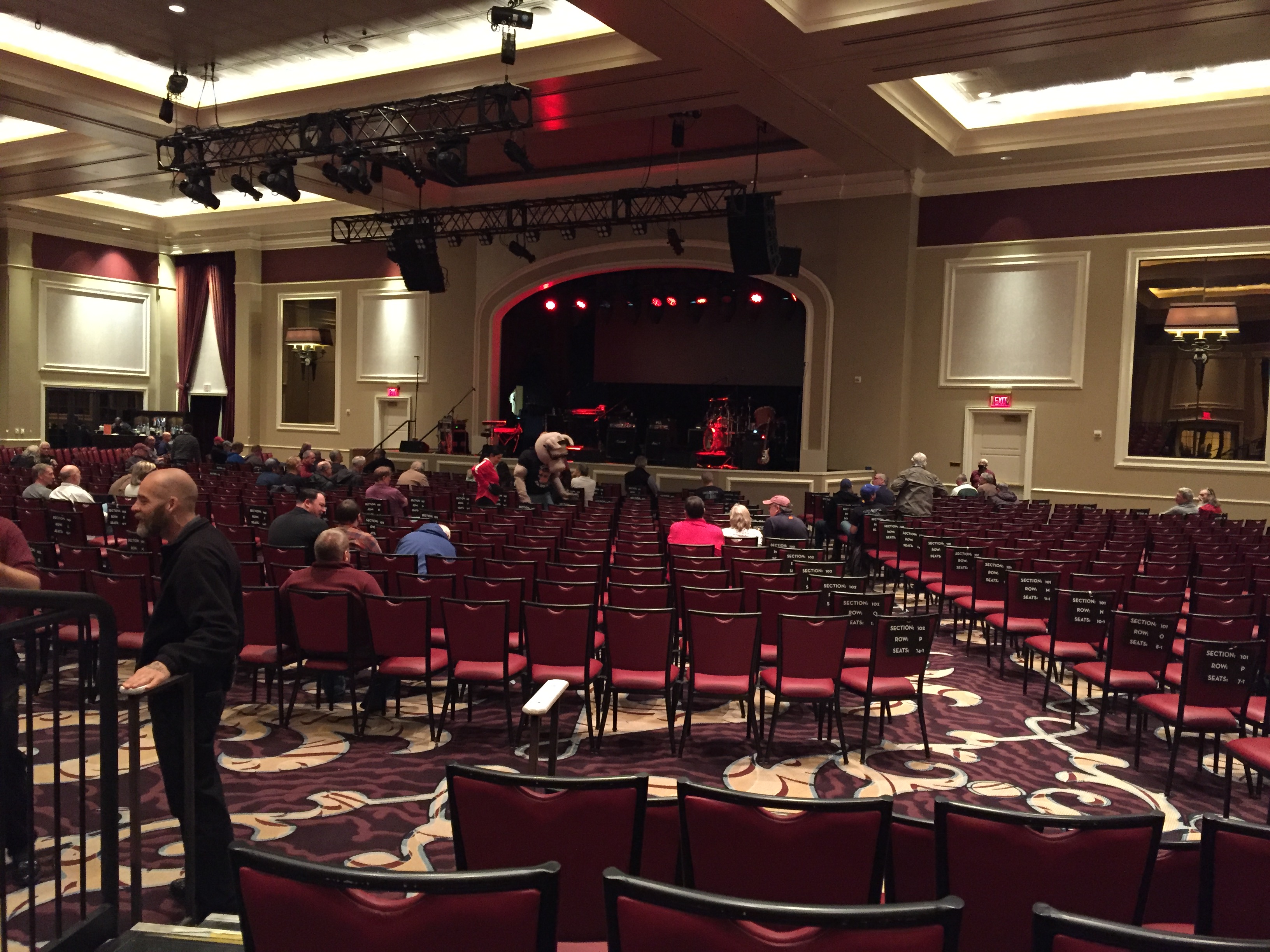
I wasn’t planning on attending Steve Hackett’s show here in St. Louis at the River City Casino. For one I couldn’t really afford it, and two I didn’t want to buy tickets months ago since I wasn’t sure if I’d still be
Great view from the risers inside the River City Casino convention center
living in St. Louis. But a friend from church is a big prog fan, and I knew he was going. Monday night he told me he had a spare ticket, and he offered it to me! Well I sure as heck couldn’t turn that down. Thanks, Eric!
I haven’t been to a live concert since October 2019 when I saw Steve Hackett in Grand Rapids on his Selling England By the Pound tour (check out my review of that show). This tour features the same talented lineup. I have all of Hackett’s live albums from the past decade or so, and while I’ve only seen him in person with this current lineup, I think it’s the best he has had in the last decade of Genesis Revisited shows. Everyone plays so well together, and it’s clear they’re having a blast. They play like a proper band rather than touring musicians supporting a big name musician.
The band’s vibe together was quickly established in the short first set, which featured some excellent selections from Hackett’s solo career. If I had to pick five songs from his solo career for them to play, I couldn’t have picked a better set. “Clocks” was a great instrumental opener followed by “Held in the Shadows,” one of the best songs off Hackett’s most recent solo album, Surrender of Silence. Hackett’s vocals were so effortlessly smooth. This was followed up by a rousing rendition of “Every Day,” another classic from Spectral Mornings.
After that they played “The Devil’s Cathedral,” my favorite song off Surrender of Silence. Nad Sylvan was stellar on vocals, as he was the entire night. This song displays what this band can do when they make music together. I would love to hear an entire album of new music from this band, perhaps with Nad and Steve sharing lead vocals. The instrumental version of “Shadow of the Hierophant” followed – the greatest solo Hackett song that should’ve been a Genesis track. Genesis lost a lot when Hackett left. Sure they may have become the most popular pop rock band in the world, but they lost their soul.
After the intermission, the audience (which seemed to be pretty inebriated by this point – especially the four talkative blokes in front of me) was treated to the entirety of the Seconds Out setlist. Every song was brilliant. This band plays so well, and they do justice to the music. They take a few artistic liberties as they’ve done for several years now, but I think it adds to the sound. For instance some of the keyboard parts are either replaced or layered with Rob Townsend’s saxophone, and his saxophone replaces the flute in “Firth of Fifth.” He also plays Irish whistles on parts of “Supper’s Ready” instead of flute. In some ways these changes add to the music.
Nad Sylvan really stole the show on “Carpet Crawlers.” Vocals dominate that track, with the music taking a bit of a back seat, and Nad rose to the occasion with a phenomenal rendition. Nad sang effortlessly on every song, hitting all the high notes with ease. He sounds a little more natural singing the Peter Gabriel songs, although he sounded great on everything. “Robbery, Assault & Battery” must be a very difficult song to sing, but he did a great job. The song shows the playful storytelling side of Genesis, which still remained after Gabriel left the band. I don’t think Hackett’s band has played that song live before, or at least not in the last decade, so fans who see him every tour will get to hear some “new” material.
Since they played all of Seconds Out, there was a fair bit of overlap with the music played at the last tour, which is fine by me since I love Selling England By the Pound. “Firth of Fifth” was exquisite as always. So good that I even pulled out my earplugs. I think that guitar solo is just about the best ever, and Hackett does such a great job with it in a live setting. No one can play it like he does. Roger King is an expert with the piano intro too, something Tony Banks gave up a long time ago.
And since I mentioned the earplugs, I’ll make a quick comment about that. I always bring earplugs to concerts since I never know how loud it’s going to be. Both Hackett shows I’ve been to have been fairly well mixed with reasonable sound levels and minimal distortion, which is good since this music deserves full dynamic range instead of distorted rock crunch. With that said, it was still a bit too loud for much of the concert for my comfort, so I was taking them in and out all night. That didn’t really bother me. I probably could have left them out without permanent damage, but I’d rather be safe than sorry when it comes to my hearing. My eyesight is bad enough – I don’t need to lose my hearing too.
Like on the original live Genesis album, Hackett’s band played the ending section of “The Musical Box,” which Nad nailed on vocals. The epic “Supper’s Ready” followed that, and I’m so happy that I got to see that played live. The band performed flawlessly. The music and lyrics carried me away, as all good music should. Sadly I was drawn out of it a little bit by the perpetual yapping from one particular inebriated bloke in front of me, but I found that the earplugs actually helped drown him out, which helped me focus on the music. It’s a shame to be drawn out of those special musical moments where you really feel a connection with the band.
It’s no wonder Seconds Out is such a legendary live album. What a setlist! “Cinema Show” right after “Supper’s Ready” – it doesn’t get much better than that. The band deviated from that original setlist by adding “Aisle of Plenty” at the end of “Cinema Show.” The songs flow together, so it’s only natural to include “Aisle of Plenty,” which serves much the same purpose on Selling England as “Afterglow” does on Wind and Wuthering. It’s a cool down after an intense musical and lyrical journey.
Following that the band took their bows and left the stage to a standing ovation and thunderous roar. They were cheered for a couple minutes by the loudest encore cheer I think I’ve ever heard at a live show. It reminded me of some of the cheers I’ve heard on live prog albums recorded in Europe. It was great to hear that from an American audience in a relatively small venue. The band came back out and blew us away with “Dance on a Volcano” and “Los Endos.”
The real treat was Craig Blundell’s blistering drum solo between those two songs. Absolutely phenomenal. Drum solos can often be kind of boring, but Blundell’s solos are very… musical, if that makes sense. He grabs your attention and holds it. The speed at which he played was impressive, but he also adds in brilliant chops. It was one of my favorite parts of the evening. Even Jonas Reingold came back out on stage near the edge to watch his bandmate play. The bit of jazz-infused “Los Endos” made for an excellent final encore to a memorable musical night.
Much was made of Genesis’ final (supposedly) tour, especially their final show, which both Peter Gabriel and Steve Hackett attended. I’m sure that attention was deserved, but I watched some clips on YouTube from those shows, and I’ll take Steve Hackett’s shows over the latest iteration of Genesis any day. There’s more energy, better musicians, and better vocals. The songs sound like the albums, and Hackett’s guitar is virtually unrepeatable. His tone is so unique, and his style of playing is unmatched.
Another plus is Hackett’s band is a who’s who of current prog names. I may never get to see the Flower Kings or the Tangent (Jonas Reingold), Frost* (Craig Blundell), or Nad Sylvan play his solo stuff, but I get to see them play legendary music with my favorite guitarist. It’s hard to beat that. The band also clearly enjoys what they are doing. Hackett was obviously having fun, and I saw Jonas playing air drums at one point in the show when he wasn’t playing for several seconds.
If you’ve been following Hackett’s live shows over the last decade, there may not be many surprises in this current setlist, but there doesn’t need to be. The music is phenomenal, and I’ll leave it at that. If he’s coming near you on this tour or the upcoming Foxtrot at 50 shows, definitely grab a ticket. Last night was the most fun I’ve had in a long time.
Big Big Train have recruited Alberto Bravin as lead vocalist following the tragic death of David Longdon in November 2021.
Based in Trieste in Italy, Bravin’s career includes performing around 200 shows with progressive rock legends PFM between 2015 and January 2022, both in Italy and internationally, singing lead and backing vocals and playing keyboards.
Alberto Bravin says: “I am extremely honoured to have the opportunity to join Big Big Train. I was already a huge BBT fan and am looking forward to play my part in taking this great band forward while also honouring the memory of David Longdon.”
Big Big Train bassist and founder Gregory Spawton comments: “Before Covid-19 hit, Nick D’Virgilio and I had both seen Alberto perform with PFM. We were very impressed with his abilities as a vocalist and multi-instrumentalist and therefore approached him earlier this year.
“We know that David is irreplaceable and we miss him deeply both musically and personally,” Spawton continues. “We were very clear that we didn’t want to bring someone into the band who would seek to mimic David; that just felt fundamentally wrong. Instead we wanted someone who could do justice with their own musical skills and personality to the songs that David sang for Big Big Train as well as being able to help to drive the band forwards. From his first audition singing some BBT classic songs and subsequently his work on some new material that we’re working on, we’re confident that we’ve found the right person in Alberto.”
“Aside from Alberto’s great voice and all round musical skills, it was also vital for us to find the right personal fit, particularly after being struck with David’s sudden death,” drummer Nick D’Virgilio comments. “We flew Alberto to London several weeks ago so we could hang together for a few days and the chemistry immediately felt right.”
‘THE JOURNEY CONTINUES’ EUROPEAN TOUR 2022
Big Big Train are also pleased to confirm that their two previously announced UK shows in September 2022 will take place. In addition the band have scheduled six further shows for September in the Netherlands, Germany, Switzerland and France.
Keyboardist/vocalist Carly Bryant is unable to tour with the band in September 2022 for family reasons. “After over two years of being part of Big Big Train and involved in two studio albums, I was extremely keen to go on the road with the band. However a recent change in my family situation means that sadly I cannot be away from home in the autumn,” Bryant explains. “I love being part of BBT and will be on stage with the band at the earliest opportunity when my family commitments permit.”
Alongside Bravin, D’Virgilio, Spawton and longstanding guitarist Rikard Sjöblom, the Big Big Train line-up for the September 2022 shows will consist of guitarist Dave Foster, violinist/vocalist Clare Lindley, keyboardist Oskar Holldorff and the Big Big Train brass section led by Dave Desmond. Holldorff leads Norwegian band Dim Gray, whose debut album Flown was much acclaimed last year and who are preparing to release their second album later this year.
“Oskar came to our attention from his work with Dim Gray and is another tremendous talent to involve in Big Big Train,” Sjöblom says. “We’re very grateful to him for stepping in while Carly is unavailable. It’s also exciting that Big Big Train is becoming an increasingly international band – in September we will have an American, a Swede, an Italian and a Norwegian on stage with the Brits.”
During the September tour Big Big Train will be playing material from various stages of their career and also one new song.
“We were originally scheduled to play live shows in spring 2020 but then Covid-19 derailed our live plans repeatedly and since then we’ve prepared numerous different set lists,” Sjöblom continues. “We’ve released two full albums since we last played live and are spoilt for choice with the set list for September.”
“In addition to our UK shows, I’m really looking forward to getting back into continental Europe,” D’Virgilio adds. “As well as visiting the prog strongholds of the Boerderij and Z7, we thought it would be cool to play some smaller venues in France and Germany as we re-establish BBT as a live band. We can’t wait to get out and play again and show what this band can do!”
Big Big Train September 2022 tour dates
Friday 2 September – Waterside Theatre, Aylesbury, UK
Saturday 3 September – HRH Prog festival, Leeds, UK
Monday 5 September – Cultuurpodium Boerderij, Zoetermeer, The Netherlands
Tuesday 6 September – Harmonie, Bonn, Germany
Wednesday 7 September – Kuz, Mainz, Germany
Thursday 8 September – Frannz Club, Berlin, Germany
Saturday 10 September – Z7, Pratteln (Basel), Switzerland
Sunday 11 September – Café de la Danse, Paris, France
Support bands for all shows (except HRH Prog) will be announced shortly.
Tickets for the UK shows are on sale now. Tickets for the Netherlands, Germany, Switzerland and France shows go on sale at 10am UK time on Friday 29 April. See www.bigbigtrain.com/live for ticket links.
Thank you for your support
Carly, Clare, Alberto, Dave, Gregory, Nick and Rikard
Happy Easter, citizens of the Republic of Progarchy! I typically share Marillion’s song, “Easter” on this day every year. I do that again this year, but I want to point out that this song feels particularly relevant today. A month and a half ago, Russia invaded Ukraine after 8 years of arming rebels on Ukraine’s eastern border. In the weeks since we’ve all seen many of the horrors from this pointless war on social media or TV. Schools, hospitals, train stations filled with fleeing refugees indiscriminately struck by missiles. Streets filled with dead civilians. It’s truly horrific, and I shudder to think what will come of this mess. As is usual in war, the antagonists suffer no physical harm as they direct their attack from halls of luxury while people who already have very little lose everything – even their lives.
Thirty years ago, something similar was all too common on the border between Ireland and Northern Ireland. Fighting and violence had been ongoing for numerous decades, and even today tensions remain strong, with violent protests breaking out a year ago in Northern Ireland related to Brexit. But like in any war, the most people living on either side simply wanted peace. They likely didn’t share the zealous spirit of the terrorist setting off bombs, yet they have to live with the consequences of the terrorist’s actions.
Over a century ago on Easter 1916, the Irish nationalist groups suffered a stinging defeat by the British. William Butler Years’ poem, Easter, 1916, commemorates this event, and the poem directly influenced Steve Hogarth in writing “Easter” in 1989. The song combines elements of Irish folk music with Marillion’s classic neoprog sound. The opening verse paints a picture of peaceful rural Ireland, with green hills nestled in misty valleys. But the hedgerows and trees hide a bloody secret:
A tattered necklace of hedge end trees
On the southern side of the hill
Betrays where the border runs between
Where Mary Dunoon’s boy fell
The second verse looks at it from the perspective of someone (probably a soldier) being shipped from Liverpool to Northern Ireland. Perhaps his fate will be the same as Mary Dunoon’s boy. Those verses merely set the stage. The real meat of the song is the call to peace and forgiveness.
And Easter here again, a time for the blind to see
Easter, surely now can all of your hearts be free
What will you do?
Make a stone of your heart?
Will you set things right?
When you tear them apart?
Will you sleep at night?
With the plough and the stars alight?
What will you do?
With the wire and the gun?
That’ll set things right
When it’s said and done?
Will you sleep at night?
Is there so much love to hide?
Will the shooting and explosions really solve our problems? They didn’t for Ireland and Great Britain. They finally realized that on Good Friday and Easter 1998 with the signing of a peace agreement. Now we find ourselves with a new bloody conflict many orders of magnitude worse than the Ireland-Britain conflict Marillion sang of with “Easter.” The questions asked in this song need to be asked of the Russians and Ukrainians. Both sides have corrupt governments, but one side (Russia) is solely responsible for the hell they have unleashed on millions of innocent civilians. Things aren’t set right when torn apart. This Easter (which the Eastern Orthodox Church celebrates next Sunday) is the perfect time for them to reflect on this and if what they’re doing is really worth more people dying.
Easter is indeed a time for the blind to see, a time for hearts to be set free, a time for hearts of stone to be softened. But why is that? Much is made in western culture about Christmas, the holiday which celebrates the birth of Jesus, but Easter is a far more important holiday. On Good Friday, Christians remember Jesus’ death on the cross. We call it Good because without His death, we could never be reconciled to God. You see, our sin (the things we do and think that are morally wrong) creates a giant chasm between us and God. God is holy and perfect, and we can’t enter into His presence in our sinful state. God knows this, and in His unsurpassed mercy, He looked on us with favor and sent His son, Jesus, into the world to become one of us. Both fully God and fully man, He is the only person who ever lived a sinless life. After a three-year ministry, Jesus was crucified by a Roman governor in an effort to placate an angry mob stirred on by religious leaders threatened by the message of salvation Jesus taught. But unbeknownst to that governor and those religious leaders, Jesus’ death served a much higher purpose. In His death, Jesus bore our sin so that we don’t have to.
After Jesus died, He was taken down from the cross and placed in a tomb, which was sealed with a stone and guarded by Roman soldiers. There His body lay until that glorious Sunday morning (Easter) when death discovered it could not contain the creator of the universe. Jesus rose from the dead, defeating sin and death forever! On Easter we celebrate Jesus breaking death so we might live. In response to this lavish gift, Christians are supposed to live lives of service and love to others. We are to show compassion to the poor, mercy to the sick, and love to the unloved. We are to be the hands of Jesus to a suffering world.
Our world is desperately broken. We long for a day without war. A day when little children going to school don’t have to be worried about a rocket blasting into their building because of the whims of a crazed dictator 500 miles away. We dream of a day when people won’t feel the need to numb the pain of living with drugs just to get through another day. We wish for the pain of ongoing depression to be taken away. We dream of futures better than the present. We dream of… so much.
The world will remain broken until Jesus returns, but until that happens, we have the chance to show love. We can find fulfillment in a personal relationship with God, and through that we can spread joy, hope, and love to others. All it requires is making Jesus your lord – repenting of your sin, repenting of your pride, relinquishing control of your life to Him and allowing Him to use you to build His kingdom. Only then can true meaning and purpose in life be found. It isn’t easy. In fact being a Christian is really hard sometimes, but it’s worth it. Unity with God the Father and unity with fellow believers is a precious gift worth far more than any earthly riches. Even if our world literally blows up around us due to circumstances over which we have no control, we might still have internal peace knowing that God loves us and cares for us.
You might think, “I don’t read this site to be preached at,” and that’s fair. But I pay the WordPress rent for the site, so I’ll write what I want ;p And more than that, I care about you, dear reader. Your life matters. Your soul matters more than you can possibly comprehend. The decisions we make in this life really do impact where we spend eternity. We can spend it in eternal bliss unified with God, or we can spend it in eternal torment separated from Him. God ultimately gives us what we want. If we want nothing to do with Him now, then He will give us that after we die. But just like life without God is dark and depressing – full of war, famine, hatred, murder, rape, lust, bitterness, anger, etc. – eternal death will be far darker. The sin in this world is merely a shadow of the death to come. The goodness in this world reflects the goodness of God, and it too is merely a shadow of the joy and peace to be found in Heaven.
Don’t let today pass without giving this some serious thought. We don’t have forever. Time flies by in the blink of an eye, and none of us are promised another day. But through faith in Jesus Christ and His work on the cross and resurrection from the dead, we can have absolute confidence on which side of the chasm we will spend eternity. Even when our world gets rocked by war, sickness, famine, drought, and storm, we can have confidence knowing we are deeply loved by a God who laid down His life for us.


 Bjørn Riis, Everything to Everyone, Karisma Records, April 8, 2022
 Steven Wilson (with Mick Wall), Limited Edition of One: How to Succeed in the Music Industry Without Being Part of the Mainstream, London: Constable (imprint of Little, Brown Book Group), 2022, 361 pages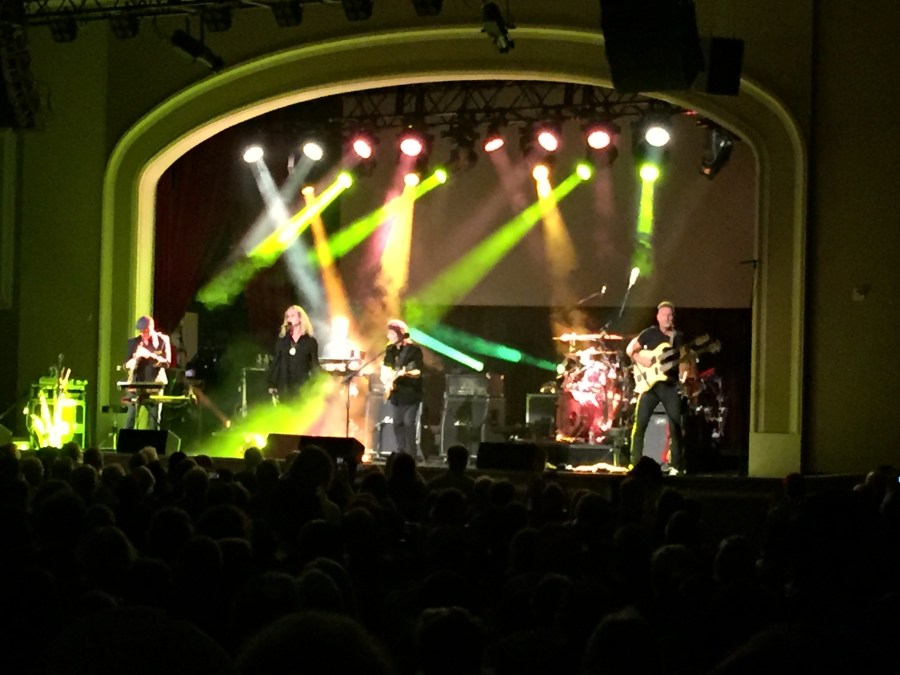
 Progarchy