Grateful for my beloved wife, son, daughter-in-law, grandchildren and siblings. Also a lover of theology, music, history, philosophy, classic novels, science fiction, fantasy and Looney Tunes.
Born in California and raised in Sweden, singer/songwriter/multi-instrumentalist Nad Sylvan is a music lifer who formed his first band in 1968, toured for the first time in 1975 and signed his first record contract in 1983. With three eclectic solo albums already under his belt, Sylvan’s 2008 collaboration with keyboardist Bonamici Unifaun caught the prog community’s ear; it’s a stunningly fine pastiche that goes beyond superficial gestures to embody the musical soul of Genesis’ progressive period. One thing led to another from that point: Sylvan joining Roine Stolt and Jonas Reingold in Agents of Mercy; his ongoing gig with Steve Hackett, providing a visually and vocally flamboyant focus for multiple Genesis Revisited tours since 2013; and the deliciously Baroque solo albums on Inside Out that constitute his Vampirate trilogy (2015’s Courting the Widow, 2017’s The Bride Said No and 2019’s The Regal Bastard).
Nad’s new effort Spiritus Mundi sees him joining forces with guitarist/songwriter Andrew Laitres to set poems by W. B. Yeats — including visionary classics such as “The Second Coming,” “Sailing to Byzantium” and “The Stolen Child.” This is a fresh, winning album, focused on Laitres’ acoustic guitar, shimmering orchestral colors — and Sylvan’s voice, ably navigating the spry melodies, inhabiting Yeats’ weighty words with grace, power and panache.
Nad Sylvan spoke with us last in 2019; after seeing him in concert with Hackett three times, it was delightful for me to chat with him about Spiritus Mundi and related topics. Recovering from a long day of shipping out preorders (roughly five times the amount he anticipated), Nad was nonetheless thoughtful, charming, and engaged throughout. The audio of our conversation is below, with a transcript following.
So, let’s talk about the new album, about Spiritus Mundi. How did you decide on a direction after you finished the Vampirate trilogy?
You got that one right! Vampirate — good! It’s my own invention; think of the vampire and the pirate combined into one character.
Well, to make a long story short, I was approached by Andrew Laitres, who I’ve done this record with. About two and a half years ago. And he asked me if I would be interested to track my voice for a song of his that was gonna go on one of his solo records. And that was a song called “The Lake Isle of Innisfree,” which turned out to be a bonus track on The Regal Bastard, my previous album.
So I asked him, “could I use this for this album?” ‘Cause I thought, it just went so well, it sounded so good, and I thought, “what a nice thing to use as a bonus track.” And so he granted me permission to do that!
So after I’d finished the trilogy, I immediately came to “where am I gonna go now? What should I do now? I feel like doing something completely different.” And then before you knew it, you had the pandemic as well come along. And I thought, well, spiritus mundi means sort of “the spirit of the world,” if you like. And that’s very much what we’re concerned about these days, more so than ever. It’s also a quote from the first song, “The Second Coming.” Where he sings about spiritus mundi. And it sounds so lovely, and it’s got some power behind those words. And I thought “why not use that as a title?”
And so I asked Andrew, “would you be keen to make a full album with these lyrics of Yeats? Let’s write these songs together.” I don’t have any prestigious thoughts about “I have to do everything.” I’ve already proven that I can write, ‘cause I’ve done three albums already. So he was enticed to go along with my idea, and then we started to work together – I would say it kicked off December of ’19. So during the whole pandemic, as I returned home from the tour with Hackett about a year ago – I would say mid-March of 2020 — I’ve been completely absorbed by this work. And it comes down to everything, even the artwork I’ve done for the album, so I could totally focus on this record, and I think it shows. It just sounds and comes across as being a bit more mature this time.
Well, that was one of the things that struck me, that you’re using Yeats’ poems for lyrics, because that strikes me as an amazing challenge. They’ve been set to music almost since the moment they were originally written.
Yeah, I know, but this was Andrew’s idea, you see. I wasn’t even that familiar with Yeats’ poems; I’ve heard of him. But once [Andrew] presented all his demos for me, I’d cherry pick: “Oh, this sounds nice.” And we started to mold the songs together, like “maybe this bit should be restructured” or “maybe we should change these chords” or stuff like that. It was very much a combined work effort. So, yes, Yeats has been covered by The Waterboys, back in the late 80s, I believe. But I didn’t even know that! I just thought, “what lovely poems! Let’s do it.”
One indication of the absolute glut of recorded music available today: more of what I’ve whimsically labelled “DIY (for Do It Yourself, a la Peter Gabriel) Britprog” is available than ever. With Prog Magazine providing a megaphone and Big Big Train’s international impact paving the way, countless musicians from England have brushed up their chops, dusted off their home recording setups, and churned out self-released albums by the bushel in the past decade. Even as the chances of market penetration narrow in the age of Spotify and live lockdowns, an astonishing number of artists seem compelled to keep plowing the furrows first tilled by Pink Floyd, King Crimson, Yes, Genesis and their sundry heirs. The sheer amount of “meh” music that’s resulted notwithstanding, three recent releases (and a teaser of more to come) indicate there’s still enough fertile soil in that ground to keep yielding fresh harvests.
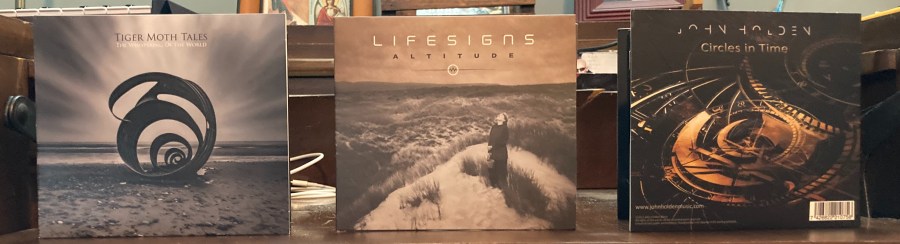
First up: Tiger Moth Tales’ The Whispering of the World from late 2020, for which TMT mainman Peter Jones stripped down both his writing and his usual instrumentation. Working with producers Robert Reed and Andrew Lawson, Jones eschewed multi-sectional tunesmithery and one-man-bandship in favor of a song cycle for voice, piano and string quartet. The result works like gangbusters! From the vigorous, propulsive opener “Taking the Dawn” through melancholy mini-epics like the title track, “Quiet Night” and “Waving, Drowning” to the grave, sweeping pop of “Blackbird” (no, not THAT one, but arguably as affecting) and the closer “Lost to the Years”, every track feels unpretentious, fresh and heartfelt. The semi-classical sonics mesh effortlessly with the compelling songcraft; Jones’ sensitive singing and lush piano playing weaves in and around the light and shade of the strings. Even better, the music proves the right medium for the lyrical message, as Jones narrates a cathartic passage through (in his words) “special or significant moments . . . coming to terms with both losing those close to us and our own mortality and place in the universe.” Sound a bit heavy? Well, yeah — but paired with Jones’ solo Quiet Room Session, The Whispering of the World is a sentimental journey well worth taking. Sample it for yourself, then order it on Bandcamp.
With multiple attempts at a 2020-21 tour yanked out from under him, Todd Rundgren has pulled a fresh concept out of his back pocket in turn. In lieu of a one-off worldwide livestream, Rundgren kicked off the “Clearly Human Virtual Tour” on February 14.
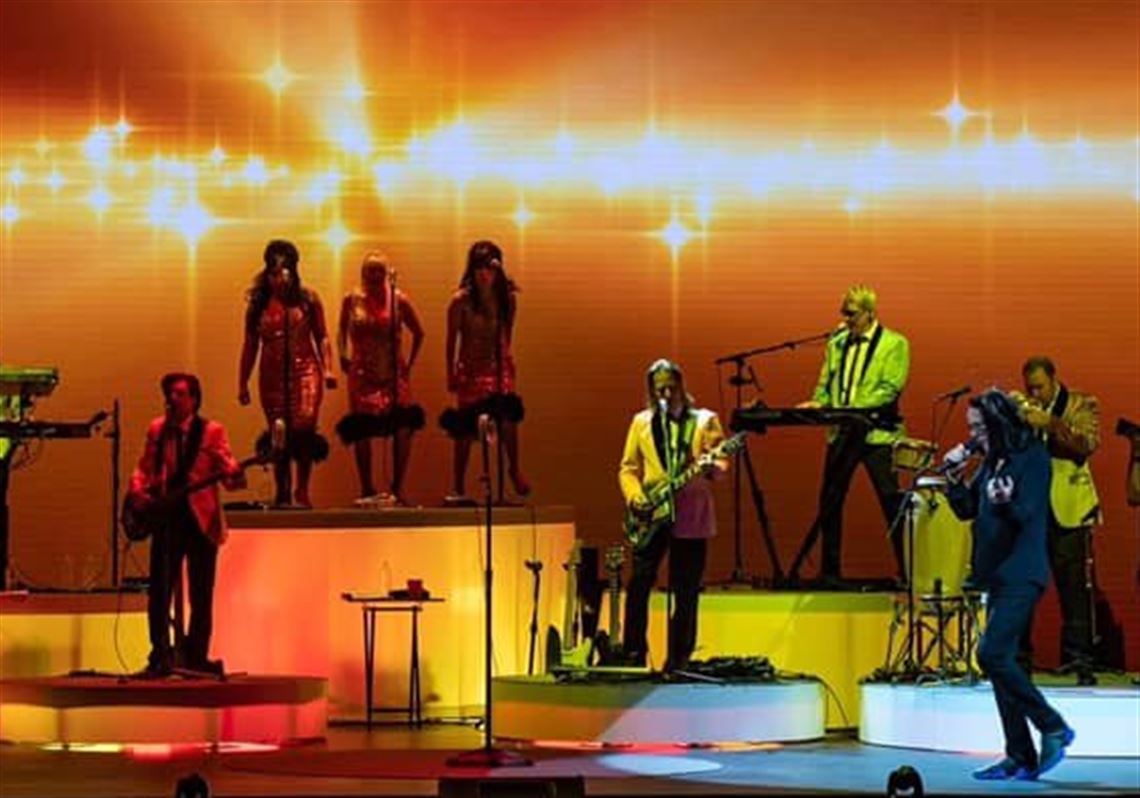
Sporting a setlist focused on the ambitious 1989 album Nearly Human, Rundgren and his 10-piece band (including bassist Kasim Sulton and synthesist Gil Assayas from the 2018 Utopia reunion tour) are now midway through a 25-date residency in Chicago; original talk of limiting each show’s streaming market via “geofencing” quickly gave way to a few visual and verbal nods to a different city each night. Intrigued, I ponied up $40 for February 25’s “Indianapolis” show; for more cash, you could control what camera angle you were seeing, order the usual merch, have your face projected onto video screens the band can see, or even attend in person (the last option subject to being one of 19 people to pay VIP prices, then pass a COVID test within 72 hours of the show).
It’s a great concept: cutting down overhead by staying in one place, Rundgren has added a horn section (Steven Stanley on trumpet and Nearly Human sax man Bobby Strickland), three backup singers (Nia Halvorson, Grace Yoo and Todd’s wife Michele), guitarist Bruce McDaniel and second keyboardist Elliot Lewis to his usual rhythm section of Sulton, Assayas and drummer Prairie Prince. The musical results all night were pretty marvelous, ranging from a smooth purr to a raucous roar, with lots of guts and grace to spare. Pin-sharp after two weeks with the material, the band eagerly powered through most of Nearly Human plus selected classics from the 1970s (the 10-part vocalese in “Can We Still Be Friends” was downright awe-inspiring), a few Utopia tunes and later R&B-inflected gems (with the precision funk of 2nd Wind’s “Love Science” and the slow burn of “God Said” from 2004’s Liars proving especially effective). Rundgren’s occasional forays into lead guitar on his iconic green instrument “Foamy” were spaced out for maximum impact; the rest of the time he stalked the lip of the stage, strutting his stuff while the players did their thing. His obvious delight in his “nebbish as soul man” persona was utterly endearing — and once he shucked his suit jacket to reveal a bit of a pot belly and comfy athletic shoes, you were in on the joke as well.
The only weak link, for this show at least, was Rundgren’s voice. His melodies, especially on his soul material, are fairly fearsome, multi-octave constructions; they require a sturdy vocal instrument, a comprehensive range, consistent breath support, and lots of stamina! On this night, Rundgren’s bottom and top were strong, but a little phlegmy and forced, and the midrange between the two was unsteady to the point of outright disappearance at times — including during the opener “Real Man”. (l’ve had to sing for numerous worship services or concerts with a dry throat, sinus congestion or a cold, and I think that’s what may have been going on. Take it from me, it ain’t much fun.) Previous reports have found Todd in great vocal form on this tour (and Cirdec Songs’ Cedric Hendrix reported that he was up to snuff for the next night’s show); hopefully, this was a one-time glitch that some rest — or maybe hot tea and honey — fixed! And in my book, Rundgren earned “show must go on” bonus points for his perseverance in difficult circumstances.
In short, Todd Rundgren’s come up with an enjoyable cure for the no-concert blues — one that, even on a bit of an off night, was highly effective, impressive and fun! If it’s been too long since you rocked out in your favorite venue, I recommend you check out the remaining livestream dates for the “Clearly Human Virtual Tour” at NoCap Shows.
You wouldn’t have had your Chick Coreas five years ago. Chick Corea doesn’t have to really dress up in blazer gear to get a wide following. It just goes to show you that it’s not a question of image these days. It’s more a question of the actual music.
Keith Emerson, Keyboard Magazine interview, October 1977
In late 1976, my older brother changed my life by giving me a copy of Keyboard Magazine. It was a pretty amazing periodical: in those days before digital sounds, computers and then-undreamt-of technology became the prevailing medium of modern music, Keyboard focused on the serious fun of playing and listening, mostly in interviews with pianists, organists and synthesists across a broad spectrum of genres, as well as in how-to columns and record reviews. That’s where Chick Corea, who cranked out a monthly “Keyboards & Music” column and whose remarkably frequent albums merited equally frequent cover stories, first caught my eye. And through the album My Spanish Heart, reviewed in that issue my brother gave me, he caught my ear as well.
“Armando’s Rhumba” from Chick Corea’s My Spanish Heart – with Jean-Luc Ponty on violin & Stanley Clarke on bass
More than a decade into his career, Corea had unquestionably paid his dues by the mid-1970s. Born into a musical family, gigging professionally in high school, and briefly pursuing classical studies at Columbia and Julliard, Corea jumped into the jazz world of New York City as both a sideman and a leader of striking originality (as on the seminal 1968 trio date Now He Sings, Now He Sobs). Which is when Miles Davis came calling: playing on Davis’ trailblazing In a Silent Way and Bitches Brew, then launching the avant-garde quartet Circle, Corea consistently sought the cutting edge of the music. But an encounter with L. Ron Hubbard’s Scientology movement abruptly shifted his perspective. As he said looking back,
The concept of communication with an audience became a big thing for me at the time. The reason I was using that concept so much at that point in my life – in 1968, 1969 or so – was because it was a discovery for me. I grew up kind of only thinking how much fun it was to tinkle on the piano and not noticing that what I did had an effect on others. I did not even think about a relationship to an audience, really, until way later.
Chick Corea, Artist Interviews.eu, 1994
That shift was palpable by 1972; in addition to the meditative Crystal Silence(an outstanding duet effort with vibraphonist Gary Burton), Corea was checking out more directly populist idioms. Teaming with bassist and lifelong musical compadre Stanley Clarke, he formed Return to Forever in 1972, traveling with lightning speed from the laid-back Brazilian vibe of Light As A Feather to the audacious jazz-rock suites of 1976’s Romantic Warrior. This version of RTF, also featuring Lenny White’s funky drumming and the flamenco-metal of guitar phenom Al DiMeola, even crossed over to the still prog-immersed shores of Great Britain:
[Sly and the Family Stone’s album ‘There’s a riot goin’ on’] is Muzak with its finger on the trigger . . . If you listen, you get sharper, and you begin to hear what the band is hearing; every bass line or vocal nuance eventually takes on great force.
Greil Marcus, Mystery Train: Images of America in Rock’n’Roll Music
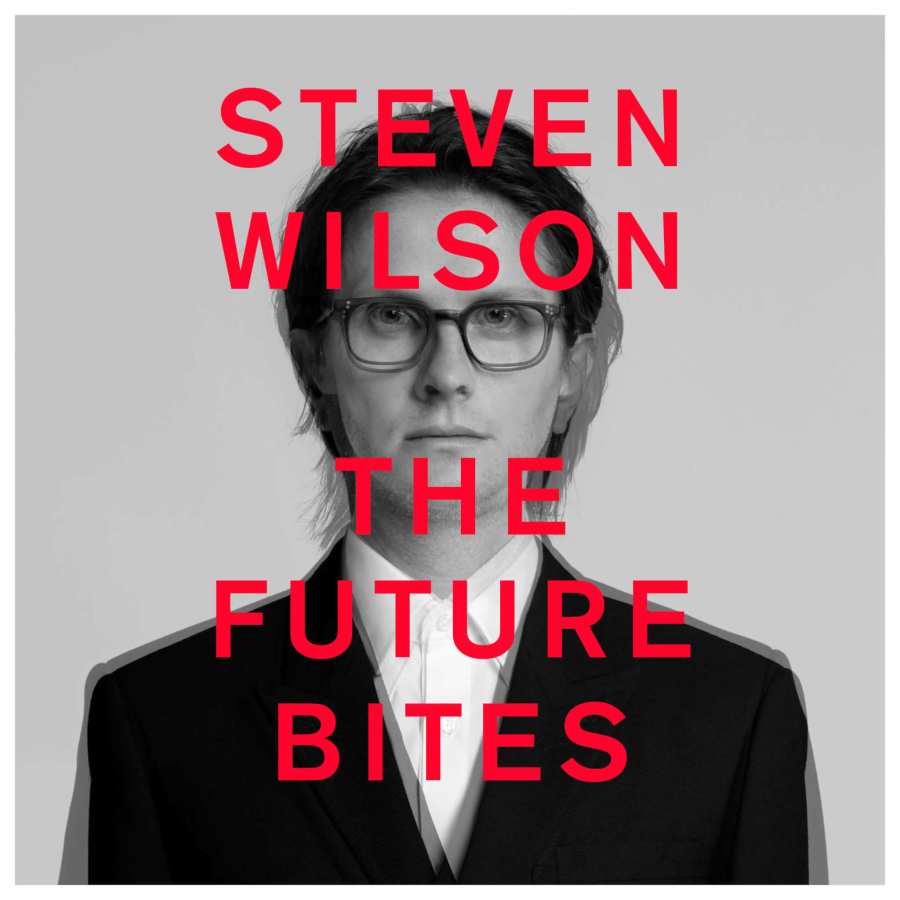
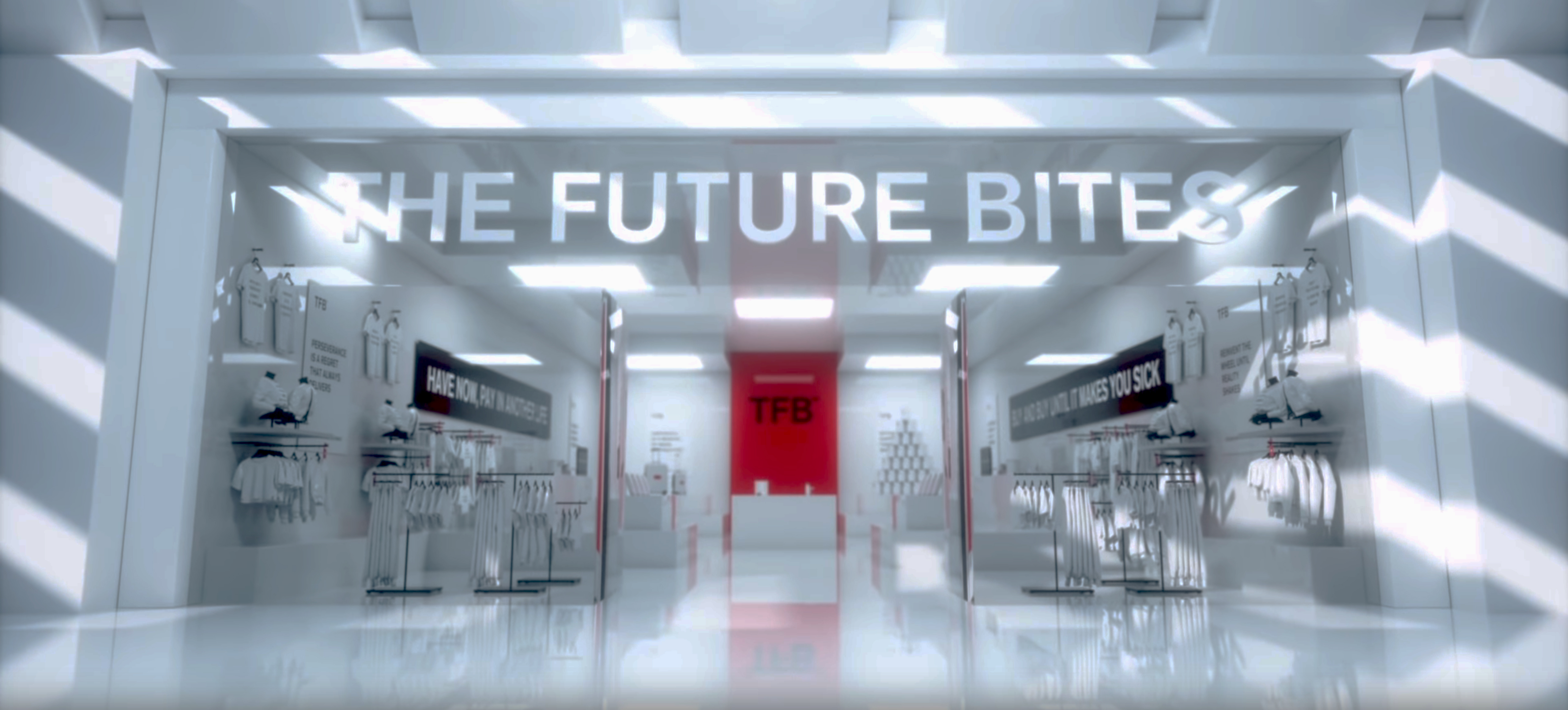
Steven Wilson’s The Future Bites didn’t click for me until I stopped listening to it. Let me explain.
It was when I was playing TFB for the fifth time, as I was doing something else, that I finally heard it — almost as if the album was designed to catch you by surprise when you’re focused elsewhere or distracted. I found myself drawn toward the interplay of backing textures instead of the spare surface detail, zooming in on the ambience of the foundational grooves and pads instead of the gyrating vocal and instrumental leads. Instead of missing the rock rhythms, the power riffs, the extended structures and the virtuoso musical moments of Wilson’s previous efforts, I started digging into what was actually there. The minimalism — maybe even the monotony Bryan Morey detected in his review — becomes the message.
Which, whatever you may think of the results, is a pretty neat trick. So the thought struck me: is this latest release meant to work as background music, as much or more than as a foreground listening experience? When you turn the frequently static norms of today’s electronic pop inside out, is this what you get?
If so, it fits with more of Steven Wilson’s catalog than later adopters might think — sample the extended trance trip of Porcupine Tree’s Voyage 34, the forlorn, scratched-up drones of his Bass Communion efforts, even the symphonic disco of 2019’s No-Man comebackLove You to Bits if you doubt me. (Not to mention his remastering of vintage efforts by German synth wizards Tangerine Dream.) And it seems to me his new sound — a postmodern British upgrade of Greil Marcus’ concept? — is not just purposeful, but channeled for a purpose. After all, the man knows (and has lyrically railed against) the sound of Muzak. By embracing it here, he’s planting depth charges beneath our buffed-up virtual lives, triggering both our individual delight as we succumb to the age of the algorithm and our creeped-out, collective unease with the results. We may be having a good time amusing ourselves into financial and spiritual bankruptcy, but Wilson’s depictions of lost, alienated souls (by turns ironic, empathetic, furious, blackly hilarious) hold up a mirror — one with the caption “Limited Edition Deluxe Box Set Purchaser” across the bottom — and dare us to study the reflection as we spiral downward.
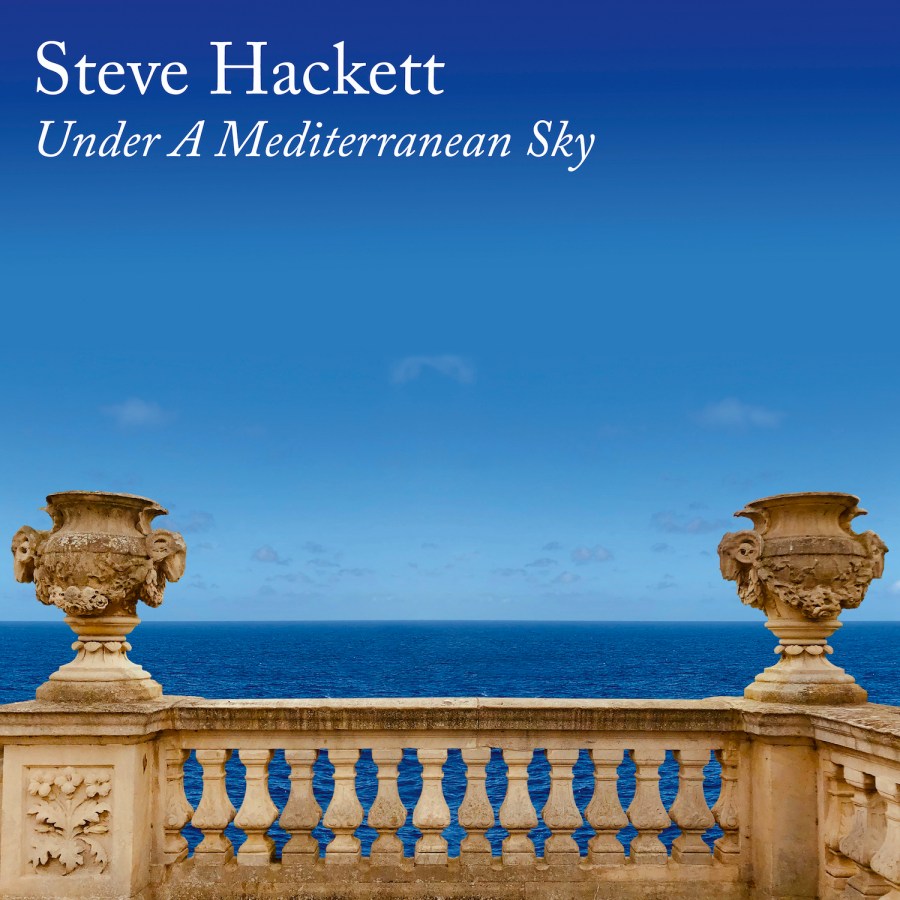
Give Steve Hackett credit for grace under pressure. With the 2020 leg of his Genesis Revisited tour stopped in its tracks by COVID-19, Hackett retreated to his London home, pulled out the acoustic guitar ideas he had been accumulating since 2008’s Tribute album, and huddled with wife Jo and keyboardist/musical director Roger King. Under A Mediterranean Sky is the sultry, stirring result, a first-rate blend of the world musics Hackett explored on recent electric albums The Night Siren and At the Edge of Light with the lush orchestral settings of his vintage classical efforts A Midsummer Night’s Dream andMetamorpheus. If you’re currently cooped up inside (whether due to the pandemic, winter in the Northern Hemisphere or both), this welcoming sonic travelogue will transport you to a brighter, better place.
Under A Mediterranean Sky grabs the listener right from the start with “Mdina (The Walled City). King’s opening orchestrations (a rich blend of acoustic instruments and synths throughout) seethe and sprawl, giving way to Hackett’s virtuosic solo work on nylon-string guitar; at the end, it’s a headlong dash to a sprightly finish, the guitar bursting forward as the symphonic storm gives way to sunshine on the coast of Malta. As a mission statement for the album, it could hardly be bettered.
Organically structured to circle the Mediterranean coast, Hackett’s musical portraits are drawn with ever-present grace and appealing variety. The delectable arpeggiated melody of “Adriatic Blue”, the pensive lines that link up with galloping Middle Eastern percussion on “Sirocco”, the folky, almost downhome French vibe of “Joie de Vivre” and the haunting, romantic Grecian portrait “The Memory of Myth” each tantalize in their own unique way. At the heart of the album comes Hackett’s only solo piece, a sonata by Italian composer Domenico Scarlatti (1685-1757) that features both breathtaking technique and a profound feel for melodic line, harmonic depth and rhythmic panache. It’s drop dead gorgeous, a true testimony to his heartfelt love for the classical guitar tradition.
The latter half of the program broadens the musical palette as the voyage continues, with stellar guest turns by brother John Hackett and regular band member Rob Townsend on flutes (a lush duet on “Casa del Fauno”), Azerbaijan tar virtuoso Malik Mansurov and Armenian duduk master Arsen Petrosyan (the dizzying, atmospheric “The Dervish and the Djin”), and oboist Frank Avril and violinist/violist Christine Townsend on “Andalusian Heart” (which also spotlights stunning extended flamenco work by Hackett). The poignant, rhapsodic finale “The Call of the Sea” is the perfect capstone to the album, winding down the journey to leave the listener at peace in heart and spirit.
Under A Mediterranean Sky is not just a welcome detour from Steve Hackett’s familiar sonic paths; it’s also a culmination to his lifetime pursuit of musical excellence. Hackett’s compositions and performances here are filled to the brim with both the fire of the young at heart and the canny craft of the mature, seasoned performer. Making this album obviously refreshed him during a difficult time; if my experience is any indication, hearing it — in fact, returning to it again and again — will refresh you as well.
As we (and everybody else in the prog rock world) announced back in November, Transatlantic’s fifth album The Absolute Universe will be unleashed on February 5. This album will arrive not just in multiple formats, but also in multiple versions: the 60-minute, 14-track The Breath of Life (Abridged Version), the 90-minute, 18-track Forevermore (Extended Version) and The Ultimate Edition box set (both versions on LP and CD, plus a 19-track 5.1 version on BluRay).
Having had the privilege of hearing the abridged and extended versions, I’ll testify that The Absolute Universe thoroughly satisfies my craving for that special Transatlantic blend of prog past, present and future. Everything that I love about the band is there, to (and sometimes beyond) the point of gluttony; I’ve come away from each listen delighted, thrilled and moved. So it was another real treat when, the week before Christmas, I got to chat with Neal Morse about this new music. (Neal also talked to Bryan Morey about his latest solo album, Sola Gratia, a few months back.) In this interview, Neal tells us how The Absolute Universe came together, why a double album wasn’t enough, and more.
So first, thanks for talking to me! I have been a Transatlantic fan for a long time back. SMPT:e was actually the first thing I ever heard with you involved in it, and that got me back into prog after some time away from it.
Right! Good!
And then I saw you guys in 2010 in Chicago, and that was a great, great, great show! I enjoyed that so much.
That would have been The Whirlwind?
Yes, exactly right.
Was that at Park West? Yeah, that was a great night!
Yeah, it was Mike’s birthday.
Right! And they got us Giordano’s [“Chicago’s Famous Stuffed Deep Dish Pizza”] for after-show food! [Chuckles] I remember the really good pizza! It was a good night.
Yes, it was a great show. I missed you the last time through [touring the Kaleidoscope album]. But now you’ve got this new album coming through the pipeline, The Absolute Universe. And I guess my first question is: how does a new Transatlantic album happen? Was there a certain person or a certain thing that kickstarted the process? How did it come about?
Well, let’s see. I think it started with me! I think I emailed everybody, if memory serves, but that was a long time ago. It would have been near the end of 2018 or the beginning of 2019, I think. I started the conversation, and then we started talking about schedules. At first, it’s like “hey, do you wanna do it?” and everybody was like, “yeah, we’d like to, but …” We had to find the right time when everybody had time for it, which wound up being the end of September 2019 in Sweden.
I remember starting to write some demos for Transatlantic in March, I think, of 2019. And I think we went round and round about where to record and when to record for many months, till finally it was like, “OK, if we’re gonna do this, it needs to be in this window of time.” And so, we all convened in Sweden and worked on it for about two weeks – wrote and recorded what I would call the template. Not the keeper track, but the template for what became the long version of the album, Forevermore.
We left there in early October, and then Mike came here into Nashville to do his keeper drums. He would have done them in Sweden, but we ran out of time. In fact, we were still changing the album and writing it right up on the last day, when we had to go to the airport. And everything kind of fell into place right at the end; it was pretty amazing.
Anyway, Mike came here, did his drums in November. Then I did my parts in December and January, and then I left to go to Australia to play some shows and take a vacation in New Zealand. And that’s where I got away from the album, and I started working on my solo album Sola Gratia.
And then I listened to the Transatlantic album again in March, I think it was. And I kinda had the feeling like – and this is really unusual for me, cause a lot of times I want to make things longer! But I felt like maybe this album would benefit from some editing! So, I started editing some things out. I thought maybe some of the guys might like it as well, because when we were writing it in Sweden, several of the guys were wanting it to be a single disc, and they really didn’t want it to be a double.
Anyway, I sent off this edit with, I think, the subject line that read, “Am I Crazy?” I thought they might just dismiss the whole concept right away. But not everybody did. Some of them were like, “maybe this is a good way to go.” So then, we went round and round about that for a couple of months, trying to decide what was the best thing to do.
We were still trying to figure that out when Mike had the idea of releasing both! And then once we agreed to release both, then the idea was to make the versions as different as possible.
Here are the albums of new music from 2020 that grabbed me on first listen, then compelled repeated plays. I’m not gonna rank them except for my Top Favorite status, which I’ll save for the very end. The others are listed alphabetically by artist. (Old school style, that is — last names first where necessary!) Links to previous reviews or listening/purchase sites like Bandcamp are embedded in the album titles.
Nick D’Virgilio, Invisible: No echoes of Big Big Train or even Spock’s Beard to be heard here. D’Virgilio’s long-awaited latest focuses on classy, soulful rock and pop with R&B undercurrents, reminiscent of nothing so much as the pre-Nirvana mainstream; the progginess is in the extended structures, the virtuoso playing and the overall concept. The down to earth storyline, a redemption narrative with some nifty twists, definitely helps make Invisible appealing and relatable. But it’s the musical means D’Virgilio uses to build out the story — emotive singing, consistently powerful drum work, polished electric piano, loops, bass, bass synth and guitars — that seal the deal. As a result, every single track grabs on tight from the start — not just revealing more depth and emotional resonance with every repeat, but also relentlessly propelling the album forward.
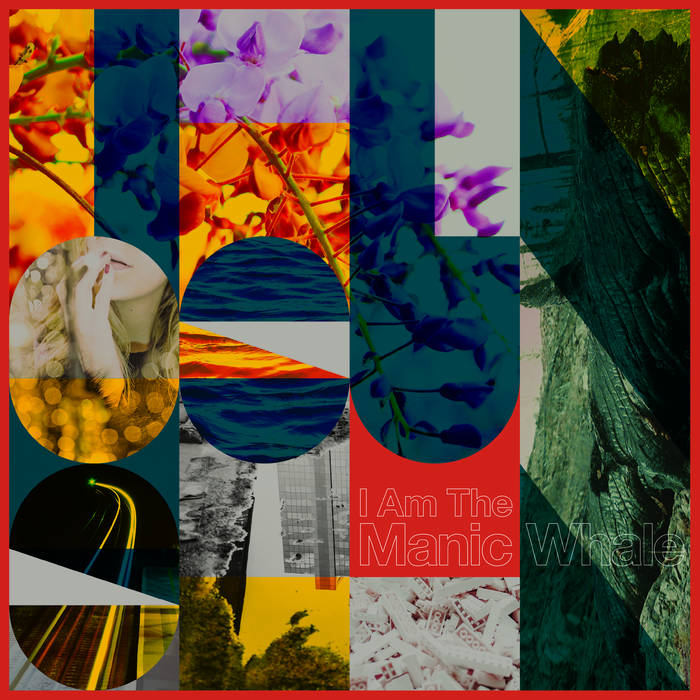
I Am the Manic Whale, Things Unseen: I remain blown away by the energy, humor and sheer delight these young British proggers bring to their story-songs; this third album sounds like their best yet, with crystal clear production by Rob Aubrey. There’s wickedly cheery satire in “Billionaire” and “Celebrity”, a brooding, atmospheric trip to Narnia in “The Deplorable Word” and unbounded delight in the gift of children in “Smile” and “Halcyon Days”. Not to mention IAtMW’s very own train song, “Valenta Scream”, laying down a challenge to Big Big Train with (in my opinion) the best lyrical simile of 2020: “Making it look so very easy/Eating up the distance like a cheese sandwich.” Really. (Check out their free compilation of covers and live-in-studio tracks, Christmas Selection Box on Bandcamp, too.)
Kansas, The Absence of Presence: A real leap forward for a revitalized band; appealing melodies, heady complexity and breathtaking power unite for maximum impact, and it’s a joy to hear all the way through. Each band member has upped his game multiple notches — David Ragsdale, Zak Rivzi and Rich Williams peel off one ear-catching riff and solo after another, Ronnie Platt sings with smooth, soaring power and commitment (evoking Steve Walsh while being utterly himself), and I could listen to Billy Greer and Phil Ehart’s rolling, tumbling thunder all day. New keyboardist Tom Brislin is the perfect match for this line-up, dishing up just the right lick no matter what’s required — pensive piano intros, crushing organ and synth riffs, lush textures, wigged-out solos, you name it. Stir in a new level of collaboration in the writing, and you get Kansas unlocking a new level of achievement, making excellent new music more than 40 years after their initial breakthrough. Recommended without hesitation.
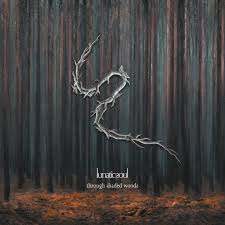
Lunatic Soul, Through Shaded Woods: The perfect Hero’s Journey for this frustrating year. Mariusz Duda’s latest holiday from Riverside’s post-prog heads straight for Mirkwood — ominous, lowering music, echoing the colors and contours of Slavic and Scandinavian folk. Playing all the instruments (frenetic acoustic strums; decorative baroque keys; tasty metallic riffs and electronica accents; unstoppable primal percussion) Duda penetrates the heart of his melancholy, only to discover his greatest obstacle: himself. At which point “Summoning Dance” pivots, echoing Dante lyrically as it turns toward the soul-easing finale of “The Fountain.” Imagine Bela Bartok and Jethro Tull collaborating on a sequel to Kate Bush’s “The Ninth Wave,” and you’ll have some idea of how unique and special this album is. (The bonus disc — currently only available as a Bandcamp download link above and as a Polish import — is essential listening too, especially the hypnotic minimalist epic “Transition II.”)
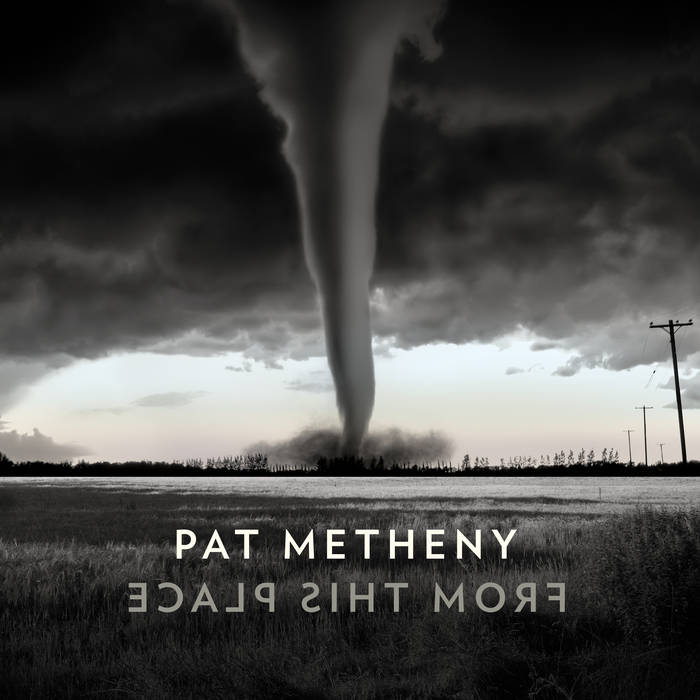
Pat Metheny, From This Place: State of the art jazz composed and performed at the highest level, this is a unified work of formidable emotional range and intelligence: instantly accessible, inescapably substantial — and above all, incredibly moving. Metheny, pianist Gwilym Simcock, bassist Linda May Han Oh and drummer Antonio Sanchez ride the exhilarating ebb and flow of ten new tunes, their rich interplay locking together with sumptuous orchestral overdubs for awe-inspiring, high-intensity results. From This Place communicates like mad; confronting knotty, pensive questions of culture, identity and hope, it’s also a deeply satisfying culmination to Metheny’s career-long pursuit of transcendence — music both of its time and potentially timeless, gripping at first acquaintance, deepening its impact with every further listen.
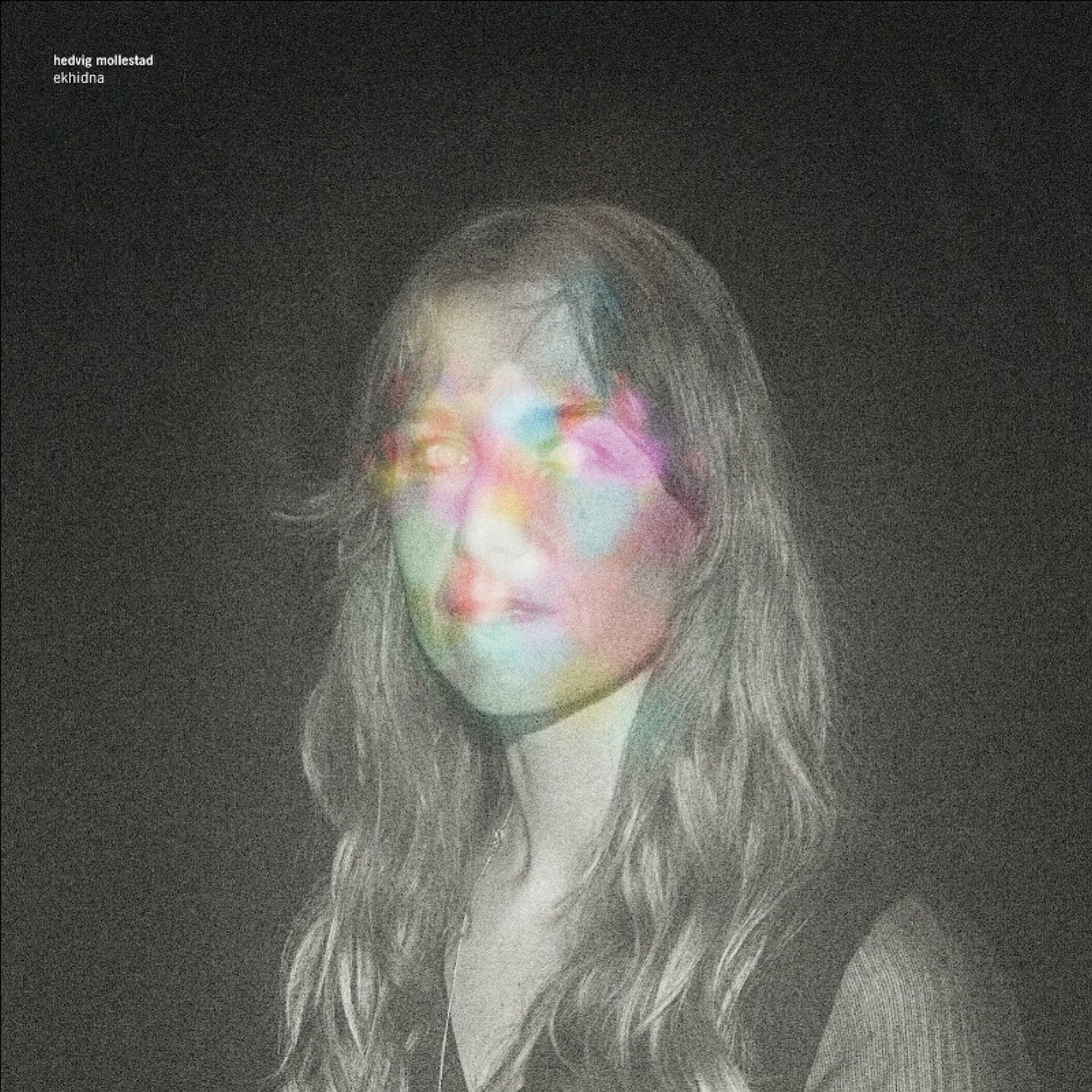
Hedvig Mollestad, Ekhidna: The Norwegian guitarist takes her incandescent blend of heavy rock and avant-garde jazz to the next level, triumphantly meeting the challenges inherent in writing for a bigger band and a broader sonic palette. Ekhidna is a bracing blend of tumbling rhythms, killer riffs and brain-bending improv that goes down remarkably smooth, but leaves a fiery aftertaste. Writing for an accomplished sextet of players, Mollestad’s new music doesn’t avoid the expectations raised by its evocation of Miles Davis’ Bitches Brew, sometimes confronting classic genre strategies head-on, sometimes blithely subverting them. Named for the she-dragon of Greek mythology (also called “the mother of all monsters”), this album is monstrous in the best sense — a musical rollercoaster ride suffused with heat, light and heart, recombining the raw materials of jazz-rock and extending its reach into realms of vast new potential. A real breakthrough, and Mollestad’s best effort to date.
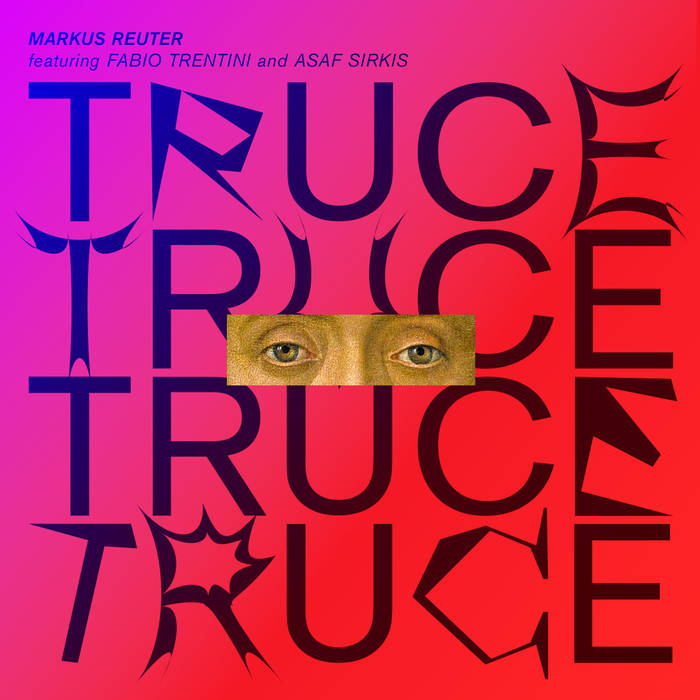
Markus Reuter, Fabio Trentini and Asaf Sirkis, Truce: Utterly bracing, a cold slap in the face that kicked off 2020 in the best way possible. Recorded live in the studio on a single day by touch guitarist Reuter, bassist Trentini and drummer Sirkis, this is the unfiltered, mind-boggling sound of three virtuosos throwing caution to the winds and just going for it. From start to stop, the music they make is unbeatably heavy, head-snappingly varied, and vividly compelling — whether on the searing stomp of a title track, the brutal mid-tempo funk of “Bogeyman”, the abstract balladry of “Be Still My Brazen Heart”, or the Police-ified dub freak-out of “Let Me Touch Your Batman”. Listening to Truce is an hour-long thrill ride with tons of substance to chew on — one you need to experience for yourself, more than once.
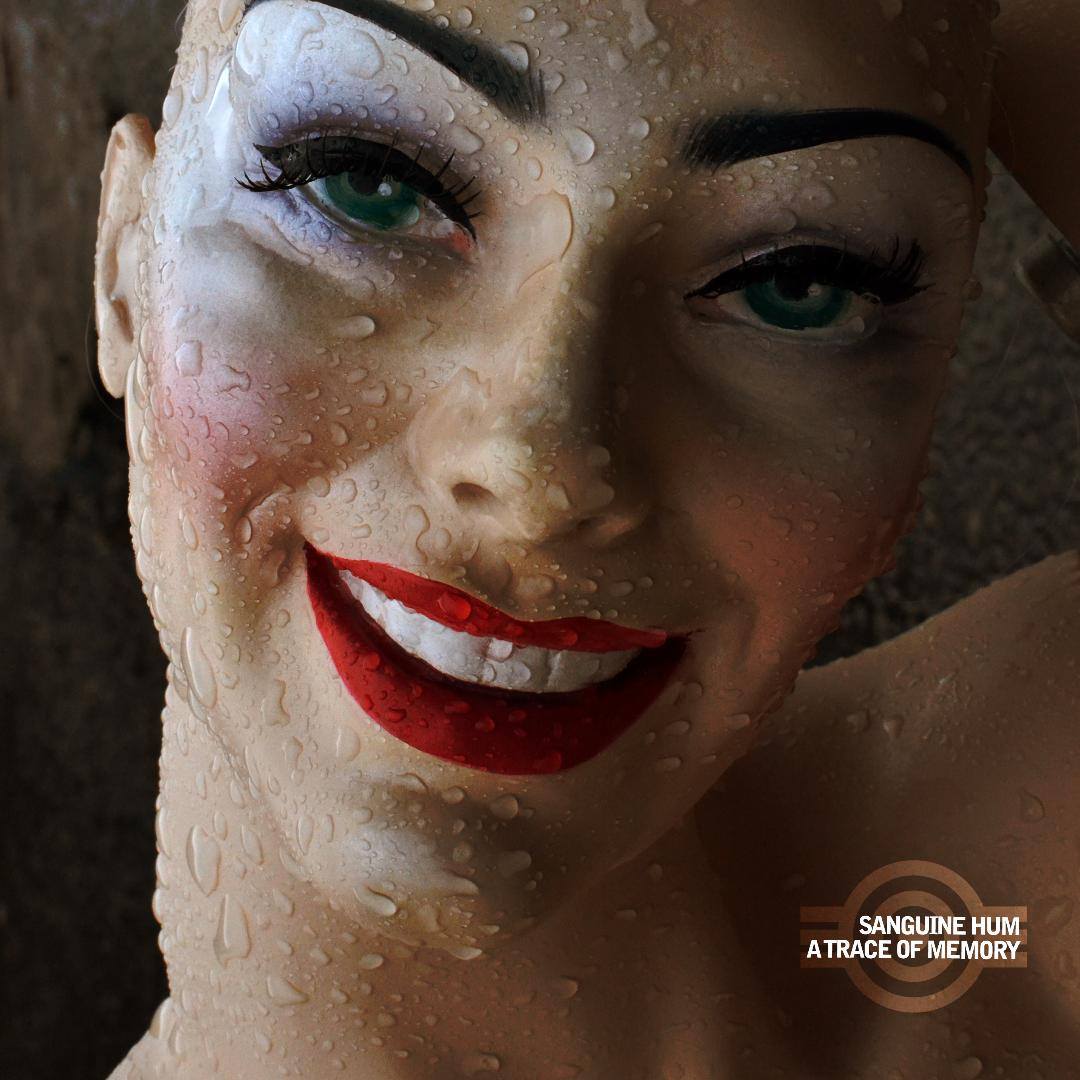
Sanguine Hum, A Trace of Memory: Rarely does eccentricity sound so graceful as in the hands of Joff Binks, Matt Baber and Andrew Waismann. Sequenced as a seamless whole, the seven tracks on A Trace of Memory trace a playful trajectory; no matter the giddy succession of off-kilter riffs, the complex counterpoint of Binks’ guitar and Baber’s keys, or the intensity of the musical climaxes, the ebb and flow is consistently welcoming, yet always subtly stimulating. Freed from the broadly goofy, conceptual conceit of Now We Have Light and Now We Have Power, Binks can explore a more allusive lyrical style and spare melodic lines that soar instead of patter; less is definitely more in this context. Sanguine Hum has hit new heights here; listening to this album is like watching clouds travel unhurriedly across a clear sky, and it makes me smile every time. In 2020, this may be the closest you can come to hearing the harmony of the spheres.
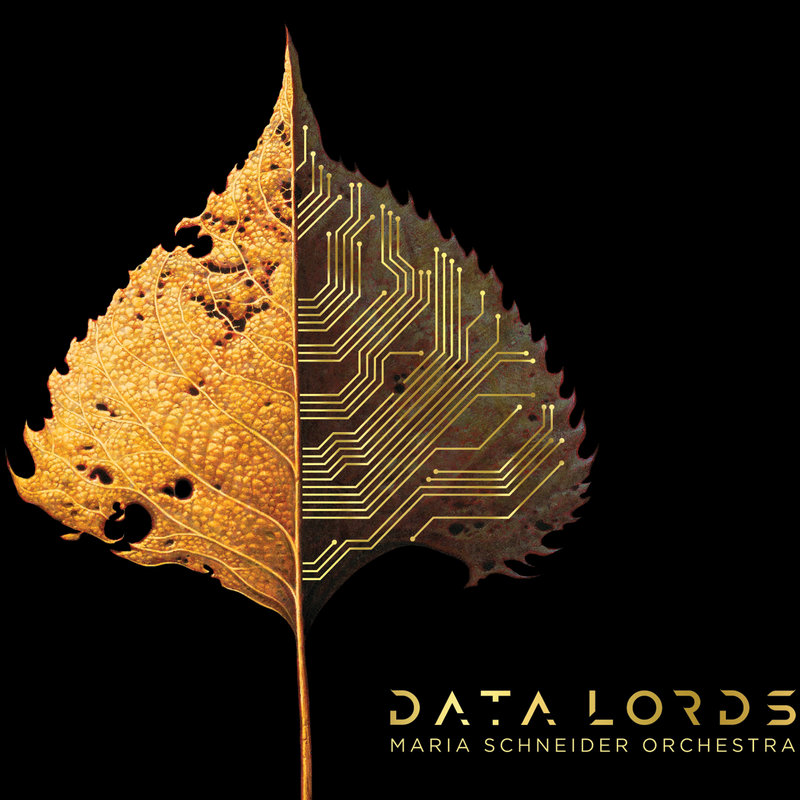
Maria Schneider Orchestra, Data Lords: There’s no question in my mind that composer Maria Schneider (based in jazz but embracing musical terrain beyond category) and her orchestra have reached a new artistic pinnacle on this album. Conveying both the bleak potential of online life blindly lived and the bounteous beauty of the life around us we take for granted, Schneider conjures up slow-burning tone poems that, as they catch fire, blaze with fear and dread — but also with hope and joy. Throughout there’s a symphonic sweep, a supple rhythmic foundation and a seamless flow of inexhaustible melody; Schneider’s compatriots inhabit and animate her music with dedicated unity and thrilling improvisational daring; and the high-definition sound lovingly unfolds all of the music’s sophisticated, profoundly moving beauty with breathtaking clarity.
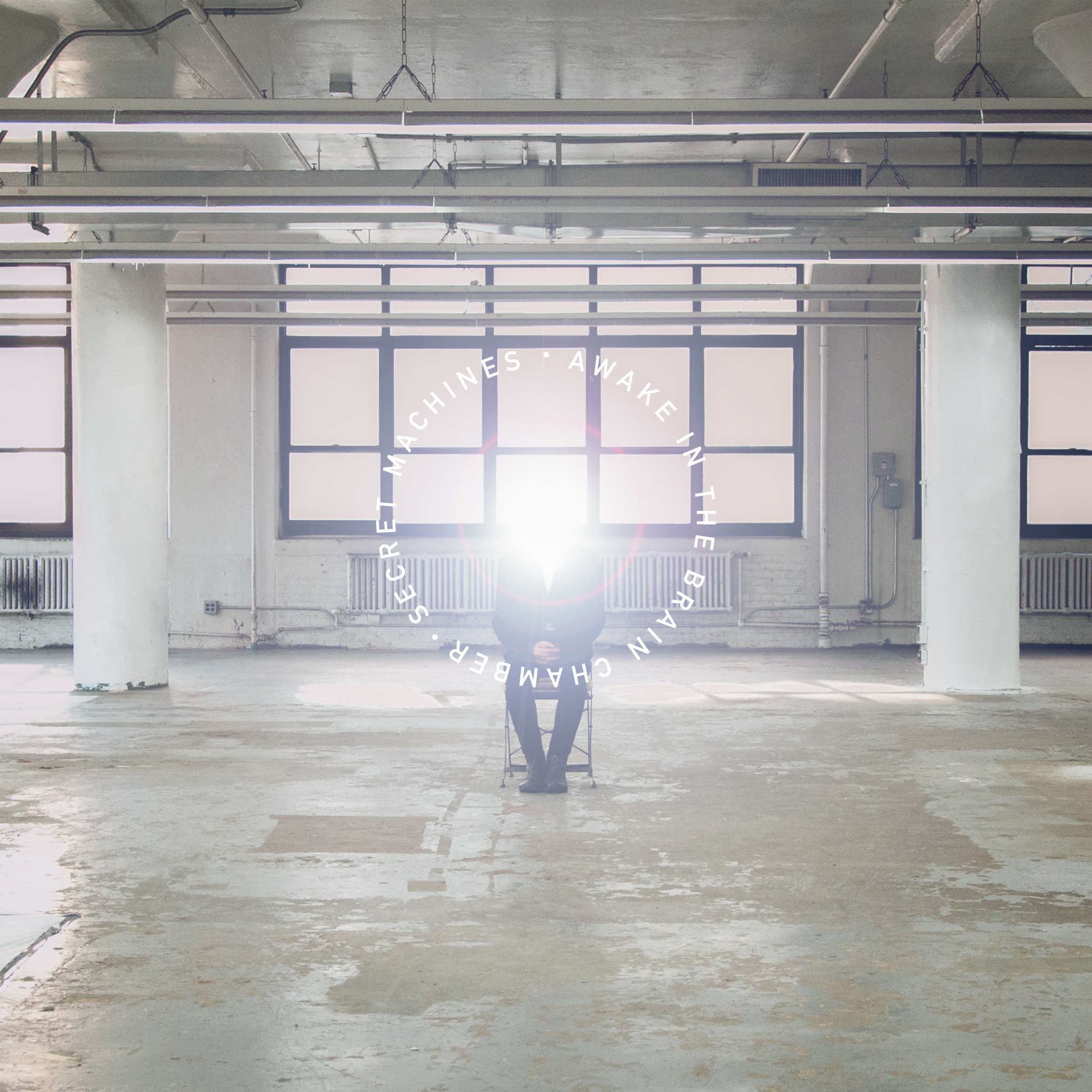
Secret Machines, Awake in the Brain Chamber: Way back in 2004, Secret Machines’ Now Here Is Nowhere was one of that year’s most compelling albums, a ferocious collage of droning space-rock riffs, rampaging Zeppelinesque grooves and unsettling, dystopian lyrics. A stalled major-label career and a revolving door of personnel dissolved the band’s momentum, capped by guitarist Benjamin Curtis’ passing in 2013 — but somehow, this magnificent beast is back. On Awake in the Brain Chamber, brother Brandon Curtis writes the songs and supplies keys, guitar and bass (as well as his patented, heartbroken vocal sneer) while drummer Josh Garza fills all available frequencies with his customary thunder. Whether they’re uptempo sprints (“Dreaming Is Alright, “Everything’s Under”), widescreen ballad-paced crawls (“3, 4, 5 Let’s Stay Alive,” “So Far Down”), or determined drives into the middle distance (“Talos’ Corpse,” “Everything Starts”), these eight taut, sharp tracks hit the sweet spot between hard rock and modern-day psychedelia — tight, mesmerizing, absolutely exhilarating. This one will get your blood flowing.
Bruce Springsteen, Letter to You: As his career trajectory flared, climbed, peaked, then settled into the long tail of legacy-rock stardom, Springsteen never really stopped exploring his core concerns: the ins and outs of freedom and community, their costs and their consolations. The good news here is that Letter to You digs deeper, pondering the price of escape, love, friendship, loss, grief and jubilation, remembering friends now dead, reviving songs once abandoned. When Bruce has something big to write about, he can cut straight to your heart, even from a secluded home studio in deepest New Jersey, and he’s done it again here. With the E Street Band on fire behind him, Letter to You could be the basis of a tour to top them all for Springsteen; but even if that never comes to pass, this album is something special, a hard-rocking reminder that yes, our days on this earth are numbered — but also that love is strong as death.
Three Colours Dark, The Science of Goodbye: This new collaboration between vocalist Rachel Cohen (Karnataka, The Reasoning) and keyboardist/guitarist Jonathan Edwards (Karnataka, Panic Room) proves elegant, introspective and strangely irresistible; there’s brooding power to the music and a darkly compelling lyrical vision to match. Lured by Edwards’ lush, disconcerting settings into Cohen’s brave, quietly harrowing narratives of pain, bewilderment, and self-doubt, you wonder how you’ll make it out — which makes the album’s cathartic finale even more delicious. From claustrophobic onset to the inspiring end, The Science of Goodbye rings true as both testimony and art, as Three Colours Dark follow the light that seeps through the cracks in everything to a new day.
and my favorite new album of 2020 . . .
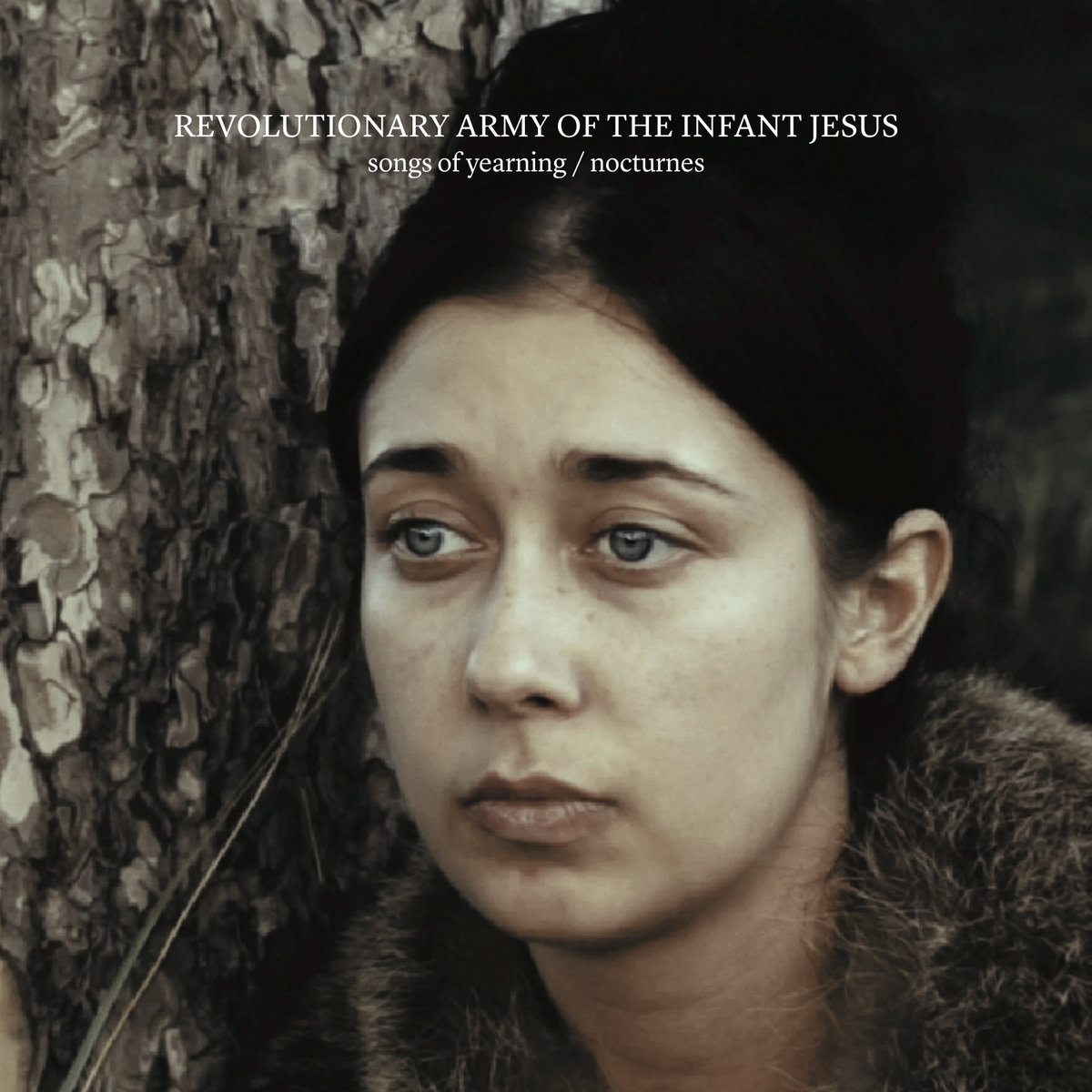
Revolutionary Army of the Infant Jesus, Songs of Yearning/Nocturnes: I have never before heard anything quite like this album, and found myself returning to it all year. This loose creative collective from Liverpool has pursued “echoes of the sacred” across three decades, striving to access sonic space where transcendence can invade a stiflingly measured-out world. Songs of Yearning and the limited bonus album Nocturnes (still available as a pair at Bandcamp) both stake out new territory where rumors of glory can run; brimming with rough-hewn beauty and deep mystery, pairing audacious scope with quiet, insistent appeal, this music is primal and postmodern in the same eternal instant. As the idols of prosperity and progress continue to totter around us, RAIJ’s latest feels like genuinely good news — a sacramental transmission from, then back to, the heart of creation.
This year, I’m starting off my “best of” retrospective with albums that aren’t technically “new” — compilations, live albums, reissues and (re)discoveries from previous years — that grabbed me on first listen, then compelled repeated plays in 2020. I’m not gonna rank them except for my Top Pick, which I’ll save for the very end. The others are listed alphabetically by artist. (Old school style, that is — last names first where necessary!) Where available, listening opportunities are linked in the album title or included below my summary via Bandcamp, YouTube or Spotify.
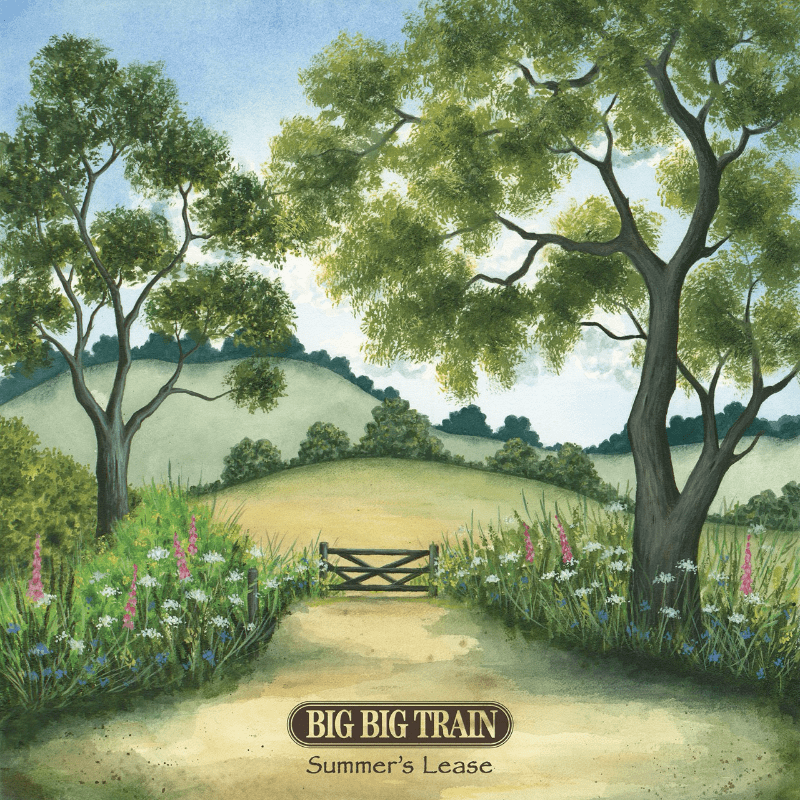
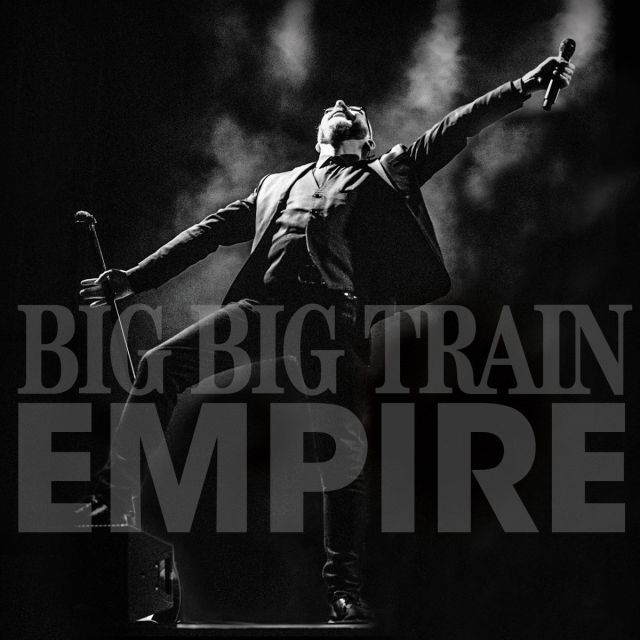
Big Big Train, Summer’s Lease (compilation)and Empire (live): This year, I’ve bought music from even more far-flung corners of the world than usual — including Big Big Train’s Japanese-only retrospective. Disc 1 features various rarities on CD for the first time: re-recordings old and new (including excerpts from my intro to the band, the Stone and Steel Blu-Ray), plus the “London Song” sequence from Folklore in all its sprawling glory. Disc 2 leans into the post-Underfall Yard era with a solid mix of epics and, um, shorter epics, plus an unreleased instrumental as dessert. It’s all impeccably curated, and (in retrospect) a fitting capstone to the work of recently departed Train crew Dave Gregory Rachel Hall and Danny Manners. In a similar fashion, Empire is a fond farewell — the last concert played by this incarnation of the band (including Cosmograf’s Robin Armstrong) before COVID-19 killed off their first-ever North American tour. Which makes the entire show, brilliantly performed as always, even more poignant, from the rocket-fueled opener “Alive” to the romantic, spiraling coda for the best version of “East Coast Racer” yet. Sorry, there’s something in my eye . . .
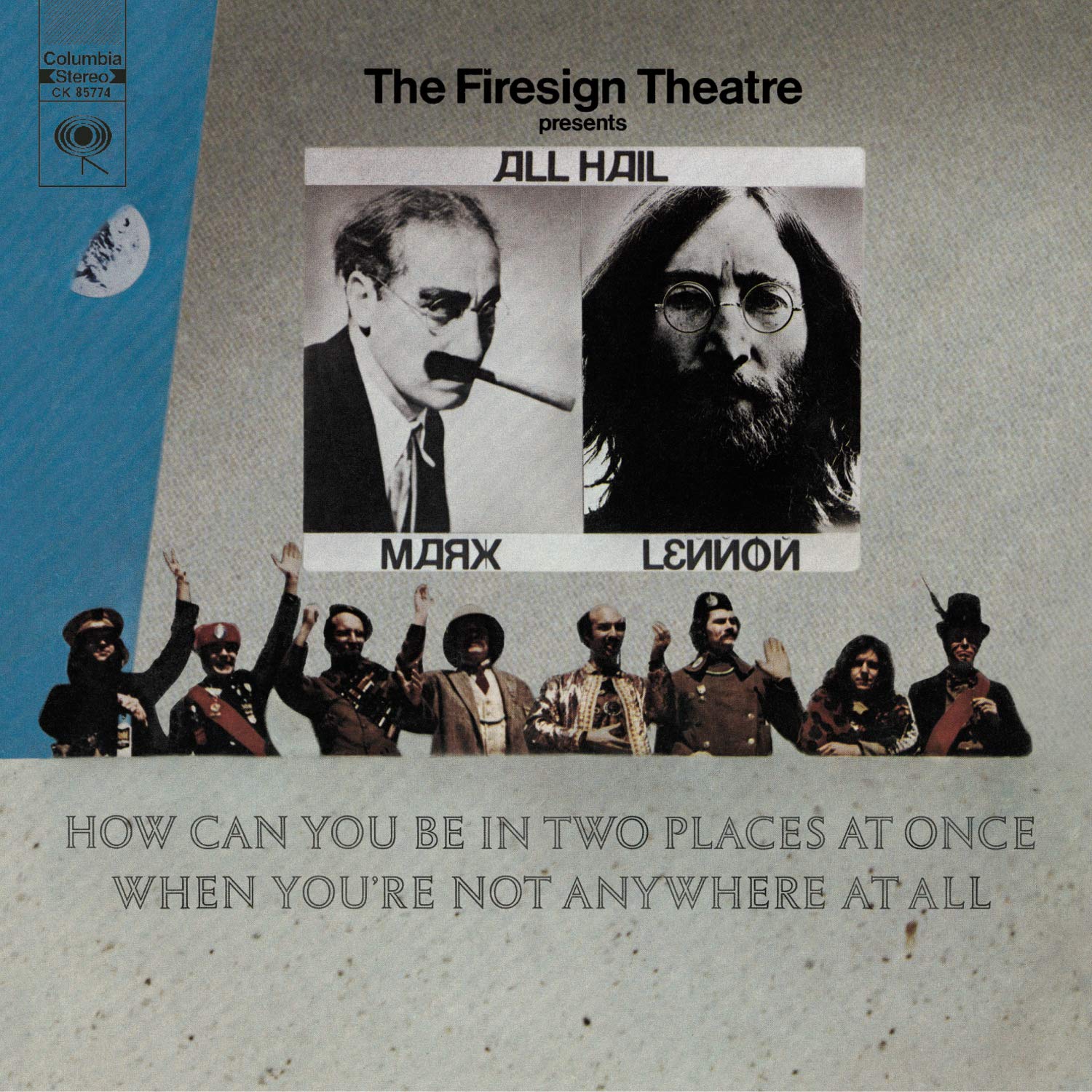
The Firesign Theatre, How Can You Be in Two Places at Once When You’re Not Anywhere At All(rediscovery): This spring, my big brother Bob pointed me back to this 1969 classic — quite possibly the single most insane comedy album ever recorded. The half-hour long title track’s surrealistic road trip morphs into a wickedly irreverent (yet oddly touching) patriotic pageant, with stopover cameos from Lewis Carroll and James Joyce; “The Further Adventures Of Nick Danger,” memorized and mimed to by me and my roommates back in college, is a hallucinogenic smoothie of hardboiled detective drama, time travel and the Beatles’ White Album. “Wait a minute — didn’t I say that line on the other side of the record?” Believe me, you need to find out.
Pat Mastelotto and Markus Reuter, FACE (discovery): My New Year’s resolution was to become a MoonJune Music subscriber through Bandcamp; twelve months later, it’s still one of the best musical decisions I made. In recent years, touch guitarist Reuter has become a major contributor to Leonardo Pavkovic’s ongoing quest to “explore and expand boundaries of jazz, rock, ethnographic, avant, the unknown and anything between and beyond,” frequently joined by King Crimson drummer Mastelotto (his partner with Tony Levin in Stick Men). The 2017 FACE (not actually on MoonJune) stands out in the duo’s catalog: a single, 35-minute instrumental travelogue that swiftly spans the globe and its myriad rhythms, aided and abetted by Steven Wilson and associates of David Lynch, Tool and the Rembrandts. Blink with your ears and you’ll miss the transitions from theme to theme and place to place; this one both demands and thoroughly rewards my attention every time. Hopefully, the excerpts linked above will convince you — don’t hesitate to hop on board!
The Neal Morse Band, The Great Adventour Live in Brno (live): every bit as impressive as when I saw this show in Detroit the same year, the NMB’s concert take on The Great Adventure is even tighter, more driven and more finely honed than the studio version. Kaleidoscopic contrasts of rhythm, instrumental color, vocal textures (mainly from Morse, guitarist Eric Gillette and keyboardist Bill Hubauer) and tonality mesh effortlessly with drummer Mike Portnoy and bassist Randy’s George’s badass forward propulsion, mirroring the lyrical highs and lows of the journey to John Bunyan’s Celestial City. The result is sustained, extended, unforced ecstasy in the Czech audience, capturing how Morse’s recent work embodies the ongoing ideal of American revivalist religion. A journey worth taking, whether you caught this in person or not.
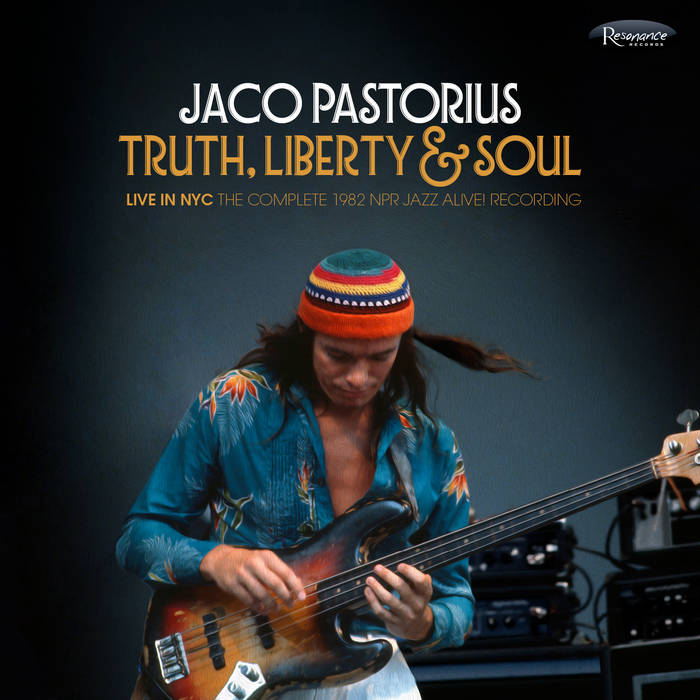
Jaco Pastorius, Truth, Liberty and Soul: Live in NYC(live, archival, discovery): 2020 was the year I came across Resonance Records, where “jazz detective” Zev Feldman has been unearthing incredible archival treasures for nearly a decade. Jaco Pastorius single-handedly revolutionized electric bass playing in the 1970s; this 2017 release captures him in 1982, fresh from his boundary-busting stint in jazz-rock titans Weather Report. Fronting a big band of great players — the best New York horns, the drum/percussion duo of Peter Erskine and Don Alias, Othello Molineaux on steel pans and harmonica virtuoso Toots Thielmanns — Pastorius mixes classic tunes with his own soulful writing. It’s a mighty, bubbling noise — jazz, funk, rock, reggae, swing and more, with a groove that never stops and heart behind the flash. Irresistible for anyone with a pulse!
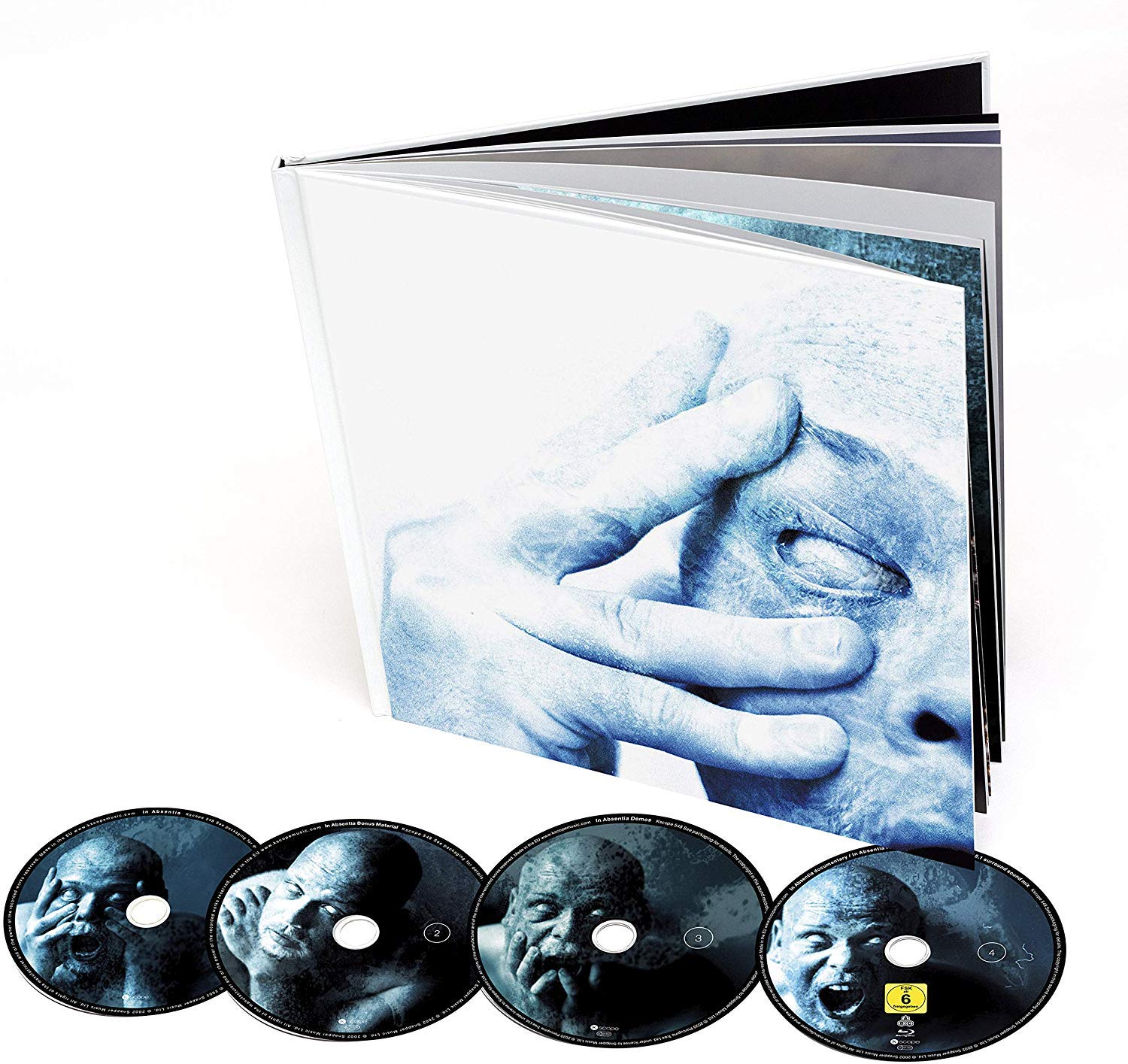
Porcupine Tree, In Absentia(deluxe reissue): Not the Porcupine Tree album that hooked me (that was Deadwing, promised its own deluxe box next year) but, looking back, my firm favorite of the band’s late period. Freshly signed to the American label that brought us Trans Siberian Orchestra, Steven Wilson and company made the polar opposite of a sentimental holiday album, focusing on the inner motivations of — serial killers? What makes that work? Well, how about: the full-on debut of Gavin Harrison’s stylish, rhythmically slippery drumming; Richard Barbieri’s off-center, arresting synth textures and solos; Colin Edwin’s relentless, incomparably steady bass workouts; Steven Wilson’s reignited love of metal slamming up against the songcraft developed on Stupid Dream and Lightbulb Sun, as well as a fixation with Beach Boys-tinged harmonies? Oh, and a clutch of superior tunes that became perennial favorites, both on the main album (“Blackest Eyes,” “Trains,” “The Sound of Muzak”) and the bonus disc (“Drown With Me,” “Futile”). Add in subtle yet superb remastering and you have a near-perfect example of how these boxes should be done.
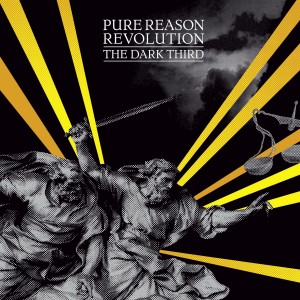
Pure Reason Revolution, The Dark Third (reissue): At a time when progressive rock’s troops were thin on the ground, PRR provided reinforcements — and a breath of fresh air. It’s still hard to believe a major label released The Dark Third back in 2006; the effortlessly evolving long-form suites, the sweet-and-sour pairings of lush soundscapes and jacked-up beats were a vivid variant on Pink Floyd’s classic palette that turned the bass and drums up to 11. Jon Courtney, Chloe Alper and their cohorts weave the webs of melody and harmony; Paul Northfield’s co-production brings out the cavernous bottom end. The new bonus disc includes both the intriguing student work that led to Sony signing PRR and outtakes that showed up in different forms on later albums. Always an booming, blissed-out listen, now more inviting than ever.
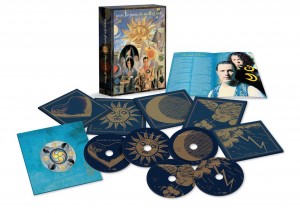
Tears for Fears, The Seeds of Love (reissue): A marvelously all-over-the-place, widescreen record. Unabashedly pop but also fearlessly expanding the TFF sound into psychedelia (the title track was everywhere back in 1989), soul (big shout-out to Oleta Adams and Tessa Niles, who pushed Roland Orzbaal and Curt Smith to new vocal heights on “Woman in Chains” & “Swords & Knives”), jazz (Nicky Holland & Adams serve up stunningly tasty piano), world music (Jon Hassell’s superlative trumpet on “Standing on the Corner of the Third World” & “Famous Last Words”) and even a touch of prog-funk on “Year of the Knife.’ The squeaky-clean remaster (plenty of headroom and dynamic range) is dandy, but if you need more, the super-deluxe set linked above includes some dynamite rehearsal recordings.
and my Top Pick . . .
Ella Fitzgerald, The Lost Berlin Tapes (live, archival): My recent listening has tacked in the direction of mainstream jazz; if I had to speculate as to why, I’d say I might be looking for less tension and more release during my unobligated time. But what’s on offer is a factor as well. Instead of baking sourdough bread or taking up acoustic guitar during the time of COVID, it’s as if jazz musicians and aficionados have all dug deep in their closets and simultaneously unearthed long lost vintage recordings — which record companies eager to fill their distribution pipelines have snapped up and launched into the wider world.
This, in my view, is the best of that harvest: an astounding, life-affirming 1962 concert buried in the archives of Ella Fitzgerald’s manager until now. Ella and her fellas (Paul Smith on piano, Wilfred Middlebrooks on bass, Stan Levey on drums) are at their absolute peak, in tune with each other and with an extroverted, enthralled Berlin audience. Every note of this concert radiates warmth and inner joy, even when the mood darkens on torch songs like “Cry Me A River” and Billie Holiday’s “Good Morning Heartache.” And when Ella swings on “Jersey Bounce,” jumps on “Clap Hands, Here Comes Charlie,” digs into Ray Charles’ “Hallelujah, I Love Him So” (resulting in an immediate, complete encore!), then breaks into her trademark scatting on “Mack the Knife,” well, she is unstoppable. I have had no finer feeling listening to music this year; whatever may ail your soul, I believe that The Lost Berlin Tapes are good medicine for it.
But wait, there’s more! Watch for my “new album” favorites from 2020 coming soon . . .






 Progarchy