All of 2014: Rush @ 40


rush at 40.001 - Version 2

Long to longish progarchist posts on Rush
Hold your Fire -Rush’s finest? by Tad Wert (*progarchy’s single most popular post ever)

https://progarchy.com/2014/04/24/rushs-finest-album-hold-your-fire-until-youve-read-my-analysis/

***

Erik Heter on Moving Pictures as Synergy

https://progarchy.com/2014/04/27/synergistic-perfection-first-and-lasting-impressions-of-moving-pictures/

***

Discovering Rush on their 40th anniversary by Eric Perry

https://progarchy.com/2014/04/25/discovering-rush-the-40-year-old-virgin/

***

The first Rush album reviewed by Craig Breaden

https://progarchy.com/2014/02/22/rushs-first/

***

A review of A Farewell to Kings by Kevin McCormick

https://progarchy.com/2013/01/21/rush-a-farewell-to-hemispheres-part-i/

***

A review of Power Windows by Brad Birzer

https://progarchy.com/2013/12/14/power-windows-rush-and-excellence-against-conformity/

***

Kevin Williams on Clockwork Angels Tour

https://progarchy.com/2013/11/24/rushs-clockwork-angels-tour-straddles-the-80s-and-the-now/

***

Brad Birzer on Clockwork Angels Tour

https://progarchy.com/2013/11/27/rush-2-0-clockwork-angels-tour-2013-review/

***

Erik Heter on Clockwork Angels Tour Concert in Texas

https://progarchy.com/2013/04/24/you-can-do-a-lot-in-a-lifetime-if-you-dont-burn-out-too-fast-rush-april-23-2013-at-the-frank-erwin-center-austin-texas/

***

A review of Vapor Trails Remixed by Birzer

https://progarchy.com/2013/10/05/resignated-joy-rush-and-vapor-trails-2013/

***

A review of Grace Under Pressure by Birzer

https://progarchy.com/2013/02/21/wind-blown-notes-rush-and-grace-under-pressure/


rush snakesAnd, our favorite Rush sites

(please support these incredible sites and the fine humans who run them!)

***

Power Windows: http://www.2112.net/powerwindows/main/Home.htm

***

Rush Vault: http://rushvault.com/

***

Rush is a Band: http://www.rushisaband.com/

***

Cygnus X-1: http://www.cygnus-x1.net/links/rush/index.php

IQ The Road of Bones

The new IQ album will be upon us very soon and if this taster is anything to go by, it is going to be a corker.

Mark Judge on Camilla Paglia and Rock’s Poetry

Cultural critic Mark Judge.

American cultural critic, Mark Judge, has a great piece on the poetry of current rock and pop music.  In particular, Judge is considering the arguments of another famous critic, Camilla Paglia, the bete noire of feminism in academia.  Enjoy.

It’s not that today’s female pop stars are not feminists. It’s that, like today’s young male pop stars, they’re illiterate. Songwriters are supposed to be poets. But we now have at least one generation of digital-revolution songwriters who know nothing about symbolism, metaphor, word play, and writing about unexpected and diverse topics.

That’s the point that Camille Paglia missed–or at least did not emphasize enough in a very popular recent post in the Hollywood Reporter. Paglia announced that “Taylor Swift, Katy Perry and Hollywood are Ruining Woman.” Paglia, who is not known for subtlety, wrote that when she sees today’s young female pop stars it’s like feminism never happened: “we’ve somehow been thrown back to the demure girly-girl days of the white-bread 1950s. It feels positively nightmarish to survivors like me of that rigidly conformist and man-pleasing era, when girls had to be simple, peppy, cheerful and modest.”

To keep reading (and you should!), go here: http://acculturated.com/has-rock-and-roll-lost-its-poetry/

Voyager-“V” Coming June 3 to North America

image013AUSTRALIA – Australian progressive metal quintet, Voyager, will release its fifth studio album, V, in North America on June 3 with distribution through Nightmare Records. The Kickstarter-funded, 13- track album was recorded at Templeman Audio with producer, Matt Templeman.

The band calls the release “heavy, groovy and super-catchy. This is going to be pure, polished Voyager with a modern feel; we are insanely excited about unleashing this.”

V can be pre-ordered now via Bandcamp at: http://voyager.bandcamp.com/.

1. Hyperventilating

2. Breaking Down

3. Beautiful Mistake

4. Fortune Favours the Blind

5. You, the Shallow

6. Embrace the Limitless

7. Orpheus

8. Domination Game

9. Peacekeeper

10. It’s a Wonder

11. The Morning Light

12. Summer Always Comes Again

13. Seasons of Age

With four full-length albums under its belt and shows throughout North America, Europe and Asia with the likes of Devin Townsend, Children of Bodom, Soilwork, Nightwish, Epica and Orphaned Land, the five-piece from Oceania is now firmly entrenched in its international repute as a band with heavy grooves, driving riffs and unforgettable melodies. The band’s fourth opus, The Meaning of I (2011), saw rave reviews and international acclaim of the highest caliber (including #8 in Metal Hammer Germany’s ‘Soundcheck’). The U.K.’s, Classic Rock Presents Prog, called the album a “polished collection of heavy, heavily polished anthems.”

Complimented by a fiery red keytar, a feisty female guitarist, and vocals Chino Moreno (Deftones, Crosses) recently likened to Duran Duran’s, Simon LeBon, Voyager is consistently a live force to be reckoned with. After breaking the record for the longest fan signing session in the 12 year history of America’s “Progpower Festival,” the band will return to “Progpower” Europe this year alongside Chimp Spanner, Agent Fresco, Pagan’s Mind and more.

image012Voyager is…

Scott Kay – guitar
Alex Canion – Bass/vocals
Daniel Estrin – vocals/keytar
Ashley Doodkorte – drums
Simone Dow – guitar


Voyager online…

www.facebook.com/Voyageraustralia

www.twitter.com/Voyagerau

Fresno Media
Fresno Media

Radiant Records for the Win!

150px-Radiant_records-logo

Neal Morse’s company, Radiant Records, is offering some rather stunning prices on cds, DVDs, t-shirts, etc.  Well worth checking out.

http://www.radiantrecords.com/category/191735-clearance.aspx?pageindex=1


Elbow; The Take Off and Landing of Everything.

2014-04-28-14-56-53--1231377311

As a reviewer it is sometimes difficult to stand back from an album that you are reviewing and be objective, not let your personal feelings, or things that are happening in your own life colour your perception of the album, and make the review all about you, and not about the album. Sometimes however the parallels between the album and experiences you have had or are going through make this difficult, and it seems that with every track the artist has seen into your soul and written songs all about you. This is where I come into Elbows new long player, the Take off and Landing of Everything. For the uninitiated Elbow are a Lancashire based quintet of Guy Garvey, Mark Potter, Craig Potter, Richard Jupp and Pete Turner, and have been working as Elbow since 1997. The Take off and Landing of Everything is their 6th studio album, and whilst its hard for them to follow such masterpieces as Leaders of the Free World, The Seldom Seen Kid or even their captivating debut, Asleep in the Back, this album is as close to perfection as you’ll ever get.

Each song grows and builds to a climax, the opening languid This Blue World, with its sparse instrumentation, and Garvey’s beautiful soulful vocals is a superb way to start, pulling in some of their finest instrumentation.

Elbow as a band have never followed any particular trend or style, so you don’t get any drum and bass albums or obligatory cover album, they are a traditional album band in all senses of the world, with every song crafted, and every track placed where it needs to be for the most emotional impact.

This is also their second ‘break up’ album, while Leaders of the Free World was all about Garveys break up with DJ Edith Bowman, this documents his break up with Emma Jane Unsworth, which impacts on most of the tracks, whilst Garveys extended stay in New York in 2012 informs large parts of the album as well.

With this being an album that has parallels with circumstances I am going through at the moment, its hard to separate the public from the personal, and yet where it could have been depressing, wallowing in the darkness of the separation, this is the exact opposite. It’s elegiac, it’s beautiful, it is a musical and lyrical celebration of what was there, and what is gone. The album is beautifully and lushly orchestrated from the strings on Charge, to the fantastic musical interlude in Fly Boy Blue/Lunette, with Garveys observational lyrics reminiscent of the title track to Leaders of the Free World, whilst the musical backdrop is superb, the music growing, and building into a climactic crescendo. With most of the tracks over the 6-minute mark, each one has space to grow; there is nothing worse than a great track that is over before it’s even started. Luckily Elbow give the music the room to breath, maybe its something to do with the moors that surround their Manchester base, as this is nowhere near the sneering belligerence of the Gallagher brothers, or the demented drug crazed Madchester scene, this is closer to Joy Division or the Doves, where the wide open spaces of the moors, which gives you room to think, room to reflect, and needs music as epic as this to accompany it. If you’re looking for a quick hit and gone then this is the wrong place.

If you want an album that grows on you and gives you something new, then Elbow are the progressive band for you, and yes, I will describe Elbow as progressive, Andy Tillison once said to me that ‘Its music that does something, it moves from point A to point B… true progressive music takes you from one point to another’ and this is the strength of Elbow, their albums are like stories, snapshots of a moment, and something you need to hear from the beginning to the end. Albums as albums, not collections of songs arranged in order of downloading preference.

The beautiful, elegiac single New York Morning, with its fantastic lyrics, its epic build, and the massed chorus as it grows and grows is almost the perfect Elbow song, even with it’s line about ‘The modern Rome, where folks are nice to Yoko’ encapsulates the brilliance of Garveys observational lyrics, where he can juxtapose the huge and the small in one song, and bring it from the public to the personal is why he is one of the countries best, and underrated lyricists. His mournful, soulful vocals can sing heartbreak and make it seem elegiac, there is poetry and everyday life in his work, with the music and the work coming together so perfectly to create songs as artwork, beauty on the radio, perfection in a pop song.

Songs like Real Life (Angel), the metronomic, sparse minimal Honey Sun, with Garveys lyrics almost whispered almost confidentially, and the driving beat building up, piece by piece, with some great guitar work, it comes across halfway between a lullaby and a hymn, with all the power of the latter and the intimacy of the former.

The albums highlight, centrepiece and the song Elbow have been building up to is My Sad Captains (named after a quote from Shakespeare’s Antony and Cleopatra) with its mournful brass band, which seems a perfect accompaniment, (whether it’s a coincidence, or whether its in the blood I don’t know, but having grown up around the Colliery brass bands and St Georges day marches, there is something bittersweet about the sound of a well placed brass section, something Elbow I’m sure will be familiar with as well) and it’s moving lyrics about losing a group of drinking friends, happy and sad at the same time, remembering things past and mourning how they used to be, whilst celebrating what they had, lyrics like ‘if its true we only pass this way but once, what a perfect waste of time’ bring a lump to the throat and a smile to the face. The superb Colour Fields, again with it’s electronic, sparse arrangement and driving lyrics, leads into the title track, the longest track on the album, a 7 minute plus with some fantastic lyrics and vocals from Garvey, mixed and surrounded by an almost psychedelic musical accompaniment, with the band pushing themselves on this, and pulling together in a magisterial musical piece, with the fantastic musical coda appearing and building from about halfway in, as it ends with some beautifully multi layered vocals, and a brilliant build that fades out, leaving you wanting more.

The Blanket of Night puts the album to bed, and closes it in style, with the music and lyrics again working in harmony.

Elbow are one of the most consistently brilliant bands working in the world today, and have over a 14 year career, with the same members (that’s longer than the Beatles were active as recording artists) and have released 6 studio albums, 2 live albums and b-side collection (the amusingly named Dead in the Boot, a tongue in cheek parody of their debut Asleep in the Back) and show no signs of losing either quality control, or running out of something new to say. If you love epic music, that makes you think, makes you want to listen to more, and which can both pull on the heartstrings and cheer you up, then you need to discover Elbow. Start here and then see where the Take Off and Landing of Everything takes you.

Synergistic Perfection: First – and Lasting – Impressions of Moving Pictures

I. Blown Away

ImageIt was a beautiful spring day.

At least so it seemed. The calendar said it was still February, so officially we were still in winter. But Winter 1981 in Lexington, KY, was unseasonably warm.

On that fateful afternoon, I met up with my friend Greg Sims at the end of the school day. We hopped into his Chevy Monza (or, ‘The Monza-rati’ as we called it) and he drove me over to the K-Mart on New Circle Road. I went in, quickly located a copy of the new Rush album, Moving Pictures, made my purchase, and headed back out to the car. Greg gave me a ride home, and then took off, as he had to work while I had the night off from my job.

 I don’t remember the exact day it was when I made this purchase, but it likely was the same day the album was released. While that detail is fuzzy through the haze of thirty three years, I can say with confidence that I hadn’t heard so much as a single note of the record yet. At that time, listening to FM rock radio was a big part of my music consumption, and songs from Moving Pictures (especially Tom Sawyer) were in heavy rotation almost as soon as the album was released. Knowing that I had not heard any of the album before I listened to it on that fateful day tells me that it most likely was its release date.

 I opened the window in my bedroom to get in some of that nice spring-like air and then quickly removed the cellophane from the album cover. The vinyl record was removed from its sleeve, and put on the turntable. I set it in motion to start playing before quickly but comfortably implanting myself into an oversized beanbag chair I had in my room. As I pulled out the liner to look at the lyrics, I heard the needle make contact with vinyl, hearing the first few cracks and pops that were so common to music lovers of that era. And then …

 … the synthesizer intro to Tom Sawyer, the drums pacing things underneath. Oh my God.

 Right then and there I knew I was listening to a great album – Rush’s masterwork. To some, it might have seemed like I was jumping the gun. But there are some things you just know. And based on nothing more than the first few seconds of Tom Sawyer, I knew. Oh man. This is going to be a great album.

A modern day warrior

Mean, mean stride

Today’s Tom Sawyer

Mean, mean pride

Duh duh duh duh duuuuuuuuuuuuuuuuuuuunnnnnnnnnnnnhhhhhhhhhhhh

 (oh man, this is AWESOME!!)

Duh duh duh duh duuuuuuuuuuuuuuuuuuuunnnnnnnnnnnnhhhhhhhhhhhh

Duh duh duh duh DUUUUUUUUUUUUUNNNNNNNNHHHHHHHHH

I was soooooo hooked and I wasn’t even one minute into the first song. With every Alex Lifeson power chord, with every pluck of the Geddy Lee’s bass, every keyboard note, with every drum beat from Neil Peart, my conclusion of greatness was confirmed and reconfirmed.

 Today’s Tom Sawyer

He gets high on you

And the space he invades

He gets by on you

 And then came the synthesizer solo. There are no words that can describe my state of mind at this point. ‘Ecstatic’ … ‘thrilled’ … ‘mesmerized’ … all were inadequate. The rapture of a Rush fan.

Nevertheless, the rational part of my brain was still fully functioning. As I listened through the rest of Tom Sawyer, it was clear that Rush was in the process of making a quantum leap forward. This didn’t just sound like any other Rush album … it sounded like all the Rush albums. But I knew would have to distill that thought a bit to bring it into focus.

 Red Barchetta was up next. I loved it immediately. It was more guitar driven than the previous song, but still had a certain refinement not heard on some of their earlier guitar-heavy works. And it didn’t take long to recognize the lyrical themes of freedom vs. tyranny, the individual vs. the collective, and the free man vs. the state that I had first encountered on 2112 (discussed here). One of the things I had loved about Rush when I first heard them was all right here in one neat little package.

 Then came YYZ. Another instrumental, just as they had done on Hemispheres with La Villa Strangiato. However, this one was much more focused, much tighter. It certainly could not be called “an exercise in self-indulgence” as the band had referred to its previous instrumental. Full of great riffs and great playing, this one is still instantly recognizable all these years later, and still one of their live centerpieces.

 Side one drew to a close with Limelight, and again I knew I was listening to an instant classic. The music included some thick power chords from Lifeson’s guitar, not unlike some of their earliest works. Yet, it still seemed very fresh and new. The whole feel of this song was great. Something new and yet something familiar. The song ended and the needle returned to the resting position, but my state of euphoric shock continued.

 After flipping the vinyl record over and starting the turntable for side 2, I noticed that the first song, The Camera Eye, was a bit extended in length. Not a sidelong suite like 2112 or Hemispheres, but more comparable in length to the excellent Natural Science from their previous album, Permanent Waves.

 I kicked back again to the comfort of the beanbag and listened to the city noises that preceded some random synth buzzing before some proper keyboard lines made their appearance. Eventually, Lifeson joined the party, as the song moved forward with some heavy grace. A brief pause intervened, and then a more frantic keyboard line announced “here we go!” And just like that, Lee, Lifeson, and Peart were off to the races.

Duuuuuuuun dun dun DAAAAAN dun dun

Duuuuuuuun dun dun DAAAAAN dun dun

DAAAN dun dun

DAAAN dun dun

DAAAN dun dun

DAAAN dun dun

(Yeah, we are cruisin’ now, baby!!)

 It was as if we were being transported somewhere. We arrived when the instrumental section gave way to Geddy’s vocals. He delivered lyrical imagery of life in New York City from the point of a detached observer contemplating it all. I wasn’t sure what it all meant, but I loved it nonetheless.

 After that, the cycle repeated, and off we were transported to London for some images and observations of that city, and a contrast with New York.

 A more fantastic beginning to Side 2 would have been impossible. Five songs in, and my hastily drawn conclusion of the album’s greatness didn’t seem so hasty now. On the contrary, my initial gut feeling had been right on target.

 The mood of the music definitely took a shift with Witch Hunt. With this song, I followed the lyrics more closely than I had with any other. While I was never one to be particularly rebellious, I have long had a skepticism for authority and for others who “knew what was best” for me. Thus, when Geddy delivered the line “those who know what’s best for us must rise and save us from ourselves,” it hit home.

 I had some ideas of the particular intolerant a**holes to whom the lyrics referred at the time, but as I’ve learned over the years, the lyrics are broadly applicable to intolerance from all across the political spectrum.

 Six tracks up, six tracks down. Every damn one of them incredible. Only one left to go.

 Vital Signs made it seven for seven. A quirky synthesizer and guitar with a reggae beat? Who can pull that off? Well, Rush can. I laid back and enjoyed the music as the album I had dubbed a masterwork in its opening bar raced to its conclusion.

 The familiar cracks and pops returned for a few seconds before I heard the needle lift and the arm move to its resting spot. I sat there and contemplated what I had just experienced, and drew a few more conclusions.Image

 I knew this album was going to be huge. Every Rush fan and their grandmother was going to want a copy, and it would also bring in legions of new fans. While the hipster critics would hate it (but who cares about them, anyway?), the fans, both new and old, were going to love it. I knew Tom Sawyer would be their signature song. It was played at each of the four Rush concerts I witnessed subsequent to the release of Moving Pictures and appears on every video concert of Rush that I have watched. I knew that this would be the end of one era and the beginning of another for Rush. And I definitely knew that in my little bedroom on Marlboro Drive, on my modest stereo, this album was going to spend a lot of time on the turntable. Through the remainder of 1981, there was not another album that even came close.

 Rush albums generally take a few listens before they truly sink in with me. This is not necessarily a bad thing, and in fact, it’s something I like about Rush. Having the various layers revealed through multiple listens can be very rewarding it its own right. This album, on the other hand, did not. It strongly resonated with me right out of the gate. Just one listen, and I truly was blown away.


II. The Sum and The Whole

 Moving Pictures was many things. For one, it was an album that took the best of everything Rush had done before then, combined it, and distilled it into a whole that was greater than the sum of its parts. It was a culmination of their previous work in the same way that Close to the Edge was for Yes; it was the album that made the statement “we have arrived” the same way Dark Side of the Moon did for Pink Floyd.

 The music of the first few Rush albums were centered around heavy guitar. As the band honed their chops, they began writing extended pieces, first with The Fountain of Lamenth and then hitting big with 2112. In A Farewell to Kings and Hemispheres, the role of keyboards in Rush music changed from simply providing atmospheric background to a more prominent role in the melodic discourse, often times being a featured instrument for sections of songs. In the meantime, the band took a more experimental approach, both musically and lyrically. And on Permanent Waves, the band pared back some of the excesses of previous albums while tightening up their songwriting.
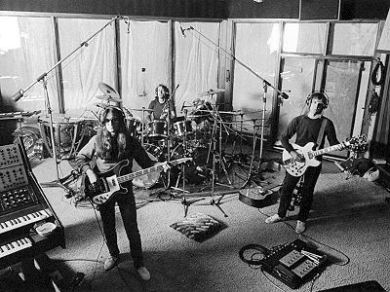
Image Moving Pictures takes something from all of the previous Rush albums and combines it into something new – and greater. Here, Rush took pieces from every one of their previous albums and put it together into something that sounded both fresh and familiar. On the outstanding documentary Beyond the Lighted Stage, Peart states “As I define it, that’s when be became us … I think Rush was born with Moving Pictures.” He further states “It represents so much that we learned up to that time about songwriting, about arrangement, that’s when we brought our band identity together.” Both statements – but especially the second – really hit home for me. Moving Pictures pulled it all together into one package that is both synergistic and perfect.

III. And Ending and a Beginning

 Given that Moving Pictures is a culmination of everything the band had produced up to that time, it represented (at least to me) an ending to the first phase of Rush music. But as much as it was an ending, it was also a beginning. Moving Pictures also served as a segue to and a launching pad for Rush’s output in the 1980’s. Particularly notable on Moving Pictures was the integration of the keyboards into the music. To be sure, most Rush albums prior to Moving Pictures had included at least some keyboards. However, keyboards seemed to be featured primarily when the other instruments stopped, most notably evident in keyboard solos that appears in songs such as Xanadu, Circumstances, and Jacob’s Ladder. This has been the source of a significant amount of controversy among Rush fans, with Moving Pictures being the dividing line. Nevertheless, anecdotally anyway, most Rush fans I have known like this album, irrespective of where they stand on their prior or subsequent work.

 For my money, Moving Pictures was the first in a sequence of four albums that marked a portion of Rush’s career that was creatively very fertile. Following with Signals, Grace Under Pressure, and Power Windows, the tighter integration of the keyboards that began with Moving Pictures continued even further, while the number of outside influences that made their way into the music continued to increased. This trend eventually played itself out in the late 1980’s and early 1990’s. Rush began to return to a more guitar-centric sound, with 1993’s Counterparts being most emblematic of that shift.   However, in the twelve years leading up to that album, the echoes of Moving Pictures could be heard in every intervening release.

 IV. Lasting Impact

 I’ve heard every album of original Rush music (I have not heard Feedback, their album of remakes … but I’ll get to it). None of them are bad, most of them are at least good, and a number of them are truly great. I’ve been astonished at their ability to produce so much good music over the course of their career. I’m even more astonished that they have been able to produce such excellent music so late in their career (Clockwork Angels, anybody?) at a time when other bands are typically doing nothing more than rehashing their glory days or producing sub-par output.

 Still, no Rush album has ever had an impact on me that is as lasting as Moving Pictures. If I had to choose only one Rush album to take to a desert island with me, this would be it and it wouldn’t even be a tough decision. Now as you can guess from what I’ve written above, that is not a criticism of any of their other albums. It’s just a simple recognition that not only did Moving Pictures have an immediate and powerful effect on me on that February day in 1981, it’s that the effect has never faded. Higher praise than that is simply not possible.


The Enid 26th April 2014 Chesterfield UK A Review

Image

Before I start, I have a confession to make; or maybe claim a world record. I have gone a little while without going to an Enid gig. Thirty five years!!! It’s quite a lot really. The last time I saw the Enid in concert was at the Hammersmith Odeon in 1979.Three of the current band members were not even born. I used to follow them to every gig in the 70’s. When they played Newcastle Upon Tyne earlier this year I was on holiday so a three hundred mile round trip was quickly planned to make sure I didn’t miss out this time.

The Real Time Music venue in Chesterfield is a compact standing only (apart from a few tables and chairs at the side) venue with a decent size stage and good acoustics. Although nowhere near full, there was a good atmosphere and when the support band came on they were given a good reception.

The Tirith are a three piece band that started life in the 1970’s and have reformed to play some of the old songs and some newer ones too. Consisting of Tim Cox on Guitar  Dick Cory on Vocals, Bass and Pedals and Carl Nightingale on Drums, they played a nice set of rock tinged prog. They started with “Song of all Ages”  and by the time we got to “Daughter of the Water” the crowd were enjoying the well constructed guitar solos and sound textures from the flange, chorus and delay pedals. Towards the back end of the set they played a couple of acoustic numbers before playing the two best songs of their set. “Home from the Sea” and “Lost” They reminded me a little of Rush (without the high vocals) and a bit of Camel (without the keyboards) . Very nice and very enjoyable.

As The Enid took to the stage, I was well aware that the band had changed so much since I last saw them. They were an instrumental band then with occasional vocals from Robert. But as the opening timpani heralded “The Last Judgement” I was transported back in time to those early days. This led as usual into “In The region Of The Summer stars” and then I got to witness the new Enid as Joe announced the arrival of “One  And The Many on his MIDI Clarinet. On the new album “Invicta” his voice is amazing. Live, it is truly spectacular. He starts the song in a soprano voice sounding like a young chorister. It is pitch perfect and mesmerising. After seven or eight minutes he suddenly changes the style of singing to a more rock type of voice and when it happens it is truly stunning. For me, and I don’t say this lightly; one of the great moments in prog when this happens. If you have never heard it, I urge you to check it out on youtube or buy the track from your usual download outlet.

The band continued to play songs from the new album as well as revisiting songs from the 1980’s as well. Robert John Godfrey left the centre stage to Joe ( it was his birthday) and Jason whose guitar playing was immaculate. Dave Storey who is the only remaining original member with Robert, combined with Nick Willes to form a tight and powerful rhythm section. Max Read kept it all together with Background vox played through a keyboard (wonderful effect) and guitar playing. Robert is planning to retire from the band once a replacement is found for him. Of course he will be missed but I can see this version of the band carrying on for a long time.

This gig was prog at its very best. You can visit their site at www.theenid.co.uk to find out where they are playing in the next few months. You would be mad not to.


Black Vines – The Return of the Splendid Bastards

Since moving to South Yorkshire around 10 years ago, it’s been good to discover the great musical heritage that abounds here. Of note must be the great Joe Cocker and one of Mike’s former Mechanics, Paul Carrack. The Classic Rock Society has two great venues here too, at Maltby and Wath-upon-Dearne, and within popular music of various genres the county has given birth to Human League, Heaven 17, Def Leppard, Pulp and Arctic Monkeys among many others.

To that list we can also add The Black Vines. They may seem like an odd band to be reviewing on this site, but as Brad has mentioned them in an earlier post maybe I can get away with it.

Image

This is the second album by this Barnsley four-piece, and the 10 tracks take up just over 41 minutes of your time, ranging from 2:40 to an almost epic 8:00 for the album closer. This is not ‘prog’ as we would understand it: this is honest, stripped-down, bluesy rock; “a hard-hitting dirty riff-based dirge, full of soul and dark matter” as the band’s own Bandcamp page proclaims. There’s nothing unnecessary or pretentious here: this is music taken down to the bare essentials and delivered with power and panache as only guitar, bass, drums and voice can.

That said, there are some quirks to this recording that give it a certain edge: for goodness’ sake, they use a mandolin on ‘Another Second Chance’! A number of the songs use audio clips of old radio shows in polished English accents as introductions. The opening song ‘Come With Us’ has the time signal (the ‘pips’) near the beginning, which is echoed at the end of the penultimate track ‘Wolves’, giving the impression that the ‘long song’, ‘In From The…Reign’, is some kind of coda, or even a summary of the whole collection. The clip that opens it speaks of ‘listening to Britain’ and urges us to ‘hear that heart beating’, and perhaps that’s what the rest of the songs have been seeking to help us to do.

If it is the heartbeat of Britain, then it is a frenetic one! A pounding beat pervades the music, driven by bass and drums that feature quite high in the mix in many places, though without completely overpowering the riffing of the guitar and the calm but powerful authority of the vocals. This album put me in mind (in places) of Black Country Communion, Wolfmother, Bad Company and The Temperance Movement, and even of some of Hendrix’s bluesier pieces.

There are some wonderful crowd-pleasing moments here, and I have no doubt that these guys will rock in the live setting (I’ve not seen them live, but can imagine that something like ‘Black Boots on Red Dirt’ would go down particularly well). If you like your rock ‘down and dirty’, and on the whole bite-sized, then this may be a band for you: this is what the band themselves call – in good Yorkshire style – “mucky Rock”.

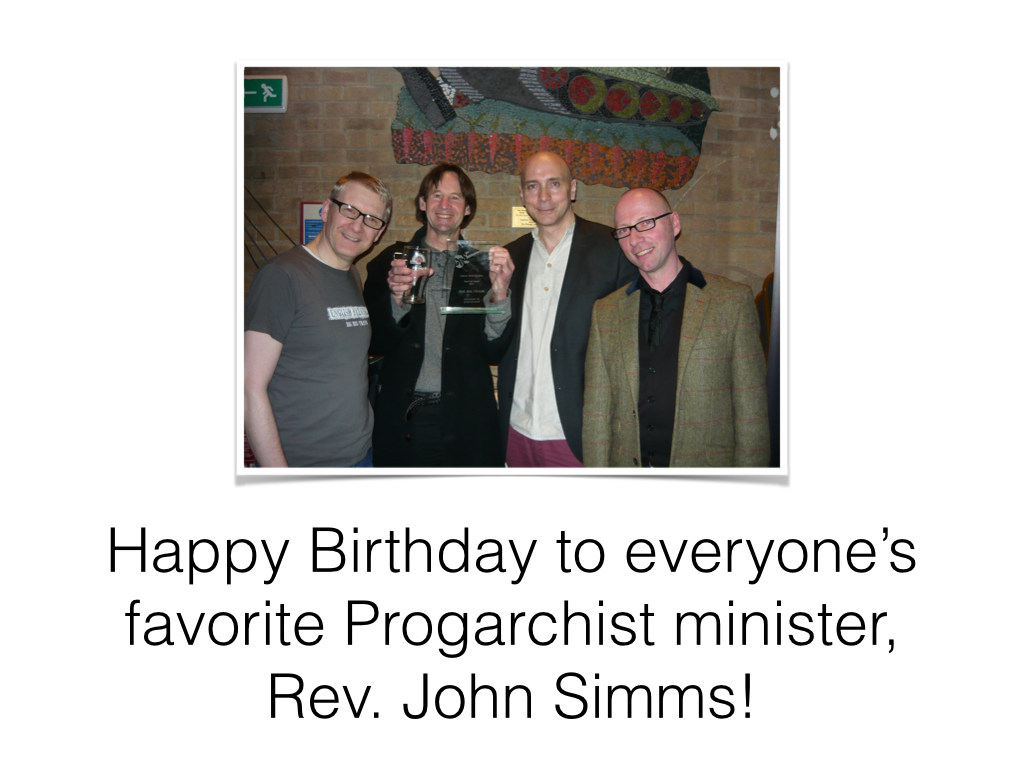
A Progarchist Happy Birthday to John Simms

Progarchist John Simms with three members of Big Big Train.