There were only a handful of them, American rock bands in the late 1960s who sunk the kind of roots that North American progressive rock could grow from. Spirit was one of them, and by the time they released their fourth album in 1970, they’d covered enough territory that they managed to have both a pop single, in the garage rock monster “I Got Line On You,” and a back catalogue of albums critically respected for their sophistication in arrangement and playing. Although recently dwarfed by the attention given to their instrumental “Taurus,” which Led Zeppelin may have heard and used, probably unwittingly, for “Stairway to Heaven,” Spirit’s albums up through Twelve Dreams of Dr. Sardonicus are rich canvases that, some have observed, may seem too eclectic, don’t always sum the band’s talents as they could. So that when you look for a definable Spirit sound, it eludes definition. I can see this, but at the same time Spirit’s appetite for musical movement was its guide, a definable point not being the point at all.
“When I Touch You” was not the song off of Twelve Dreams you’d hear on the air back when rock stations were just rock stations — that was “Nature’s Way,” the centerpiece of a record that dwelt on themes of conservation and modern-day alienation. But “When I Touch You” is where it’s at, an early metal art mammoth lumbering across its own post-Hendrix plain into the 1970s.
soundstreamsunday presents one song or live set by an artist each week, and in theory wants to be an infinite linear mix tape where the songs relate and progress as a whole. For the complete playlist, go here: soundstreamsunday archive and playlist, or check related articles by clicking on”soundstreamsunday” in the tags section above.
Like Rush, the Velvet Underground were painted as a cult band so frequently that it became clear by the early 1980s, a decade after the band was done, that they were anything but. In the rock-and-roll retrospectives and histories that began appearing at that time, the band became a pivotal force despite their commercial failure — Brian Eno famously half-joked that even though the band’s first record (that Andy Warhol one with the banana on it) only sold 10,000 copies on its release, every one who bought it started their own group — and through sheer collective will the rock community at large cemented VU’s role as the progenitor of punk by the time of Legs McNeil’s and Gillian McCain’s landmark Please Kill Me: The Uncensored Oral History of Punk (1996). It’s a conclusion that’s hard to argue with, if at the same time you cast a wider net including bands like Love and the Stooges and countless garage-rock monsters like the Sonics and the Seeds. The legacy of the Velvet Underground comes down to attitude, songwriting, and, importantly, their connection with Warhol and New York.
By the mid-1980s American college rock (for so it was called at the time) was jonesing for all things VU, but often threw that influence in with the other nostalgia trips taking place at the time, to the lands of Byrds, Beatles, and Barrett. California’s neo-psychedelic “paisley underground” existed in this space, and reached its pinnacle in the early 1990s with Mazzy Star, a group that grew out of another band, Opal, and, before that, Rain Parade. Mazzy Star matched David Roback’s sculpted fuzz country blues with Hope Sandoval’s beautiful vocal phrasing, which paired a remarkable emotional investment with the kind of matter-of-fact distance that characterized Lou Reed’s and the Velvet Underground’s best work. While their hit, “Fade Into You,” would come from their second album, it’s their first record, She Hangs Brightly, that defines their sound best, slow- and mid-tempo country/blues/americana rock that is its own reverb-ed thing but also strongly evokes VU and the Doors (to the point where they lift the riff for “Ghost Highway” straight from the Doors’ “My Eyes Have Seen You”). As a whole the album is near-perfect, has aged as gracefully as any of its contemporaries. “Blue Flower” reminds me of standing in front of a stage in Carrboro, North Carolina, in 1994, watching one of the best live bands I’ve seen make a case for the past and future of American rock and roll.
soundstreamsunday presents one song or live set by an artist each week, and in theory wants to be an infinite linear mix tape where the songs relate and progress as a whole. For the complete playlist, go here: soundstreamsunday archive and playlist, or check related articles by clicking on”soundstreamsunday” in the tags section above.
Outside the fact both groups employed players of a violin/viola in their lineups at one time or another, and possessed songwriters of legend, you’d be hard pressed to find common ground for Fairport Convention, last week’s soundstreamsunday feature, and the Velvet Underground. But in an imaginary Venn diagram of live rock jams from otherwise non-jammy groups circa ’68-’72, Fairport’s scratchy, chugging take on “Matty Groves” would share a noisy, electric segment of that interlocking circle with V.U.’s live work during the same period. In 1969 the Velvets, with aforesaid violist/bassist John Cale one year gone and a third album released (The Velvet Underground), recorded a handful of shows in Texas and San Francisco, showing an energetic, touring rock outfit whose songs of hustlers, dopers, and beloved Factory freaks worked even without Cale’s avant-garde contributions. Indeed, Cale’s replacement Doug Yule, doubling on organ, more than adequately filled in Cale’s creeped-out carnival viola drone. The tapes — unreleased until 1974’s 1969: Velvet Underground Live with Lou Reed (the full two-night run at San Francisco’s Matrix was released in 2015 in pristine glory and it is mind-blowing) —like the rest of their music, hold the seeds of punk. But beyond that, the jams they insert, not part of the studio versions, have a live inventiveness and melodic sensibility that rank among the finest of their long-haired time. On “I Can’t Stand It” — in its studio incarnation a proto pop-punk nugget of the variety the band could so effortlessly summon — the band opens up space for an extended guitar section that takes cues from Jim McGuinn’s intro to “Eight Miles High” and pushes its Coltrane-inspired riffing into the stratosphere. Mo Tucker’s relentless pounding and Yule’s bass background the song, never allowing the guitars of Lou Reed and Sterling Morrison to disintegrate into wandering exploration. This is a lean-and-mean live band unharried by the legend they would become (Tucker has even noted that on this tour audience members would tell her they couldn’t even find the band’s albums for sale), at a time when rock-n-roll was meant to be rough around the edges, and maybe even exact a toll.
soundstreamsunday presents one song or live set by an artist each week, and in theory wants to be an infinite linear mix tape where the songs relate and progress as a whole. For the complete playlist, go here: soundstreamsunday archive and playlist, or check related articles by clicking on”soundstreamsunday” in the tags section above.
Bob Dylan is the rare artist who, at 75, retains the power, energy, and restlessness that distinguished his early work. As both a recording and performing artist, his electricity is unabated, and he continues to make vibrant contributions to the post-folk culture he virtually created. That he has achieved this is astounding; for those of us who have followed his career and know something of its roots and evolution, it is not surprising. He constantly recasts his song catalogue, the depth of which by 1965 (let alone 2016) was unrivaled in the rock/folk/singer-songwriter genre he invented, to match his current sound, and commands a fluidity of vision in his writing that sees beyond the trees and perhaps the forest as well. Witness “High Water,” a tribute to Charley Patton (whose “High Water Everywhere” is a stone cold delta blues barking, howling, classic), from 2001’s Love and Theft. This is a blues about love and the water that rises, that has picked up some oldtime, some drone, shaking and breaking and name-checking muscle cars and evolutionary philosophers. The thing is that it works because when Dylan sings “the cuckoo is a pretty bird” that’s a kind of referenced code that he’s hollering back to Patton. He’s writing a blank check to freely associate (find and listen to a version of “The Cuckoo” and you’ll get what I mean), to make the rhyme work and throw meaning to the wind and to the listener. Harder than it sounds because it’s about the sound, what music is, what makes its power inexplicable. To make that warble on the 5th day of July, and trace your absurd and beautiful melody: it takes courage and a resolution that comes at a price only Dylan, and maybe Patton, knows.
Three months after Miles Davis unleashed Bitches Brew on the rock and jazz worlds, the Stooges second record, Fun House, appeared. Like Davis, like a lot of music in 1970, the band was looking for the elemental, pushed by psychedelics to the fringes of structure, open minds creating extremes of focus. For the Stooges that meant following the train to the auto plants of Detroit, putting into music the sisyphian rhythm of the line, in the same way that Maurice Ravel cited in Bolero his memories of the factory his father worked in. The merciless repetition, the stamping power of machinery. Already one album into creating a trinity of punk rock templates, the Stooges on Fun House sound at once heavier, funkier, freer than they did on Stooges. Bringing in fellow Michiganer Steve Mackay on saxophone, whose presence created both space and chaos, the band occupied a far more complex and dangerous place than probably anyone around them truly expected, finding at their crossroads a vévé made of free jazz and Louie Louie, summoning the era’s riots and Kent States and Vietnams, holding up the same mirror that Hendrix traveled through in “Machine Gun” or Funkadelic gazed into on “Wars of Armageddon.” But at the end of it there’s no message of peace and love or some kind of lesson learned. It’s really a blank stare, a do-what-you-will-with-this, a Punk manifesto. It’s no wonder, although still kind of remarkable, that Miles Davis thought the group was good, or at least that their cocaine was excellent. The song “1970” begins the album’s second, disintegrating half, an answer to “1969” from Stooges, with Iggy’s proclamation “I feel alright!” feeling anything but. It’s the dark stuff, completely and totally honest, because Iggy probably always did feel alright when things went to the edge. The Stooges cut deep, to the bone, burning towards the true dark star of rock and roll.
Say what you will about pop radio, you nostalgists and prognosticators of musical doom. I will laugh and scoff with you, because there is, as there always has been, portents of conformity in the monochrome sameness of the popular. But your arguments against are blind to the tail-chasing beast: it’s as often in pop as not that the true revolutions happen, where the work is done, before in creeps mimicry and gold diggery. In the case of Hozier, the revolution is subversion by honoring the blues and soul music his native Ireland so loves. In 2014 into 2015 he produced a bona fide pop radio hit in “Take Me To Church,” which got played on all the I Heart Radio stations in the U.S. In true pop radio fashion it was catchy, easy on the ears, anthem-y. But unusual too — it wasn’t hard to hear beneath the compressed radio waves a rock band sweating it out behind a gifted singer, songwriter, and guitarist. It almost seemed like it was a mistake, because how long has it been since you heard an actual band pumping out the rock on a pop station? The song was from Hozier’s full length, self-titled debut, which, while not a perfect record, isn’t far from it. With lyrics that investigate sexuality, religion, and drugs without robbing any of them of their dark poetry, the album maintains a soulful bounce that only occasionally loses its chug. Them-period Van Morrison would be proud. “To Be Alone,” which Hozier put together, or so I understand because the internet on this point mostly fails me, as a tribute to Junior Kimbrough (who gets a writing credit), does not bear the stamp of Kimbrough’s rough electric blues — although perhaps captures the feel — suggesting instead Peter Green during his brief time as the leader of Fleetwood Mac, it’s lead riff echoing the B riff of Green’s”Oh Well.” The production, too, has that dank, rainy reverb that Green loved, and deals in the dark depths of green manalishis and black magic women. Knowing nothing of the man but his music, I can say that he’s gotten at least that bit right, and while it would be a stretch to say his is the future of pop music, that he found his way into pop’s armored compound is a righteous thing.
“Outlaw country” is an ironic descriptor at best, applied to a music that, without the modifier, began as a lucrative embarrassment to the phonograph salesmen of the 1920s, their newly-minted “hillbilly” record catalogs doing surprisingly well next to the more respectable stacks of whatever maudlin tenor was the operatic toast of the day. Country music’s cornpone reputation grew as its burgeoning industry began to trade on an image based in white southern poverty; but if the marketing suggested the music was as impoverished as its people (a patent falsehood), this achieved for the proponents of such thinking a comfortable outsider-ism, a romantic us-versus-them rewind and replay of Reconstruction that survives in other place in the South as well, through for instance a protracted and continuing — and, unfortunately, necessary — civil rights movement, to this day. So then, what’s this Outlaw business? The term attached to Willie Nelson, Waylon Jennings, and a handful of other country writers and singers who, starting in the late 1960s, were drawn away from the industrial strength, smooth country music produced by “Nashville,” that Tennessee town’s small oligarchy of producers and record labels who held sway over any music distributed under the category of country, and pointedly avoided shifting their audience’s gaze towards the rockier issues or musical themes of the times. Jennings, like Nelson, bucked at this, knew what it meant for their art, and went back to Texas; he turned up the rock’n’roll rhythms he’d played with Buddy Holly, sang what he wanted, and called Nashville out on its phony conservatism. In so doing, Waylon and the country outlaws — and the new southern bands like the Allman Brothers and Lynyrd Skynyrd — found a younger, national country audience, and also reminded rockers that their favorite music was as much country as blues.
Fast forward a half century and the same tension exists in country music, with a handful of artists living outside the airbrush Nashville continues to apply to its version of bro’ country American culture. Trying to live real. Living the dream, as Sturgill Simpson might say, though the song he wrote by this name is nothing if not double-edged, and carries a lot more weight in its few words than most anthems I can think of. Forced to defend the song’s lyrics at one point, he wrote:
Ironically, the song is actually a metaphor comparing the soothing yet completely addictive and damaging effects of hard narcotic opiates to the negative sociological impact of organized religion and blind faith when forced upon society and used as a political tool by self-righteous, thinly-veiled bigots to control and manipulate the masses and enhance the suffering of impoverished, lower class citizens. Also, since I’m self-funding/self-releasing my art instead of shooting for ACM [Academy of Country Music] awards and taking it up the ass from the music row man, I have the right to write and sing and say whatever I choose just as you have the right to not buy or listen to my music and stay away from my page if you don’t like it.
That Simpson had to write this at all is a farce, but that he did is valuable, and continues the tradition of outlaw country and what country music was at its roots. Like the other songs on 2014’s Metamodern Sounds in Country Music, “Living the Dream” is a primer in the lean, rock and roll approach to country, its guitars drawing from the full history of its pioneering players while marking out its own ground. From its languid beginning to its keening wail of a finish, this song is from the wellspring itself.
In 1979, while in New York City and around the time he was adding guitar overdubs to Steely Dan’s Gaucho, Mark Knopfler took note of the city’s brazen street skaters, who had spilled out of the roller discos and taken to weaving among traffic. The next year Knopfler added the song “Skateaway” to Dire Straits third LP, Making Movies, romancing the free spirit of “queen rollerball” and the ecstatic, transporting power of rock and roll. A simple notion, an observation of joy, made into song, and then fully realized on record. The imagery of the rollergirl, “making movies on location” as she listens to the radio through her headphones and places herself in the center of the music, was strong enough that Dire Straits named the LP after the lyric. Knopfler’s Dylan-ish, everyman talking blues delivery and beautifully rendered, melodic guitar lines — an alchemical force really, that feels reminiscent of a wicked brew of Peter Frampton, Richard Thompson, and Jerry Donahue (and, Knopfler would undoubtedly add, Chet Atkins) — lead the song with a slippery momentum, which makes me, like the rollergirl, want to step into it, be a part of it. E Street keyboardist Roy Bittan adds cinematic grandeur in the chorus, while Jimmy Iovine’s production adds the kind of rock-and-roll epic vibe he brought to Born to Run: Knopfler in 1980 was proving himself to be Springsteen’s equal in character study, and the texture added by Iovine and Bittan, to the core group of Knopfler, bassist John Illsley and drummer Pick Withers, complements Knopfler’s songwriting without cluttering it or making it seem derivative. “Skateaway” rolls in motion, like film coming off a reel, and, even for a band who had a decade of creating many, many fine images in song, is Dire Straits’ perfect movie moment.
And the music make her wanna be the story And the story was whatever was the song, what it was
Put a couple of decades on the protagonist of “Lush Life,” put him on the West Coast with some other wicked habits, and you’d come up with something like “Babylon Sisters,” from Steely Dan’s final masterpiece, Gaucho. A commercial success but critical dud at the time of its release, Gaucho has grown in stature, but still it lingers in the shadow of its forebear, Aja. Gaucho, though, is the perfect extension of Aja, a further distillation of Steely Dan’s trajectory towards its God-in-the-details hybrid of jazz and rock. Its slow, studied strut, coupled with a bell-clear production, supports the record’s stories of 70s California decadence, delivered in Donald Fagen’s most pronounced ironic drawl. Drug use and sketchy sexual adventure are linked to characters who are too old, too rich, too emotionally distant, and even so the oily discomfort they evoke is dispelled by the deeply funky, freewheeling grooves — courtesy of such players as Bernard Purdie, Mark Knopfler, Chuck Rainey, Joe Sample, Rick Derringer, the Brecker brothers, Don Grolnick, Larry Carlton, and on and on — and the sense that this is sharp character study and cool observation. “Babylon Sisters,” the album’s opener, cycles through first, second, and third person, appearing on its face to be an old dude telling the story of his hookup with (perhaps more than one) much younger woman, with veiled references to cocaine or meth use, but other voices intrude, those of the women and also those of his friends, the latter warning him away from a life that he himself recognizes is beyond him. As in many of Steely Dan’s songs, narrative clarity isn’t the point as much as the delivery of the words with the music, an impressionistic approach which brings a dark tonality, towards sadness, to the characters in “Babylon Sisters” and to Gaucho as a whole. It’s less Hotel California and that album’s obvious metaphors, and more the tricky psych-scape of film noir L.A., set even more ominously to music that is bright and sunny and colorful, with a distinct slither. Classic Rock’s Less Than Zero.
“Unlikely” is probably the right word, that the hairiest, grittiest, straight-uppenest American rock record of the 1970s, maybe ever, would be made by an English band in tax exile in the south of France lolling in sheer European decadence. That the Rolling Stones attained such a state of grace is only partly surprising, though, given the sheer will of their progress to the point of Exile on Main Street: with Beggars Banquet, Let It Bleed, and Sticky Fingers the writing was on the wall, but it was this double album that sealed their legend, where the channeling was complete, where without seams the Deep South blackness poured through their pasty, pale, drug-addled limey fingers in drums and basses and guitars and voxes and keys and horns. They hadn’t just gone to the crossroads, they’d set up the tent years before and waited it out, for the spirit to finally visit them. “Satisfaction”? “Get Off My Cloud”? Even “Honky Tonk Women,” with its perfect guitar? Those were killing time, chop builders, and the work they’ve done since has had high points too but has never been more than the downhill coast. Exile’s the big meet up, a meticulously made album with no contrivance, a blues turned over with a rock shovel, originals mixing with covers with barely a hint of borderline, as if this is their music as much as it is yours or mine or Robert Johnson’s. And it’s here that they cover one of Johnson’s more unusual songs, less a blues than a prophet’s vision of the rock and roll to come. The Stones had already covered Johnson on record by the time of Exile — the down tempo “Love in Vain” was featured on Let It Bleed — but the rock and roll suggested in “Stop Breaking Down” is wrung from the song by the Stones, matching the strut of the lyric, “Every time I’m walking down the street….”


 There were only a handful of them, American rock bands in the late 1960s who sunk the kind of roots that North American progressive rock could grow from. Spirit was one of them, and by the time they released their fourth album in 1970, they’d covered enough territory that they managed to have both a pop single, in the garage rock monster “I Got Line On You,” and a back catalogue of albums critically respected for their sophistication in arrangement and playing. Although recently dwarfed by the attention given to their instrumental “Taurus,” which Led Zeppelin may have heard and used, probably unwittingly, for “Stairway to Heaven,” Spirit’s albums up through Twelve Dreams of Dr. Sardonicus are rich canvases that, some have observed, may seem too eclectic, don’t always sum the band’s talents as they could. So that when you look for a definable Spirit sound, it eludes definition. I can see this, but at the same time Spirit’s appetite for musical movement was its guide, a definable point not being the point at all.
 Like Rush, the
  Outside the fact both groups employed players of a violin/viola in their lineups at one time or another, and possessed songwriters of legend, you’d be hard pressed to find common ground for
  Bob Dylan is the rare artist who, at 75, retains the power, energy, and restlessness that distinguished his early work. As both a recording and performing artist, his electricity is unabated, and he continues to make vibrant contributions to the post-folk culture he virtually created. That he has achieved this is astounding; for those of us who have followed his career and know something of its roots and evolution, it is not surprising. He constantly recasts his song catalogue, the depth of which by 1965 (let alone 2016) was unrivaled in the rock/folk/singer-songwriter genre he invented, to match his current sound, and commands a fluidity of vision in his writing that sees beyond the trees and perhaps the forest as well. Witness “High Water,” a tribute to Charley Patton (whose “High Water Everywhere” is a stone cold delta blues barking, howling, classic), from 2001’s Love and Theft. This is a blues about love and the water that rises, that has picked up some oldtime, some drone, shaking and breaking and name-checking muscle cars and evolutionary philosophers. The thing is that it works because when Dylan sings “the cuckoo is a pretty bird” that’s a kind of referenced code that he’s hollering back to Patton. He’s writing a blank check to freely associate (find and listen to a version of “The Cuckoo” and you’ll get what I mean), to make the rhyme work and throw meaning to the wind and to the listener. Harder than it sounds because it’s about the sound, what music is, what makes its power inexplicable. To make that warble on the 5th day of July, and trace your absurd and beautiful melody: it takes courage and a resolution that comes at a price only Dylan, and maybe Patton, knows.
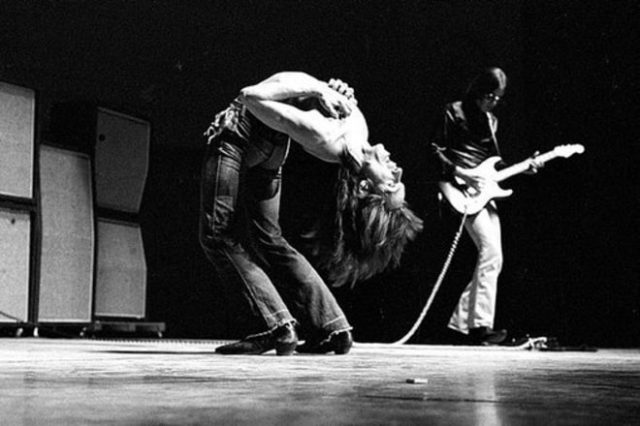 Three months after
  Say what you will about pop radio, you nostalgists and prognosticators of musical doom. I will laugh and scoff with you, because there is, as there always has been, portents of conformity in the monochrome sameness of the popular. But your arguments against are blind to the tail-chasing beast: it’s as often in pop as not that the true revolutions happen, where the work is done, before in creeps mimicry and gold diggery. In the case of Hozier, the revolution is subversion by honoring the blues and soul music his native Ireland so loves. In 2014 into 2015 he produced a bona fide pop radio hit in “Take Me To Church,” which got played on all the I Heart Radio stations in the U.S. In true pop radio fashion it was catchy, easy on the ears, anthem-y. But unusual too — it wasn’t hard to hear beneath the compressed radio waves a rock band sweating it out behind a gifted singer, songwriter, and guitarist. It almost seemed like it was a mistake, because how long has it been since you heard an actual band pumping out the rock on a pop station? The song was from Hozier’s full length, self-titled debut, which, while not a perfect record, isn’t far from it. With lyrics that investigate sexuality, religion, and drugs without robbing any of them of their dark poetry, the album maintains a soulful bounce that only occasionally loses its chug. Them-period Van Morrison would be proud. “To Be Alone,” which Hozier put together, or so I understand because the internet on this point mostly fails me, as a tribute to Junior Kimbrough (who gets a writing credit), does not bear the stamp of Kimbrough’s rough electric blues — although perhaps captures the feel — suggesting instead Peter Green during his brief time as the leader of Fleetwood Mac, it’s lead riff echoing the B riff of Green’s”Oh Well.” The production, too, has that dank, rainy reverb that Green loved, and deals in the dark depths of green manalishis and black magic women. Knowing nothing of the man but his music, I can say that he’s gotten at least that bit right, and while it would be a stretch to say his is the future of pop music, that he found his way into pop’s armored compound is a righteous thing.
 “Outlaw country” is an ironic descriptor at best, applied to a music that, without the modifier, began as a lucrative embarrassment to the phonograph salesmen of the 1920s, their newly-minted “hillbilly” record catalogs doing surprisingly well next to the more respectable stacks of whatever maudlin tenor was the operatic toast of the day. Country music’s cornpone reputation grew as its burgeoning industry began to trade on an image based in white southern poverty; but if the marketing suggested the music was as impoverished as its people (a patent falsehood), this achieved for the proponents of such thinking a comfortable outsider-ism, a romantic us-versus-them rewind and replay of Reconstruction that survives in other place in the South as well, through for instance a protracted and continuing — and, unfortunately, necessary — civil rights movement, to this day. So then, what’s this Outlaw business? The term attached to Willie Nelson, Waylon Jennings, and a handful of other country writers and singers who, starting in the late 1960s, were drawn away from the industrial strength, smooth country music produced by “Nashville,” that Tennessee town’s small oligarchy of producers and record labels who held sway over any music distributed under the category of country, and pointedly avoided shifting their audience’s gaze towards the rockier issues or musical themes of the times. Jennings, like Nelson, bucked at this, knew what it meant for their art, and went back to Texas; he turned up the rock’n’roll rhythms he’d played with Buddy Holly, sang what he wanted, and called Nashville out on its phony conservatism. In so doing, Waylon and the country outlaws — and the new southern bands like the Allman Brothers and Lynyrd Skynyrd — found a younger, national country audience, and also reminded rockers that their favorite music was as much country as blues.
 In 1979, while in New York City and around the time he was adding guitar overdubs to
  Put a couple of decades on the protagonist of
 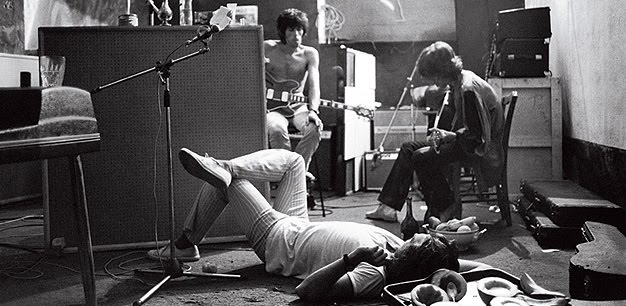 “Unlikely” is probably the right word, that the hairiest, grittiest, straight-uppenest American rock record of the 1970s, maybe ever, would be made by an English band in tax exile in the south of France lolling in sheer European decadence. That the Rolling Stones attained such a state of grace is only partly surprising, though, given the sheer will of their progress to the point of Exile on Main Street: with Beggars Banquet, Let It Bleed, and Sticky Fingers the writing was on the wall, but it was this double album that sealed their legend, where the channeling was complete, where without seams the Deep South blackness poured through their pasty, pale, drug-addled limey fingers in drums and basses and guitars and voxes and keys and horns. They hadn’t just gone to the crossroads, they’d set up the tent years before and waited it out, for the spirit to finally visit them. “Satisfaction”? “Get Off My Cloud”? Even “Honky Tonk Women,” with its perfect guitar? Those were killing time, chop builders, and the work they’ve done since has had high points too but has never been more than the downhill coast. Exile’s the big meet up, a meticulously made album with no contrivance, a blues turned over with a rock shovel, originals mixing with covers with barely a hint of borderline, as if this is their music as much as it is yours or mine or
  Progarchy