Journeys Through Beauty and Honesty: Kinetic Element’s TRAVELOG

Kinetic Element: Mike Visaggio (keys and vocals); Michael Murray (drums and vocals); Todd Russell (guitars); and Mark Tupko (bass).

Travelog tracks: War Song; Travelog; Into the Lair; Her; and Vision.

Birzer rating: Mysterious and perfect

If I had to put a label on this. . . I would label it. . . .
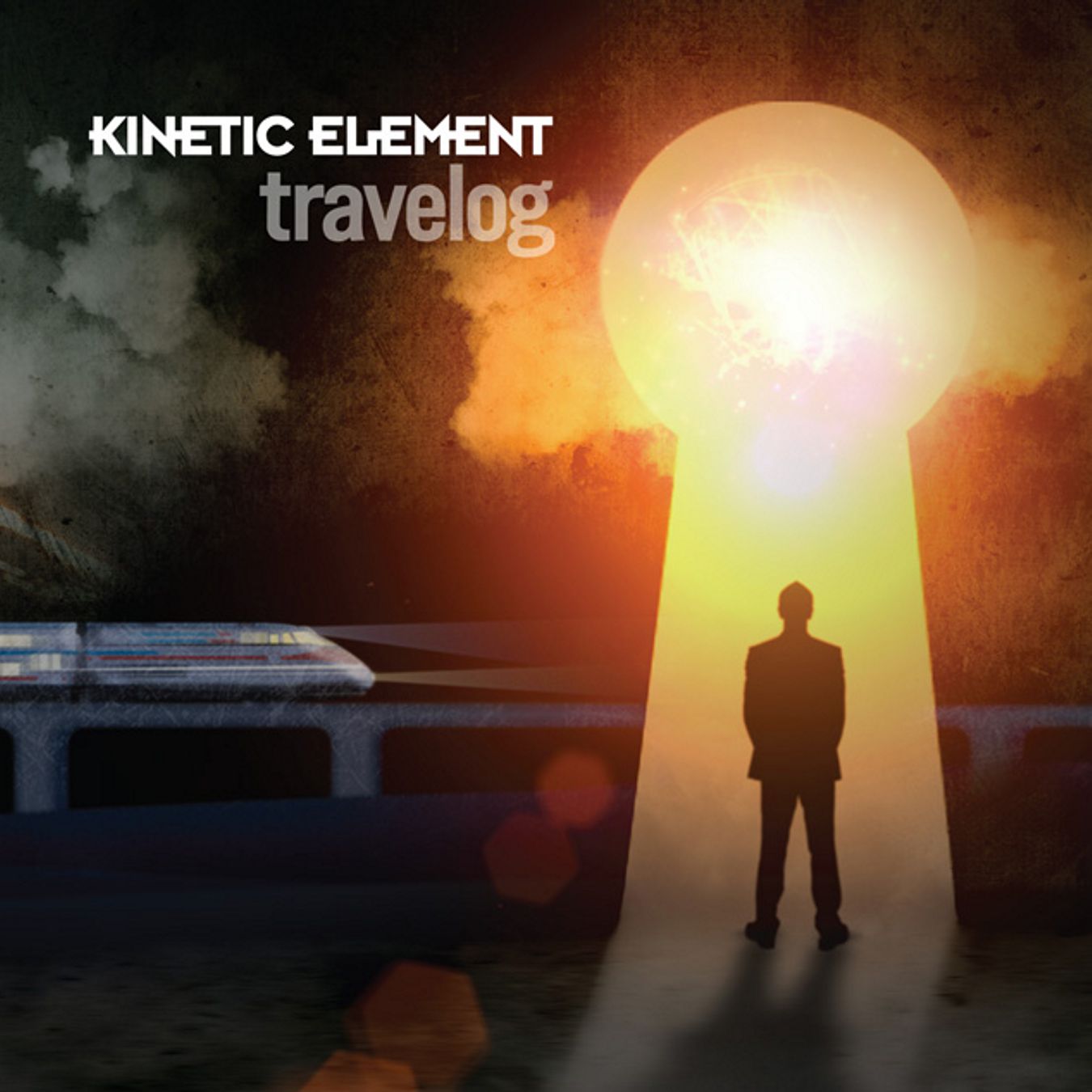
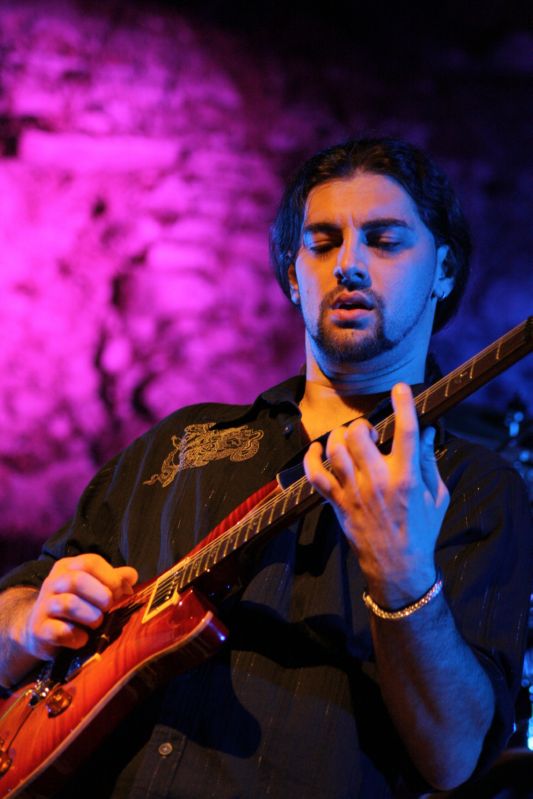
Kinetic Element's second release, TRAVELOG, a thing of mystery and beauty.
Kinetic Element’s second release, TRAVELOG, a thing of mystery and beauty.

As much as I hate labels and labeling as forms of dismissal, I also recognize how important labels can be for finding context.  Every once in a while, I find a thing that is so beautiful it defies any labels or categorization.  Such is the new Kinetic Element album, TRAVELOG.  I’ve had a review copy for about 2 weeks, and I’ve enjoyed every listen.  Yes, every single one.  Indeed, “enjoy” is simply too weak.  This is an absolutely incredible album at every level.

For some reason, as I listen, I can’t get fanciful mergers and conglomerations out of my head.  TRAVELOG could be, an Americanized Flower Kings album.  This is what comes to mind most frequently.  Yet, I hear elements of Zebra and Saga and Triumph and Glass Hammer.  There’s psychedelia and folk and prog.  Lots and lots of prog.  No one would mistake this as anything other than a very authentic American expression of prog.  But, what kind of prog?

If early Styx wrote A TRICK OF THE TAIL.  If 1971 Allman Brothers wrote TORMATO.  If 1975 Kansas wrote the one and only Blind Faith album.  Yes, it’s this last one that fits best.  If you can imagine Livgren and co writing and performing “Do What You Like,” you’ll start to get the idea of Kinetic Element.

I love this album.  It’s a thing of intense and meandering beauty.  Just as the title of the album suggests, TRAVELOG is a journey through the dark night of the soul, finding doubts but also vistas of joy and, amazingly, patriotism.

Though over 20 minutes long, “War Song,” the opening track to the album, pulls the listener into the journey, full immersion, demanding a complete surrender of the will.  Though dominated by instrumental excursions—all heavenly—the minimal appearance of the lyrics makes the vocals all the more important.  The protagonist must choose between his love of country and his love of a specific woman.  Nothing is easy, and the choices demands sacrifice.  The listener feels every aspect of the pain the man goes through in his decision.

Track two stunned me.  A reworking of “America the Beautiful,” the song made me cynically wonder at what point would the band proclaim the irony of what they’re doing.  There is no such irony.  These guys absolutely mean what they say: America is beautiful, and we denigrate it at our own peril.  Honestly, as an American who rather proudly came of age in the 1980s in Kansas, I’ve not felt this proud to be American since 1989.  Thank you, Kinetic Element.  This is a song that could’ve gone wrong at every point.  It never does.

The third track, “Into the Lair,” is a cry against conformity, mediocrity, and a duplicitous Leviathan.  A new voice takes the lead vocals, a more folky version of Glass Hammer’s Suzie Bogdanowicz.

Track four, “Her” begins with unrelentingly romantic keys, but the lyrics reveals that the woman is not all she seems on the surface, seeking to devour her prey.

The final track, “Vision of a New Dawn,” is almost as long as the first track and certainly as epic.  Lyrically, it’s an anthem, a call for integrity, openness, and honesty.  This is Kinetic Element at its most Peartian.

To purchase the album, please go here: http://melodicrevolutionrecords.com/album/travelog

A final note, it wasn’t until I’d finished this review that I realized that Steve Babb and Fred Schendel mixed this album.  A lot more makes sense now—all to the good!
Musical Memories, Day 2: Mozart’s Great Mass in C Minor

Musical memory day 2.  My great friend, Tobbe Janson, nominated me to offer seven days of musical memories.  On day one, I talked about my love of two songs as a little kid: the theme from the Banana Splits and Snoopy and the Red Baron.

As I’ve mentioned before, I grew up in a house where music always played and albums littered (in a very Germanic, organized fashion!) the walls, the shelves, and the vinyl boxes.  All music was accepted in our house: classical; opera; jazz; rock; prog; pop; and even musicals.  The latter two, admittedly, did the least for me, while I cherished the others.

This memory, however, comes not from the Great Plains of Kansas as a child but from Innsbruck, Austria, as a sophomore in college.  That year (July 1987-July 1988), I spent at the University of Innsbruck with several close friends, including current Facebook friends, Jim Otteson and Liz Bardwell.  Kevin McCormick was spending the same year in Rome.

This memory is intimately tied up with the place, but it is also tied up with my soul.  Sometime around the age of 13, I had decided I was an atheist or agnostic, and I became rather militant about it.  Without getting into the nitty gritty of it all, let me just state here and now that I was rather proud of my atheism, despite the the rather brilliant witness example of my extended family members and the continuing but very patient arguments about this with Kevin McCormick.  I found God on a train in the deserts of Morocco in late February, 1988.  Or, He found me.

When I made my way back to Innsbruck, I decided to attend high Mass at St. Jakob’s.  I was a minute or two late on a Sunday morning, and it was during an opening moment of silence.  At the end of that pregnant pause, the immense choir erupted into Mozart’s Great Mass in C Minor.  I’m not sure I’d ever heard anything that beautiful or beatific in my life.  Though I’d always loved Mozart, his music had been just that: music.  Never had I heard it integrated into worship.  My soul soared at those opening coral notes, and I don’t think I’ve been the same.  When people tell me that Mass is a glimpse of heaven and I hear bad folk guitar playing the tripe of Marty Haugen or Dan Schutte, I cringe.  Surely, God has more class than this.

When I heard Mozart. . . then, I heard heaven.

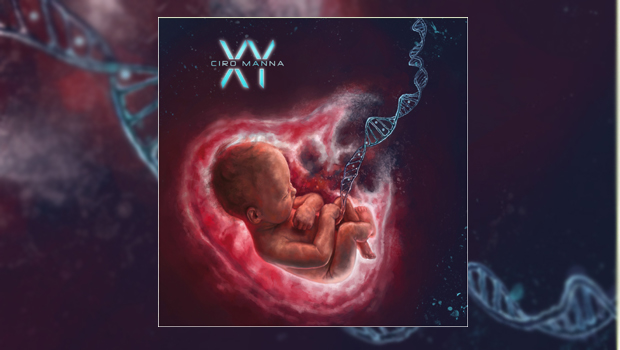
Ciro Manna: XY

Ciro-Manna-XY

Last month, Italian guitar virtuoso Ciro Manna released his second album, XY, eight years after his impressive debut, Feel’n’Groove. Dominated by the sound of the electric guitar, XY takes the listener on a roller-coaster ride of fast-paced jazz/blues fusion pieces (with a heavy edge to them). Although Manna’s style may resemble that of the master of fusion, Jeff Beck, Manna allows his own sound to shine through. Manna’s talent also manifests itself in his ability to surround himself with some of the industry’s best, including drummer Simon Phillips of Toto fame and Guthrie Govan, one of prog’s finest and most requested guitarists. Here’s a breakdown of the album:

The first three pieces (X1, X2, and X3) are instrumental, and all three feature skillful guitar-bass-drum interplay.

Fear and Fire interrupts the instrumentals to showcase the soulful vocals of Italian singer Illaria Palmieri.

The next three songs (Mosaika Rock, Drivin’ On, and Bad Brakes) return to instrument-only fusion.

Secret Potion, the second and last song to interrupt the instrumental pieces, features the bluesy (and quite impressive) vocals of Patrix Duenas.

The album closes with three more instrumentals (XY, Wheels on Fire, Just In Time), the last piece featuring a neat jazzy keyboard interlude.

ciromanna

Overall, this album is more than a worthy sophomore effort by Manna. Capturing the best of jazz fusion, he utilizes the standard guitar, bass, and drum trifecta to their utmost effect. Furthermore, by incorporating the talents of prog luminaries such as Phillips and Govan, he gives the album a notable progressive edge not found in the work of other jazz fusion artists. This album is definitely worth a listen.

For more information, check out http://www.ciromanna.com

Day 1 of Seven Musical Memories: Infancy

My great friend, Tobbe Janson​, asked that I offer seven days of music-related memories. Thank you, Tobbe. Let the nostalgia begin.

Even earlier than my actual memory allows, I used to crawl out of my crib in the middle of the night. Sometimes, I was rather dangerous. My mom and two older brothers remember with much horror the one night that I had crawled onto the stovetop, lighting all the burners to full. When they heard me screaming, they ran down to find me standing in the middle of the stovetop. Amazingly, I stood perfectly in the middle, unharmed.

Usually, though, my 3 in the morning explorations were just plain mischievous. As far as I know, there was never a time in our house that we didn’t have music. Classical, jazz, musicals, rock. All was acceptable. Born in late 1960s, I became rather obsessed with two records. Frequently, I crawled out of the crib, descended downstairs, and put one of my two favorite singles on the stereo system. I’d not only figured out how to play records before I could walk, I knew how to blare the records at full volume, waking up my family. Most likely, I awoke several neighbors in my hometown of Great Bend, Kansas, as well. Our stereo went to 11.

The two songs: the Banana Splits Theme and Snoopy and the Red Barron.

Anglo-Saxon Perfection: English Boy Wonders by Big Big Train

Big Big Train, ENGLISH BOY WONDERS (Giant Electric Pea, 1997; 2008)

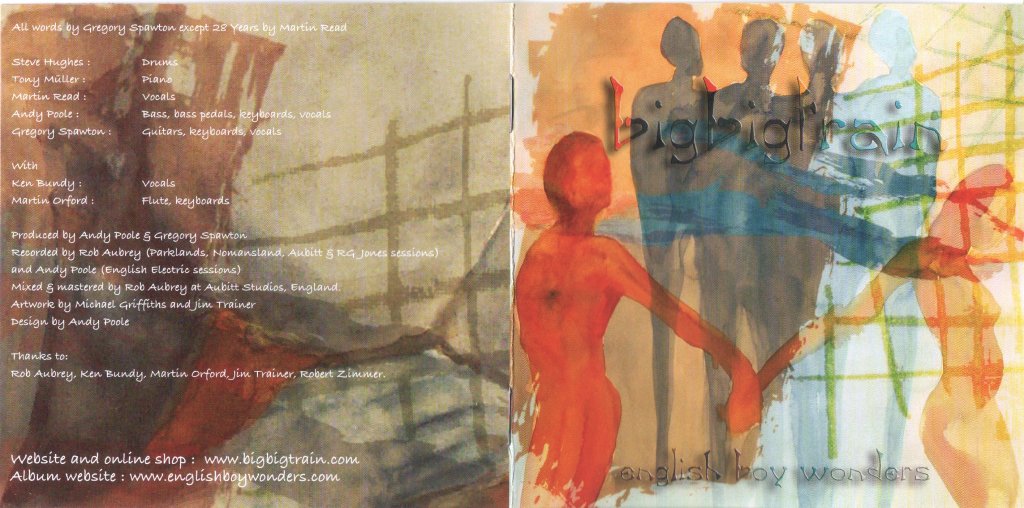
14 Tracks on the re-released version, 2008.  Interior/booklet art by Jim Trainer.

The interior art of English Boy Wonders.  All interior art and design by Jim Trainer.
The interior art of English Boy Wonders. All interior art and design by Jim Trainer.

ENGLISH BOY WONDERS is, by far, the most “English” of all of Big Big Train’s albums.  Articulate, intelligent, penetrating, and romantic, the album should properly be listened to under grey skies with fog clinging to the land, an iron-gated cemetery to one side and a beautiful pale-skinned, red-headed woman just out of reach on the other, with a slight bit of drizzle in 55-degree weather.  The listener, of course, should be wearing tweed and fiddling with his pipe.  Perhaps, he should also have a battered, leather copy of Wordsworth or Tennyson as well.

I exaggerate, but only slightly.

As explained at the EBW promotional site:

English Boy Wonders was originally recorded on a limited budget & released by GEP in a semi-complete state in 1997. It has been unavailable for many years. For the 2008 re-release, Big Big Train have returned to the original master tapes & have re-recorded much of the album. Additional sections of music have also been written to complete the album as it was once intended. A bonus track featuring Martin Orford has been included & the album has been completely remixed & remastered by Rob Aubrey.

English Boy Wonders tells the heart breaking story of a doomed relationship across its 80 minutes of music & words. The album is a unique blend of progressive rock & English pop featuring many of Big Big Train’s finest songs.

Never shy about his melancholic, autumnal imagination, Greg Spawton actively and openly wrote a heart-wrenching story about loss on this second Big Big Train album.  And, not just loss. . . but desire, hope, longing, and unrequited love.

For those of us—and we are becoming immense in our numbers—who have come to fall in love with David Longdon’s voice (a voice I consider to be the single finest in the current era of rock), it’s difficult to hear BBT without him.  And, yet, on EBW, it was so.  No Longdon.  Not yet.  He’s not the only one missing.  A quick look reveals, of course, no Manners.  No D’Virgilio.  No Gregory.

Holy schnikees, what is this thing I hold so delicately in my hands?  How can it be so great as it is without those four distinctive personalities?

Well, at least Poole and Spawton are here.  And, thank the Northern pantheon of gods, very much so.  One can hear them and their brilliance in every note.  Not only is EBW so very English, it is so very BBT.  The complexity of the arrangements, the searing guitar, the swirling keyboards, the anxious drums, and Spawton’s heart rending lyrics.  Yes, this is Big Big Train.  With all BBT releases, Spawton and Poole never shy away from reflecting those they admire.  There’s some mid-period Genesis here, but there is also quite a bit of atmospheric jazz, with keyboards and drums far more daring than Collins and Banks ever tried.

And, for the newer release, the unofficial member of the band, that Anglos-audiophilic genius Rob Aubrey lends his extraordinary skills to EBW.

While the entire album is excellent and a must own, the tracks that lodge themselves firmly in the soul and mind are “Albion Perfide,” “Out of It,” “Reaching for John Dowland” and “The Shipping Forecast.”

Jim Trainer and Greg Spawton offer a nice look at the remake of the album and what needed to be done in 2008 in this interview: http://www.englishboywonders.com/ebw_interview.html

Happy Birthday Progarchy

Tiger Moth Tales
Tiger Moth Tales

Although I have been absent from this site for a while in writing terms, I have still read every article written and agree with Brad that this is the most intelligent and well written music site on the interweb. I have been creating a new life for myself in a new country and slowly the pieces are falling together. In the meanwhile, can I point you all in the direction of The Storytellers album by Tiger Moth Tales. It is a great prog album that lends a style to Genesis circa Trick and Wind and Wuthering but because of the nature of the songs ranging from sleeping beauty to pied piper of Hamlin to Billy’s goats gruff it is a great way to get kids and in my case grand kids interested in the music. It is a fine album although I have yet to hear anything getting close to The Tangent release earlier this year ( not including the BBT ep coz it’s not an album)

Vanden Plas Release New Music Video

Vanden Plas recently released a new music video for a song off of their upcoming album, “Chronicles of the Immortals: Netherworld II,” the sequel to last year’s album. I don’t know about you, but I am really looking forward to this album. “Netherworld Pt. I” was my introduction to the band, and since then, I have listened to many of their earlier albums, and I am astounded by how amazing these guys are. This new music video is no exception. Check it out.

And happy birthday, Progarchy!!!

20 Looks at The Lamb, 16: Rael the Lamia Slayer?

BuffyMainRemember when “camp” was an important category for classifying bits of popular culture? Sure, it’s still around, but you don’t hear it as often as you used to. When I hear it, my strongest association is the 1960’s Batman show, with Adam West. But I thought of it most recently while watching Buffy the Vampire Slayer (my second time binge-watching the series).   No, Buffy doesn’t fit neatly in the “campy” box, but it does draw pretty freely from that spring. There’s a higher-than-usual suspension of belief that’s often called for. You can’t worry about whether people would really do those things in a school or a hospital without drawing a SWAT team. You don’t ask how all that loud, catastrophic to-do happens without anyone noticing (unless the plot requires them to notice).

Camp style is a sort of deliberate transgression of situational proprieties, simultaneously satirizing or lampooning those proprieties while still totally relying on them. Relying on them with a wink. Watching Buffy, and wondering at our willingness to go along with the transgression, to wink back while still seriously caring, I thought of LambCoverThe Lamb. I thought of Rael (the Lamia Slayer). It was not yet a well-formed thought, but it seemed right in some way. No wooden stakes come into play; Rael’s blood is enough, and the Lamia become food rather than dust. But the heavy sense of destiny is familiar.

Then I remembered “magical realism” (AKA “magic realism”). Though more commonly applied to certain novelists, this phrase is also applied to some painters.   It’s related to surrealism, and often seems to veer in that direction. But it generally stays “realistic” in its framing and in its primary references, so that the fantastic elements stand out in just the right way. Consider the work of Philip Curtis or George Tooker.

Framing the fantastic elements with the real. Allowing the surreal to impinge, even to the point of a kind of crisis between worlds, where competing candidates for “real” become both equally real and equally fantastic. New York City is real, but in The Lamb it becomes a fantasy, a fable, an open question in some important sense. The city is a contrast to the strange, rocky landscape where Rael travels inexorably toward that strange collapse of self into his brother John. When he’s “Back in New York City,” it’s more like a Potemkin city, a reconstruction or representation of the city, and we see the city as a wasteland somehow continuous with the mysterious land of Slippermen.

BuffyMentalThinking of Buffy once more: In “Normal Again,” (season 6, episode 17), we are confronted with the possibility that Buffy’s career as Vampire Slayer is all a hallucination, and that a return to mental health is available to her by choice. [BIG spoiler alert!] The episode deliberately leaves the question of what is real an open question, but Buffy clearly chooses the darker version of Sunnydale, her life as Slayer, and the friends she loves. The passage between the two Sunnydales opens like the window or skylight that opens for Rael. “I must decide between the freedom I had in the rat race, or to stay forever in this forsaken place.” This realization leads directly to – is almost interrupted by – the exclamation, “Hey John!” As if staying is a forgone conclusion. The window fades on cue. Buffy the series cannot be negated, as much fun as it is to play with the possibility.  Rael can’t really go back.

RaelWindowSo is it really a choice? Is destiny not written deeply into the plot of the narrative, for Rael and for Buffy? Trained by logic into antipathy toward contradictions, it seems WE must decide whether or not these “decisions” are genuinely free. But must that meta-decision be a genuinely free choice as well? Do you smell that? It’s the smell of an infinite regress, suggesting that something in our thinking has gone awry.

When the narrative hinges on some notion of destiny, isn’t there always that ongoing sense of the voluntary, of choosing it even though it is destiny?

Listen again now, and consider: Destinies; fate; predestination; forgone conclusions… Don’t we need to struggle with how none of these really eliminate decision, choice, free will? Might it be that we really don’t (yet) understand decision?

It’s an invitation, not a command. Listen again.

But once you’ve done it, won’t you know that it couldn’t have been otherwise? And perhaps this is true only because it could have been otherwise.

<—- Previous Look     Prologue     Next Look —->

Nothing compares to ChrisPrinceO’ConnorCornell!

As a longtime admirer of the musical magic of Soundgarden and Chris Cornell, I had high hopes for Cornell’s new solo album “Higher Truth”. I was not disappointed. On the contrary, the album exceeded my expectations; I think that TimeLord is right on the mark in giving the album 5 stars. I’ve listened to the album some 30 times or so now, and keep finding new aural delights, whether in the abundance of fabulous melodies, or the subtleties (yes, subtleties!) of the vocals and harmonies (all of them by Cornell), or the fabulous production.

On top of that embarrassment of riches, SiriusXM radio recently released a video, now going viral, of Cornell performing “Nothing Compares To U”, which was a major hit for Sinead O’Connor a quarter century ago (was it really that long ago? Yep.). Many folks apparently think O’Connor wrote the song, but it was actually written by Prince for his side project, The Family, and it appears on one of his hits compilations. Cornell, as he did with Michael Jackson’s “Billie Jean”, employs a more bluesy sound, augmented by cello and additional acoustic guitar. The result is dynamite: