Snow Goose is no Turkey – A new Tangent Release!

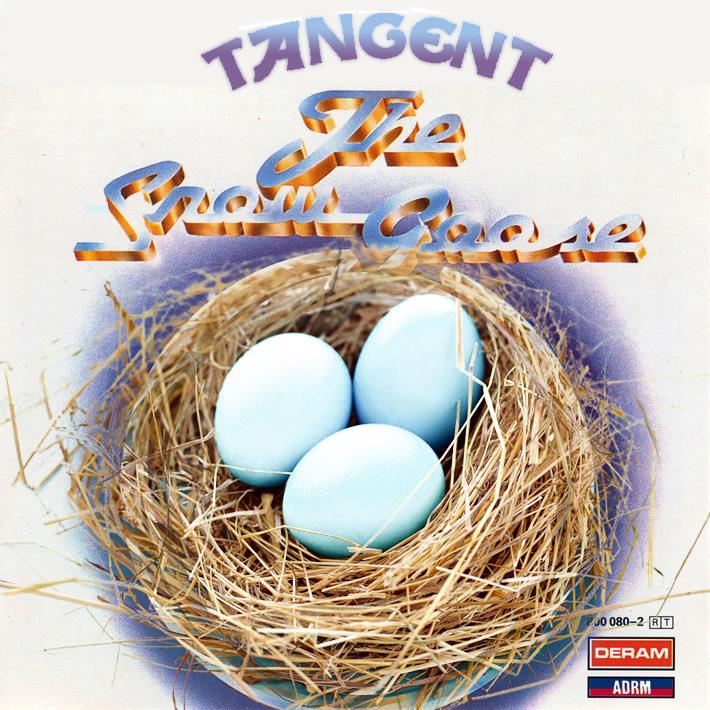
The Tangent -snow goose

The new release from the Tangent is due out on Christmas Eve….I’m going to stop there and clarify that. The newest release from the Tangent in 2013 is out on tomorrow. Yes another piece of great music from Andy Tillison is being released just before the Christmas holidays. A prolific few months from the band have given us some of the best music of the year in the form of two albums Le Sacre Du Travail and L’Etagere Du Travail.

“Music Inspired by Music Inspired by the Snow Goose” is the official title of the latest offering and this is exactly what the name suggests. A homage to one of the best prog albums of the original era by Camel.
A fantastic recent tour from a revitalised Andy Latimer has no doubt had some influence in this creative moment for Andy and the results are a delight that I’m sure even the most hardened critics will warm to.

The song starts with a familiar refrain that could have come straight out of the Camel stable, a flute based toe tapper that draws you in and literary makes you smile. As the song settles into the middle instrumental passages it offers a clever blend of the flavours of Camel but there is enough of The Tangent sound in there to convince you that you aren’t actually just listening to a blatant pastiche. Impressively everything is performed by Andy on the small set up within his house. (The dining room I think.)
A special mention goes to Sally Collyer for the camera work on the video that has been made to accompany the song and Andy’s post production editing skills combine to make a fun piece which brings out the charm of the track perfectly.

Significant proceeds from the sale of the track are going to a good causes in particular Cancer charities in honour of Andy Latimer’s return and also the expectation of a speedy recovery for Christina Booth from Magenta who is also being treated at this time.

I am hoping plenty of people read this and share it, and most of all, purchase this track on Christmas Eve. It will blow away your Christmas stress, help you with the wrapping of presents and keep you company whilst you plough your way through a bottle of Shiraz.

Well actually it probably won’t but it will remind you this has been a great year for Tangent music and progressive rock in general.

MP3 and FLAC will be available to buy from the Tangent shop at  http://thetangent.org/ and the song will be free to watch on YouTube from Tues 24th at 8pm – 20:00 GMT
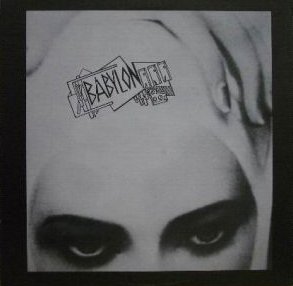
The Best Prog Bands You’ve Never Heard Of (Part Five): Babylon

babylon

Following a busy (and triumphant) end to another college semester, I have finally returned to help bring to light those bands which would have been lost to history if not for the wondrous powers of the Internet.  There are many groups left to cover, and this Christmas week I would like to call your attention to a band called Babylon.  This Florida based quintet released one eponymous album in 1978.  It was an excellent effort, but due to lack of sales the group disbanded shortly after the album’s release.  Nevertheless it is an album worth listening to.  Babylon has been compared to Genesis, but they are more than mere copycats.  Like Genesis, Babylon found its niche in the symphonic school of prog; their sound is primarily driven by keyboards and a guitar synthesizer (no flute is present, however).  The lead singer could best be described as a blend of Peter Gabriel and Peter Hammill; his vocals are rather distinct and dramatic.  Guitarist J. David Boyko was no doubt inspired by Steve Hackett’s unique sound, and he does some fine work on the album.  The individual members are comparable in sound (and nearly in skill) to the members of Genesis, but some of the lyrics are darker.  And now to the songs:

The Mote in God’s Eye: keyboard driven piece; (somewhat) humorous lyrics sung with dramatic vocals provides an interesting contrast

Before the Fall: solid bass performance (louder than Rutherford usually played); Hackett-like guitar synth

Dreamfish: excellent keyboard intro reminiscent of some of Banks’s finest work; Hammill-like vocals; solid drumming and bass provides great rhythm section

Cathedral of the Mary Ruin: vocals sound like Fish and Gabriel; another fine keyboard and guitar synthesizer driven song

All four songs are over seven minutes in length and each is of the utmost quality.  It’s unfortunate this group never released another album, but thanks to Youtube and iTunes, you can enjoy the small masterpiece they did produce.

Have a Merry Christmas and Happy New Year!

Here is Dreamfish:

Some Cover-Artworks by Ed Unitsky

Schnikees, this is incredible.  Enjoy this fabulous cover art.  Posted here with permission of Ed Unitsky.

unitsky covers

The Mountain (Best of 2013 — Part 4)

Coming in the #4 slot (in alphabetical order) on my Best of 2013 list is a band that this year really made me sit up and take notice:

Haken

This is prog metal that is so transcendent, and so obviously far above the average genre offering, that I was truly shocked by the staggering magnitude of the excellence on display in this album release.

Kind of like an awesome mountain.

Behold the majesty! How beautiful.

How spectacular!

The first track, “The Path,” pierces right to the heart with its stunningly beautiful theme. (It resurfaces in very satisfying ways later on.)

Continuing on from there, the entire album is non-stop upper-echelon prog.

I want to give a big special thanks to my Progarchy friends, for alerting me to this amazing album, by posting the hilarious “Cockroach King” video back in September.

Perhaps my favorite track is “Pareidolia“; I agree with Thaddeus Wert that this track is sheer perfection.

(But then again, “Falling Back to Earth” is totally epic; and at 11:51 it wins the battle of the prog clock.)

I am pleased to see this album make it onto so many Top Ten lists among all the progarchists. Justice! What more need I say?

Perhaps I should close with a public service announcement, by noting the correct pronunciation of the band’s name. According to the band, it rhymes with bacon. As for the meaning of the name:

There’s no meaning, really. It came from kind of alcohol-fueled gatherings between me and my friend and we thought it’d be a nice name purely from the sound of it. There’s no deep meaning behind it.

How disappointing. But there are conflicting accounts; apparently the name is “actually the name of a fictional character” they once invented.

Well, if I could give the band a piece of advice — now that they have proven themselves to be top-rank masters of prog — I would say that they need to change their story on this, pronto.

Run this past the publicist: Why not officially decide that the band name refers to model Rianne ten Haken? (After all, there is rock precedent for using models’ names for purposes of euphony; I adduce, as my prime example, Nash Kato’s inspired use of Laetitia Casta’s sonorous appellation in “Octoroon.”)

But even more importantly, there has to be an immediate and non-negotiable change in the correct pronunciation of the band’s name:

Haken.

Rhymes with rockin’.

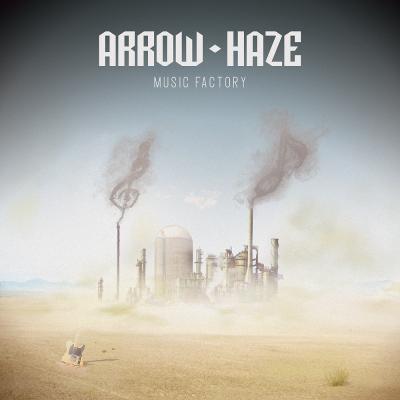
The Overlooked and Neglected of 2012, Part II: Arrow Haze, MUSIC FACTORY

front_400As I mentioned at the end of November, I fear that a number of important 2012 releases will be lost to the annals of time.  As we’re already looking forward (happily) to 2014 and celebrating the year—perhaps the best year in the history of progressive rock—that was 2013, I want to consider some albums from 2012 that failed to garner as much attention as they should have.

My first such somewhat ignored classic of 2012 was North Atlantic Oscillation’s FOG ELECTRIC.  I give it—and everything Sam Healy does—my highest ratings.

Tonight, I want to continue with my second in the series, MUSIC FACTORY by Arrow Haze.

I’m not completely sure I would classify this Belgian album—quite excellent—as necessarily progressive rock in the sense that we might think of Big Big Train or The Tangent as prog.  Nor is MUSIC FACTORY moody in the way that Nosound is.  Instead, I think it’s much more classic 1980’s AOR, though with modern production and modern sensibilities.  Perhaps a good comparison might be with Neal Morse’s AOR project, Flying Colors.  Coralspin also comes to mind.  This is really progressive AOR, with lots of Trevor Rabin, Rush-era Counterparts, as well as grunge tendencies.

Most importantly, the album is diverse.  No song really sounds like any other song.  At first listen, this threw me off, as I was search for something to tie it all together.  But, don’t take this the wrong way.  This isn’t a criticism as much as it is an observation.

At 13 tracks over 57 minutes, MUSIC FACTORY covers a lot of territory, especially in terms of musical styles.  The opening track, “Casino,” for example, reminds me of the poppier pieces by Oceansize with its angular guitars, Oceansize.  The fifth track, “Lost,” harkens back to early 1990s groups such as Inspiral Carpets and the Charlatans.  The ninth track, “Elly Kedward,” strikes me as what Dream Theater might sound like if it decided to cover the best of Blue Oyster Cult.

Of this first album, the standout is really track 13, “Crisis.”  This is the most Trevor Rabin-like of all the tracks, a bit heavier than anything Rabin did, but outstanding.

The leader singer has an excellent voice, again with a very AOR-like sound (reminded me of being in junior high and highs school and listening to KICT-95 rock out of Wichita, Kansas), and the lyrics are poetically rendered and, generally, very life affirming.  This is not to suggest they’re always just happy go lucky.  Instead, they appropriate criticize excesses of conformism in society, but never to the extent that, say, Neil Peart did in the early 1980s.  The only exception to this is the appropriately named “Routine,” track 12.

Arrow Haze formed in 2011, and these guys—at least from the picture on the back of the booklet—are young.  These guys are brilliant musicians, and I have no doubt that we will be hearing a lot from, by, and about them over the next decade or two.

If I could offer a suggestion—offered with age if not necessarily wisdom—I hope these guys open up the spaces they’ve created.  Right now, they’re as driven as young men normally are, though, of course, while also being endowed with exceptional musical gifts.  I hope they allow themselves to explore the music itself more, to linger in it, and to allow it to encompass them.  Right now, with Music Factory, the music is a second ahead of the band.  With a bit more time, they’ll come into sync with it.

I have no doubt they will succeed admirably and with integrity.  I’m already very much looking forward to their second release.  These guys have a solid future.

To check out Arrow Haze on their home web turf, go here.

Kids Writing Music in a Basement

Loudwire recently caught up with John Petrucci of Dream Theater. An excerpt from their exclusive interview:

In your opinion, not just of the Grammys, but of other award shows, do you think they really matter?

There’s successes you have in your career. For me, for example, as a guitar player, as somebody in a band putting out albums, the success that we have in our field and how we’re viewed by our fans; that type of success means more than anything to us. The Grammy recognition is cool, as well, because that’s something different. Now, here is a situation where your song or album is being considered and voted on by members of the Recording Academy. It’s all professional; a wide range of professionals in the music industry. So, it could be different engineers, producers, musicians and songwriters in that pool of people who are doing the same thing that you are doing and think enough of your music that among hundreds and hundreds of submissions to pick, they say, “Hey, that song is deserving.” That has a really special meaning as well. It’s very cool, you feel a sense of honor and you’re humbled by that, from people making that kind of choice.

When you look at your history, Dream Theater are one of those bands that’s always been very critically acclaimed. For you, the Grammys is a new type of critical acclaim. Do you ever get used to the amount and of praise that Dream Theater receives?

It’s always surprising. In fact, we talk about this a lot. For example, me and John Myung, we met when we were in middle school / junior high. We were teenagers, we’ve been playing together for so long. We have so much history and the band has been through so many different things together professionally and personally. We’ve seen our families grow up together. It’s a very private thing when you have these strong relationships with these guys, you’re writing music with these guys behind closed doors.

It’s a really personal and private career that all of a sudden gets exposed in a very public way as soon as you put music out, play live and everything else. The innocence of it never goes away. We still feel like we’re the same kids writing music in a basement. [Laughs] Next thing you know, there are people out there that appreciate it and want to see it and want to get it, and in the case of the Grammys, want to recognize it. It’s all very surreal, it’s a strange feeling. You never get used to that kind of praise. It keeps us pushing to do better. You want to do better, to keep upping our game. That’s what great about choosing music as a career, you can do that.

Judas Unrepentant

Alva Noe has an interesting essay out on art, skepticism, and forgery:

I don’t know whether it is true that a janitor at an art gallery was fired not so long ago for sweeping up the artwork the morning after the opening, but the story captures a certain skepticism about art: if art is whatever “we,” or the art cognoscenti, say it is, then there is no such thing as art.

The worry that art is a sham is an old idea and it is one that art itself has cherished.

It is right to reject, as Gopnik does, the myth of the connoisseur, but Gopnik does so for the wrong reasons. The problem with the myth is not that it attributes unrealistic powers of discernment and identification to the connoisseur or critic, but rather that it mischaracterizes his or her job, and so it misunderstands what powers he or she needs to do the job well in the first place.

Gopnik describes the connoisseur as if he or she were a human measuring device, someone who has been trained up to give the right answer to questions of value and origin. This thought leads directly to skepticism. For either we suppose that the connoisseur cannot be wrong, that whatever he or she says goes, or we suppose that a mistake is possible, that a different connoisseur or critic could offer a different answer—but if a mistake is possible, then we must admit that there are no settled criteria for deciding the question of value, there is only what you or I or we “like.”

The connoisseur or critic, crucially, is not a measuring instrument, a kind of authorship- or value-detector. Rather, they are bent on seeing, and seeing is not mere detection. Unlike detecting, seeing is not instantaneous, nor is it all or nothing or once and for all. Seeing is itself thoroughly critical; it is thoughtful and it is contextual. Stanley Cavell captures this idea when he explains that what distinguishes the critic is not that he or she can discern qualities that you cannot, but rather that, in discerning them, the critic can give you the means to discern them as well. Criticism is less an art of discrimination than it is a discipline of accounting for what one sees; it is a practice of making it intelligible to oneself and another. Critics make sense, and they give you the tools you need to make sense too. Critics don’t just see, they teach us how to see.

We are all critics, and neither the possibility of forgery, nor that of perceptual error, should lead us to be skeptics, about art, or anything else.

If you need a soundtrack for further reading and reflection, why not revisit Big Big Train on Tom Keating.
 

Catching up with Neal Morse

From The Prog Report:

Neal Morse talks about the new Transatlantic album “Kaleidoscope”, Flying Colors, working with Mike Portnoy, and how to make an album in a week.

Dream Theater (Best of 2013 — Part 3)

Coming in the #3 slot (in alphabetical order) on my Best of 2013 list is this self-titled splendor:

Dream Theater

Back in August, we got excited when we first heard the preview of “The Enemy Inside” (which has gone on to receive a Grammy nomination).

Then, in September, the band treated us to a full album stream.

My favorite tracks include the glorious “Along for the Ride” and the amazing “The Looking Glass” and the scintillating “Surrender to Reason“…

But let’s be real. Whatever track you are listening to at the moment becomes your favorite!

This is a powerfully good album. Surely everyone who knows and loves Rush can recognize the unmistakable musical excellence at work here.

What a thrill to hear Dream Theater at the top of their game, showing us their very best!

Exactly the sort of prog metal that I like best is found here on this upper-echelon release.

Congratulations, gentlemen.

With your musical panorama, you have given us what prog gives best.

Namely, the bigger picture.