In Part 1 of Tim Bowness’ latest Progarchy interview, Tim discussed his previous solo albums, working again with his first band Plenty, reuniting with Steven Wilson for fresh No-Man music, and how it all feeds into his new album Flowers At The Scene (released March 1 on Inside Out Music). Part 2 was an in-depth look at the new album’s music and players. To finish up, the conversation branches off into the process of writing, the genesis of Tim’s label/online shop Burning Shed, the state of the music business and more! Note that [brackets] below indicate editorial insertions.
I’ve always found your lyrics very, again, distinctive and appealing. The words for your songs, if you read them on the page, they look very sparse; they’re epigrammatic, or they’re almost like a hymn text. But they convey a lot of emotion and meaning when you sing them – It’s like you hear what’s behind them, kind of like a minimalist take on lyrics. Was there anyone who particularly influenced how you write lyrics – or melodies, for that matter? Where do the words come from for you?
I think the words in some ways came before the singing, because I used to like poetry, before I ever really was in a band. So I’d always loved reading, and still am a fairly avid reader of novels and poetry. There were a lot of lyricists I adore, so, I think … Joni Mitchell is an absolutely fantastic lyricist. But I can’t say there’s any lyricists I’ve been particularly influenced by.
I think that, in terms of that pared down style, I guess I always quite liked people like Samuel Beckett and Harold Pinter and Raymond Carver. Certain writers like that. And, although I don’t think I’m anything like them, that might be the core influence. And there’s also, there’s an English poet called Ian Hamilton, who has a very sparse approach, and I always used to like his work.
And so in some ways, it’s kind of closer to that; it’s closer to the poetry that I grew up reading, without being particularly like it. And as I said, I’m a fan of many singers, many lyricists. Again, Roger Waters, fantastic lyricist, fantastic concepts, but I can’t say it’s particularly influenced me. So maybe it comes from outside of music, the lyrical element of what I do.
Plus, I also think it comes, of course, from my own experiences, my own obsessions, my own emotions. So that’s thrown into the mix.
Would Philip Larkin be in the mix? It just occurred to me that was another person that kind of worked in that epigrammatic, lyric style?
Yeah, very much so, yes indeed! The Collected Works of Philip Larkin are on my shelf.
Well, it’s amazing how busy you are, because along with all of what you do – your solo work, No-Man — you also co-direct one of my very favorite online shops! And it’s certainly a favorite of all of us at Progarchy. Burning Shed is just a wonderful place to buy music from, even across the pond. You’re listed as a co-director; what does your role there involve?
Well, I still – the newsletters you receive, I write them.
Oh, OK!
The text that goes on the site, I write it. So I suppose, in a sense, Burning Shed was my idea of a company. So I started burningshed.com as an idea of doing cost-effective, experimental solo albums. And so initially, we released three CD-Rs. So the idea was originally in 2001, online, on demand, cost-effective solo albums that labels wouldn’t be interested in. So Steven [Wilson] gave us a Bass Communion album; I gave a Samuel Smiles live album; Roger Eno gave an ambient album. And almost from the off, it did better than we thought it would do.
In Part 1 of Tim Bowness’ latest Progarchy interview, Tim discussed his previous solo albums, working again with his first band Plenty, reuniting with Steven Wilson for new No-Man music, and how all this feeds into his new album Flowers At The Scene (released March 1 on Inside Out Music). We dig into the new album in depth below! Note that [brackets] below indicate editorial insertions.
Pulling it back to Flowers At The Scene, it’s interesting what you said about how really, there are some [pieces] that you’re producing, there’s some that you and Brian [Hulse] are working on, there’s some that you and Brian and Steven [Wilson] are working on. It all feels like a unity when I listen to it. Despite the variety of colors, it’s, as you say, it feeds on what you’ve done before, but it goes in really interesting, different directions. Are there any particular songs that you feel are at the core of the album?
I would say you’re right, it does feel like an album. One thing that’s important to me is, I know in this age of streaming and Spotify it’s not particularly fashionable, but I love the album. I’ve always loved the album as a statement. And in some ways, although this album is different from the other albums – I mean, the previous three albums had themes to a degree. Lost In The Ghost Light was a narrative concept album. Stupid Things That Mean The World and Abandoned Dancehall Dreams had linking lyrical themes in a way. This is different in the sense that it’s eleven very separate moods, very separate lyrics, very separate songs. And yet it fits together, I think, in a kind of classic 43-minute album format. And in some ways, I think it’s the album that flows best of all four. There’s something about it that it kind of moves from one mood to another. And yet it holds together.
I suppose the key songs would have been when “Flowers At The Scene” and “Not Married Anymore” were written. And I just felt that Brian and I had been coming up with material that had its own distinct identity. And I also had a certain idea of how I wanted them to sound – and suddenly that was it! And I guess that there’s this [Robert] Fripp line, he would always say that a new direction presented itself. And I think that it’s true, because I’d continued writing material on my own, and I’d continued writing material with Stephen Bennett while I was recording the Plenty album. And although the material was good, it felt like it was gonna be a continuation of Lost In The Ghost Light or Stupid Things That Mean The World.
And I think that it was when I’d written the fifth song with no purpose really – Brian and I just kept on writing together because we were excited by what we were doing. And I think it would have been “Flowers At The Scene”, the title track itself, and I thought, “this is the new direction; it’s presented itself.” And from that moment on, it became a very exciting and immersive project and I said to Brian, “I think this is the basis of a new solo album. And it feels like a fresh direction after the other albums.” And you’re right that, what’s kind of interesting for me is it’s fresh, it’s a reset, but perhaps because of the mood of some of the music and because of my voice, there’s also a sense of continuation.
And certainly one of the things that contributes to it being fresh is this cast of musicians that you gathered, which is really genuinely impressive. So many great names with great work that have fed into this. I was wondering if I could just toss out names and, in a few words, you could try to describe what each of these guys have brought to the music for the album. Starting with Jim Matheos.
Well, Jim’s somebody I’ve known for a few years. He asked me to guest on an OSI album [Blood], probably about nine years ago now. And I really enjoyed it. So the track, which is called “No Celebrations”, felt very different for me; it was very much in that OSI art-metal style, but it accommodated my singing as well. And after that, we carried on communicating together. So occasionally he’s asked me for advice about things, and also we had co-written a couple of tracks that had never been released.
And when I was doing this album, I thought I’d love to get him involved. Because one of the tracks I’d been developing had him on anyway, and he’s an incredibly versatile guitarist. Very, very nice guy, but what people I don’t think are aware of is how versatile his talent is. So his own music can be anything from sort of ambient experimental to metal to classical acoustic guitar. And I knew how good he was as a soloist, and so I got him – really, he was my stunt guitarist on the album on a few tracks. And he did some fantastic work on it.
Peter Hammill. What a legend!
Yeah! Well, Peter’s somebody who when I was growing up, when I was in my teens, he was one of my favorite singers. And as I’ve said to people, what’s interesting with this album is that, probably my five favorite singers when I was 13 would have been David Bowie, Peter Hammill, Peter Gabriel, Kate Bush and Kevin Godley. And I’ve two of them on the album, and it’s an incredible thrill to have that!
Over the years, Peter’s become a friend. We ended up playing on lots of the same albums in Italy, and we got to know one another. And over the years, he’s guested on my work; and we even live in the same small town in England! And so he’s probably my sort of coffee and chat companion, where we’ve put the political and the musical world to rights once a month. And as I always say about Peter, he’s as nice, generous and decent as his music is frightening!
[Laughs] Oh, that’s a great summary!
[Laughs] Absolutely! Cause, you know, you wouldn’t want him to be as frightening as [Van der Graaf Generator’s] Pawn Hearts really, would you?
[Laughs] No, not in the slightest!
It is true; you’d be coughing your coffee up. It’s not good! [Both laugh] So yeah, lovely guy, and we’ve worked on a few things. And the thing about Peter is he is very honest about his opinion. So interestingly enough, I’d asked him to work on Lost in the Ghost Light, but he wasn’t as much a fan of that material. So basically, he works on what he likes. And he’d worked on the Stupid Things That Mean the World album, and I’d played him this album in progress. He’d mixed an album for me as well. There’s a Bowness/[Peter] Chilvers album that’s been unreleased that Peter’s mixed, which is quite an interesting project in itself.
And while I was making the new album I said, “ah, you know, a couple of Hammill-shaped holes here!” And he heard it, and he heard exactly what I wanted, and he really liked the material. One of the tracks he put a great deal into it, there’s a track on it called “It’s The World”. I’d played it to him, and initially I wanted his bite – there’s a real sort of bite in his voice, I wanted this in the chorus. And he said, “Yep, I know exactly what you want; I’ll get it to you. But I tell you what else I’ll give you; I’ll give you guitars, because the guitars on this aren’t working!” And so he completely re-recorded the chorus guitars, and almost went into sort of Rikki Nadir [from Hammill’s proto-punk solo album Nadir’s Big Chance] mode, and did a fantastic job.
So on the track “It’s The World” he’s on kind of backing and lead vocals, and also adds some really ferocious guitar parts. And he made the piece work. So that was an interesting case, where the piece I think was pretty good as it was, but he gave it an extra edge and an extra looseness.
Got it! One of the newer singers on the album is David Longdon. I know you collaborated with Big Big Train on a b-side [“Seen Better Days (the brass band’s last piece)”]. What did David bring?
Well, I suppose I asked him to be on the piece [“Borderline”] and I’d suggested a particular approach to backing vocal which he used. I almost wanted this kind of rich, Michael McDonald/Steely Dan approach. That’s something I wanted: a comfortable bed of David Longdon voice, really, and he gave that. And then he added some flute as a means of contrasting with the trumpet. And he did a beautiful job in both cases, really. So I suppose what he gave was himself, so he kind of knew the places where I wanted him to play, and where I wanted him to be, and with the backing vocal he was effectively re-singing the melody that I’d already sung on the demo.
But with the flute, he performed a really beautiful solo, and it was great! Because although the trumpet was recorded in the outback in Australia – I used a jazz musician, a guy called Ian Dixon, who’s worked with No-Man, he was on Returning Jesus, several tracks on that, and he’s a wonderful sort of jazz trumpet player. And his studio is a tin shack in the outback in Australia! And he said when he recorded it, it was in the middle of the rainy season. So he’s recording that with crashing rain on the tin roof – which I thought was very romantic! And David really beautifully worked with Ian’s trumpet. And to me, it sounds as if the two could be in the room together playing! So they worked very nicely together, and I suppose in that case, I knew what I wanted, and I got what I wanted. But it was still different, the playing, the expression that the two of them had given was entirely their own.
Progarchy wishes a huge happy birthday to the world’s greatest guitarist – Mr. Steve Hackett! Thanks for all the music over the years, and we hope you continue your current creative explosion for years to come.
DJ Brass Camel is a prog-loving collective of amazing musicians. They performed the concert of the year in 2018, as I wrote in my review earlier on Progarchy. Enjoy their entire debut album, embedded above. Prog on!
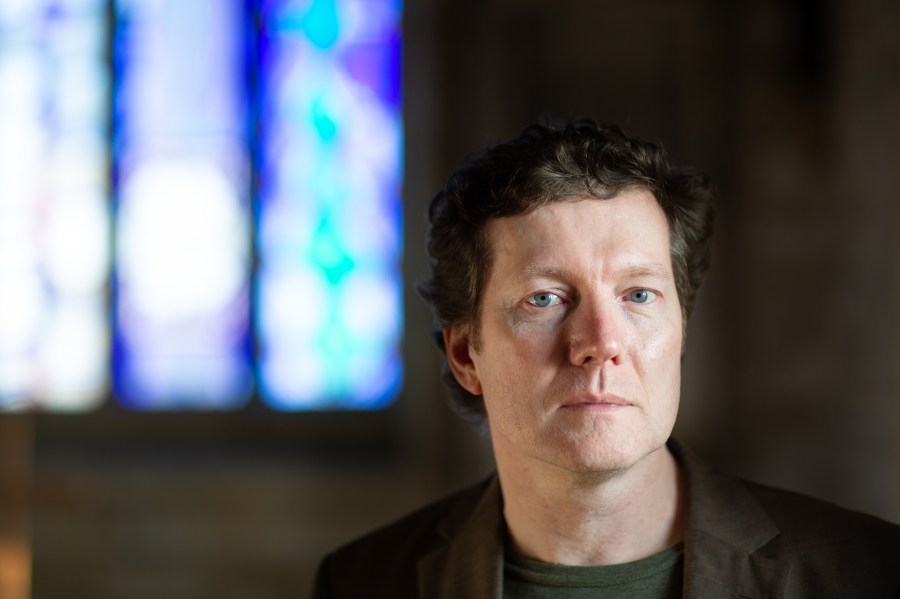
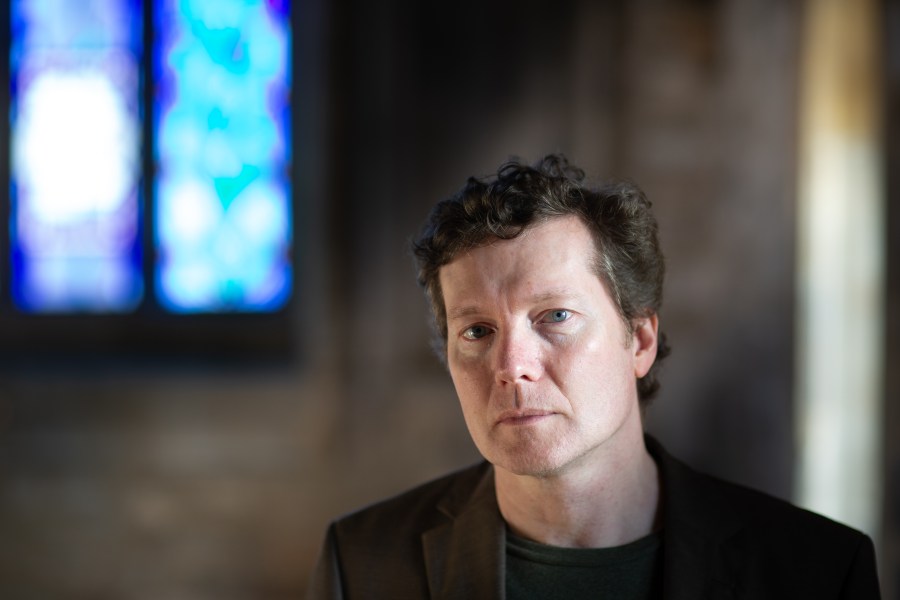
Tim Bowness first made waves in the art-rock world in the 1990s via No-Man, his longtime collaboration with Steven Wilson; albums like Flowermouth and Wild Opera led to Bowness’ working with Robert Fripp, Phil Manzanera, Nosound’s Giancarlo Erra (on Memories of Machines’ Warm Winter) and many others. Since 2014, Bowness has also pursued a solo career, with a trio of critically acclaimed albums released on Inside Out Music.
Bowness’ latest album, Flowers At The Scene, is out on March 1. Having previously interviewed Tim in 2015 and 2017, it’s been exciting for us at Progarchy both to hear the new album in advance — and to talk about it with Tim in depth. In the first part of a 3-part interview, Tim lays out what’s led up to Flowers At The Scene, and how it’s different from his previous solo albums — and also teases No-Man’s first new music in more than a decade!
So first of all, congratulations on the new album; I’ve really enjoyed listening to it. What a prolific run in the last five years!
Thank you! Yep!
Could you unpack for us how the albums you’ve made for Inside Out, starting with Abandoned Dancehall Dreams – how have they led up to Flowers at the Scene?
Well, I think that Flowers At The Scene is kind of a statement in itself, really; it feels like a reset of the solo career. And I think that the other three Inside Out solo albums really were leading up to Lost In The Ghost Light. I think that was the conclusion of a particular way of working.
It started off really with – when I’d written Abandoned Dancehall Dreams, that was an album that I presented to Steven Wilson as a possible No-Man album, and it was pretty much how we’d done No-Man’s Schoolyard Ghosts – that I’d written songs and I’d co-written songs, and I’d brought what I thought was the best of that to Steven and had an idea for an album. And with Schoolyard Ghosts, we then worked on the material together, produced the material together, Steven added to what I’d written and so on. But with Abandoned Dancehall Dreams, he was in the middle of working on his Raven album, and just said, “Look, I’ll mix it; this is your album. Release a solo work!”
So that’s how the recent run of solo albums started; it was something I’d assembled with a No-Man album in mind, and it became what feels like my debut solo album. (I know it’s my second solo album, but it feels like my debut solo album!) Stupid Things That Mean the World emerged out of that, really, in that Abandoned Dancehall Dreams had got a very positive reaction and I was feeling very energized by that, really, so I was writing quite a lot of the time.
And with Lost In The Ghost Light, that was the conclusion of a project that I’d kind of been working on probably for about ten years. And some of the songs in that concept had been on Schoolyard Ghosts, some on Abandoned Dancehall Dreams, some on Stupid Things That Mean the World. And I didn’t think I was going to complete it! But there was a certain point in 2016 when I focused on it and it all came together.
And with Lost In The Ghost Light, it felt like a conclusion to a particular way of writing and working, and I think specifically that pieces like “Smiler at 50” from Abandoned Dancehall Dreams or “Sing to Me” from Stupid Things That Mean The World, that it was almost like an album-length exploration of that type of music. And of course, it had a very specific overall concept, which is the first time that I’ve ever worked, really, with a kind of narrative concept album. The Lost In The Ghost Light story was one that I’d been writing about for years and one that I really wanted to finish. So I was delighted when it was finished!
But after that, it really felt like I needed to do something completely fresh, completely refresh my own musical palette to keep things exciting.
Thanks! The other thing that you’ve done recently is you’ve also gone back even deeper into your past. I know that you worked with Brian Hulse and David K. Jones to re-record the music of your very first band, Plenty. And It Could Be Home is a really delightful album. Was that part of your process for trying to find something new? How did that project feed into this new album?
I think you’re right; I think it did feed into this album in some ways. Because what was interesting is that we’d not worked together for thirty years, and it was actually very creative. Going back to that material, we wanted to be faithful to it. But what was exciting was that we were doing something new with it, and it was taking us to new places. Partly, in my case, it was re-introducing me to ways of singing and writing I’d long abandoned. And so, as much as it was old material, it really felt like it was a new project. And we enjoyed doing that so much that Brian and I continued writing together.
And we just felt that what we were coming up was something that wasn’t Plenty, and it was kind of hinting at what I wanted to do on my next solo album. So it definitely directly fed into Flowers At the Scene, the fact that we just continued to write, record, produce together. And eventually there was a project that we were both excited about, and that became Flowers At The Scene. And of course, there are other collaborations and other methods of writing used on the album. But yeah, I think the Plenty experience directly led to this and fed into it.
I feel like I’m entering a war zone writing about this topic: being a soprano in a choir. There are so many preconceived notions about sopranos. Let’s get those stereotypes out of the way now.
We sopranos don’t have ears. We just sing the melody. We don’t have brains. We’re divas. We always sing sharp. We always sing flat. We have vibrato the size of a donkey. The minute we read harmony the world falls apart. The list goes on and on and on.
It’s OK. In their careers, a lot of musicians have met that one soprano who simply ruined it for them. We’ve all met her. She’s ruined it for all of us. Sure, maybe she was oblivious and self-centered.
But maybe she was having a hard day because she was a little tired of leading her superhero life. Yes, sopranos are superheroes: It’s a bird! It’s a plane! It’s a half-woman, half-boy! Wow!
As I entered Reggie’s Rock Club on the final day of Progtoberfest, the Virginia band Kinetic Element were winding up their set … their take on classic prog, spearheaded by keyboardist Mike Visaggio, sounded accomplished and intriguing; I wished I could have arrived earlier and heard more. Plus, you gotta love a band with a lead singer in a kilt!
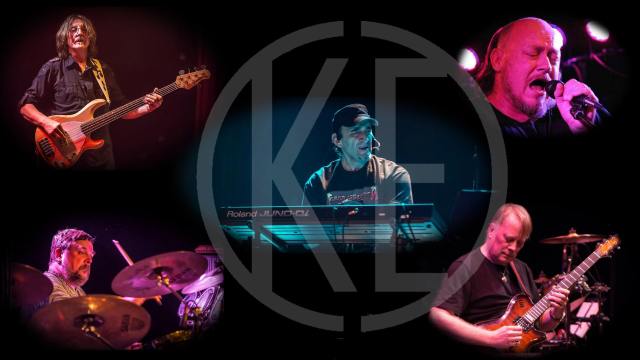
I’m still working on arriving earlier; fortunately, Kinetic Element has stepped up with more to hear. Forged in the crucible of key personnel changes, KE’s new The Face of Life is a sturdy album of ambitious, appealing prog from the grassroots. Visaggio, longtime drummer Michael Murray, bassist Mark Tupko, vocalist Saint John Coleman (he of the kilt), and new guitarist Peter Matuchniak rise to a tricky challenge — shaping music that’s steeped in the “founding proggers” while striving for fresh sonic territory and aptly framing the cultural and spiritual musings of Visaggio’s lyrics.
Album opener “Epistle” lays out Kinetic Element’s approach; seven minutes of space-age blues melded with a modernized take on 1 Corinthians 13, it’s a driving showcase for Tupko and Murray’s grounded groove, Visaggio and Matuchniak’s timbral variations and upbeat solo flights, and Coleman’s forthright delivery. The epic “All Open Eyes” admittedly kicks off in familiar Yes Album territory, as a cappella vocals trade off with wistful guitar/mellotron licks. But KE quickly heads their own way, building from a ear-catching symphonic overture through dramatic piano-led balladry (which Coleman aces) into an exciting instrumental with hot licks aplenty from Matuchniak, Tupko and Visaggio, as tempos, textures and the players’ roles constantly shift. The return to the ballad for the big finish is a classic prog move (just ask Neal Morse), but Coleman’s portrayal of the resurrection of the body and the life everlasting is utterly committed, and Tupko’s “Heart of the Sunrise” tribute toward the end tastes like a delicious cherry on top, not like half-baked leftovers.
Similarly, the title track’s opening can’t help but recall Going for the One’s “Awaken” to my ears. But again, there’s a swift upshift to a more aggressive vibe, as Matuchniak and Visaggio push hard atop Tupko and Murray’s steamrolling riffs, Coleman testifies over gospel-inflected piano, and the band cycles through an organic, consistently surprising rotation of related ideas. “Last Words” is an affecting coda to the album, a two-verse meditation sung first to Visaggio’s digital string quartet, then to a full band backing that floats to a serene conclusion. Throughout, the mix by Glass Hammer’s Fred Schendel and Steve Babb is full, present and warm.
So if you want meat and potatoes prog that’s more than a hackneyed rehash of the past, Kinetic Element’s proudly blue collar efforts fill the bill. The Face of Life is a satisfying listen and a genuine achievement, splendidly realizing the latent potential of a fine band.
January is always an interesting month. I find myself still listening to some of the best albums of the previous year, as well as exploring albums from other people’s Top Ten lists for the previous year that I somehow missed.
And then there are the new releases of the year. Sometimes January can blow you away, as artists release something new in January that is so good, you just know it will be on your Top Ten for that new year.
Also of note is that Dave Kerzner has launched Acceleration Theory — Part 1 with his In Continuum exercise in collaboration. It’s pretty good but, because it recycles some material destined for the second Sound of Contact album that never happened, it has some unevenness and lack of cohesion. Yet it does also have some really great moments, and I am particularly fond of the crazy “Bjork from space” episodes as delivered by the protagonist’s love interest on the “AlienA” track, as well as the album’s more conventional prog awesomeness on “Hands of Time.”
Kerzner’s solo albums are all superb, so let’s hope he brings Part 2 more into focus. Still, he may have saddled this project with too silly of a story line to make it possible to achieve a higher musical elevation. Then again, prog has a tradition of transfiguring the silly idea into a classic epic. Try explaining the best concept albums to someone without the music. They sound like jokes, right?
Meanwhile, on the new Dream Theater album, the only track I can like is “S2N,” because while the musicians undeniably have technical skill, my main first impression is the album overall lacks interesting or emotionally engaging songs.
Other new albums that I have been listening to in 2019 have been Weezer’s superfun Teal Album and Damian Wilson and Adam Wakeman’s intimate Stripped, both of which supply plenty of emotional impact, since both exhibit what great songwriting is (be they originals or cover songs).
There are four albums from 2018 that I still cannot stop listening to in 2019, and so I commend them all to you, in case you missed them:
Subsignal, La Muerta Wytch Hazel, II: Sojourn Greta van Fleet, Anthem of the Peaceful Army Phaeton, Phaeton
Don’t forget, Soen’s Lotus is released tomorrow (on February 1), and I can guarantee its excellence. I have already written a preview review of it for you on Progarchy. It’s their best release ever, and if you love prog metal you cannot miss it, since it offers songs with serious emotional depth as well as unusual musical skill.
Kansas – ‘Point of Know Return’ Anniversary Tour Resumes March 1st
Photo credit: EMily Butler Photography
KANSAS INTRODUCES KEYBOARDIST TOM BRISLIN AS NEWEST MEMBER OF ICONIC BAND
KANSAS RETURNING TO STUDIO IN AUGUST
ATLANTA, GA – KANSAS is excited to announce keyboardist Tom Brislin as the newest member of the band. Brislin replaces departing keyboardist David Manion.
An internationally acclaimed musician, Brislin has performed and toured with a variety of artists, including Yes (appearing on Symphonic Live), Meat Loaf, Debbie Harry of Blondie, Camel, Renaissance, Dennis DeYoung formerly of Styx, and many others. For years he fronted the band Spiraling and produced his debut solo album Hurry Up and Smell the Roses.
Most recently, Tom co-founded the progressive rock group The Sea Within. Along with guitarist Roine Stolt of The Flower Kings, bassist Jonas Reingold of the Steve Hackett band, and drum star Marco Minnemann, they released their first album in 2018 on Sony/Inside Out Music, joining KANSAS on the label’s roster. Tom has also formed Gold Rotation, a collective of diverse musicians and songwriters who premiered with a performance at Progstock Festival in 2018.
KANSAS original member and drummer, Phil Ehart comments, “We are extremely excited for Tom Brislin to be the newest member of KANSAS. We think KANSAS fans will really enjoy what Tom brings to the band. Rehearsals for the spring have been going great. We cannot wait to get back out on the road and perform for KANSAS fans. Then, it’s into the studio in August to begin a new KANSAS album, and back out on tour in September.”
Brislin adds, “It’s an honor to be asked to join a such legendary band as KANSAS. Their music has been in the soundtrack to so many of our lives, and their repertoire has enduring depth, beauty, and power. I’m thrilled to perform the classics and I’m equally excited to be a part of the new music that KANSAS creates.”
Brislin’s first performances with KANSAS will be aboard the Rock Legends Cruise in February, followed by March 1 in Baltimore, MD at the Modell Lyric where the band will be resuming the Point of Know Return Anniversary Tour. The band will perform a set of KANSAS Classics at shows throughout the summer, before returning to the studio to begin a new KANSAS album in August 2019.
A complete list of announced 2019 KANSAS tour dates is listed below. Ticket & VIP Package information can be found at KansasBand.com
SPRING 2019 KANSAS POINT OF KNOW RETURN TOUR DATES
March 1 Baltimore, MD The Modell Lyric
March 3 Wilkes-Barre, PA F.M. Kirby Center
March 8 Des Moines, IA Hoyt Sherman Place
March 9 Peoria, IL Peoria Civic Center Theater
March 15 Salina, KS Stiefel Theatre for the Performing Arts
March 16 Salina, KS Stiefel Theatre for the Performing Arts
March 21 Charleston, WV Clay Center for the Arts & Sciences
March 23 Louisville, KY Louisville Palace Theatre
March 29 Beaver Creek, CO Vilar Performing Arts Center
March 30 Denver, CO Paramount TheatreApril 2 Tucson, AZ Fox Tucson Theatre
April 4 San Diego, CA Balboa Theatre
April 6 Los Angeles, CA The Orpheum Theatre
April 7 Santa Barbara, CA The Arlington Theatre
April 10 Oakland, CA Paramount Theatre
April 12 Portland, OR Arlene Schnitzer Concert Hall
April 13 Seattle, WA Paramount Theatre
April 24 Vancouver, BC, Canada The Orpheum
April 26 Edmonton, AB, Canada Northern Alberta Jubilee Auditorium
April 28 Calgary, AB, Canada Jack Singer Concert Hall
April 30 Saskatoon, SK, Canada TCU PlaceMay 1 Regina, SK, Canada Conexus Arts Centre
May 3 Winnipeg, MB, Canada Burton Cummings Theatre
May 10 Rockford, IL Coronado Performing Arts Center
May 11 Fort Wayne, IN Foellinger TheatreSUMMER 2019 KANSAS CLASSICS DATES May 17 Ocala, FL Square Cultural Center
May 18 Coconut Creek, FL Seminole Casino Coconut Creek
May 24 Biloxi, MS Beau Rivage Resort & Casino
May 30 Bethlehem, PA Sands Event Center
May 31 Atlantic City, NJ Hard Rock Hotel & Casino
June 1 Atlantic City, NJ Hard Rock Hotel & Casino



 Here’s some essential reading for the soprano in your life: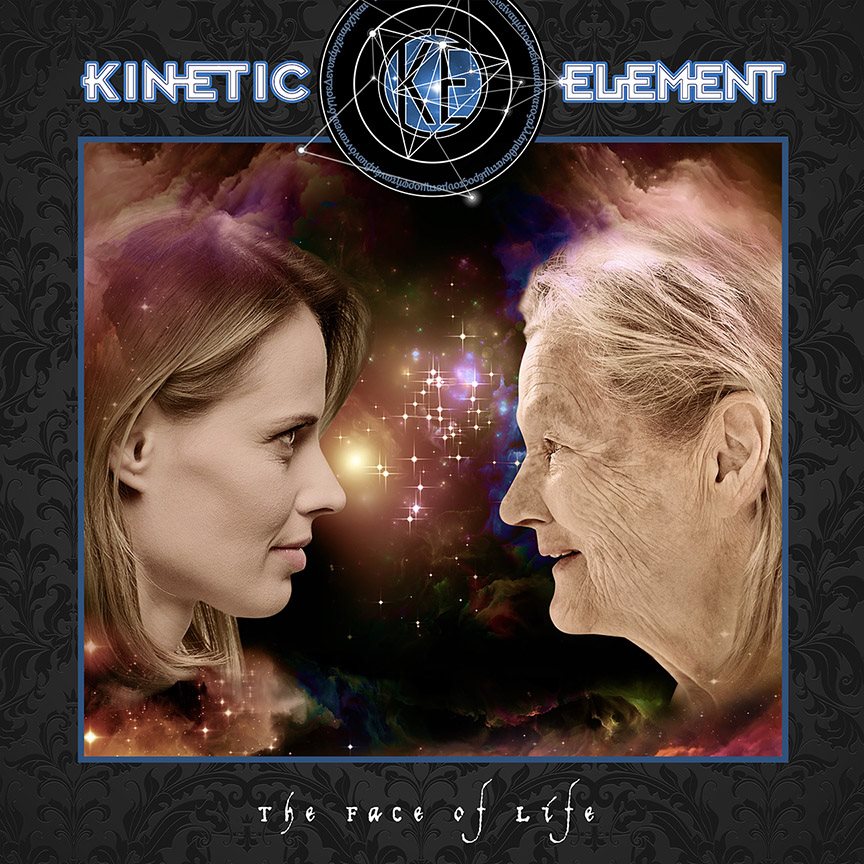



 Progarchy