In the 1997 movie Men in Black, Agent K (aka Tommy Lee Jones) spoke truer than he knew:
This is a fascinating little gadget. It’s gonna replace CDs soon. Guess I’ll have to buy ‘The White Album’ again.
Fast forward to the 50th anniversary Super Deluxe edition of The Beatles — my copy is #0112672, if you’re interested — my fifth purchase of the 1968 album. Following the first CD release in 1987, Agent K’s prophecy was swiftly fulfilled, with 1998’s “30th anniversary limited edition” (CD #0438243), then 2009’s mono and stereo remasters each promising better sound and a more complete listening experience. So does this new box provide anything previous versions haven’t? And does it shed any new light on the “White Album’s” ultimate stature, both in the Fabs’ catalog and in rock history ?
When it comes to merch, it’s always best to buy direct… especially from the lead guitarist and bass player!
Bent Knee rocked Vancouver, Canada, last night, and Ben Levin and Jessica Kion had fun meeting the fans.
They hung out selling their Bent Knee goodies during the subsequent sets by Leprous and Haken, for whom they opened.
Their set was perfect, with an ideal blend of diverse musicality, culminating in a massive headbanging version of “Holy Ghost” that set the stage well for what was to follow:
Egg Replacer
Way Too Long
Hold Me In
It Happens
Golden Hour
Holy Ghost
Actually I went back and read the ‘The Rime of the Ancient Mariner’ because of Iron Maiden, didn’t pay much attention to that chapter during middle-school years. Nor would I have bothered about Aldous Huxley’s works or the Greek mythology of Icarus, or paid attention to Winston Churchill’s famous WWII speech. The list is endless. Folklore, history, culture, mythology – Iron Maiden discography was probably better than all the high school textbooks, combined. So, if not for this band, some of us metal-heads might be even less civilized. Guess its music at its entertaining-enlightening best.
The band also fits the ‘gateway drug’ definition, accessible and yet heavy. Extended exposure simply leads to obsession with heavier sounds. Steve Harris bassline along with that dual guitar harmony, quite an enticing blend of grind and melody – innocent minds hooked forever.
Listening to “Strange World” or “Running Free” is actually like time travel, to simpler days, when we weren’t buried beneath ten thousand metal sub-genres. I am not advocating romanticism for good ol days. But, sometimes it’s just healthy to head-bang to “Wrathchild”, instead of three dozen time signatures per sec inhumanity.
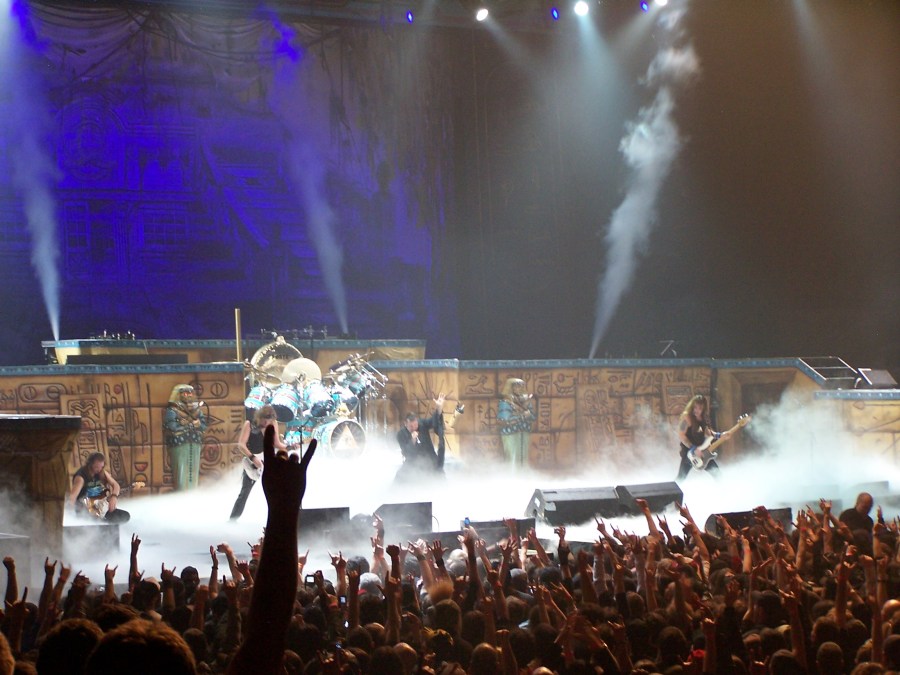
My first Iron Maiden concert was probably the most brutal one too, took a lot of bruises to reach the second row. Not to mention, the dizziness due to tropical summer and alcohol induced dehydration. But, even during the encore, the energy was off the charts. Not every day you get to hear a thirty five thousand strong coordinated chant — “Hallowed Be Thy Name” — “Hallowed Be Thy Name”…. Steve Harris and Bruce Dickinson both just stood there, stunned at this spectacle. You can tell this was unique; these heavy metal veterans were completely overwhelmed by the response. At least for me, in spite of the countless concerts over the years, this remains one of those vivid heavy metal moments.
I will always remember the thrill of hearing the first track, “Show, Don’t Tell.”
Why thrilling? Well, because it sounded to my ears like a return to form, the form of the best Rush, the Rush of the classic Rush years (from 2112 to Moving Pictures).
Capsule reviews of what I’ve listened to since the last installment follow the jump. Albums are reviewed in descending order on my Personal Proggyness Perception (PPP) scale, scored from 0 to 10.
Prog has the scoop, but here are some quotations from Andy Tillison himself:
1. Proxy is “a song of sadness at the insidious Proxy Wars going on in the world today where big powers, be they governments or weapons manufacturers, play warlords in smaller countries yet absolve themselves of responsibility.”
2. The Melting Andalusian Skies is “an instrumental written as a reflection on a motorcycle ride through southern Spain. It’s another of the Tangent’s jazz fusion tracks, highly inspired by Chick Corea/Return To Forever.”
3. A Case Of Misplaced Optimism is “the first of two songs about missed opportunities, in the case of this song, personal choices and restrictions that we have imposed on ourselves in our lifetimes.”
4. The Adulthood Lie “deals with the sad way in which many of us (myself included) can get caught in the trap of believing that nothing is ever as good as it was when we were 17-21 years old. … We are daft sometimes. I reckon that as people who grew up loving the forward thinking of prog music, it’s ironic that so many of us just want to hear the old songs.”
5. Supper’s Off is “a sarcastic look at my own generation, what we used to believe in and what we believe in now instead.”
Progarchy bottom line: The album is brilliant. Don’t miss it, because it’s one of the year’s best.
It has been a while since we have done a “Metal Mondays” here at Progarchy, and it has been even longer since I can remember reading anything online about Dream Theater’s first album, “When Dream and Day Unite.” Due to the absence of singer James LaBrie, this album is usually overlooked and forgotten by all but the most diehard fans of the band. Charlie Dominici, the band’s second vocalist (Majesty’s original vocalist was a guy named Chris Collins), was no slouch as a singer. He had the range and power necessary for someone in an 80s metal band, although he was 15 years older than the other members of the group. Dominici had a history singing music akin to pop rather than metal, and it quickly became clear that he wasn’t the best fit for a group intent on making music in the vein of Queensrÿche and Iron Maiden [1].
Despite its flaws, “When Dream and Day Unite” remains a listenable album almost 30 years after its release. The band even occasionally plays a few songs from it at live shows. The musicality is what we would expect from the musicians who would come to be known as some of the best in the world at their respective instruments. Mike Portnoy’s blistering kick drum on “Afterlife” and “Only a Matter of Time” was ahead of its time, yet it clearly bears the influence of Phil Ehart.
The journalistic laziness of the time claimed the band was merely a copy of Kansas and Rush, yet listening to the album now makes those comparisons sound cheap. Obviously Dream Theater has shown influences from both of those bands, going so far as to cover both groups (and many others) in special editions of their albums over the years. To dismiss “When Dream and Day Unite” as mere copying is far from the truth, in my opinion. There is too much originality in the musicianship to call it a copy of those groups. The influences are there, but Kansas and Rush never sounded quite like this.
I find “Ytse Jam” to be the most compelling song here. Perhaps that is because it is instrumental, and it is easiest to make the connection to James LaBrie era Dream Theater. John Myung’s bass is particularly exceptional here, but then again, when is it not exceptional? “Afterlife” is probably the best song with singing on the album. From the lyrics to the guitars, this song delivers on all fronts.
Is “When Dream and Day Unite” Dream Theater’s best album? Of course not. Does it deserve to be forgotten and ignored like it has been? No. It is a solid album given its time, and it serves as an interesting reminder of where the greatest band in progressive metal came from. Every group has their beginnings, and it is great to return to Dream Theater’s roots. This album is particularly hard to get here in America, so if you don’t already have it, you may have trouble finding it. Discogs appears to have plenty of used copies, and you may be able to find a copy via your local library or Inter-Library loan (where I got mine). For those who prefer to stream, it also appears to be available on Spotify, despite it not being for sale on iTunes. It may require a hunt, but sometimes the search is half of the fun.
[1] Rich Wilson, Lifting Shadows The Authorized Biography of Dream Theater (UK: Rocket 88, 2013), 63-64.
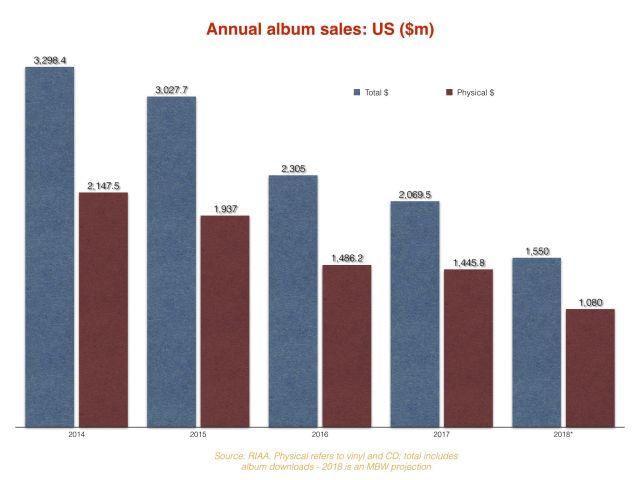
After a comfortable 6.5 percent drop in sales in 2017, in the first half of 2018, revenues generated by the CD album in the USA were slashed nearly in half – down 41.5 percent, to $246 million.
…
As we all know, the music business held hands with [Spotify’s Daniel] Ek and dived profit-first into a streaming-led industry.
Now, however, a murmur is quietly breaking out: In the rush to follow the money, did the music business sacrifice something more valuable than it could have realized?
Sure, hits on streaming services make a lot of people a lot of money. But as the death knell rings for the album — and the music industry returns to the pre-Beatles era of track-led consumption — are fans being encouraged to develop a less-committed relationship with new artists?





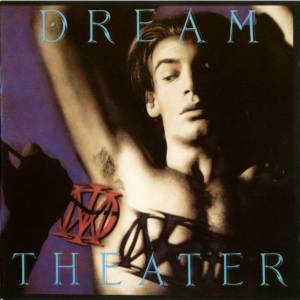 It has been a while since we have done a “Metal Mondays” here at Progarchy, and it has been even longer since I can remember reading anything online about Dream Theater’s first album, “When Dream and Day Unite.” Due to the absence of singer James LaBrie, this album is usually overlooked and forgotten by all but the most diehard fans of the band. Charlie Dominici, the band’s second vocalist (Majesty’s original vocalist was a guy named Chris Collins), was no slouch as a singer. He had the range and power necessary for someone in an 80s metal band, although he was 15 years older than the other members of the group. Dominici had a history singing music akin to pop rather than metal, and it quickly became clear that he wasn’t the best fit for a group intent on making music in the vein of Queensrÿche and Iron Maiden