Quite an illustrious Decibel Fest lineup, but one band simply stood out. Dim onstage setting aside, the mere presence of Mayhem itself was unsettling. But once everyone managed to gather themselves, there was a brief and inevitable mass instagraming session.
Setlist was a mix of old, new and their classics from De Mysteriis Dom Sathanas. Couple of songs from ‘The Grand Declaration of War’ too, and here the crowd was not in a perfect harmony with the sound, response to these experimental progressions can be often confounding. Mayhem definitely transcends black metal, and sometimes even metal itself.
Just about half way into the set the real unhinged pandemonium begins; “Deathcrush” sets the stage — for ‘Carnage’, ‘Freezing Moon’ and ‘Life Eternal’ sonic obliteration. But this time there was perfect harmony in the pit – with these classics the crowd knew exactly what hit them. That alloy of elegant atmosphere, technical musicianship and crass aggression is uniquely Mayhem. Again, what’s exquisite tends to be subtle too; there is simply enough substance in these compositions, and they come through without need for any exaggeration whatsoever. To paraphrase an earlier post – ‘very little about Mayhem is instantly discernible’, and even here, ‘the most complex of patterns is comfortably buried beneath a wall of rich chaotic sound.’
In the seven years that have passed since Snowtorch, it has sometimes felt as if we would never see the much-vaunted ‘Project Infernal’ come to fruition. But here it is, finally: the long-awaited concluding chapter of the eco-terror trilogy that began with 2006’s The Great Leap and was developed further in 2007’s classic Doomsday Afternoon.
I’m little more than halfway through my first listen as I write this. There’s an awful lot to take in from this 19-track, 83-minute double album, but it seems clear already that time has done little to diminish Phideaux Xavier’s distinctive ‘dark wave of art rock’. Infernal is rich, melodic and varied, with moments of real Floydian grandeur. Check it out now on Bandcamp!
Haken just released a music video for new song “The Good Doctor” off upcoming album, Vector. If this song is anything to go by, Vector will be another re-styling of Haken’s unique sound. This particular song sees the band go from Muse-like sounds to Meshuggah-esque blasts, all in about 3 minutes. The result is obviously 100% Haken.
Speaking of Muse… they also have an album coming out later this year: Simulation Theory. They have released several music videos so far, and it seems like the band have moved in a more synth-pop direction, especially compared to the hard-rock bombast of 2015’s Drones. The guitar seems especially lacking in this most recent song:
Maybe you have seen a Pink Floyd laser light and music show at the Planetarium, long ago. But what about this genius idea? A live band prog extravaganza at the Planetarium!
Daniel James’ Brass Camel is putting on a show in Vancouver (tickets now available) with the ultimate in prog rock visual accompaniment. I saw their August 18th show in Vancouver, as an eleven-piece band (including horns and backup singers), at the Fox Cabaret, where they played almost all the tracks from their incredible new album (soon to be available online for digital download), played to the hilt, along with some Sturgill Simpson, Parliament, and Led Zeppelin tunes. The show was a top-notch display of meticulous musicianship.
I can therefore recommend that you don’t miss this future chance to see Daniel James’ Brass Camel live, now celebrating their new release in the grandest of style. The Fox Cabaret show had a volume level that was too loud for such a small venue, so I am hoping they’ll take a page out of Steven Wilson’s playbook and set the volume level at optimal human range for the Planetarium. If you saw Wilson the last time he was in Vancouver, you’ll know what I mean: he does a perfectly crafted multimedia show, with no earplugs required, as he sets the volume level at just the right setting, in order to fulfill every audiophile’s dream. (By the way, Wilson returns again this year to Vancouver.)
Having to use earplugs at a musical event is always a sad situation, just as it would be ridiculous to have to wear a blindfold or sunglasses at a Planetarium show. The promise of prog rock music is that it enhances our sensory experience, not dulls it. I am betting that this November 2nd show will be not just one small step in the right direction, but rather one giant leap for all prog-kind. (Why aren’t more prog bands doing this genius idea??? In any case, Daniel James’ Brass Camel is leading the way.)
The last time I spoke with Daniel, he was trying to secure a set of tubular bells for the November 2nd event. It sure sounds like he’s getting ready to do this right and give Wilson a run for his money! Prog right on, wayward sons.
The Vancouver prog-funk ensemble that calls itself Daniel James’ Brass Camel has conspired to take you on a trip through the universe in Vancouver’s only 360 degree star theatre. Underneath mindblowing visuals, DJBC will be performing a swathe of progressive rock classics by such artists as King Crimson, Pink Floyd, Rush, Genesis, Yes and more. They will be joined by a handful of special musical guests who will join the Camel and lend their talents to this progressive extravaganza.
Alcoholic beverages and light snacks will be available before the show and during the short intermission on the planetarium’s Star Deck.
Doors at 7:30
Performance 8:15-10:30 (15 minute intermission)
H.R. MacMillan Space Centre
The idea for ‘Friendship’ came to me because of an old photo of me as a child. I found this old photo at my parents’ house, depicting me standing on top of this really tall treehouse in a glade near our house. Although I of course remembered it as being really high up in the tree tops as a child, this picture proved that it really was! As I reminisced about the treehouse I started thinking about my childhood friends with whom I built it. We were the best of friends and we spent so much time together in this little village where I used to live. This of course made me think about all the friends I used to have, these relationships where you hung out all the time, went through childhood together, grew up and knew everything about each other and then all of a sudden, for some reason, disappeared from each other’s lives. This phenomenon of falling out with someone is still a mystery to me, but I’ve learned to accept it, much like the separation of death it’s just a part of life and the nature of our course of life, I guess. So this is a collection of songs about and for all of my friends, dead or alive, past and present. I chose to base the stories around the treehouse in the glade, not because all of my memories are from there, but rather that it’s the place that made me think back on all of this.
Musically, what can I say? This is prog rock, but I want to be free to move in whatever direction the music wants to go and I happily go exploring where it wants to take me. Even though there are a few softer songs and sections, most of the album turned out to be a rocker; a collection of hard rock songs with lots of tricky parts, some heavier moments and some downright jazzy elements too!
Track listing:
1. Ghost of Vanity
2. Friendship
3. They Fade
4. A Treehouse in a Glade
5. Stone Cold
6. If You Fall, Pt. 2
7. Crown of Leaves
8. Slow Dancer (Bonus Track)
9. Past Generation (Bonus Track)
10. Friendship (Utopian Radio Edit) (Bonus Track)
Toto at Frederik Meijer Gardens Amphitheatre, Grand Rapids Michigan, August 24, 2018.
Toto’s sold out my local outdoor shed twice in the past three years. Last time through, they stacked the deck, playing plenty of hits and radio favorites. This year, with the anniversary compilation 40 Trips Around the Sun to flog, they took more chances with a deep-cut setlist, a semi-acoustic storytellers interlude, and extended displays of their fearsome chops. Riding a fresh wave of Internet love, they could do no wrong for the hyped-up crowd.
And the same held true for me; I’ve always had a soft spot in my heart (and possibly my critical faculties) for Toto. A posse of Los Angeles studio aces melding Steely Dan’s shuffles, Boz Scaggs’ blue-eyed soul, crunchy proto-Van Halen guitar and proggy synthesizer fanfares, with the mission statement (from founding drummer Jeff Porcaro in Rolling Stone) “craft is content”? No wonder rock critics hated their guts, especially when when they got triple platinum sales out of the box. Their goal was to make sleek, catchy pop with a touch of musical ambition, get on radio and move records — not bare their souls, change the world, or even necessarily write sensible lyrics. There’s an odd, appealing purity to that aim, no matter how calculated the strategy.
Top 40 radio courts a different sound these days, but Toto still has a knack for the killer hook; kicking off, new songs “Alone” and “Spanish Sea” were every bit as engaging as the singalong version of “Hold the Line” and Toto IV’s “Lovers of the Night” that they framed. Following spirited takes of tracks from forgotten-stepchild albums like Tambu and Turn Back, the band lit the fuse on Kingdom of Desire’s funky instrumental “Jake to the Bone;” guest keyboardist Dominique “Xavier” Talpin (subbing for founder David Paich) and guitarist Steve Lukather stoked their lengthly solos to the boiling point, while synth whiz Steve Porcaro and the rhythm section (Shem von Schroeck on bass, Shannon Forest on drums, Lenny Castro on percussion) simmered underneath. Building on the momentum, “Rosanna” was a foregone, happily welcomed conclusion to the first half, with singer Joseph Williams (the John Williams’ son! Really!) and sax man Warren Ham helping bring the crowd to their feet.
The storytellers interlude — with everyone sitting on stools and Lukather playing acoustic guitar — had its charms, even though the six selections (including Porcaro’s “Human Nature” from Michael Jackson’s Thriller) were truncated to keep things moving. Ramping up again, the band dove deeper into their catalog, holding the audience’s attention even through obscurities like the Dune soundtrack’s impressive “Desert Theme”. But in the end, past was all prologue; the moment Lukather shouted, “Are you ready for that song?” and Castro and Forrest launched the polyrhythms of “Africa,” Meijer Gardens went joyously, deliriously nuts. It was gonna take a lot to drag 2,000 fans away from that moment; they were all in — dancing, singing along, clapping during Castro’s exhilarating solo, chanting back and forth vocals with Williams, responding with a full-throated standing ovation. Hard to beat an extended moment of pop ecstasy like that — even if you’re frightened of this thing that you’ve become.
One quick and grungy cover of Weezer’s “Hash Pipe” later (sadly, without Rivers Cuomo or “Weird Al” Yankovic in sight), Toto was done, the crowd went home happy, and my streak of satisfying showsin 2018 was unbroken. Check out another review of the show, with an extensive photo gallery, here.
Though I’m a prog man at heart, I like to think of myself as open to all forms of music. Granted, I have yet to hear a single country or rap song that I like, but I certainly love much of classical and symphonic, jazz, and various forms of rock. One thing I miss in the rock world are compilation albums. I definitely don’t mean “greatest hits” packages. I mean albums that contain songs by various artists coming together for a particular purpose. Usually, this purpose was for movie soundtracks, but not always.
Looking at my own collection–however limited–it looks to me that the best of these came out in the 1990s. I will admit, though, that my love of these specific compilation albums might have much to do with some happy nostalgia for a pre-9/11, far more innocent world.
Here are my favorite four from that time period.
Before it’s too late. . .
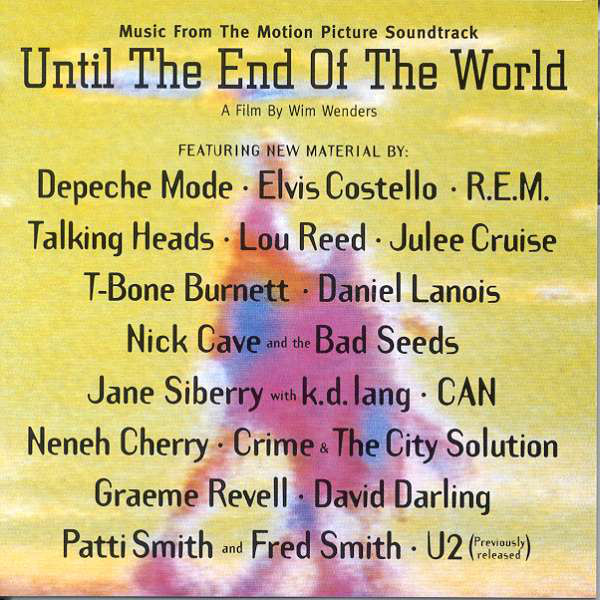
4. “Until the End of the World”–a soundtrack for the Wim Wenders film of the same name. The album features songs–every one of them good–by a number of artists I would never listen to, otherwise, such as Depeche Mode, Lou Reed, and T-Bone Burnett. Even the major bands that appear–such as Talking Heads, Nick Cave, and U2 give it their best. My favorite song, by far, is “Calling All Angels,” performed by Jane Siberry and K.D. Lang.
The musical entity that is Rush is not an easy thing to define. Where many have foundered, there is no reason to assume that I will fare any better, except perhaps that I have access to the actual facts, and some inside information on the motivations. We have always done our utmost to elude any convenient classifications, in spite of those who must affix a label and assign a function to everything in sight, whether they really fit or not.
It may be that the only term loose enough to encompass anything of the concept of Rush, is simply “progressive rock”, for it is to this ideal of enjoyment, integrity, and freedom of expression that we have dedicated ourselves. Our music is aimed at the head, at the heart, and at the abdomen. We can only hope that it finds its mark in yours.
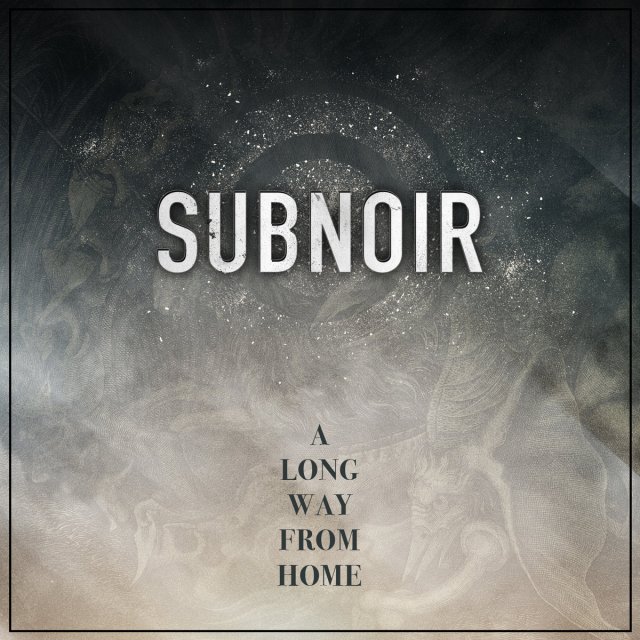
Prejudice. It’s something all of us have. As a product of human error, all of us sometimes unfairly judge based off stereotypes and predetermined opinions, musical or not. I have always had a prominent discrimination against something many people love. That something is metal music. My opinion on metal music was harsh and unfair, quickly dismissing it as shallow and insignificant. To me, metal always consisted of repeated chugging chords and strange animal noises replacing actual singing, with cheesy and soft sections interspersed. I thought of metal as a self-indulgent form of music, that served only to please the ostentatious and overblown bands and their ridiculously loyal fans. It was a brutal criticism of a genre I didn’t know well at all, and it served only to damage my listening experience. The worst part was, I believed myself for the longest time. That is, until I listened to Subnoir’s debut masterpiece A Long Way From Home. Rarely can a single album give you a completely different outlook on an entire genre, but the album did it, and if I have one regret about it, it’s not listening to it sooner.
What makes ALWFH differ from other metal albums A.D. is that it’s simply a way in for anybody who doesn’t warm to metal easily. It effortlessly mixes elements of indie rock, sludge metal, post-rock, progressive, and even ambient into its own unique hybridization of genres. However, it’s still recognizable as metal (and some damn good metal at that): its rich and heavy chords and growling vocals are staples of the genre done one better, and its unconventional song structure recalls progressive metal bands such as Opeth or even Mastodon. However, Subnoir remember something so many metal bands seem to forget: to make their music beautiful. When not pounding out chords so rich they seem tangible, the band are creating softly meandering interludes that are nothing short of gorgeous (if in a subtly menacing way).
In addition to improving on already-established standards of metal, Subnoir constantly find new ways to innovate and expand the genre’s depths. The album is “progressive” in every sense of the word. Subnoir also constantly show restraint on the album; instead of taking the “easy way out” and constantly letting the songs devolve into sludgy jam sessions, the band choose to take longer musical paths and let the songs build themselves to beautiful apexes. The band constantly discard conventional structure in favor of an infinitely more interesting way of building their songs: sometimes subtly disquieting passages will suddenly give way to triumphantly blasting guitar chords, or the band will introduce an unexpected riff, or even give ad-lib nods to other genres. Whatever it is they end up doing, the band always excite and are never predictable, giving the album an impulsive edge.
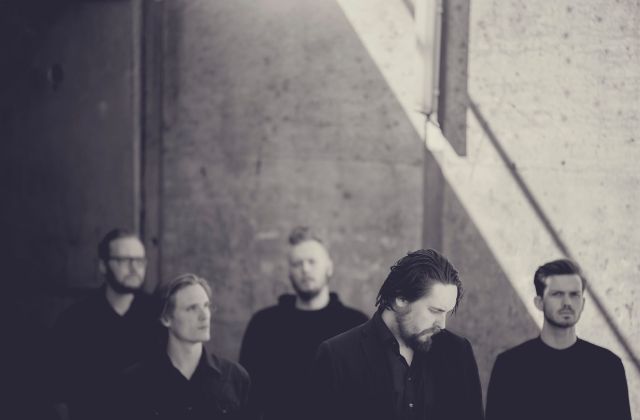
While they show brilliance in the songwriting category, the band’s members also make it known that they sure as hell know what they’re doing with their instruments. Frontman Kenneth Mellum is the best of both worlds: his singing has a gruff yet affecting edge, while his growling never feels forced or laughably indulgent, like so many others do. His voice fits perfectly with the astoundingly rich chords played on the guitars, and, both his voice and the guitars acting as instruments, the pair is one you won’t likely see bettered in almost any metal band. Subnoir excel in other instrumental fields as well: the drumming is consistently strong, while the atmospheric tones that complement the quieter sections are always placed to near-perfection.
A Long Way From Home is not an album that can be taken apart track-by-track. While each track makes for a fascinating individual listen, the album is best taken as a whole. The length of the album’s songs (the album spans eight songs and 50 minutes) may seem a little daunting for the uninitiated, but the album is easily welcoming for anyone willing to give it their undivided attention. The album is a seductive experience, trading in structure and melody for overall sound and tone. It may not be the most accessible metal album on the market, but it should have any listener quickly scrambling for their future works. I know I will.
Until then support Subnoir by checking out A Long Way From Home on Bandcamp.
Seven albums on, Soft Machine was stuck. Founding organist Mike Ratledge was still around, but his contributions had diminished to an ongoing flow of “cosmic tinkles” — minimalist electric piano patterns enhanced by tape delay effects. Keyboardist/reed player Karl Jenkins had taken up the compositional slack, but the music was edging into blandness onstage, no matter how much oomph bassist Roy Babbington and drummer John Marshall kicked up. At Marshall’s suggestion, the Softs decided to freshen their palette with a different solo voice — namely, Allan Holdsworth on guitar.
Recruiting a guitarist for a band that hadn’t had one since 1968 seemed a drastic move, but the gamble paid off handsomely. The young Holdsworth brought guts and brio back to Soft Machine’s sound, digging deep to play off Babbington and Marshall, spitting out energetic improvisations that channeled his idols John Coltrane and John McLaughlin. Equally fired up, Jenkins and Ratledge composed extended suites with plenty of space for blowing, and the Softs hit the road with a completely new set. Archive releases from that year’s world tour such as Cuneiform’s Switzerland 1974 and MoonJune’s Floating World Live (recorded in England in early 1975) amply display the impressive results.
The excitement carried over to 1975’s Bundles, the Softs’ first album for EMI’s Harvest label. The side-long epic “Hazard Profile” is the perfect introduction to the new sound: Holdsworth’s light-speed melodicism nicely complements Jenkins’ classically tinged ruminations; Babbington and Marshall groove relentlessly; Ratledge even provides a skittering synthesizer solo that nods at his salad days. The players are in full flight throughout, locking in over a variety of backgrounds and moods; there’s new room for acoustic interludes (Holdsworth’s “Gone Sailing”) and multi-sectioned proggy workouts (the Jenkins/Holdsworth mashup “Bundles/The Land of the Bag Snake”). Even the “cosmic tinkles” get a shot of adrenalin in Ratledge’s unstoppable crescendo “The Man Who Waved at Trains/Peff” and Jenkins’ lush, spacious “The Floating World.” The future looked bright again.
But, predictably for those who know both Soft Machine and Holdsworth history, it wasn’t that simple; Holdsworth left just as Bundles was released, joining Miles Davis alumni Tony Williams’ New Lifetime. With more touring already booked, the group quickly tapped up-and-coming guitarist John Etheridge (Holdsworth’s suggestion) for the open slot. Etheridge fit the bill, with his spare, muscular style leaving more space for his bandmates to shine onstage.
Recording the next album brought further changes: Alan Wakeman (Rick’s cousin!) joined on hard-charging solo sax, so Jenkins could focus on keys and composing; the new tunes drew sharper lines between tightly arranged prog/classical movements and vamps to improvise over; and Mike Ratledge’s long exodus from Soft Machine culminated in contributions to just two tracks. Despite all these shifts, 1976’s Softs had plenty of energy and appeal, a striking variety of well-crafted textures, space for free blowing on Side Two (dig “The Camden Tandem” and the end of “One Over the Eight”), and first-class playing throughout.
Still, poor record sales and precarious finances took their toll. Wakeman bailed on the eve of another tour, replaced by Ray Warleigh; afterwards, Warleigh and Babbington left, with the bass chair taken first by Brand X’s Percy Jones, then by Steve Cook; violinist Ric Saunders became the second soloist, lending a Mahavishnu Orchestra tinge to the proceedings. By 1977, the band was actively splintering, with members taking lucrative side gigs to make ends meet and a variety of live substitutes (even Holdsworth!) filling in as necessary.
Given the situation, recording Soft Machine’s 1977 Paris gigs was deemed the way forward to another album. Disaster ensued: equipment was held up at customs, safety officials limited attendance, an assistant recording engineer failed to turn up, and Etheridge and Cook’s instruments were stolen after the first night. And yet Alive and Well: Recorded in Paris comes off remarkably well: the new music is solid; the band interplay on “Huffin'” and “The Nodder” is stunningly on point, and even the Giorgio Moroder-style disco funk concoction “Soft Space” (complete with uncredited contributions from Ratledge) clicks. (Note that Esoteric Recordings’ 2010 reissue features an extra disc of live outtakes.)
And then — nothing. Well, nothing except 1981’s Land of Cockayne — in actuality, producer Mike Thorne’s invitation for Karl Jenkins to record with both rock and orchestral forces. Despite a stellar cast (including Softs alumni Marshall, Warleigh and Holdsworth, plus bass legend Jack Bruce) and echoes of past glories like “Panoramania” and “Sly Monkey,” Land of Cockayne is a completely different beast, the most mainstream music ever released under the Soft Machine name. Ultimately, it proved a marker toward the rest of Jenkins’ career, occasionally in collaboration with Mike Ratledge: advertising jingles (including the inescapable-for-a-time DeBeers Diamond music), then the 1990s classical crossover project Adiemus, then a full-blown career as an orchestral composer, culminating with a 2015 knighthood.
It had been a good run, but after one last week-long London residency in 1984, Soft Machine was no more. Still, the legacy of the band lived on in its recordings and in the work of its numerous alumni until …





 Progarchy