The Intensities and Perplexities of [headspace]

Review of [headspace], ALL THAT YOU FEAR IS GONE (Insideout Music, 2016).

Tracks: Road to Supremacy; Your Life Will Change; Polluted Alcohol; Kill You With Kindness; The Element; The Science Within Us; Semaphore; The Death Bell; The Day You Return; All That You Fear is Gone; Borders and Days; and Secular Souls
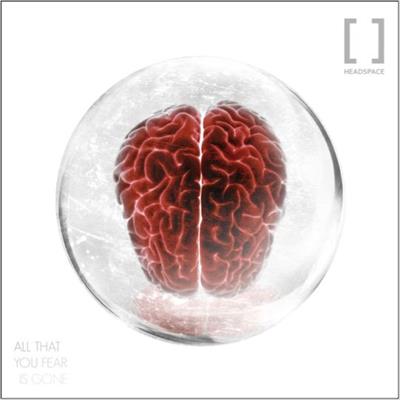
headspace all that you fear
All That You Fear is Gone (Insideout, 2016).

Bread and Circuses rule the day, or so it seems.
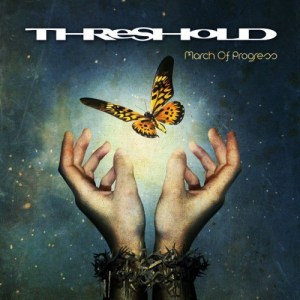
Threshold-March-Of-Progress-Nuclear-Blast-e1353388399435
2012.  One of the best metal albums ever made.

On their second album, ALL THAT YOU FEAR IS GONE, prog metal act and somewhat supergroup [headspace] delve into some rather deep social and cultural problems.  Specifically, the band asks, just 1) what is it that The-Powers-That-Be be do to distract us, and, perhaps more importantly, 2) why do we let them?

Lyrically, this album follows the first album rather closely.  That is, the themes follow logically from before.  If I’m interpreting the lyrics properly on the second [headspace] album, Wilson is even more writing a sequel to Threshold’s excellent MARCH OF PROGRESS (2012).  All three albums, though, radiate a form of individualist libertarianism and anarchy.

Throughout its illustrious and long history, prog rock rarely fails to engage such problems and pose such questions, though it often does so through employment of symbolism, metaphor, and allegory.   On ALL THAT YOU FEAR IS GONE, some symbolism exists, but the lyrics seem rather straight forward: the moral and virtuous individual, though rare, must resist the tyranny of the mass mind, whether that mass mind is found in schools, bureaucracies, corporations, governments, or neighborhoods.

From what little I’ve been able to glean from the internet, Wilson had little to do with the lyrics on MARCH OF PROGRESS, but he wrote nearly all of them for ALL THAT YOU FEAR IS GONE.

Regardless, there’s a lot of young Neil Peart hovering over this album.

And yet, not completely, especially when it comes to matters of religion.  I’ll get to this in a bit.

Musically, the album is glorious prog metal, more driving than Dream Theater but not as much so as Threshold.  And, where Haken might be playful, [headspace] is intense.  Indeed, intense is the most proper and best way to think of the band’s music.  And yet, within such prog metal intensity, there is to be found much variation.  The opening track, “Road to Supremacy,” begins with a heavy Philip Glass minimalism before Wilson’s soaring vocals force us to look to the heavens.  Tracks 2 through 11 mix everything from melodic ballads to folkish auras to classical guitar runs, but always with—here’s that word again—intensity.

What perplexes me and interests me most is the final song of the album, “Secular Souls.”  First, musically, this is an extraordinary song.  Not only does it reveal the wide range and power of Wilson’s voice, but every one of the musicians in [headspace] is in top form.  No hyperbole here.  The best of the best comes out here.  Though there’s not a dud on this album, this is the best song of the album, and it is the perfect conclusion to what the album has built and earned over the previous eleven songs.

I’ve not mentioned the members of the band yet–but it really is a supergroup (a term, I dislike, generally, but it applies here).  In addition to Wilson on vocals–Adam Wakeman on keys; Lee Pomeroy on bass (if you want to be blown away, watch Pomeroy on the Genesis II Revisited DVDs); Pete Rinaldi on guitars; and Adam Falkner on drums.  Sheesh.

Second, the lyrics deal with the mystery of the Catholic Mass.  “What!?!?!,” I thought when I first heard this, scratching my head and furrowing my brow.  Is Wilson mocking the Mass?  Though Catholic myself, I will be the first to admit, I’m a pretty bad Catholic when it comes to actual practice.  Culturally and intellectually, though, I’m pretty much in full agreement with the Church.  Whatever my beliefs about the next world, in this world, I have more respect for the Church—despite its rather blatant and often terrible failings—than for any other institution in existence.  I write all of this not to convince you, the reader, of anything other than this: I take this stuff seriously.

Listening to the final song, one could arguably claim it is as anti-Catholic as it is pro-Catholic.  Given the deep sensitivity with which Wilson sings the words of consecration (the part of the Mass in which Catholics (Anglo- and Roman-) believe the bread and wine become flesh and blood) and the placement of the song as the final song, it seems to me that Wilson is serious.  And, at many levels, this works with the other criticisms of the album leveled in the previous songs.  After all, from the first song on, this album praises in no uncertain terms the righteous individual.

If so, that righteousness ultimately stems from grace, not will.  That grace comes through the rigors of faith.  Just as Rome’s “bread and circuses” failed, so too will our modern equivalents.  The only hope for Rome (or, really, the West) was the rise of an obscure sect from out of the catacombs, a sect preaching loving and sacrifice.  These truths do not change, whether in 312AD or 2016AD.
1280x895
2016, though it could be 1982!

You as well as Damian Wilson might be reading this and, legitimately, thinking: what the hell is Birzer talking about?  If so, I apologize.  But, until I hear otherwise, I’m going to assume that [headspace] embraces both libertarianism and Catholicism.

Wishful thinking on my part, perhaps.

Regardless, this is an excellent album.  How many hours of enjoyment has it given to me already in the first ¼ of 2016?  I couldn’t even count the hours.  I can state this with certainty: I’m listening to [headspace], and I will be for many, many, many years to come.

The Tangent, AfterRicochet

Andy Tillison continues to be brilliant.  Homage to Tangerine Dream.

As Andy describes it:

Andy Tillison (Keyboards) and Luke Machin (Guitar) of THE TANGENT rehearse their Berlin School Electronica section of the Tangent’s set for the forthcoming European Mini Tour in May/June 2014. The tour features the two full progressive rock bands The Tangent and Karmakanic including members of Maschine, The Flower Kings and in London the band will be joined by Theo Travis, longtime associate of Tangent and currently the wind player with the Steven Wilson Band. All tour dates can be found at the Tangent website http://www.thetangent.org.

This piece was recorded by Andy in Yorkshire, England in one take and similarly by Luke Machin in Brighton, England using an internet link. The music is all live with no overdubs from either musician. There are two parallel 4 note sequencers running for the duration of the song in the same way as Tangerine Dream would have used analogue step sequencers. This piece features the (currently) new Roland FA-06 workstation which is responsible for all the keyboard sounds you hear (minus the ebow guitar patch and the Mellotrons) – regardless of which keyboard appears to be being played. The laptop computer in the video is creating these other sounds and the large desktop computer is only switched on because it happened to be switched on. It’s not doing anything. The arpeggios are generated by the FA-06.

Sigh. . .

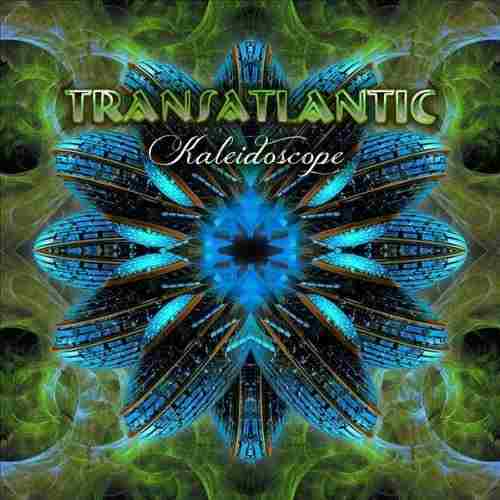
S.T. Karnick’s review of Transatlantic’s latest

transatlantic-kaleidoscope-box-set-cddvd-deluxe-edition-11801-MLB20049782288_022014-OOver a decade ago, American cultural critic S.T. Karnick published a seminal piece on progressive rock and its third-wave vitality in the pages of William F. Buckley’s magazine, National Review.  At the time, he noted especially the greatness of Spock’s Beard.

Karnick is always worth reading, but this (below) will be of particular interest to progarchists–a review of the latest Transatlantic album:

Although progressive rock has had a low profile in the music world since the rise of punk and disco in the late ’70s, it’s still very much alive today, even to the point that there are real stars of this musical style. Foremost among these are the members of Transatlantic, and their latest album, Kaleidoscope, is a production worthy of their major talents. Just as a kaleidoscope creates fascinating images by juxtaposing numerous bits of colors and shapes that contrast with one another, Transatlantic’s Kaleidoscope does so with sounds. Ranging from hard rock to classic rock to folk to classical, the sounds on Kaleidoscope shift and recur in patterns of real beauty.

To keep reading (and you should!), go here: http://www.stkarnick.com/blog/post/transatlantics-kaleidoscope-is-classic-progressive-rock

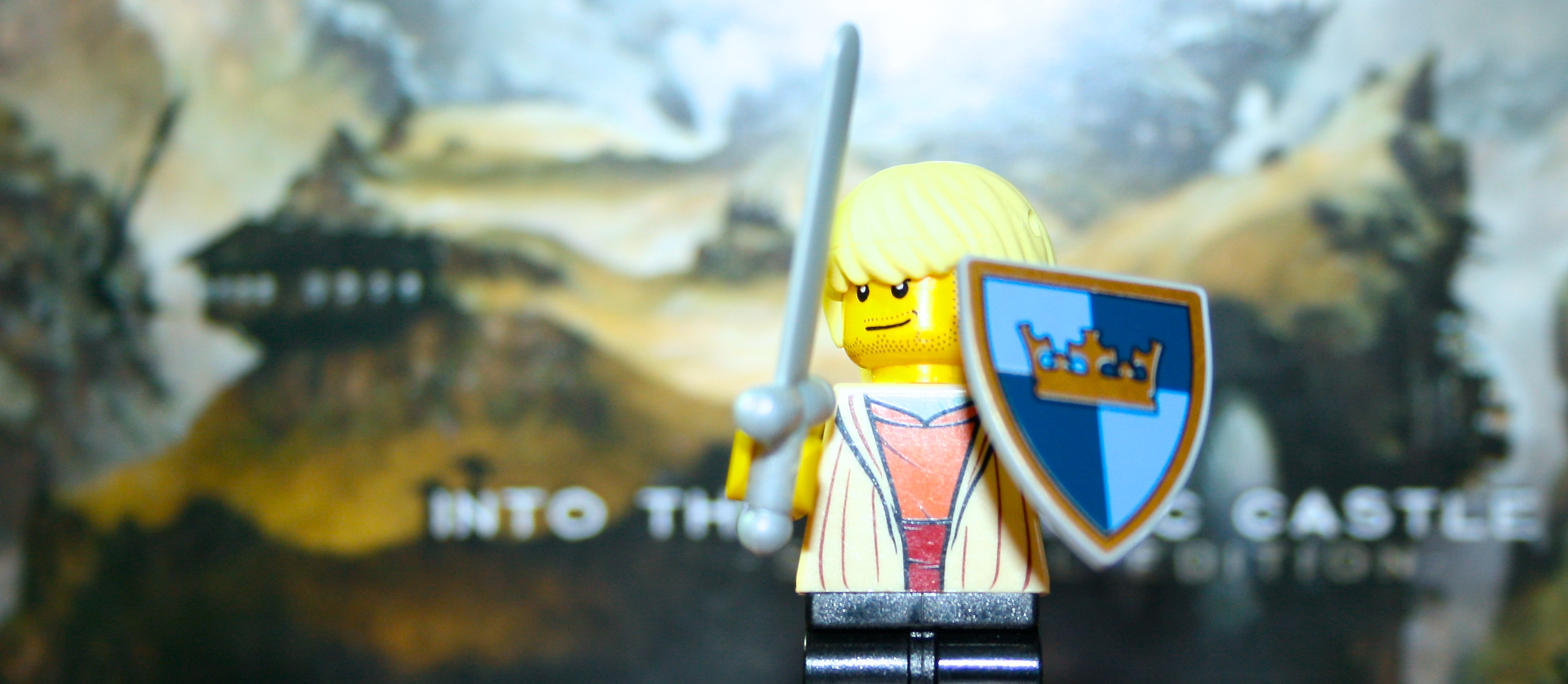
Lego Ayreon

Arjen: Into the Electric Castle.  After an evening of Legos with my five year old, John.

Ayreon Arjen

Anticipating a Lordly Tangent

etagere
Last year’s masterpiece. A masterpiece not just of the year, but of Third Wave prog.

As I posted yesterday at progarchy, Andy Tillison has announced his agreement with Insideout (ongoing, of course) to release the new The Tangent album in 2015.

Inside Out MusicConsidering the sheer gravitas that surrounds every single thing Andy Tillison, this is vitally important news to those of us who love and cherish prog.  For all intents and purposes, Andy is the embodiment of Third Wave prog.  He is at the very least A Mr. Prog if not THE Mr. Prog.  Given Andy’s own political sympathies (though not cultural and artistic ones!) with egalitarianism, I won’t offend him by labeling him Lord Prog.  But, political views aside, why not?  His title is one of merit, not birth.  By birth, he’s the product of the dissidence of dissent.  Amen.  By merit, though: Lord Prog fits.

I’m one of the very fortunate human beings who served as a “beta tester” during the writing of this most current album.  I’m not worthy, but I’m deeply honored.  When I told my wife with all the enthusiasm that any good bubble-gum chewing Kansas boy naturally possesses (Gee, whiz!  Golly!), she just knowingly smiled and said, “See?”

Yes, I’m admittedly rather proud to be a part of the process, no matter how small or unworthy.  After all, how many persons in history have been allowed to participate—no matter how marginally or, God forbid, tangentially (sorry—couldn’t resist!)—with the art created by their personal heroes?  After all, who among us would give much to have sat in C.S. Lewis’s rooms on a Thursday night in 1946, listening to Tolkien read his latest chapter of The Lord of the Rings and meditating upon all that is mythic in this rather fallen world?

This is how I felt when Andy asked me?  I just, more or less, walked around with a stupid grin.

By agreement with Andy—standard for beta-testers in all things—I don’t want to give too much away.  But, I did receive a note from him on Monday letting me know that I was now ok to mention that I’d heard the earliest demo version of the album.  So, I’ll offer a few thoughts, generally spoiler free.  Also, please note: these are merely my observations.  I don’t know if Andy would agree or not.  So, these are my words—right or wrong—not Andy’s.  And, of course, I only heard the demo version, not something even close to the final version recorded with band and in studio.  Still, for those of you who love The Tangent as I have for 11 years now, you know that Andy is incapable of pursuing imperfection.  Even his “demos” have all the meaning and purpose and sense of completion that most artists only achieve in the absolute final moments of a major project, after a 100 people have perfected the thing.  Andy is a Century of Artists possessing one body and one soul.

Here are the notes (somewhat edited—to take out track titles, etc.) from my first listens.

This is brilliant, all the way around.  What I especially like is how much the new album—that is, the songs I’ve heard—contrasts with as well as completes last year’s album.

Last year, Andy produced an album that offered serious social criticism by looking from a fixed point (the actual, physical church—sorry I can’t remember the name right now).  Every thing passed by Andy, and he observed it all.  Then, he went into Google Earth and saw it all from the bird’s eye view.  But, even there, he looked down on the same fixed point, all organized chaos swirling around the church, all clockwork.  And, of course, he tied everything back to the modernism of 1913, noting the good and the bad of modernity.  In the end, next to the criticism, Andy offered a stoic resignation.

With this album (title yet?), he has done something very different.  Rather than looking from a fixed point, Andy’s allowed himself to wonder the globe, to explore, and to experience, even if only in imagination (which, after listening to The Tangent faithfully for 11 years, I know to be rather fertile!).  Though there’s cultural criticism (all good, especially against superficiality and conformity) on this album, there’s also an abundance of hope and playfulness.

Not surprisingly, Andy throws in a lot of jazzy moments—some jazz from the 1920s, some from the 1950s, and some from the early 1970s.  As to the songs, musically and lyrically, I used the following descriptives: sultry, epiphanic, triumphal, gracious, hopeful, joyous.

So much cooler than Nieztsche.  Andy, a god among gods.
So much cooler than Nieztsche. Andy, a god among gods.

So, from my perspective, the genius has revealed his talent yet again.  I, for one, am thrilled not just because I got to play the smallest of roles in its creation, but, far more importantly, because Andy’s talent continues to humble me.  And, especially, he continues to remind me that excellence, brilliance, and–dare I say it?–love can change the world.

***

If you’re interested in joining the official discussion regarding the new The Tangent album, Andy has created a forum here:

https://www.facebook.com/groups/alltangentmembers/

***

Progarchy has looked at Andy’s work a number of times.

COMM

https://progarchy.com/2013/02/02/comm-the-tangent/

The Music That Died Alone

https://progarchy.com/2014/02/10/tupvr-13-the-tangent-the-music-that-died-alone/

A Moveable Feast

https://progarchy.com/2013/08/20/a-moveable-and-glorious-feast-letagere-du-travail-by-the-tangent/

Snow Goose is No Turkey

https://progarchy.com/2013/12/23/snow-goose-is-no-turkey-a-new-tangent-release/

The Big Big Tangent

https://progarchy.com/2013/12/11/the-big-big-tangent/

The Genius Rages

https://progarchy.com/2013/06/11/the-genius-rages-the-tangents-le-sacre-du-travail-2013/

Is This The End of Rock? Maybe, Maybe Not. An Editorial.

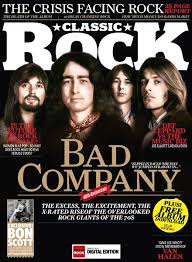
classic rock march 2014Classic Rock Magazine’s most recent issue (March 2014) has a fascinating article/editorial asking, “Is This the End of Rock”?  The website has reposted it as well–http://www.classicrockmagazine.com/blog/is-this-the-end-of-rock/.

Well written, Scott Rowley’s article laments the decline of the popularity of rock—as there seems to be little new talent, few companies, and even fewer cd shelves promoting and selling rock music.  In particular, with the decline of genre-radio, there’s no precise way to get a “mass movement” behind a band, a song, or an album.

Such laments, of course, can be heard in the book publishing and movie-making industries as well, as the author of the piece readily admits.

In some ways, I can sympathize with the article’s author, but only in a a very few ways.

I grew up with an amazing radio station, KICT-95FM, out of Wichita, Kansas.  I started listening to T95 sometime in 1978 or so.  I was 10.   As a teenager, I would rather listen to it or to my albums than watch TV, any day.  I even had the great privilege of having roughly six years of working for classical, rock, and news radio as a DJ and as a news reporter.

KICT95 and my albums were the soundtrack and the background of my life.  For a long time in my life, radio was everything.

Whether I was delivering pizzas or writing debate briefs (I was a high school debater–yes, I’m sure you’re shocked!), I always had music playing.  Though I now teach professionally, little has changed.  I would still rather listen to good music and write than watch TV, though I’m, admittedly, a big fan of science fiction.  Our house and my home and work offices always have music playing.  And, of course, I edit this website, dedicated to music.

Technology and a vastly expanding digital market has changed everything over the last two decades.  Steve Jobs, in particular, decentralized the world of media.  We no longer have to look to Arista or to CBS or to MGM to provide entertainment, all based on a corporate profit model.

As with all decentralization, it means harder work at all levels.  Bands will have to find time to write, to record, to tour, and to promote.  Fans have harder work as well, making choices about what to buy, how to search it out, and how much time to promote it.

In other words, in music, we’ve gone from from the equivalent of a world of Walmarts and Targets back to the “ma and pa dime stores”, the local soda fountains, and the corner groceries and drug stores.

Rock, as a genre, consequently, could follow two paths.  It could follow jazz in the late 1980s and basically die out or become so specialized as to become, sadly, merely obscure.

The other path is to follow prog, and the ways paved, in the mid 1990s, by Marillion, Spock’s Beard, and the Flower Kings.

The loss of CDs, centralized, corporate music making, and genre radio has been a huge boon to the creativity of prog as a genre.  We proggers—fans and musicians—have formed small but highly inclusive communities, using the internet as a means of communicating, sharing, discussing, debating, and promoting our favorite bands.  I know how frustrating it is for such great groups as Big Big Train, The Tangent, Cosmograf, TFATD, Leah, and others to get a market.  I would give much—and have, especially given my own limited financial resources and time—to promote progressive rock wherever and whenever possible.  I would love Greg Spawton or Andy Tillison to do nothing all day but write music, never having to worry about a 9 to 5 job.  If I had the financial means, I would gladly serve as a Patron, allowing them to do nothing but write and produce.

But, objectively, we also have to admit, as a genre, we proggers (fans and musicians) have done really, really well over the last twenty years.  If we want art as expression and not as market campaigns—forgive me, Mr. Peart—we’ve succeeded.  Rather than a Walmart or Target (is it Tesco in Britain?) of prog rock, we have lots and lots of wonderful, small-town stores and boutiques, intimately connected to their customers.  Rather than a Coors or a Budweiser, we have in the prog world, neighborhood after neighborhood of locally-produced, finely honed craft beers.  Rather than a General Motors or Ford, we have folks making model cars in their garages.  Well, you get the idea.

And, those prog labels that have done beautifully–such as Insideout, Radiant, Kscope, Bad Elephant–have done so precisely because they have allowed for the flourishing of creativity and have promoted it, rightfully, as the creativity that it is.

As with all changes in the market and technology, there are those who will adapt, create, and succeed, finding a place.  There will also be those who—out of failure to understand or sheer bad luck—fail.  If mainstream rock wants to succeed as a genre, it needs to look to prog, not jazz, as a model.  It needs to accept decentralization and intimate relationships with the fan base.

As proggers, we have almost everything to praise.  Rather than lamentation, we should be celebrating.  The old taskmasters are gone, and we’re–the small labels, the musicians, and the fans–now in charge.

Transatlantic Covers a Yes Classic: And You and I

Nice to wake up to this, this morning.  A beautiful rendition of a Yes classic.  Morse’s and Stolt’s voices especially add to the atmosphere of the song.

https://soundcloud.com/officialinsideoutmusic/transatlantic-and-you-and-i/s-RbydJ

Transatlantic’s new album out late January, 2014 (Insideout).

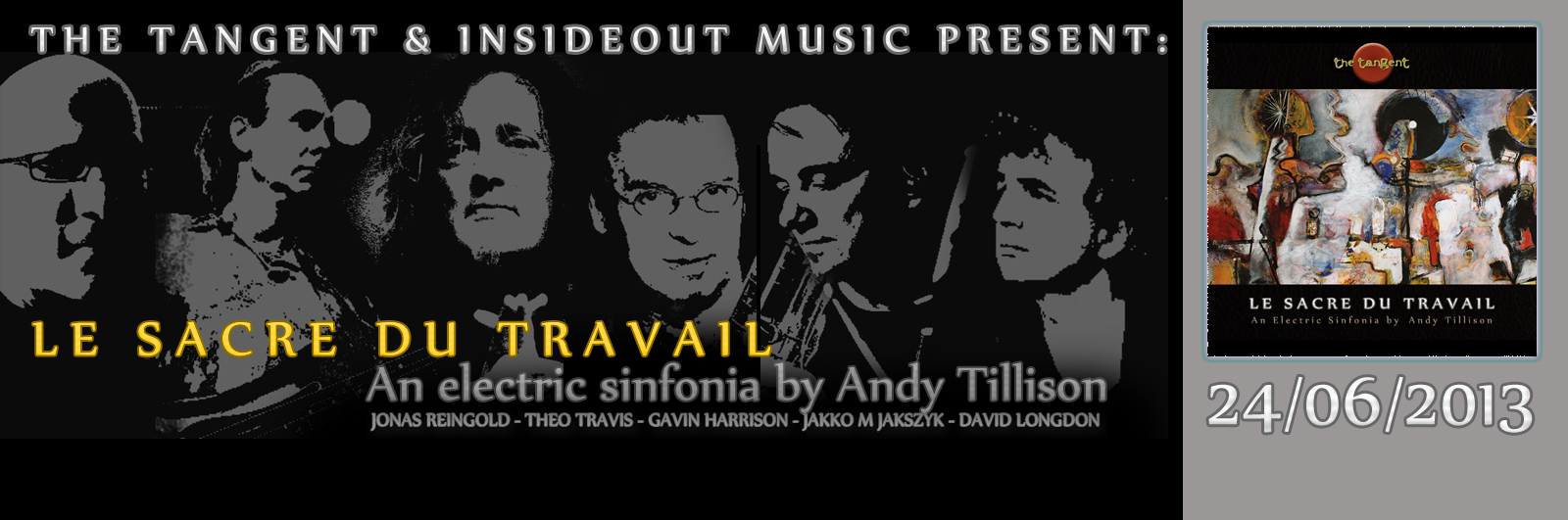
The Genius Rages: The Tangent’s Le Sacre Du Travail (2013)

group ANNOUNCEMENT

Genius

Andy Tillison is a genius.  It must stated as bluntly as possible.  Tillison is a genius.  He’s a musical genius and a lyrical genius, but he’s also just a genius genius.  Actually, this might seem redundant, but it’s not.  Only genius could properly modify genius when it comes to Tillison’s art.

As I mentioned in a previous post on our beloved site, Progarchy, anything Tillison releases is not just an event, but a moment.  A real moment, not a fleeting one.  A moment of seriousness and reflection.

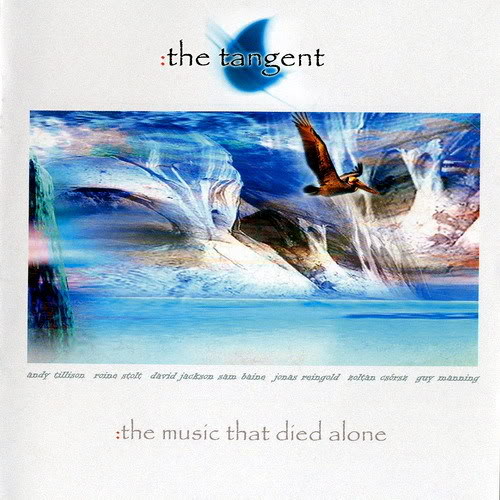
From the first I listened to The Tangent’s The Music That Died Alone, a full decade ago, I knew there was something special going on.  Not only did the cover art entrance me,  but the very depth and seriousness of the music captured my then 35-year old imagination.  I felt as though Tillison was speaking directly to me, asking me to remember the greatness of the musicians who came before 2003, but also inviting me–in a very meaningful fashion–to move forward with him.

cover_2458173122009The Music That Died Alone really serves as a powerful nexus between past and present, present and future, up and down, and every which way.  Only the evocative power of the lyrics match the classiness and free flow (though, we all know what makes something seem free is often a highly disciplined mind and soul) of the music.

At the time I first heard them, I mentally labeled The Tangent a “neo-Canterbury band,” but I was too limited in my imagination, and I would discover this very quickly.  Indeed, each subsequent The Tangent album offers new pleasures and paths for adventure, but always with that power of that Tillison nexus, connecting the past and the future with beauty.

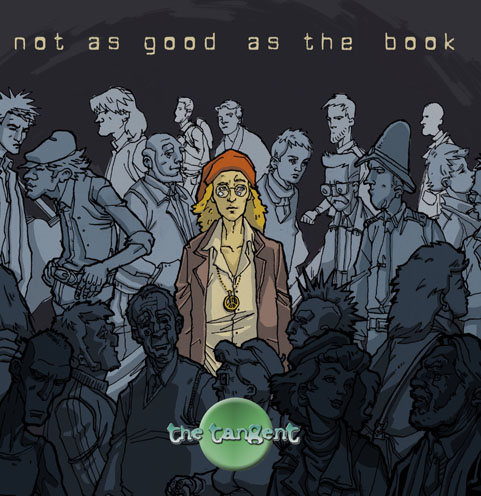
Tillison makes this connection literal in his very fine novella, “Not as Good as the Book: A Midlife Crisis in a Minor.”  The dedication lists close to 100 names, including numerous members (first names only) of the members of various bands from Yes to ELP to The Flower Kings to Spock’s Beard to XTC and to authors such as Arthur C. Clarke and J.R.R. Tolkien.  None of this is contrived.  Just pure Tillison expressions of gratitude.not as good

Privileged (well, blessed, frankly, if you’ll pardon a blatant religious term) to receive a review copy of the new album, Le Sacre Du Travail (Out officially June 24, 2013 from InsideOut Music), I dove right into the music.  Full immersion.  With every album, Tillison has only improved.  Each album has bettered the already previous excellent album with even more classiness, more intensity, and more meaning.  Not an easy feat in this modern world of chaos and consumerist fetishes.

With this album, though, Tillison has moved forward the equivalent of several The Tangent albums.  Again, to be blunt, the album is mind-boggingly good.

Easy listening?  No.  Of course not.  It’s Tillison, it’s prog, and it’s excellent.  What part of those three things suggests easy.  No excellent thing is easy.  Can’t be.  It wouldn’t and couldn’t be excellent if easy.

Satisfying listening?  Oh, yes.  A thousand times, yes.

For one thing, Tillison has brought together some of the finest artists in the business.  I was convinced of the potential greatness of this new album when I first heard David Longdon (in my not so humble opinion, the finest voice in rock today) would appear on the album.  But, add a number of others in: Jonas Reingold (The Flower Kings), Jakko Jakszyk (Level 42), Theo Travis (Soft Machine), and Gavin Harrison (Porcupine Tree).  And, it doesn’t stop here.  Add Brian Watson (DPRP.net)’s spectacular art work and the cool dj voice of Geoff Banks (Prog Dog show).  Ok, this is one very, very solid lineup of the best of the best.

1913

Ten years ago, Tillison released the first The Tangent album.  100 years ago, Igor Stravinsky released what was arguably his masterpiece and certainly one of the finest pieces of music of the twentieth-century, The Rite of Spring.  While The Rite of Spring hasn’t pervaded our culture in the way the fourth movement of Beethoven’s 9th Symphony has, it’s a close second.  Every person, an appreciator of music or not, knows at least part of The Rite of Spring.

Imagine for a moment 1913.  It was, by almost every standard, the last great year of the optimism of western civilization.  Technology upon technology had produced innumerable advancements, almost everyone in the western world believed in unlimited progress, and even devout Christian artists (such as Stravinsky) had no problems embracing the greatest elements of paganism and folk culture.

In almost every way, Stravinsky explored not only the folk traditions of his era, but he embraced and, really, transcended the modernist movement in music.  He bested it.  His Rite is full of tensions and dissonance, but each of these is overruled and corrected by harmony and emergent joy.  The Rite, no matter how pagan, also has deep roots in the Judeo-Christian and Greco-Roman traditions.  The Rite–the ritual, the liturgy–has been a part of western civilization since the pre-Socratics debated about the origins of the cycles of the world and history: earth, water, air, or fire.

MARTIN STEPHEN COVER PIC2013

Imagine for a moment 2013.  Well, ok, just look around.  Technology remains exponential in its growth, but few would praise the development of the Atomic Bomb, the gas chamber, or the aerial bomber.  But, then, there’s the iPod.  And, unless you’re Steven Wilson, you probably think your iPod is ok.  Certainly better than an Atomic Bomb.

Optimism?  No.  I don’t need to go into detail, but, suffice it state, T.S. Eliot might very well have been correct when in the late 1940s he claimed the western world in an advancing stage of darkness:

the tower overthrown, the bells upturned, what have we to do

But stand with empty hands and palms turned upwards

In an age which advances progressively backwards?

The U.S. and the U.K. are currently waging numerous wars, and there seems to be no end in sight.

The Rite of Work

As with the Stravinsky of 1913, the Tillison of 2013 surveys the cultural landscape.  Unlike his Russian counterpart, the Yorkshire man finds little to celebrate in this whirligig of modernity.

The “good guy anarchist,” as he described himself in a recent interview (and, not to be too political, but more than one progarchist would be in great sympathy with Tillison on this point), Tillison observes not the Rite of Spring, but the liturgy of work.  We get up, we commute, we sit in our cubicle, we commute again, we eat, we drink, we have sex, we watch a little t.v., and we sleep.  The cycle beings again every Monday, Tuesday, Wednesday, Thursday, and Friday.  Who made this deal, Tillison wisely asks.

Throughout it all–pure prog interspersed with very modernist musical elements from time to time–Tillison references much in our modern folk and popular culture, including The Sound of Music and Rush (2112):

In a Rush T-shirt, pony tail, 2112 tatooed on his hands

He’s a star through thick & thin

But he still gets that data in

A modern day warrior, today’s Tom Sawyer is a clerk

He’s a meta for disillusion

He’s a metaphor for life

But, interestingly enough, Tillison does all of this as a modern-day St. Thomas the Doubter.

But I don’t believe them, not ’til I see it

Until I put my finger in the holes

In every word, the lyrics rage against the conformity demanded in 2013–demanded by our corporations, our neighbors, and our governments.  What have we become. . . mere ants, living in a world of bird dung.  Certainly, whatever humanity remains has been given over to some institution radiating power.

And, yet, still somewhat in the persona of St. Thomas, Tillison asks us to reconsider our day-to-day rituals and liturgies.  Is it worth it that we squander what little time we have in the name of the mindless and soulless cycles of modern life?  By far the most powerful moment of an album of immense power (power in the good sense; not in the domineering sense):

‘Cos you can’t take it with you

There’s no luggage allowed

No you can’t take it with you

No matter how rich or proud

Your kids will sell it off on Ebay

For god’s sake don’t waste their time

‘Cos you can’t take it with you

You can leave just a little bit behind.

Summa

Well, what an album.  What an artist.  What a group of artists.  If any one ever again complains about the superficiality of rock music, consider handing them a copy of this CD.  No superficiality here.  Only beautiful–if at times gut wrenching–meaning.

Keep raging, Mr. Diskdrive.  Rage on.

To order the album (and you should, several times!), go here: http://www.thetangent.org/