
Tag: Rush
Dream Theater (Best of 2013 — Part 3)

Coming in the #3 slot (in alphabetical order) on my Best of 2013 list is this self-titled splendor:
Dream Theater
Back in August, we got excited when we first heard the preview of “The Enemy Inside” (which has gone on to receive a Grammy nomination).
Then, in September, the band treated us to a full album stream.
My favorite tracks include the glorious “Along for the Ride” and the amazing “The Looking Glass” and the scintillating “Surrender to Reason“…
But let’s be real. Whatever track you are listening to at the moment becomes your favorite!
This is a powerfully good album. Surely everyone who knows and loves Rush can recognize the unmistakable musical excellence at work here.
What a thrill to hear Dream Theater at the top of their game, showing us their very best!
Exactly the sort of prog metal that I like best is found here on this upper-echelon release.
Congratulations, gentlemen.
With your musical panorama, you have given us what prog gives best.
Namely, the bigger picture.
Forthcoming Book on Rush
Thanks to Steve Horwitz, man of many talents, for letting me know about this forthcoming book, EXPERIENCING RUSH, by Darrell Bowman.
It looks stunning. Here’s a long writeup about it from the author’s website:
Power Windows: Rush and Excellence against Conformity
It’s the power and the glory
It’s a war in paradise
It’s a cinderella story
On the tumble of the dice
—Neil Peart, “The Big Money,” 1985
***

Power Money
It would have been impossible to avoid Power Windows in the Fall of 1985, I being a senior in a Kansas high school, even if I had wanted to.
And, I didn’t.
Every where I turned that fall—in ways far more than any other Rush song since Tom Sawyer—I heard “The Big Money.” MTV played the video repeatedly (we didn’t have MTV, but friends did), and our wonderful local radio station—KICT95 out of Wichita—had it in constant rotation. Of course, being a massively obsessed Rush fan since first encountering them in 7th grade detention, I was thrilled to see Rush get so much attention.
Sadly, though, I became overly saturated with “The Big Money.” It’s the only Rush song that has ever grown tiring for me. For years, it stood up there with “Stairway to Heaven.” I just shut both out of my mind, flipped the radio dial when either played. As Power Windows is one of my all-time favorite albums, this has been rather difficult for me to accomplish. For nearly two decades, though, I merely started the album with the second track, “Grand Designs.”
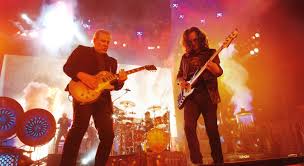
Then, on September 18, 2012, at the Palace in Auburn Hills, Michigan, standing next to my good friend, Dom, Rush played it as the second track of the Clockwork Angels tour. Straight from Subdivisions to The Big Money to Force Ten and then, three songs from Power Windows in a row: Grand Designs; Middletown Dreams; and Territories. Half of the album! Freaking brilliant. Poor Dom. He’s only a college student, and he had to hear my sound byte reminiscences for every track. I was reliving a huge part of my high school experience.
Seeing “The Big Money” live made me realize why that song is so wonderful. Alex, Geddy, and Neil brought immense energy to it (and Force Ten, as well—the most rocking version I’d heard from Rush; Alex even played one of his best guitar solos for this song on this tour). Suddenly, whatever tiredness and reluctance I’d felt about “The Big Money” over the last several decades dissipated at the moment the opening few notes began. Add video of spinning and printing dollars as well as the Three Stooges, and I was sold. (Sorry, bad choice of words). But, really, everything was perfect—the drumming, the bass, the guitar solo. And, of course, the Austin Powers moment at the end: “One million dollars!”
Now, as of the end of 2013, I’m back in and with those autumn days of 1985. Let “The Big Money” reign. I’ve also re-discovered my love of Led Zeppelin 4.
But, the point of the post is not to praise “The Big Money” specifically, but to remember Power Windows. I’m happy to praise both! And, frankly, I’ve been offering praise of Power Windows since it came out, but only with the caveat that The Big Money is a weak point. Now, in 2013, I realize how wrong I was. The whole thing deserves praise, and one cannot separate any song from the whole. It is what it is, and it’s a thing of immense beauty.
Power Jazz
In Contents Under Pressure (by Martin Popoff), Neil argues that he sees Power Windows and Hold Your Fire as two sides of the same coin, separate from Grace Under Press, but also from Presto. Certainly, there’s an argument to be made here. In terms of bass and drums, Power Windows and Hold Your Fire, have the most distinctly jazz feel of any Rush albums. At times, taking the rhythm section alone, the listener might be enjoying a Chick Corea album from the same time period. In production, though, Power Windows comes across as rather raw power, while Hold Your Fire feels rather lush. Whatever similarities—and they are many—the albums seem very different to the listener. Again, as Neil states, the first is an extrovert, while the second an introvert.
As a fan, though, I tend to hear consistent themes in Moving Pictures through Hold Your Fire. Moving Pictures stresses the need to be an individual against the crowd; Signals warns that being such an individual will cause pain, but is worth it; Grace Under Press deals with recovery from such persecution (sometimes in the hallway, sometimes in the concentration camp); Power Windows deals with excellence against conformity; and Hold Your Fire pleads for restraint in the now comfortable individual looking at those he’s made uncomfortable.
Granted, these themes are, for me, autobiographical, in the sense that I grew up with them, and each album plays a key role in my own understanding of the world. That is, these themes might not have been intended by Peart, and, admittedly, perhaps I’m alone in seeing them this way. As I’ve mentioned before, Neil Peart has influenced me as much as anyone in my life—ranging from Plato (I teach western civ for a living, so allow me a little pretense here) to St. Paul to my mother. Plato-Paul-Peart!!! The three Ps.
For me:
- Moving Pictures: 7th Grade
- Signals: 9th Grade
- Grace Under Pressure: 11th (Junior) Grade
- Power Windows: 12th (Senior) Grade
- Hold Your Fire: sophomore year of college.
 Power Themes
In terms of wordplay and poetry, Neil is at his best on Power Windows.
In The Big Money, Peart considers the good and the evils of what we now refer quite commonly as “Crony Captialism.” As with much of this album, the shadow of cultural critic, socialist-turned-libertarian and anti-war novelist, John Dos Passos, hangs over The Big Money. Dos Passos also called his style “The Camera Eye.” 1936’s The Big Money concluded Dos Passos’s famous U.S.A. Trilogy. Much like Peart, Dos Passos traveled incessantly, offering a fine cultural criticism over everything he surveyed.
Grand Designs, track two, comes from the final part of the “District of Columbia,” trilogy published by Dos Passos in 1949. It examines individual genius in line with nature and against nature. In the conflict of style and substance, Peart is also referencing the grand Anglo-American poet, T.S. Eliot, and his 1925 poem, The Hollow Men.
The third track, Manhattan Project, anticipates the history-telling prog of Big Big Train, offering a rather neutral analysis of the development of the first three atomic bombs. Interestingly enough for Peart, he continues to harken back to religious language and themes, specially Catholic, referring again and again to “a world without end.”
Marathon echoes a number of other Peart songs, but it does it with extraordinary energy. A celebration of the battle of the Athenians over the Persians in the Fifth Century, BC, it also, of course, deals with the virtue of fortitude.
Territories offers a scathing criticism of propaganda, nationalisms, and nation states. In his criticisms and in the clever examples, Peart echoes the anti-statism of Mark Twain.
Taken, most likely, from the famous 1925 sociological report of Muncie, Indiana, entitled Middletown. Not surprisingly, given the state of sociology in the 1920s, the report considers the every day habits and desires of rural Americans. In his own Middletown, Peart examines the life of rural America as well as the dreams of those wishing to escape, generally unfulfilled.
Emotion Decter is one of Peart’s most Stoic songs, offering something against both the extremes of optimism and the cynicism of despair. In the end, in a common Peart theme, man must restrain his reaction toward others, recognizing that one does not need approval of another should integrity already exist in the original act. A true man judges himself.
The final and most proggish/artistic song of the album is Mystic Rhythms. Rush ends with wonder at the intense diversity of the world and of all of the universe.
Power New Wave
Finding a producer for Power Windows proved difficult at first. After replacing the long-lived Terry Brown (every album up through Signals) with Peter Henderson (Grace Under Pressure), Rush found their third producer in Peter Collins, best known for his work with Nik Kershaw and Blancmange. Making the connection to Britain even stronger, Rush recorded much of the album at Abbey Road Studios and in parts of London. They also worked with Anne Dudley of the Art of Noise, who directed the strings.
Though Power Windows rocks with full force throughout almost all of the album (the final track, Mystic Rhythms, being the very proggy standout), it has also a strange New Wave feel to it. Ok, this needs explaining. Neil and Geddy sound as though they’re playing in a rocking jazz band from the 1980s, but Alex sounds as though he could be playing for The Fixx. Alex, like Jamie West-Oram, seems to be creating immense but punctuated guitarscapes. One of the things that makes Power Windows so effective, is this strange but powerful synthesis of jazz bass and drums with New Wave guitar. In ways that Drama (some of the same production crew worked on both) attempted to be for Yes in 1980, Power Windows succeeds at bridging prog, rock, New Wave, and jazz. I think Drama is a fine album (in fact, a favorite), but I think that Power Windows is truly successful at this attempt to bridge genres. Perhaps, of course, Power Windows couldn’t have come about without Drama first—but an exploration of this would be well beyond the intent of this post.
Suffice it say, I love both.
Power Sources:
- Martin Popoff, Contents Under Pressure (2004).
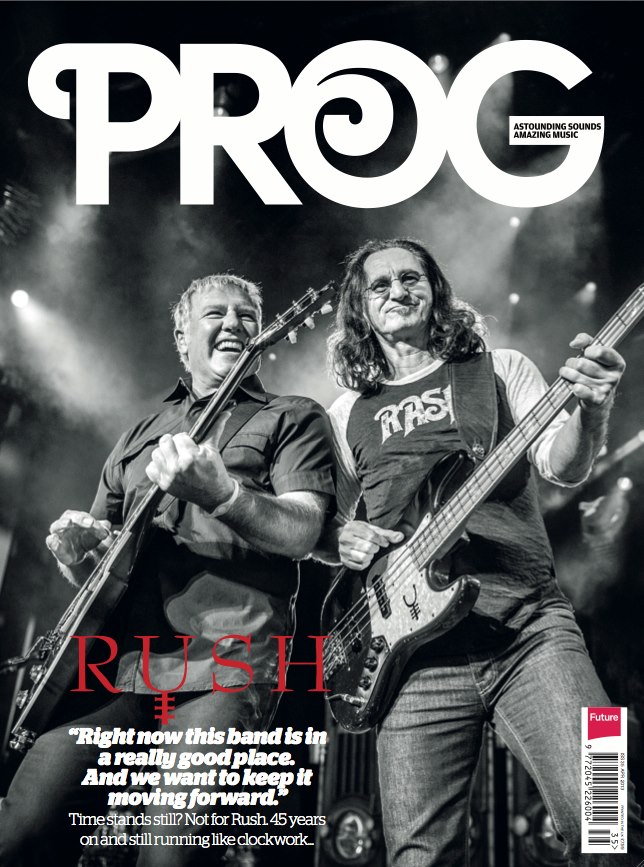
- Jerry Ewing, ed., Prog #35, Special Edition (April 2013).
- Neil Peart, Roadshow (2006).
- Power Windows liner notes (1985).
- Jim Berti and Durrell Bowman, Rush and Philosophy (2011). This book includes an essay by the brilliant economist (and philosopher), Steve Horwitz.
2013 – The Pax Progorama
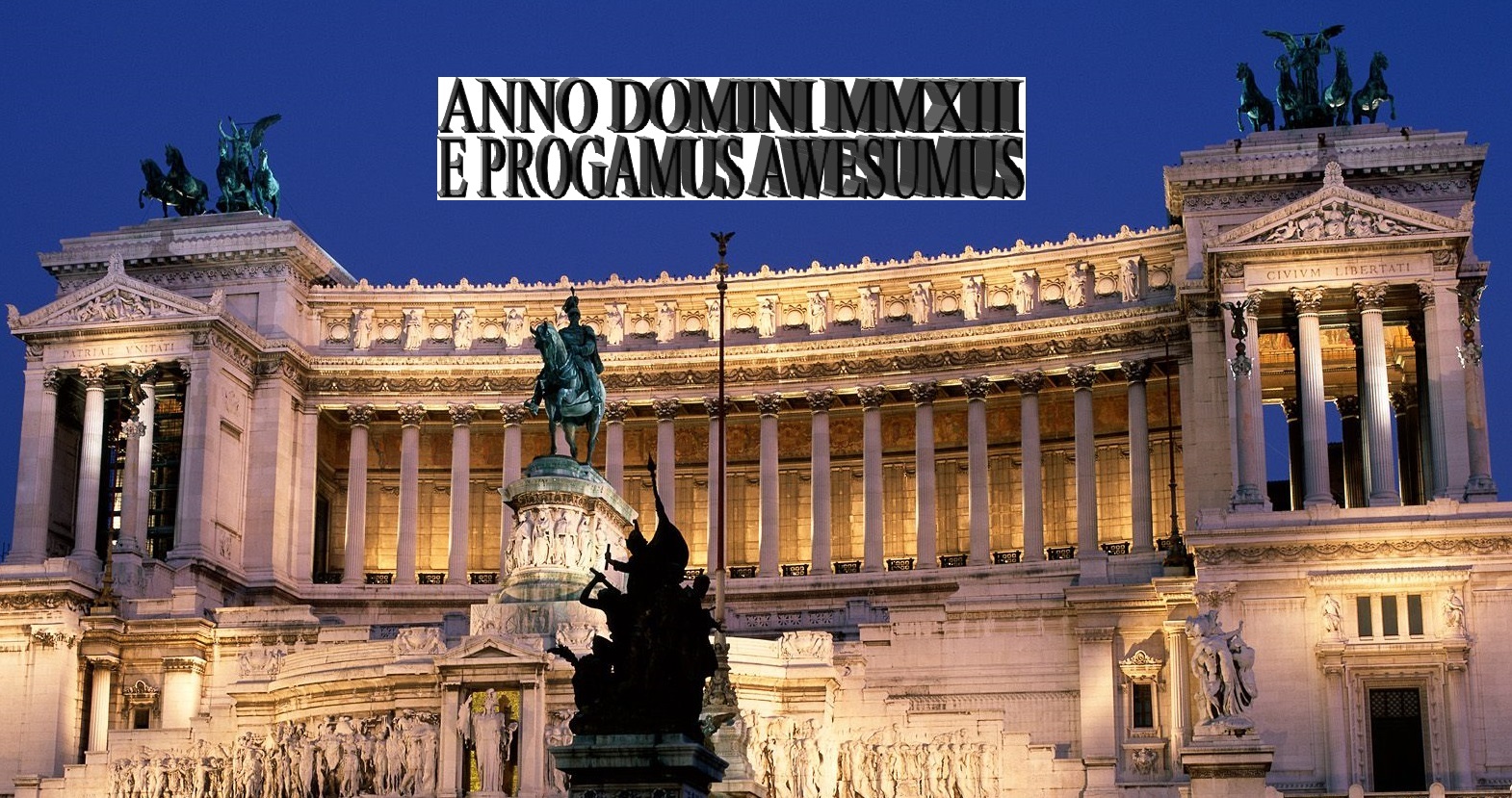
While “pax” literally translates as peace, people generally use the term “Pax Romana” to refer to a golden age of Imperial Rome. Well, if that’s the case, then the year 2013 has left no doubt that we are in another golden age for progressive rock.
Now, you will have excuse me a bit for the “Progorama” thing in the title, but that’s the closest thing to alliteration that came to mind. “Pax Progtopia” doesn’t roll off the tongue quite as well. There were a few other ideas I had, and none of them were very good … “Pax Progorama” worked the best, ok? Hyphens added upon request.
The other question is this – do I have the best, most appropriate historical metaphor? Could the current era be just as well described as a prog renaissance? Probably. We could liken the 1970’s as the original Pax Prog-O-Rama … the punk rockers as the barbarians who finally toppled a weakening empire … the 1980’s and early 1990’s as the Dark Ages (with of course, the neo-proggers being the Monks/Byzantines that preserved the flame of Western Civilization) … the rise of the Internet being equivalent to the Gutenberg printing press … and the late-1990’s and beyond representing the Renaissance and the spreading of new ideas, knowledge, and in our case here – art. Maybe I should go back and rewrite the beginning of this post. Then again, as Theodoric of York, Medieval Barber says …. naaaaahh (start at the point about where 1:00 minute remains …).
No matter what metaphor you choose, the resulting conclusion is still the same: Anno Domini 2013 was an incredible year for progressive rock, quite possibly the best ever. I don’t say that lightly. This year also gives weight to the opinion (mine, anyway) that our current Golden Age of prog has surpassed the previous one – and I don’t say that lightly, either. The past few years, and 2013 in particular, have been nothing short of an embarrassment of riches for prog lovers. Just how good was 2013? Let’s take a look. Continue reading “2013 – The Pax Progorama”
My best of, must owns, of 2013
 I realize it’s not the end of the calendar year, but it is the second day of Advent, and it seems like a proper time to list what I love about the music of this past year.
The year, frankly, has overwhelmed me—but all in a good way. As someone who has followed prog rather consciously since about 1981 (age 13) and has been exposed to it since about 1971 (age 3), I love the genre. Frankly, I love many forms of music, including classical, opera, and jazz. I’ve never learned to appreciate anything about country and rap, and, given that I’m 46, such prejudices will probably remain.
Sometime around age 22 or 23, though, I realized that financially, I was going to have to chose a genre if I wanted to collect and listen with any seriousness. Perhaps it’s the slight OCD or some other quirk I possess, but I’ve never liked doing any thing half way. In fact, as my maternal grandparents taught me—whether in taking care of the yard or cooking a meal or baking a loaf of bread or even in helping a neighbor—there’s no sense at all in doing something only partially. In fact, to do anything partially was to slap yourself, integrity, and God in the face. If you’re going to do something, do it well. In fact, do it with excellence, if you possibly can.
So, if I wanted to throw myself into a genre, and not do it halfway, I had to choose between jazz and prog. I love poetry too much, so prog seemed the best genre, as I find much to appreciate in fine lyric writing. And, even in psychedelic lyric writing, there’s a joy to figuring out the puzzle of imagery.
And, so choosing prog, I realized soon after that I’d chosen a genre made up a lot of folks like myself—a number of OCD perfectionists! And, I found that almost everyone making prog was (and is!) deeply committed and intelligent. And, so were (and are!) the fans. No one who loves the superficial of life becomes a prog musician, artist, or aficionado.
The problem was, of course, that when I was age 22 (1990), there wasn’t a lot of prog happening. At least not much new was coming out. Yet, prog could be found all throughout the rock world—though not always in the likeliest places. As a genre, though, prog was probably at its lowest point in terms of what was being released. Yet. . . yet. . . we were only a few years away from Brave and The Light and The Flower King . . .
Flash forward 23 years. Holy schnikees. What a year 2013 has been. Really, could it be better? Doubtful. And, as I mentioned in my Preliminary Awards piece a few days ago, an argument could be made that we’ve reached the pinnacle, the Mount Everest of Prog! I know, I know. Eric Perry is going to slap me down for being hyperbolic. Damnit, Eric, I’m from Kansas! We’re not exactly subtle!!!
Phew. Ok, I feel better getting all of that out.
Two quick comments. First, these are in no order, other than alphabetical. Frankly, these albums are just too good to allow my own will to separate one from another by “better or better.” With one exception. I would think any lover of the genre would want to own each of these. Second, there are several albums that I suspect are wonderful, but do to my loan limitation because of family and work, I didn’t have time to absorb. This latter list includes releases by Sam Healy (SAND is en route to the States as I type this), Mike Kershaw, Haken, Francisco Rafert, Ollocs,and Sky Architects, I apologize to these artists, as they took the time to contact me, and I was unable to give them credit where credit is due. In due time, I will, however.
***
So, the list of the must-own cds of 2013, with two important exceptions.
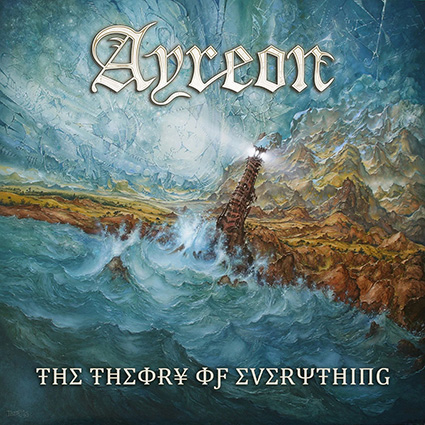
Ayreon, The Theory of Everything. I hope to offer a full review of this soon, and I think fellow progarchist Tad Wert will as well. The earlier series of Ayreon albums—possibly and arguably one of the most complex science fiction stories ever written—seems to have become self contained and at an end. Now, if I’m understanding the lyrics from Arjen Lucassen’s latest correctly, Ayreon has become a project about exploring the self rather than about the self exploring the universe. This is not easy listening, in terms of music or lyrics. The former is a shifting feast of glory, no idea lasting more than two or three minutes before gorgeously transforming into some new idea, and the latter is deeply introspective and intelligent. I’ve never had the chance to meet Arjen, but I would guess that he must be about as interesting as possible. For him to keep such a huge range of ideas in one album, musically and lyrically, screams brilliance. I only have one complaint with this release. I’m a huge fan of Arjen’s voice, and he relies on the voices of others. All good, if not outstanding, but I want Arjen’s voice.
***
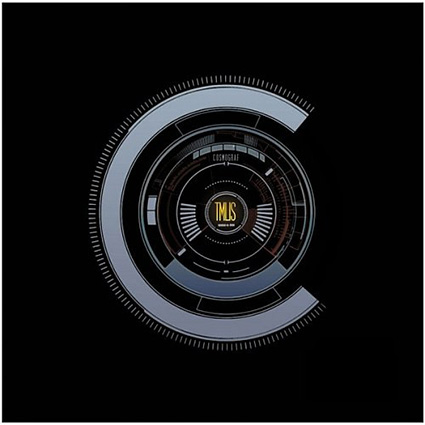
Cosmograf, The Man Left in Space. Phew. Yes, let me write that one more time. Phew. That English chronometric and entrepreneurial demigod, Robin Armstrong, has now released four albums under the project name of Cosmograf. Each is better than the last. And, each of “the last” was pretty amazing and astounding and outstanding and lovely and meaningful and . . . you get the point. The Man Left in Space is existentialism at its best. Just as Arjen has written one of the finest science fiction stories of the last century, Robin has given us the musical equivalent of of the works of Albert Camus and Gabriel Marcel. Add to near perfect story telling the musical work of Greg Spawton, Matt Stevens, Nick D’Virgilio, and, among the best, Robin himself, and you have a work of art that will stand the test of time. A family man who loves speed, Robin also loves excellence.
***

Days Between Stations, In Extremis. This one was a complete surprise to me. A review copy arrived in the mail, courtesy of the band and the master of American prog PR, Billy James. I was intrigued by the cover [que, background sound, Brad’s mother: “Never trust a book by its cover. . . “], though I frankly don’t like it that much. It’s by the famous Paul Whitehead, but it’s a little too psychedelic for my tastes. But, then, I looked at the musician list. Holy smokes! Tony Levin, Billy Sherwood, Colin Moulding, and Rick Wakeman. How did this come about, I wondered? Sherwood and Moulding sing on the album, and neither has ever sounded better. Indeed, they seemed to have been created and birthed for this album. Overall, In Extremis is symphonic prog at its best. At 8 tracks over 70 minutes, the album never lags. It flows together beautifully and movingly. There are some of the most gut-wrenching passages, emotionally, I’ve ever heard in a prog album. And, the two main members of the band, Oscar Fuentis Bills and Sepand Samzadeh, know exactly when to linger over a musical part and when to move on. The high point: The Eggshell Man. I have no idea who or what he is, but I’d like to meet him.
***
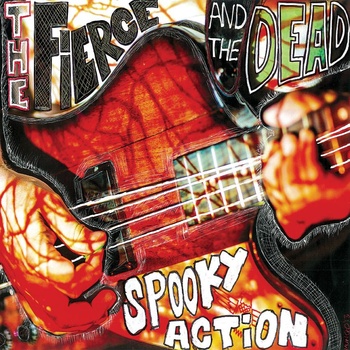
The Fierce and the Dead, Spooky Action. Four great guys—Matt Stevens, Kev Feazey, Stuart Marshall, and Steve Cleaton—making the best music possible for two other great guys, David Elliott, European Perspective Guy (I think this is official superhero name) and founder of Bad Elephant Music, along with the hilarious and artful James Allen. Matt Stevens is a stunning person and artist. It’s been fascinating and heartening to watch him struggle as he makes his way into the profession. He very openly asks about opportunities. Should he pursue fame first or art first? I always know where Matt is going to land. Probably many of us do. He always comes down on the side of art, knowing the fame will follow when it follows. I hope and pray he never changes his mind or soul regarding this. There are lots and lots of folks out there—not just progarchists—cheering these guys on. As my close friend and fellow progarchist, Pete Blum, has said, nothing has hit him so hard since the days of Zappa. And, for Pete, this is a massive and important statement. Everything on this album is wonderful. In particular, I’m quite taken with Parts 4 and 5, a continuation of a theme that Matt and the guys started with Part I, their 19 minutes epic from their very first release. TFATD, not surprisingly, also seems to have started somewhat of a sub genre within prog, the prog instrumental album. In otherwords, what TFATD is doing is roughly equivalent to what progressive jazz was in the 1960s and 1970s. A good sign for the health of all concerned. In particular, newly emerging bands such as Ollocs and Rafert are also releasing instrumental albums, all of them quite good.
***
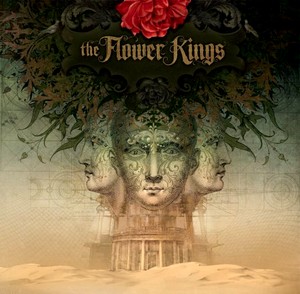
The Flower Kings, Desolation Rose. This release surprised me as well, but not for the reason Days Between Stations did. As far as I know, I own everything Roine Stolt has made or contributed to since about 1994. Every side project, everything. So, there was never a question about whether or not I would buy the new Flower Kings album. I would certainly list Space Revolver (2000) and Paradox Hotel (2006) as two of my favorite albums of all time. Stolt always has the power to release wonder in me. Whether it’s the wonder about the first day of creation (Unfold the Future) or John Paul’s Pizza (Space Revolver), I love the libertarian, hippie, playful spirit of Stolt and the band. Really, think about the members of this band. Stolt, Bodin, Reingold, Froberg, and Lehrmann. Already reads like a “supergroup.” Not that they can’t be as serious as they can be trippy. One only has to listen to “Bavarian Skies” or the “Ghost of Red Cloud” to know just how deep they can be. What surprised me about the new album, “Desolation Rose” is just how political and angry it is. I don’t disagree with the anger or the politics. In fact, I think I totally agree. But, “Desolation Rose,” lyrically, is about as far away from “Stardust We Are” as one could possibly imagine. This diversity just demonstrates how talented this Swedish band really is. The entire album builds until it reaches its highpoint (in terms of intensity) in “Dark Fascist Skies.” The final two songs, “Blood of Eden” and “Silent Graveyards,” offer a rather calming denouement.
***

Fractal Mirror, Strange Attractors. I’ve already had a chance to write a long review of this excellent album on progarchy, and it was (and is) a great honor do so. Strange Attractors is not only one of the best releases of 2013, it’s the freshman release of a brand new group. Three folks—all of whom met one another through the internet prog community (how cool is this!)—makes up this band. Leo Koperdraat, Ed Van Haagen, and Frank Urbaniak. But, we have to add a fourth. It’s art comes from Brian Watson. This is really important. Not only is Watson an amazing artist, but he also creates an image for the band in the way one associates Yes with Roger Dean, Talk Talk with James Marsh, and Jim Trainer with Big Big Train. It’s one of the joys of prog. The art can be (and should be!) as beautiful and meaningful as the music and lyrics. But, back to the music. The three members of Fractal Mirror have created a stunning progressive soundscape, gothic and heavy in tone, but light in the space created. I realize this sounds like a contradiction, and I wish I had the ability to explain it better. I don’t, sadly. It’s really not like anything I’ve heard before. Suffice it to state, it’s quite refreshing and welcoming in its own intensity.
***
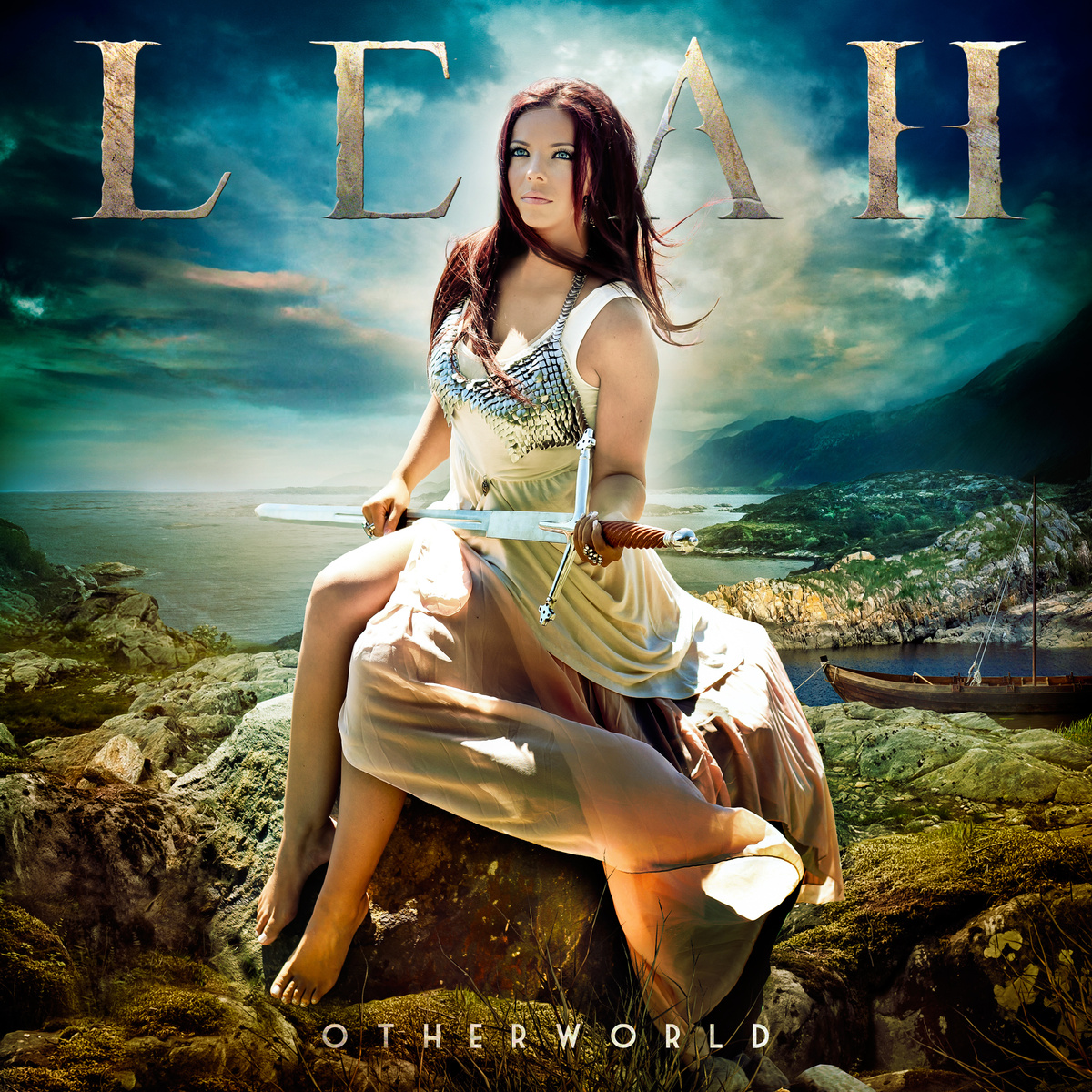
Leah, Otherworld. This is the only EP to make the “best of” list this year. It’s also the only release I’m listing in which the artist (Leah McHenry) doesn’t consider herself a progger. She places herself more in the metal camp, and this becomes obvious in the final song of the EP, “Dreamland,” a beauty and the beast duet with lots of metal “growling.” Whatever one wants to label Leah’s musical style—and I would call it a cross between Sarah Maclachlan and Arjen Lucassen—it is very artful. Leah’s voice could haunt a moor! So much depth, truth, and beauty in every note. The EP is only five songs long—Shores of Your Lies, Northern Edge, Surrounded, Do Not Stand, and Dreamland. The first four possess a very Celtic/Nordic northern edge to them. In fact, I called my initial review of the EP, “On the Northern Edge of Prog.” I’m not bragging, but I am rather proud of this title. it seems to capture exactly what Leah is. Arjen Lucassen, if you read this blog, please look into Leah’s music. I could see the two of you working very well together. Leah, as it turns out, is also about as interesting a person as one might find anywhere. Since Otherworld first arrived at progarchy hq, it’s been in constant listening rotation, and I pretty much have every note and lyric memorized at this point.
***
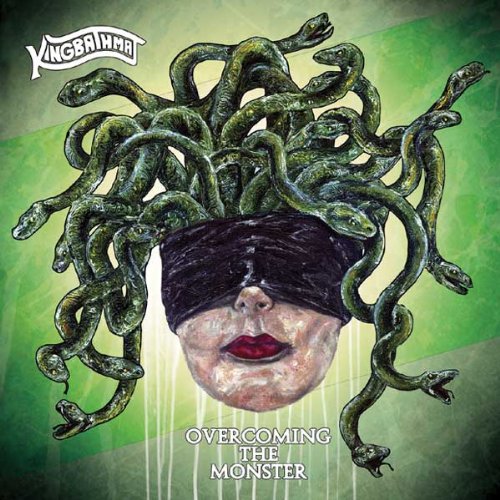
Kingbathmat, Overcoming the Monster. When we first started progarchy just a little over a year ago, I received a note from Stereohead Records of the U.K., asking me if we’d be interested in reviewing a cd by Kingbathmat. Sure, I thought. Of course. Only the dead wouldn’t be intrigued by a band with that name. Well, since then, I’ve not only listened to about as much Kingbathmat as exists (still missing a small bit of their back catalogue, but this will be rectified at the beginning of 2014, when the new tax year begins!). I love these guys. I’ve had the chance to get to know John Bassett and Bernard (he seems to have several last names on the internet!). What incredible guys. Really a band of Peart’s “Tom Sawyers.” Mean, mean stride, never renting the mind to god or government. Smart, insightful, unafraid. Frankly, these are the kind of guys I would want next to me should I ever find myself under fire. As with Leah, I’m not sure that Kingbathmat is perfectly prog. But, then again, if it’s “perfectly prog,” it’s probably not prog at all. Kingbathmat mix a number of styles, many of them heavy, to form a mythic maze of musical inspiration. They are by far the heaviest in my list for 2013. The “Tom Sawyer” reference is not just lyrical. Parts of Kingbathmat pay great homage to early and mid-period Rush. Of all Rush albums, Counterparts is my least favorite. That doesn’t mean I don’t love it. I’ve been a Rush man since 1981, and I will die a Rush man. So, any criticism is relative. But, if you could imagine Rush entering the studio with the music of Counterparts, the lyrics more intense than culturally sensitive, and a producer who wants to rock, really rock, you’d have an inkling of what “Overcoming the Monster” is. Every song is a joy. Not in the precious, sappy sense, but in the satisfying, just sense. Everything is really quite perfect: vocals, bass, guitar, drums. Since I first received a copy of OVERCOMING, I’ve probably listened to it every other day. After a hard day of teaching (a job I love) or writing something scholarly, there’s nothing quite like putting this cd on, sitting back, and saying, “yeah, it was a good day.”
***

Nosound, Afterthoughts. Giancarlo Erra might be the anti-Kingbathmat. Erra, an Italian demigod of sound in his own right, loves silence and space as much as Kingbathmat loves walls of Rush/Soundgarden-like sounds of thunder! Indeed, Erra has a lot of Spirit of Eden and Laughing Stock in him, a lot of Arvo Part, too. If there are three notes, maybe there should be two. If there are two notes, maybe there should be one. If there is one note, maybe you should let silence have its say. I’ve been following the work of Giancarlo Erra for almost a decade now. He always entrances and entices me. He creates soundscapes so powerfully delicate that one wants to drown in their dreamlike, twilight quality. He’s also every bit the lyricist Hollis was at his best. He’s also really a complete artist. He not only writes his music and lyrics, he creates his own packaging, is a rather jaw-dropping photographer, and even designs his own computer apps. I was thrilled that Kscope just re-released his early masterpiece, Lightdark (2008), remastered. As with Lightdark, Afterthoughts just flows. Gentle, punctuated, quiet, loud, emptiness, walls. Listening to Afterthoughts is akin to standing on a peak in the Idaho Rockies, watching a violent storm pass under you in an adjoining valley. Nothing is unneeded, and nothing needs to be added. Afterthoughts is what it is, another Erra masterpiece.
***
Two more to go, but supper’s ready . . . .
And Then There Was One…
I’ve heard a lot of great Genesis covers, but this single-handed version of “Supper’s Ready” has got to take the prize.
It is yet more evidence that Canada is a prog paradise… O, Canada! Land of Rush.
Okay, maybe I should have called this post, “And Then There Were Two,” because although it is a one man band doing all the instruments, the vocals are done by a second dude.
But I wanted to emphasize the insanely great instrumental skills on display in this video…
Rush 2.0: Clockwork Angels Tour (2013) Review
 A friend of mine said to me—in response to my obvious glee that Rush’s Clockwork Angels Tour Blu-ray had just arrived in the mail—“it’s good to be childlike every once in a while.” Well, maybe it was the reaction of a 13-year old trapped in a 46 year-old body. Regardless, the reaction was sincere. Rush!
Three thoughts and images (images as thoughts, and thoughts as images) come to me whenever I think of Rush. Rush—brilliance. Rush—inspiration. Rush—comfort. For thirty-three years, they’ve been all of these things to me. Thank the Good Lord for that detention in seventh grade, and thank the Good Lord again for sharing that detention with Brad and Troy, the two guys who introduced me to Moving Pictures and, consequently, to Rush. That was a heady spring. I had also heard The Wall for the first time, the U.S. had just defeated the Soviets in hockey, and some idiots tried to kill the U.S. president and the Pope and came damn close to succeeding. 7th grade. Prog Rock, Dr. Who, and Dungeons and Dragons. But, most of all, Rush.
Maybe I never grew up. These are still the things I love and share with my own kids (the oldest, now 14; he proudly wears a “prog rock—all else is noise” t-shirt; he and my twelve-year old daughter will be seeing that majesty that is Transatlantic in Chicago this coming February).
Oh, fair reader, back to the subject at hand. Rush, Clockwork Angels Tour Blu-ray. Holy schnikees. Yep, God rest Chris Farley’s soul. Holy schnikees. What a work of absolute joy. Over three hours of absolute joy. A precious document of their massive tour, 2012-2013, the blu-ray captures them for a Dallas, Texas, show.
As Kev pointed out in his review of the same, there was a time when Rush fans could calculate an era by what live CD had been or was just about to be released. All the World’s a Stage for the hard prog stage; Exit Stage Left for the melodic prog stage; A Show of Hands for the synth prog stage; and Different Stages for the return to guitar/alt rock stage.
But, this was all for Rush 1.0, testing for echo.
After the horrific tragedies in Peart’s life, his purgatory and redemption (symbolically), we’re at Rush 2.0.
I would argue rather forcefully that this is a different band, a band that finally (yes, these guys are truly humble and always have been despite their driving ambition) realizes its more than a mere band. You can see this realization dawn, finally (again, finally!) on them in Beyond on the Lighted Stage and on the Colbert Show.
They have nothing to prove anymore when it comes to acceptance. They never really did, but they always thought they did. They only have to prove their excellence. And, to me, they’ve done this in spades. As one of my favorite Rush writers, Rob Freedman, wrote about a year ago (and I quote this whenever I can)
The story of Rush is a story of validation. When the band first started out, the mainstream music establishment largely ignored them. Geddy’s voice was the brunt of jokes, Alex’s guitar playing got no respect, Neil’s lyrics were pretentious and channeled a kooky Ayn Randian ideology, and he played too many drums, all of them with the passion of a mathematician. Meanwhile, musicians and music aficionados loved them, so you had this great narrative tension. Now they’re nearing their 40-year anniversary, their old critics are in nursing homes, their fans are in leadership positions in business, science, government, and the arts, and they’re looked to as elder statesmen of rock.
Amen, Rob. Amen. On this issue, I can speak from some personal experience. As I look back over my own life as a historian, a writer, and an academic, I can easily claim that Peart has had as much influence on my own thinking as any of the other greats I looks to for ideas and inspiration: Russell Kirk, Friedrich Hayek, Edmund Burke, Adam Smith, J.R.R. Tolkien, Ray Bradbury. . . . A whole generation of us can claim to be Peart’s little brothers. Like any older brother, Neil almost certainly will not agree with all of my own views, or with what I’ve done with his ideas. But, then, Neil never—in any way—sought to conform the world. One of the greatest things Neil gave to a generation was the advice to develop and hone what is best in each of us, whatever that best might be.
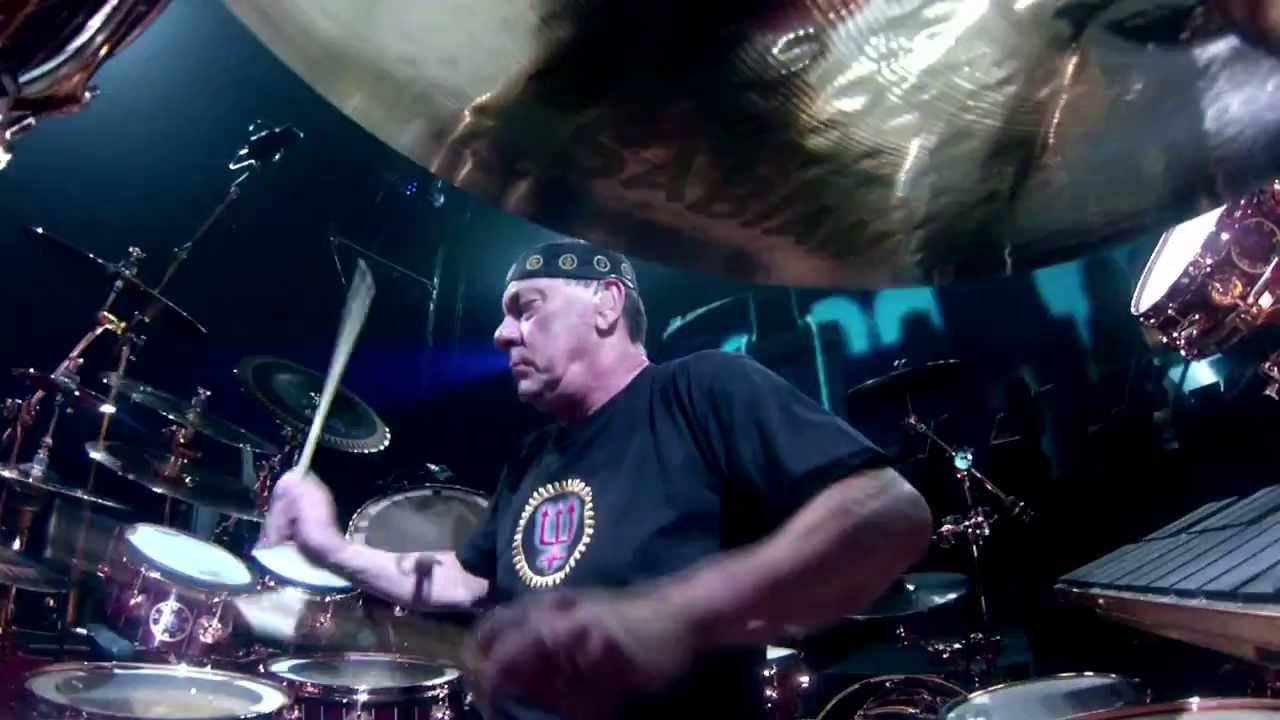
Not content to fade, Rush 2.0 has decided to shimmer with excellence. I can’t help but think of Neil’s words off of Signals, “Losing It.”
Some are born to move the world
To live their fantasies
But most of us just dream about
The things we’d like to be
Sadder still to watch it die
Than never to have known it
For you, the blind who once could see
The bell tolls for thee….
Rush is proving that greatness can beget greatness. As I see it, Rush’s last three studio albums have done nothing if not prove this. Vapor Trails, Snakes and Arrows, and, especially, Clockwork Angels. While building upon everything from Rush to Test for Echo, the last three Rush albums come with a confidence, not of resignation, but assertion. Nature has given us this time, I’ll be damned if I let it fly by unused and unappreciated. Indeed, one can say with the last three albums, Rush looked at the world not just with confidence, but with gratitude.
So, when the band decides to release a live album for each tour, I can only shout “hooray.” Give us as much as you can, Rush. So many of us want to keep journeying with you in any way we can.
As with the previous tour, this one is a massive production. Explosions, lasers, weird sets, and, best of all, incredible film clips add to the already stunning music. The background story for the Clockwork Angels Tour film clips—an IRS agent looking for the Watchmaker is just outstanding, drop-down, gut-wrenching funny. Geddy, Alex, and Neil appear as rather mischievous “G”nomes.
And, it’s just a joy to watch these guys perform. They obviously love each other and what they’re doing. In terms of playing, none of the members of Rush have ever been this good. They are each in top form. Watching each of them play guitar, bass, and drums is nothing if not humbling. I hope I give as much in my lectures as these guys give in their playing. Phew.
Musically, of course, what more could we want? Knowing that they’ve been releasing lots of tour material over the last decade, Rush chose to play a significant portion of their 1980s material—stuff that’s not appeared on any of their live releases in a long time. It’s worth remembering, however, that this is Rush 2.0. They bring the sensibilities of the last three albums to the previous multitude of albums. There’s not a dud in the live set, but songs that stand out in ways the originals didn’t: Force Ten; The Body Electric; and The Analog Kids. Schnikees (again, apologies to Chris Farley), these are amazing. Rocking, rocking, rocking.
It’s set two, however, that boggles the mind, the set that includes almost all of Clockwork Angels and—gasp!—a string quartet. Phew. Amazing. So much energy emerges from the blu-ray in set two, it’s actually a bit wonderfully overwhelming. YYZ is especially spectacular with the strings.
Bonus material on the blu-ray includes: Limelight, Middletown Dreams, The Pass, and Manhattan Project, as well as all of the movie clips from the tour and some documentaries.
For me, this is pretty much perfection itself. 33 years of loving this band comes down to this 3plus hour set. Yes, Geddy, Neil, and Alex, I could never thank you enough for the confidence you’ve given me, the excellence you’ve shown me, and the hope you embody. Whether you ever expected to get here or not, you are the embodiment of the best of rock, you are now the elder statesmen of culture. You have persevered, and we have as well!
May the journey long continue.
A Perfect Introduction to Prog: 2003. Or, was it 2002?
 Well, not quite perfect, but I probably got your attention. I’m becoming a marketer! Dear Lord. Help us all.
For much of my life, friends have asked me to explain progressive rock to them. A decade ago (Or so. It might have been more than a decade ago–probably sometime around 2002, now that I think about it), I decided to start burning CDs as a way of introducing the genre. This morning, as I was cleaning an area that should’ve been cleaned a while ago, I came across a copy of the CD.
For whatever reason, I entitled it “Regressive Rock, Part I.” I must’ve thought that was pretty funny at the time, though I don’t remember exactly why. I assume that I didn’t want my friends thinking that “progressive” had something to do with crazy right-wing nationalists (such as Teddy Roosevelt and Woodrow Wilson from a century ago; or President Bush of 2002). In the United States, “progressive” often recalls horrifically embarrassing memories of slaughtering Indians, interning Japanese Americans, and treating African-Americans inhumanely.
Well, regardless.
As I was making Sunday brunch, I popped the CD in and found myself quite happy with the selections. Here they are. Let me know what you think.
***
1. Flower Kings, “Deaf, Numb, and Blind”
Here’s my own appreciation of this song: https://progarchy.com/2012/11/17/mini-review-deaf-numb-and-blind/
2. Genesis, “Squonk”
3. Rush, “Natural Science”
4. Pat Methany, “The Roots of Coincidence”
5. Pink Floyd, “Echoes”
6. Spock’s Beard, “At the End of the Day”
The Musical Universe

Peter Kalkavage makes an important observation about “the musical universe”:
We love music because of how it makes us feel. We listen to some works more than others because we want to experience the feelings they stir in us. But feeling is not primary in music, nor is it always the reason why we listen. Most of the time we listen to a piece of music because, well, we want to hear it. We take pleasure in the hearing. But the pleasure is not in the pleasure, as though music were a drug used only to produce a “rush.” The pleasure is in what we are hearing, in the distinctive aisthêton or object of perception. Sometimes we listen to a musical work because we wish to hear a quality or perfection that is present in it. We listen for the sake of an active, even strenuous, contemplation in which we participate in, are one with, the life and shape of the musical object. To be sure, feelings are aroused, but these are grounded in, and prompted by, what we perceive in the tones, in what is there in the phenomenon we call music. We might say that in responding to music we perceive feelingly and feel perceptively. But in saying this, we must bear in mind that perception is primary. We do not, except incidentally, hear musical sounds and associate them with various feelings, images, or experiences. On the contrary, we perceive what is there and take on the condition that rhythms and tones communicate to us. [See Victor Zuckerkandl, “Words and Tones in Song,” Chapter 3 of Man, the Musician, Bollingen Series, Princeton: Princeton University Press, 1973, pp. 31-43.]
Kalkavage then quotes Paul Valery, from whose lecture (“Poetry and Abstract Thought”) he took the phrase:
The musician is … in possession of a perfect system of well-defined means which exactly match sensations with acts. From this it results that music has formed a domain absolutely its own. The world of the art of music, a world of sounds, is distinct from the world of noises. Whereas a noise merely rouses in us some isolated event—a dog, a door, a motor car—a sound evokes, of itself, the musical universe. If, in this hall, where I am speaking to you and where you hear the noise of my voice, a tuning fork or a well-tempered instrument began to vibrate, you would at once, as soon as you were affected by this pure and exceptional noise that cannot be confused with others, have the sensation of a beginning, the beginning of a world; a quite different atmosphere would immediately be created, a new order would arise, and you yourselves would unconsciously organize yourselves to receive it. [The lecture can be found in Paul Valéry, An Anthology, Bollingen Series, Princeton: Princeton University Press, 1977, pp. 136-165.]
I find this highly interesting because of the uncanny way that the musical universe of Rush is evoked for me at many points whenever I listen to the new Dream Theater album.
When I hear the interplay between guitar and drums on “The Looking Glass,” for example, the world of “Limelight” is evoked for me; or when I hear “Surrender to Reason,” the world of “Natural Science” is evoked for me. Either way, I enter into a Rush-like universe.
Kalkavage describes the experience well when he says that what gives me please is “the distinctive aisthêton or object of perception”, because what is happening is that I am not feeling certain things created by Rush-like noises. Instead, I perceive a Rush-like “musical universe” that is only indirectly evoked by some musical activity that takes my perception there—which then brings about certain magical feelings.
There are no direct quotations of Rush; there is only a display of a highly refined musical sensibility (all hail the gentlemen of Dream Theater!) that is able to perceive a certain musical universe of meaning, and then to take me there—me, along for the ride.
 Progarchy