
 Guitar Mastermind Steve Hackett has re-recorded the GTR classic, “When the Heart Rules the Mind,” with Marillion’s Steve Rothery. The new version will be available tomorrow for purchase.
[With thanks to Prog Magazine for posting this first]

Guitar Mastermind Steve Hackett has re-recorded the GTR classic, “When the Heart Rules the Mind,” with Marillion’s Steve Rothery. The new version will be available tomorrow for purchase.
[With thanks to Prog Magazine for posting this first]

Ugh. I was just looking up Tears for Fears news to find out if the release date of the new album had been announced. I had thought it would have come out last year, and, admittedly, I was a bit frustrated and surprised when it didn’t. To this day, Tears for Fears remains not just a favorite band, but certainly my favorite proggy pop or poppy prog band.
Here’s the “ugh.”
I had no idea that Roland Orzabal’s wife, Caroline, passed away last year.
Roland, you don’t know me in the least, but I am so, so sorry for your loss. I knew that something had happened when the tour got cancelled, but I’d assumed nothing as drastic and horrible as losing a family member.
Caroline had been a major part of Roland’s life and his music as his wife and best friend since the early 1980s. They married in 1982.
The Express and Star (Andy Richardson, January 13, 2018) writes:
Roland is finding his way into the day. He’s tired. Yesterday was a big day, a tough day. Though he’s still grieving Caroline – and how could he not, they were happily entwined for all of their adult lives, she was his rock – he’s trying to stay in the moment, rather than slip into the past.
Now, of course, my worries about no new TFF album in 2017 seem nothing short of absurd. Our condolences, Roland. May Caroline rest safely and happily in the embrace of eternity.

The greatest thing about Top Ten lists is that I get to learn about the best stuff during the year that I missed. For instance, take Gungfly’s On Her Journey to the Sun (2017).
I knew of it earlier, but never got around to listening to it. And for the dumbest reasons too: I had no idea how to pronounce either one of Rikard Sjoblom’s names (first or last); I figured solo work by any BBT dude would never be as good as BBT itself; and I had no idea what the hell a “gungfly” was (although I do know Socrates the “gadfly”).
Well, a bunch of Progarchy people, whose taste I trust, put the disc on their year end lists. So, finally, in January, I set aside time to listen. Sure enough, the album is absolutely freaking amazing, one of the best things I have heard in ages. As for 2017, I can’t decide which masterpiece is better: Dave Kerzner, Schooltree, or Gungfly.
In any case, I am now officially revising my 2017 lists, due to Rikard’s amazing achievement. Because I had built-in overlap between my BEST METAL and BEST PROG lists (in order to accommodate this very type of “late to the party” 2018 situation), I can take Sons of Apollo and Unleash the Archers off of my best prog list, since they are already duplicated on my BEST METAL list. Instead, I am swapping in Gungfly and one other worthy artist that I discovered in January 2018 (thanks to all those awesome Progarchy Best Of lists). Curious? Stay tuned, or else take a peek at my revised BEST OF 2017 list.
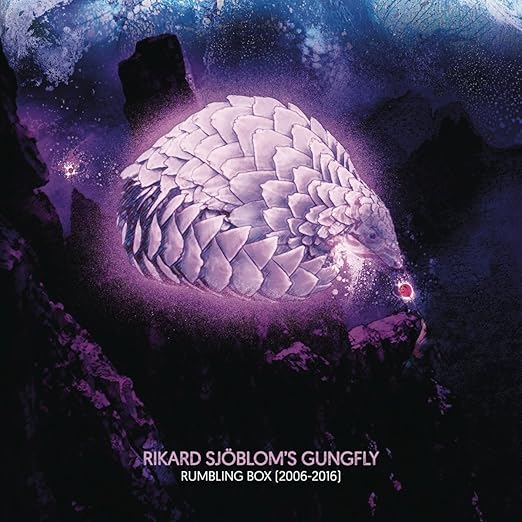
By the way, I cannot wait to hear the five disc box set coming out from Rikard this year, in 2018! If you haven’t yet pre-ordered, do so now, because it is an amazing deal: Rumbling Box. Click on the image below.
 This appeared on social media, earlier today.
Great news for all of us! God bless, Laura Meade and IZZ!
Happy 2018 to our loyal IZZ fans! We wanted to take a moment to let you know that there is new music on the horizon.
In late Spring, Laura Meade will release her first full-legnth studio album which features special guest artists including several of her IZZ bandmates. Written by Laura Meade and arranged and produced by me (John!), Laura’s album combines her passion for musical theatre with her art-rock sensibilities. Doone Records will have an announcement about the release date in the near future. On Wednesday, May 9th, Laura will be joining District 97 and Schooltree in Arlington, MA at the Regent Theatre for a night of Female-fronted art-rock, presented by NewEars.org. More information to follow.
IZZ is also back in the studio in full recording mode after writing together for the better part of a year. We are really excited about the freshness of the songs and can’t wait for you all to hear what we have been working on. We recently got together to film one of our final rehearsals before we went into the studio to start recording and we plan on releasing some of that footage later on this year in conjunction with the album release. We really enjoyed having a camera crew there filming as a “fly on the wall” of our rehearsal. They were able to capture some great stuff, including a new interview where we discussed a wide range of topics for the first time together on film.
So stay tuned…We have exciting new music in store for you in 2018.
Cheers!
John Galgano
IZZ
Bass / Vocals / Songwriter

In terms of his achievement there is only one other composer to whom Franz Schubert can be compared: Mozart. Perhaps not as precocious as Mozart, Schubert was nonetheless already an accomplished composer as a teenager. In his brief thirty-one years, he created a life’s work of more than one thousand compositions, which include sublime masterpieces…
via Franz Schubert’s Music of Paradise Lost — The Imaginative Conservative
Guess what? The graphic novel, Stalag-X, that I wrote with TV writer-producer Steven L. Sears (remember Xena, Swamp Thing, The A-Team?) is almost here. It’s about human prisoners caught in an alien POW camp during a ruthless future war. Mike Ratera did the art, and the hardcover graphic novel is being published soon by The Vault.
Joe Human is taken to a harsh POW camp on a distant planet where he’ll be examined, tortured, and forced to endure experiments that rip into his very mind as the alien Krael seek to answer the question What is Human?—a question that, in their hellish situation, the human prisoners are finding hard to answer.
Steven and I have been working on this graphic novel for years (the saga of getting it into print is almost as long as the story is!), and we’re really excited that it’s finally coming out. It’s worth the wait, I promise! Stalag-X will debut during Emerald City Comic Con in Seattle at the beginning of March. Our original bonus Stalag-X novella, “Not a Prisoner” will be included in this edition.

Paying It Forward: Prepping for This Year’s Superstars Writing Seminar
In 2010, Rebecca and I got together with fellow bestselling authors Brandon Sanderson, David Farland, and Eric Flint to launch a career-oriented writing seminar. The Superstars Writing Seminars have grown each year, and hosting it is a huge job.
This year’s Superstars is Jan 31–Feb 3 in Colorado Springs, and it’s our biggest one ever. Right now, Rebecca and I are scrambling to finish our PowerPoint presentations. For weeks we’ve been working with our assistants Chris, Diane, and Marie—and lots of other volunteers—to gather and organize boxes and boxes of materials for Superstars (enough to fill the basement and several offices). Next time you see Chris, Marie, Diane, Nancy, Ike, or any of our staff, tell them how awesome they are.
People are already here for the seminar, and we can’t wait. I’ll fill you in later, but if you want to find out more, check out our Superstars website superstarswriting.com.


I’ll write you again once the Superstars whirlwind is over. Keep reading!
KJA
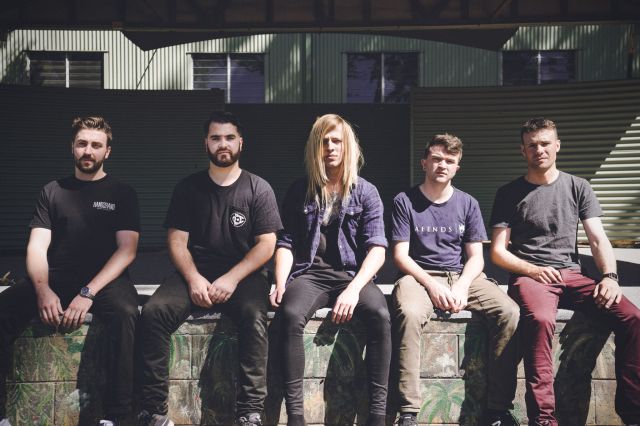
Meliorist is a progressive metal quintet from Brisbane in Australia who recently released their second EP “ii.” Guitarist Andrew Apte did a brief interview for Progarchy, letting us know how the band came up with the name, songwriting, inspiration, and more.
What made you go for the name Meliorist?
Read it as a word for the day, sounded good.
How do you usually describe your music?
I would say modern metal, trying to do new things in every songs. Mixing clean and heavy sections.
What is your writing process like?
Just searching for interesting and cool things on my guitar, then fleshing them out into full songs, trying to listen to everything as a whole as much as possible.
Who or what is your inspiration, if you have any?
All sort of music and artists, lots of Jazz music these days.
What is your favourite piece on the new EP “ii.” and why?
For me I would say My Reflection. I think that it is the best overall song, I think it’s well balanced. For most of the fans though it is What You’ve Lost.

What makes “ii.” different?
Well I have tried very hard to develop and work on a unique style for many years now so I hope that it is not quite like anything else on the market.
What should music lovers expect from “ii.”?
Lots of heavy sections designed for headbanging, mixed with clean sections to even everything out.
What kind of emotions would you like your audience to feel when they listen to your music?
Inspired and happy 🙂
Which do you like most, life in the studio or on tour?
We have not done any touring yet really. I would say it feels great to play a show where everyone is rocking out for sure. But it’s also a great feeling when you just write something you really love, it’s very exciting.
Pick your three favourite albums that you would take on a desert island with you.
Gilad Hekselman – SplitLife
Gregory Porter – Liquid Spirit
Antonio Forcione – Tears of Joy
“ii.” is available from Bandcamp here.

Like Thelonious Monk, I like everything. But a little bit of everything — not everything of everything. Within about 30 seconds to a minute of hearing a track someone is “showing” me for the first time I decide whether I’ll invest time exploring the artist.
The other evening I was reading an article while my wife was listening on her phone to a band that had appeared earlier that day on the WDVX (Knoxville, TN) Blue Plate Special. Twelve seconds into “Deep Blue Eyes,” I heard what I figured to be the familiar affectation of a young contralto voice. “No. No, no. Not another hipster band.” Already, my mind was conjuring images of the group — bearded men with goofy hats and suspenders; she, probably wearing some 1920’s floral print with loud lipstick and hairstyle to match.
At 47 seconds, however, something unusual happened with the mandolin. It climbed the scale, ripping open an attic of dense harmonies. The driving instrumental break, pausing to get its breath before again lunging forward, signaled something beyond my first impression.
I don’t know
Which way we are being pulled
But the stars are sewn into the sky
To guide us on our way
And then, “Down, down, below the waves…” By the 2:20 mark I had minimized whatever forgotten article I was reading and was Googling, “…who is this, honey?” “A band called Honeysuckle.”
My sincerest apologies to Holly McGarry, Benjamin Burns, and Chris Bloniarz for my prejudice. I promise that when you guys come back down South we will be there in the front row to see you.
Catacombs (Oct ’17) is the latest release from this Boston-based trio. How did I miss them? Liking everything sometimes devolves into too much time around the fringes: not bluegrass but traditional bluegrass; not progressive music but proto-prog, etc. Traveling the gaps are artists that pull together everything you love with unexpected dash and capacity.
Honeysuckle play traditional folk instruments (guitar, banjo, mandolin) with a jazz rock intensity and chiseled focus. The wordless vocals of “Constellations” might put one in mind of Fleet Foxes; but the musicianship is so staid and majestic that it takes wing under its own power, without an updraft of reverb.
The title track features a fusionist breakdown, introduced by a riff reprised at the end of an atonal final chorus that swirls like angry hornets. “Watershed” has a complex cadence and vocal delivery that would be at home on Tull’s Stand Up. “Chipping Away the Paint” recapitulates and expands on the themes introduced in “Constellation” and “Catacombs,” with bits of “Deep Blue Eyes” linked by a psychedelic jam and — what’s this? — a throbbing electric guitar riff. A sign of things to come? [Update: the band informed us that it’s actually the mandolin with heavy pedal effects]
Okay, maybe the brief whistling on “Greenline” is just a tad hipstery. But for those who ramble on toward Proghalla this track, like the rest of Catacombs, points out an inviting, picturesque path under familiar and constant stars. One definitely worth exploring.
From Honeysuckle’s living room, the title track…
Hwaet! The Genesis in days gone by
and the guitarist who ruled them had courage and greatness.
We have heard of that guitarist’s heroic campaigns.
A comfort sent by God to the peoples of the world.
He knew what they had tholed,
the long times and troubles they’d come through
without a leader; so the Lord of Life,
the glorious Almighty, made this Hackett renowned.
–With apologies to the Beowulf poet.
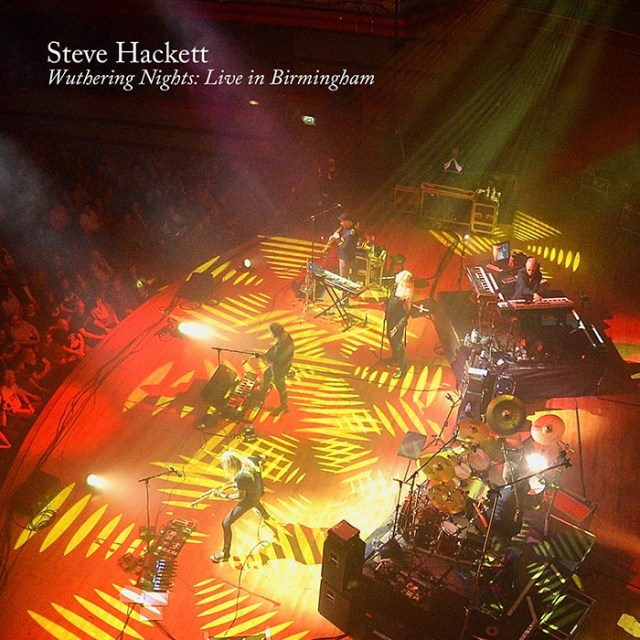
Hackett is back, and, of course, he’s greater than before. He has already conquered Grendel and Grendel’s mother. Now, he returns to fulfill the prophecy of the Hierophant.
If you’ve not guessed, my copy of Hackett’s latest live offering, WUTHERING NIGHTS: LIVE IN BIRMINGHAM, arrived in my post box today. And, oh, what a joy it is. I’ve listened through it all, and, now, I’m rather stuck on this version of “Shadow of the Hierophant.”
As I listen and watch it repeatedly, I am reminded what first brought me to prog rock, oh so many years ago. It is this, most certainly, this. The build, the lingering, the apex, the mystery, and the certainty.
I’ve always considered VOYAGE OF THE ACOLYTE the lost Genesis album of 1975, much like Squire’s FISH OUT OF WATER is the lost Yes album of the same year. “Shadow of the Hierophant” was stunning in 1975. It’s even better in 2018.
Hackett’s recent outings and return to the beloved prog of the 1970s only makes me realize how alive this music remains. Watching Hackett, King, O’Toole, Townsend, Beggs, and Lehmann perform “Shadow of the Hierophant” reminds me that even in this world of sorrows, heroes arise, called forth by the God to remind us of what beauty still remains.

With the amount of records being released in the present era, ranging from the bedroom to high-class studio productions, it is quite a challenge to satisfy my hunger for music lately. Most of this has to do with the fact that the music being released today lacks sincerity. Maybe I am stuck badly to the old-school understanding of rock music, but even though I try so hard, it happens quite a lot that I cannot understand and enjoy the modern music. The sound of 1970s is my comfort zone.
Ring of Gyges from Reykyavik, Iceland could be described as a true progressive rock/metal band with touches of metal here and there, offering well-thought melodies, interesting vocal arrangements, and passages that connect the dots that are quite enjoyable. Helgi Jónsson and Guðjón Sveinsson, who are the key persons for this band, both handle vocals and guitars on the the band’s debut album, and they absolutely shine here. Although their voices tell the story, both do a great work with their guitars — backing up the vocal melodies most of times.
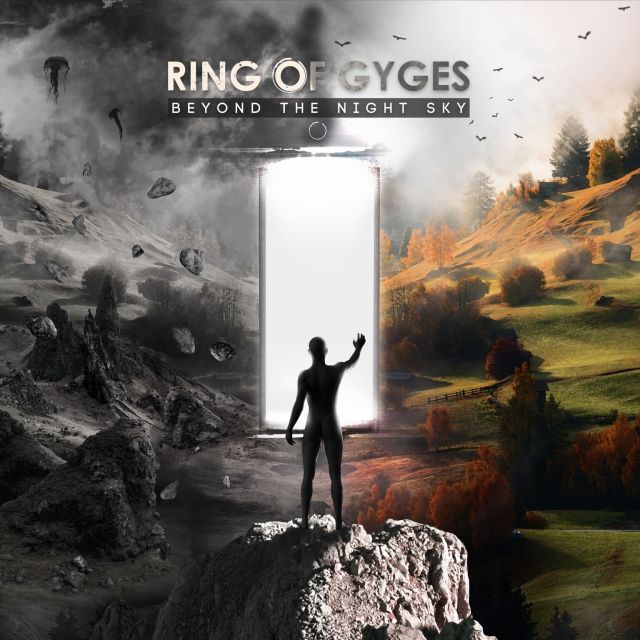
The album opens with a short atmospheric piece “Ascend,” which shows that Beyond the Night Sky has a lot to offer. With often changes, Ring of Gyges distance themselves from delivering just a pure, lifeless showcase of technical proficiency, something that these guys definitely have, but rather present the work that is alive, dynamic and above all, interesting.
References to various stylistically different artists can be heard in Ring of Gyges’ music. Their explorations within Anathema’s or Porcupine Tree’s melancholia speak of that, but the band is not afraid to delve deeper and expand their horizons. As Beyond the Night Sky flows by, a listener is taken to a sound-trip that gets more metal-esque. Each of the songs on the album has its own personality, and labelling this record under a single genre would do this band a lot of injustice.
To summarise, Beyond the Night the Sky is a record largely based on the progressive rock genre channelling many different elements. This is a true epic, both in length and amount of quality material, which requires quite a few listens to get into it. How far Ring of Gyges are ready to go? Time will tell. But for now they are on the right path.
Get a copy of Beyond the Night Sky from this location.
 Progarchy