

Well, my favorite month of the year ends today, but not before the celebration of All Hallows’ Eve! Enjoy some “Halloween” prog, courtesy of Jethro Tull!

Well, my favorite month of the year ends today, but not before the celebration of All Hallows’ Eve! Enjoy some “Halloween” prog, courtesy of Jethro Tull!
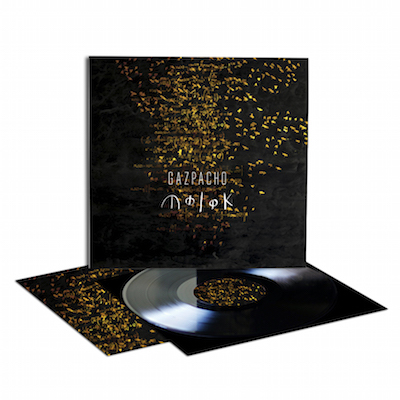
Gazpacho, MOLOK (Kscope, 2015).
Every time I delve into a new Gazpacho album, I fail to understand at what level I should comprehend and analyze the lyrics. Are they meant literally or symbolically? Is the band writing poetry or recording a nightmare? As always, Gazpacho presents puzzles, usually quite Gnostic, that might or might not sort themselves out after many listens. The latest album, Molok, is not only no different in this respect than their previous albums, but it is also much more frustrating to comprehend.
Molok, of course, is neither a good god nor a good guy. He’s a terror and a horror to all that is decent and civilized.
In English, his name is generally rendered as Moloch, and he is best remembered in the western tradition (through the Jews) as the god who demands the blood sacrifice of children. He is, simply put, a demon and an abomination. Across the centuries, almost no one has defended Moloch as anything other than a horror.
In the 1920s, especially, he made several cultural appearances. In Willa Cather’s stunning American novel, DEATH COMES FOR THE ARCHBISHOP, Archbishop Latour retches upon finding the cave in which the natives once threw their children to the gods.
In that same decade, film director Fritz Lang depicted Moloch as the modern machine of industrialization—raping and pillaging life, while demanding conformity in all things.
In the 20s and 30s, many in the West would associate Moloch with the machines being erected in fascist Italy, German, Portugal, Poland, and Austria.
Interestingly, Gazpacho sets their album in 1920.
After listening to the disc close to twenty times and delving deeply into the lyrics, I still don’t know what the album is about. When asked by TeamRock (Prog and Classic Rock), the keyboardist answered:
Molok is about a man that, sometime around 1920, decides that wherever anyone worships a God, they always seem to be worshipping stone in some form. Whether it’s a grand cathedral, the stone in Mecca or Stonehenge, God seems to have been chased by his worshipers into stone, never to return. This harkens back to Norwegian folk myths, where, if a troll was exposed to sunlight, it would turn to stone. But it also reflects the way God has been incommunicado for a very long time.
I get the second part of the statement, but the first part baffles me. Indeed, it begs more questions than it answers.
I find it hard to believe that a band as seemingly humane and dignified as Gazpacho would ever have anything positive to state about an abomination or a fascist. Indeed, such an interpretation flies in the face of everything that seems true about the band.
Presuming, then, that Gazpacho is not promoting any form of fascism or an abomination, I find myself scratching my head. What on God’s green earth are they talking about?
The lyrics refer to two important figures in the Western tradition, the pre-Socratic philosopher, Zeno (not the Stoic one of later centuries), and the Hessian-Anglo composer and astronomer, William Herschel.
I’m no closer to an answer.
I first came across the Norwegian art rock band around 2007 when the band released its magnum opus, NIGHT. Since then, the band has never NOT taken chances. Importantly, as they’ve explored the mystical in their lyrics, they’ve successfully incorporated a variety of folk music and folk instruments into their rock. As far as I know, they rarely promote themselves as art rock rather than prog. This is fine, of course, and it applies. Gazpacho is nothing if not arty.
The new album, MOLOK, is a real treat. As I admitted, I’m still not sure what the story is. But, in no way has this lessened my enjoyment of the album. I’ll keep exploring, as I’m bound and determined to figure this thing out. Until then. . . any thoughts are more than welcomed.
If The Stoic Wisdom of Neil Peart interests you, then you may be interested in Stoic Week 2015…
Video: https://vimeo.com/144107689

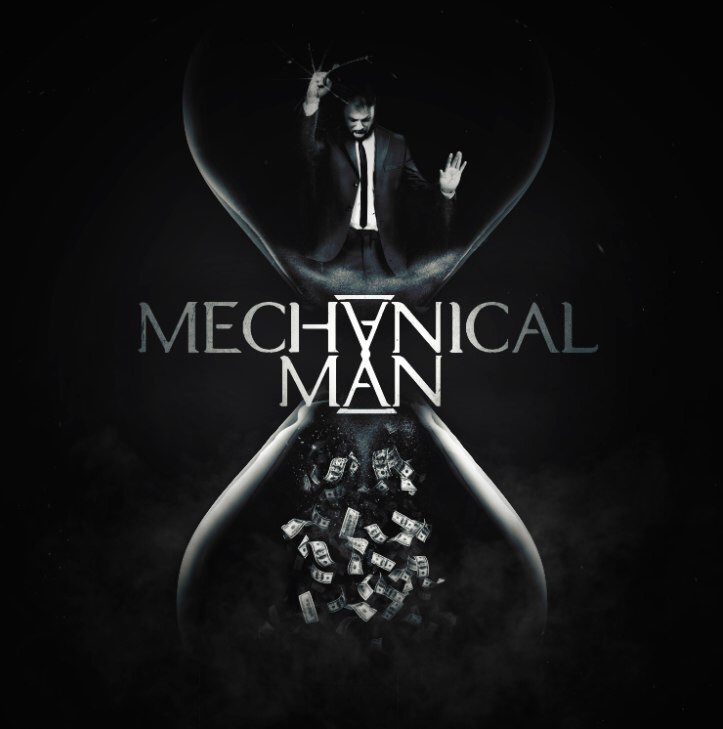
Moscow’s Mechanical Man released their self-titled full-length album earlier this month, and it’s been receiving good critics (read our review here). In an interview with Progarchy, the band discusses the creative process of the album, their sound, and future.
Mechanical Man released their first self-titled album recently. Are you satisfied how it turned out?
Alexey (vocals): Yes, absolutely! In our opinion, the album turned out to be really good. There’s even nothing that we would add or change. But what is more important, we’ve acquired a lot of experience while recording the album. This will definitely help us in our future studio work.
How did the song writing process for “Mechanical Man” go?
Eugeny (keyboards): Well, there is one thing you should know. There’s only one person in our band who writes parts for all the instruments – our guitarist Sergey. And he does it really cool! After that we just edit each part by making it more complicated and sophisticated. Then we play a song together dozens of times until it gets its shape. And everything we do, we do in a friendly atmosphere.
What were the hardest moments during the creative and production process of “Mechanical Man”?
Sergey (guitars): Working with vocal parts, I think. The thing is that the frontrunner’s voice and the vocal line itself are incredibly important. We wanted to make the choruses sound exceptionally, so that everyone wanted to join in with signing. Our singer was working on it. We had a lot of variants of how to sing this or that part, so it wasn’t always easy for us to make a choice and put everything together.
How would you describe the sound of the self-titled album?
Sergey (guitars): While creating the album we were sticking to the idea that the sound should be aggressive and at the same time melodious. We were paying scrupulous attention to keyboards sound by choosing appropriate samples. Also, we didn’t want to “overload” our album with low guitars, we tried to make warm guitar sound which characterize classic heavy metal. We think we’ve done it!
What are drawbacks and benefits of self producing an album?
Alexandr (bass): It’s difficult to give a straight answer. We had freedom of action, we didn’t have any restrictions, while recording the album. We were making decisions by ourselves. In any case, we believe we’ve achieved a magnificent and modern sound.

“Mechanical Man” is a fresh release, but are you working on anything new already?
Alexey (vocals): Sure! We have enough material for the next album, but this is just drafts. So, let’s not anticipate events. We are not going to stop! We have big plans for the future!
“Mechanical Man” is available from Bandcamp. Get this excellent album for measly seven bucks here.

He’s baaaaack…
The musician also said he’s planning a new solo album and a tour. His last studio album was 2010′s collection of Motown covers, “Going Back.” Before that, he briefly reformed with Genesis in 2007 and released a solo album, “Testify,” in 2002.
He warned Genesis fans not to get their hopes up, though. Collins wants to see how the solo tour goes first.

And so the speculation begins…
Little information has been forthcoming about a new album from the band, but we are aware that a release had been pencilled in for 2016. In a recent interview with Prog magazine, guitarist John Petrucci told band biographer Rich Wilson “There’s been no shortage of ideas. Without going into detail, this is a huge undertaking, what we’re doing. We’ve been working really hard and probably longer on this than other albums in the past. But you’ll see why”.
This has given rise to suggestions that the new album might be a hefty concept piece in the mould of Metropolis Pt. 2: Scenes From A Memory or Octavarium. If so, then do the two different factions on view on the website might give a clue as to the nature of the concept?
I’ve already reviewed Kevin Keller’s excellent new album, La Strada, in Progarchy, and he is now posting some fascinating behind-the-scenes videos of what went into the making of it.
In this one, Keller talks about how influential Genesis, Yes, and Rush (Neil Peart in particular) are to his music. Something Progarchy readers can definitely relate to!

From the green dreamlands we call New Zealand come a quartet called Shepherds of Cassini, and with them an exceptional experimentation in “Helios Forsaken,” their second studio release.
It took me good two weeks of non-stop listening to “Helios Forsaken” to come up with a scribbling about it, and I can say that even though I am not a noob anymore when it comes to the record, there is definitely much more to reveal under the hood. I am really thankful to a PR wire for hooking me up with this record and the band, because after many hours spent with listening to “Helios Forsaken” I can call myself a huge fan of the band from Auckland.
Although the album is not easy to capture in a first listening session (or a few), it without doubt gives you hints of its beauty. “Helios Forsaken” is a hook that will catch even the most stubborn fish.
The album itself is a deep ethereal masterpiece, with vocals, courtesy of Brendan Zwaan (who also plays guitar and does it very well), that hit a range of notes with precision and grace (listen to his stunning vocal performance on vocals-only “Mirrors Have No Memory”). Another crucial point for the sound of Shepherds is a violin of Felix Lun, who stays away from neo-classicism but doesn’t hesitate to bring the mid-Eastern-to-Indian influences. This is a sound to itself, and drawing parallels with any other contemporary band is a double-edged sword. Heavy hits from Omar Al-Hashimi are one of the biggest selling points of the record, and while the technical aspects of what he brings to the album are complex, the focus is given to the clarity and timing that just jive so well here. On the other side, bassist Vitesh Bava complements well with Al-Hashimi, but there are parts where he separates from the gang and stands well on his own.
“Helios Forsaken” is one of the albums that preys from the sidelines, and as that it can be a surprise for many and one of the most fantastic discoveries of the year.
Get the album from Bandcamp; it’s available both as digital download and wonderful digipack.
The ancient Greek poet Hesiod sang incredible songs — his original compositions — that were as long as the lengthiest prog epics are today.
Here’s a chance to buy his epic tales from Greek mythology at an epic 73% discount (just in time for Christmas or the Saturnalia):

 In an effort to avoid lame homecoming activities and pathetically drunk alumni hitting on poor freshmen ladies, I decided to spend last night curled up on my bed listening to Rush (Caress of Steel through Signals) while reading Brad Birzer’s new book on Neil Peart. I’m not going to offer a full review because I don’t think I could do it justice, but I highly recommend it to all of you. It helped me greatly understand both Neil Peart the man and the musician.
After reading Dr. Brad’s book, it is clear that there is a lot Mr. Peart and I disagree about, particularly when it comes to religion. However, I deeply admire him much in the same way I admire other anti-religious or anti-Christian greats of the western tradition. Despite his aversion to Christianity, Peart doesn’t come out and attack Christians for their beliefs. He is very much live and let live, and I can completely support that.
The structure of the book is chronological, beginning with Peart’s beginnings with the band and ending at the present. Brad includes in depth analysis of Rush’s lyrics, Neil Peart’s written prose, and looks at his personal life in order to understand the band’s music. Brad rounds out his look at the intellectual study of Neil Peart with generous interview references from all three band members, as well as personal interviews with masters of current prog, such as Andy Tillison. While Brad didn’t get the opportunity to conduct any new interviews with Peart himself, he makes up for that loss by looking at essentially every pertinent interview, book, and magazine article available.
In short, Neil Peart: Cultural Repercussions is a must read for fans of Rush, Neil Peart, progressive rock, literature, the western tradition, and cultural criticism. Brad paints Peart as the great western man of our time, continuing the culture of the past, all the while doing it with the enthusiasm that only Dr. Brad Birzer can provide. It really is an outstanding book, well worth your time.
Order Neil Peart: Cultural Repercussions from Amazon, here.
 Progarchy
