It’s been a very long time since we’ve heard new music from Alex Lifeson. Apart from Alex’s guest appearances on other albums, it’s been a decade since Rush’s masterpiece, Clockwork Angels. Lifeson’s new band, Envy of None, sounds nothing like Rush, but this track off their upcoming album is excellent nonetheless.
After listening to the song, it shouldn’t be a surprise that Envy of None are signed to Kscope. They have an atmospheric and industrial edge to them that Kscope is known for. Hopefully the rest of the album will be just as good.
One of the things I appreciate about progressive rock is how brutally honest many of the musicians can be in their art. Steven Wilson and Devin Townsend immediately come to mind in this regard. Townsend has always shown his emotions in his lyrics and music, whether it be in face-melting heaviness of Strapping Young Lad or in his varied solo work. Wilson’s lyrics and the musical soundscapes he creates also reflect deep wells of emotion and even a somewhat philosophical approach to those emotions.
“Pariah” off 2017’s To The Bone is in a long tradition of similar contemplative melancholic and emotional songs by Wilson. Porcupine Tree’s “Lazarus,” Wilson’s “Drive Home” and “Routine,” as well as the more recent “12 Things I Forgot,” come to mind. I think “Pariah” may rise above the aforementioned tracks because of the exquisite duet with Ninet Tayeb.
The term “pariah” has a negative connotation in modern English, but I believe the term is usually used incorrectly to refer to a person who dramatizes their situation and makes a show of being an outcast when they aren’t actually outcast from their community or society. The definition is simply someone who is an outcast. The word comes from India, where it is used to refer to members of the lower order of the caste system.
I’m not quite sure which version of the word (the vernacular use or the correct use) Wilson is using here. Wilson’s character in the song is clearly someone dealing with depression, but we aren’t sure why. I don’t think “pariah” is being used in a derogatory fashion in the song, though.
For some reason I never realized this until yesterday, but Ninet’s inclusion on the song acts as a foil to Wilson’s melancholy. Wilson sings,
I’m tired of weakness, tired of my feet of clay
I’m tired of days to come, I’m tired of yesterday
And all the worn out things that I ever said
Now it’s much too late, the words stay in my head
Ninet responds,
So the day will begin again
Take comfort from me, it’s up to you now
You’re still here, and you’ll dig in again
That’s comfort to you, it’s up to you now
So Pariah, you’ll begin again
Take comfort from me
And I will take comfort from you
Ninet is playing a role often personified by females across thousands of years of philosophy. In the Biblical book of Proverbs, wisdom is personified as a female, and in Boethius’ “Consolation of Philosophy,” philosophy is personified as a woman. Maybe it’s a stretch to compare Wilson to Solomon or Boethius, two of the wisest men who ever lived, but what I’m getting at is “Pariah” is set up in a similar way. Specifically in Boethius we see the author having a conversation with philosophy. In this track we see Wilson (or Wilson’s character) in a depressed state. He’s worn out, tired of his failings, and tired of everyone else, and it’s a woman who sits down to talk with him.
Ninet’s angelic yet slightly gritty voice reminds him that tomorrow is a new day. She reminds him that he’s still alive, still breathing, and that’s something from which to draw comfort. She even offers to give him comfort, and perplexingly she says she will also take comfort from him. Perhaps she finds relief in aiding someone else in their darkness. As I mentioned above, I don’t think pariah is meant to be derogatory here. The lyrics are too gentle and Ninet’s delivery too sincere for that.
Michael Woodman, Psithurism, 2021
Tracks: Sacramento (2:32), Petrichor (3:32), Cloned In Error (5:36), The Levitant (6:44), Seachange (6:57)
Thumpermonkey vocalist Michael Woodman released Psithurism in August 2021, and we’re finally getting around to reviewing the lovely digipack CD he sent us. I’m calling it an EP because it’s less than a half hour long, but it could very well be an album. Semantics.
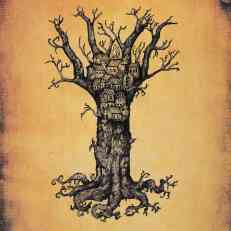
The music is relaxed and mildly atmospheric, although not quite in a Pink Floydian way. It has a more contemporary sound to it, somewhat reminiscent of Steven Wilson, although it isn’t as dark as that. Nevertheless the music is still rather haunting, which matches the artwork. The record focuses on the vocals and lyrics, with electric guitar and drums being the primary instruments. There are gaps in the instrumentation where the songs are carried along by a cappella vocals. The music is sometimes light, but it has its heavier moments. “Petrichor” starts off slow and sparse before building into a heavy blend of guitars and drums that then gets overlaid with saxophone. Quite nice.
At times the lyrics are more prose than poetry, or if it’s poetry it’s non-rhyming. There is a lot to dig into in the lyrics, since they’re on the denser side. This provides reasons to come back to the record, as well as a good reason to pick up the digipack, which has the lyrics printed on the inside of the foldout sleeves. Thematically the lyrics are very dreamlike. Images flash before the narrators eyes, much as it does in imagist poetry. The stories told are mildly in the horror, or at least mystery, genre, with cryptids lurking around corners and murders in the woods, adding to the haunting sense I mentioned earlier.
Prog magazine is reporting some interesting news from Steven Wilson. In addition to the new Porcupine Tree album due out in 2022, Wilson is working on a new concept solo album for 2023, and perhaps most interestingly he has a book coming out in March May 2022, entitled Limited Edition of One. Wilson comments on the book,
As well as containing some autobiographical material, it also has a lot on my ideas about music and the way things have changed in my time as a professional, lists, photos from my personal archives, conversation transcripts and even some fictional elements.
As there have already been a few books written about me and/or Porcupine Tree in recent years, I’ve chosen to focus on the stuff that people really don’t know about me. As you can probably guess, there will also be a special limited deluxe version. This will feature a second volume of supplementary material and photos, plus a 70 minute CD with “audio illustrations” of some of the things I talk about in the book, including mercifully brief extracts of my school bands, and early unreleased demos by No-Man and Porcupine Tree, among others. Although much of its musical merits might be questionable, my hope is to put you there “in the room” when I’m talking about my early musical endeavours.
I thought I didn’t have a big list of favorites from this year’s listening — until I revisited my six-month survey from back in June and added in the good stuff I’ve heard since then! The listing below incorporates links to full or capsule reviews, or other relevant pieces on Progarchy and elsewhere; albums I haven’t written about yet get brief comments, along with my Top Favorites of the year. Most of these are available to check out online in some form; if you find yourself especially enjoying something, use that Christmas cash and support your choice with a purchase! And the winners are . . .
Big Big Train released their final single off their upcoming album, Welcome To The Planet. “Bats in the Belfry” is an instrumental song written by drummer Nick D’Virgilio. Enjoy!
We’ve come to the end of another year, and what a horrible year it has been. Really the only positive thing I can think of from this year is the music. In addition to all the non-music nonsense that has gone on this year, we lost from legends in the prog world, none hurting more than the tragic and completely unexpected death of David Longdon. That one will hurt for a long time.
I usually write my best of lists in no particular order, with my top pick(s) at the end. So without further ado…
Robby Steinhardt – Not In Kansas Anymore
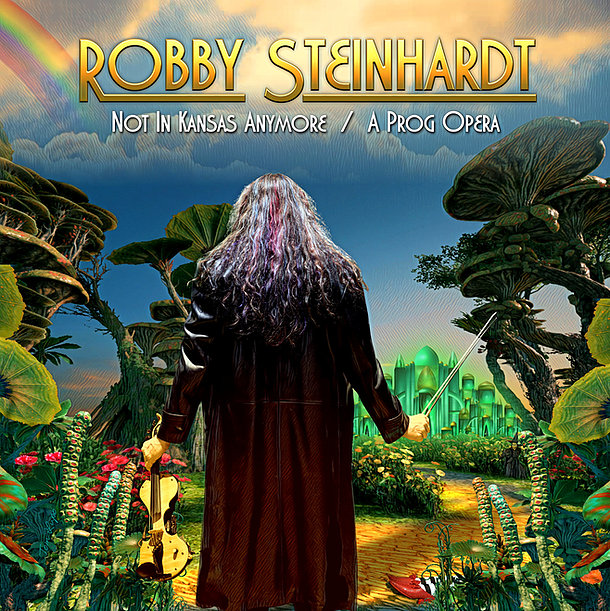
Robby Steinhardt was another prog legend we lost unexpectedly earlier this year. He hadn’t been active in music for quite some time, but that was about to change as he was finishing up his first solo album and had plans for a tour. Sadly the latter was not to be, but we did end up getting his solo album in the fall. It’s a great record, and it shows what a key player he was in Kansas. His vocals are stellar, and his violin playing is second to none. This record has a bit of the magic that I think Kansas lacks without Steinhardt. There are more musical influences at work than just Kansas on this record. It’s not a solid 10/10 throughout, but it is a very good record. Check out my review and my tribute to Robby.
Devin Townsend – Devolution Series #2 – Galactic Quarantine
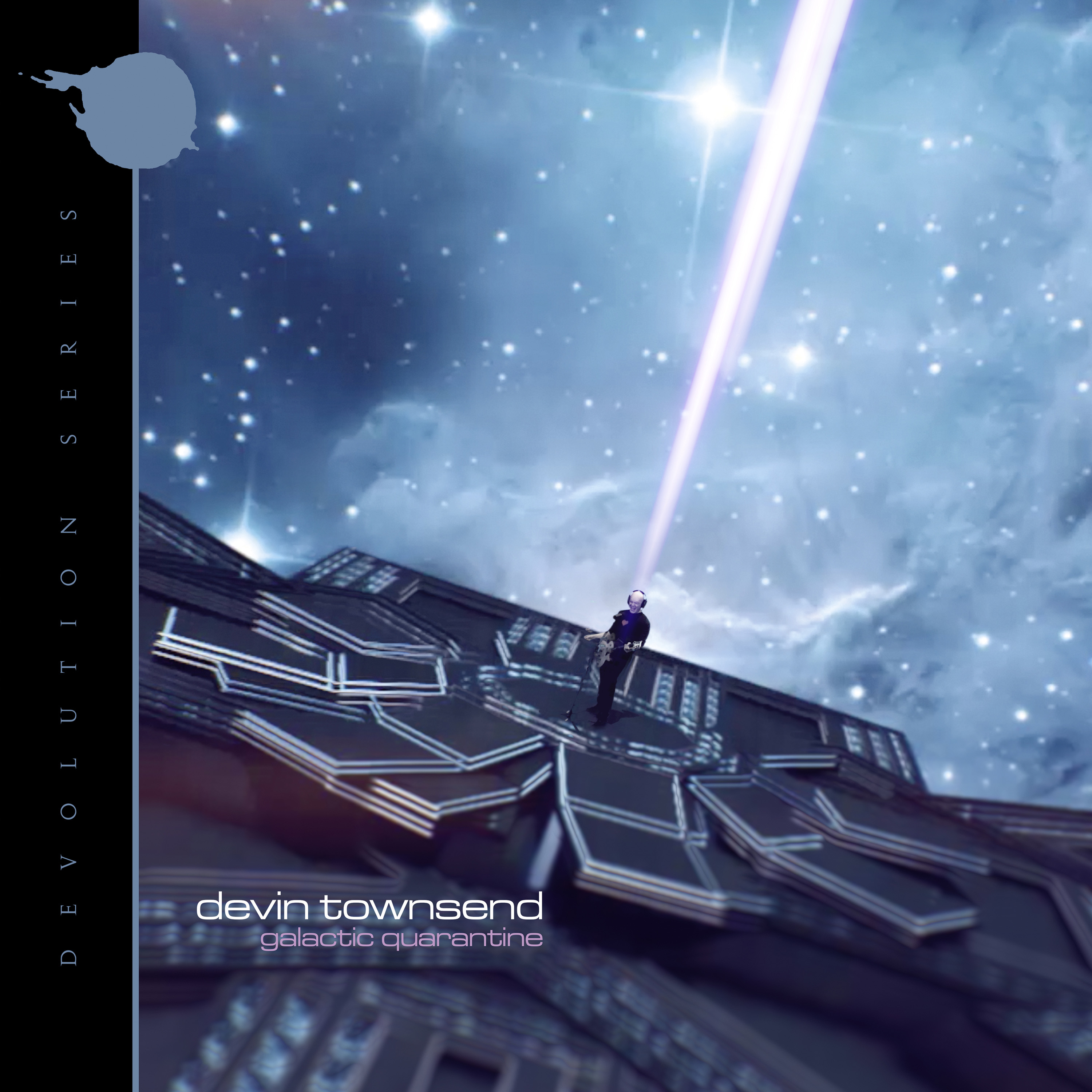
Devin Townsend has been a busy bee this year. In addition to working on three new records this year, he released two minor releases of live material. The first is an acoustic album (see my glowing review) from a show he did in Leeds in 2019. It’s a raw and emotional take on his music. The Galactic Quarantine album is one of his live-streamed albums from 2020 with the musicians playing live on green screens across the world. The music is blisteringly great, with a surprising amount of Strapping Young Lad material played. Devin humorously engages with his virtual audience, which makes the music come to life a bit more. This has been one I’ve returned to quite a bit this year. Perhaps an unorthodox release, but it would make a really good entrance point for the uninitiated to the heavier side of Devin’s music. Check out my review.
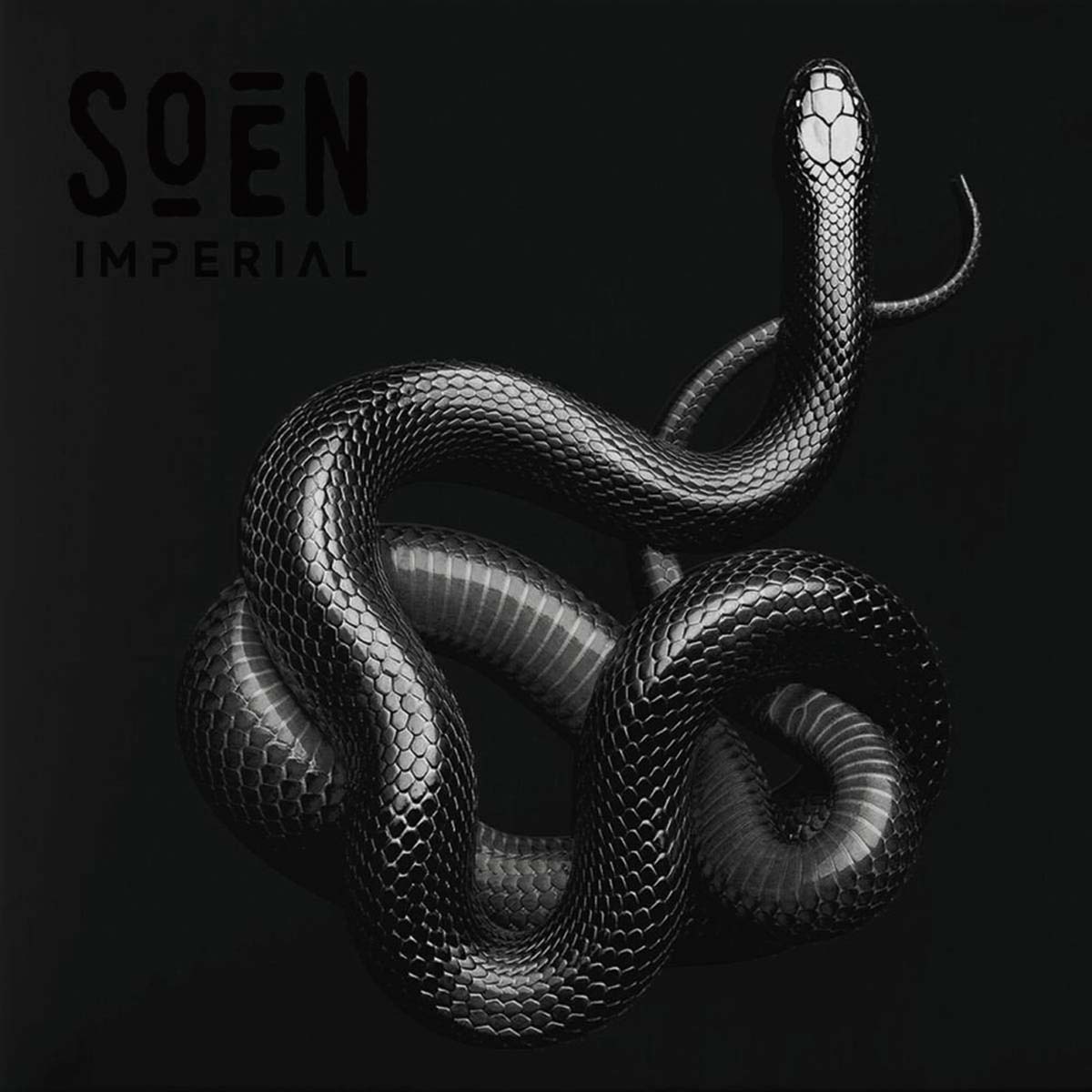
Soen – Imperial
It turns out we never reviewed Soen’s latest album, which was released in January. The Swedish prog-metal supergroup can do no wrong. Their songs are catchy, memorable, and thoughtful. They can be both heavy and contemplative, and in my book they rank in the upper echelon of progressive metal. This record has been on repeat all year.
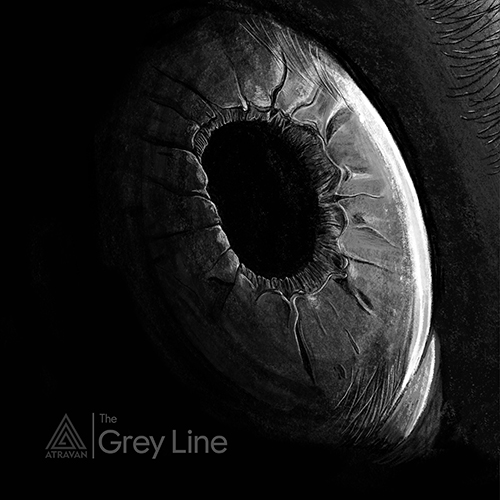
Atravan – The Grey Line
Sticking with the progressive metal theme, Atravan was a pleasant surprise at the beginning of the year. This is the first Iranian band we’ve ever reviewed here at Progarchy, and they’re fantastic. I’m so glad the band reached out to us. They make metal in the vein of Riverside – heavy, spacey, wall of sound. Definitely a band that deserves recognition, although I worry what too much recognition could do for them with the repressive Iranian regime. Check out my review.
Crown Lands had quite the year. First, these Rush superfans paid tribute with “Context—Fearless Part 1”, and its B-side “Right Way Back”, back in March.
In May, they offered live versions of the same, recorded as jaw-dropping proof that they were not merely wizards in the studio, but also a dynamic live duo, the likes which we have not seen before.
Then, they unleashed the killer single “White Buffalo” (in 7/8 time, no less) and the 13-minute epic “The Oracle” back in July.
The creativity kept on coming, as September saw the addition of “Inner Light” and “The Witching Hour (Electric Witch)” to the previous two tracks on the stunning White Buffalo EP.
Crown Lands has beautiful vinyl editions of everything, but you can also get the latter four songs on a nifty White Buffalo CD.
The year ended with a grand-slam live performance of all their new 2021 music, plus select gems from earlier years, on Odyssey Vol. 1, which you can also view online.
Here’s a fun one no one was expecting. Haken guitarist Charlie Griffiths teamed up with members of Dream Theater, Protest the Hero, Cradle of Filth and Inhuman Condition to create a special Christmas version of Slayer’s “Seasons In The Abyss.” And of course they named their “band” Sleigher. Ha.
Charlie Griffiths and Dan Goldsworthy play guitars, with the latter also writing alternate lyrics. Rody Walker of Protest the Hero sings vocals, Daniel Firth (Cradle of Filth) plays bass, Jeramie Kling (Inhuman Condition) plays drums, Haken’s Ray Hearne plays tuba, and the incomparable Jordan Rudess of Dream Theater provides a stellar keyboard solo – that he played on the first take! What a legend. Check it out:
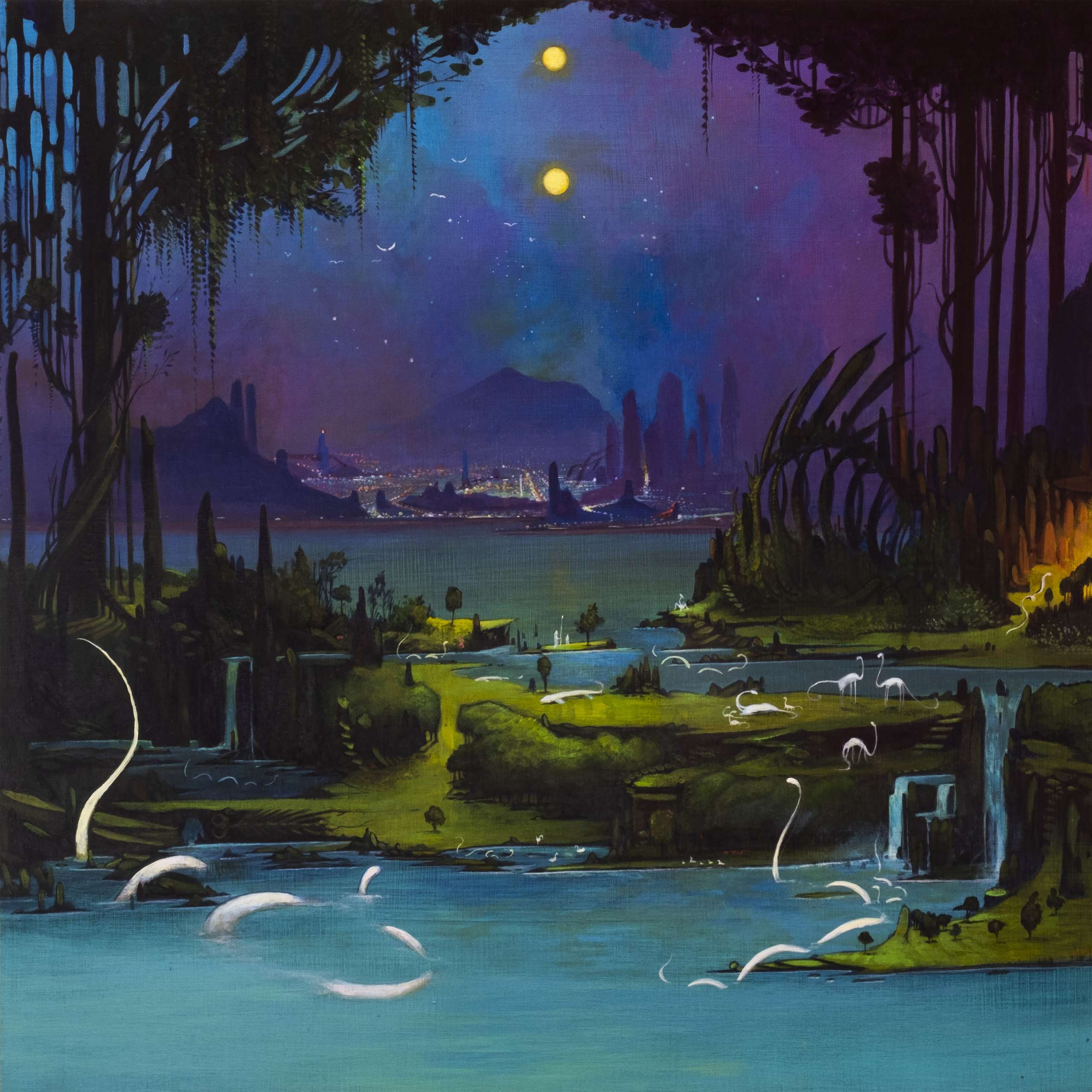
Lifesigns, Altitude, 2021 Tracks: Altitude (15:17), Gregarious (4:34), Ivory Tower (7:45), Shoreline (7:40), Fortitude (10:08), Arkhangelsk (0:57), Last One Home (6:16), Altitude Reprise (1:43)
As the year quickly comes to a close, it’s about time I start to wrap up with some reviews of some of the many wonderful albums released this year. Longtime readers of Progarchy might remember our past coverage Lifesigns, as we talked about them a fair bit in our early days. I’m happy to say that their latest album Altitude is not to be missed.
There’s a strong Marillion influence on the record, which you won’t hear me complaining about. The bass is loud and distinct, and Dave Bainbridge’s crisp guitar solos grab your attention. The keyboards and organs create a Floydian atmosphere, and the whole package, together with John Young’s vocals, create a neoprog masterpiece. When the violin kicks in on the opening track, you realize this is a special record.
With the first song clocking in at 15 minutes in length, you know right from the get-go that this is going to be a prog album in every sense of the word. The song goes through varying movements, all of which I enjoy. I hear a strong hint of Steve Hackett peppered in one of the guitar solos, which made me smile. There’s a later part of the song where acoustic guitar – possibly a twelve string – starts playing behind some synths, creating a bit of a Genesis sound. But then it blends in electric violin, a dash of saxophone, more synth sounds, and it really draws many different aspects of prog and neoprog together.
While the opening track is more contemplative, the second song, “Gregarious,” picks up the pace with a bit of a Supertramp style. There is some good cultural critique in the lyrics:
The TV will tell you who’s the master. Am I allowed to disagree?
“Ivory Tower,” impresses yet again with a familiar yet fresh sound. It’s strongly Marillionesque in melody and overall sound, but it isn’t a copycat at all. It’s just good music in that vein. There are strong elements of contemporary prog here too, with “Fortitude” reminding me of Steven Wilson’s solo work (his progressive stuff, not the pop albums).
The band goes full Floyd on “Last One Home.” Bainbridge’s long guitar solo is blisteringly brilliant, and it is backed perfectly with a Hammond organ, drums, and bass. This kind of guitar work should feature on every progressive rock album. The song closes out with some pleasant vocal harmonies that grow in a beautiful crescendo.
Altitude has impressed me more and more upon repeated listens. There are a lot of little things to pick up on throughout, such as the backing female vocals that pop up periodically. The album contains many nods to prog history, which will be sure to please many prog fans, but there’s so much more here to enjoy. The songs are well-written. The lead and backing vocals create a smooth and pleasant atmosphere, and Bainbridge’s guitar-work is worth the price of admission just by itself. Do yourself a favor and check Altitude out before the year ends.


 Michael Woodman, Psithurism, 2021
 Robby Steinhardt – Not In Kansas Anymore
 Devin Townsend – Devolution Series #2 – Galactic Quarantine
 Soen – Imperial
 Atravan – The Grey Line
 Lifesigns, Altitude, 2021
 Progarchy