He’s back. Video no. 2, this one from August 1, 1983. Again, I can only suspect that Tom lives very, very close to Hawkins, Indiana.
2018 is now a month past its halfway mark, and the year is somewhere in its middle age, and it will only continue to age until that fateful day, December 31, inevitably comes.
From the perspective of progressive rock, it’s been a solid year, but not an outstanding year–at least in terms of studio releases. Certainly, those released–from The Fierce and the Dead to Gazpacho to the Kalman Filter to Galahad to 3RDegree–have been excellent, to be sure. But, they’ve been few, especially compared to the re-releases and re-mastered and re-packaged.
Perhaps, 2018, in the end, will prove to be a moment of all of us catching our collective breath. Maybe what the Old Testament called “Selah,” pause.
The seminal British collective Soft Machine were many things in their history — psychedelic pioneers, proto-progressive rockers, avant-garde explorers, always bobbing and weaving in the borderlands between jazz and rock. One thing they were not was stable; by biographer Graham Bennett’s reckoning, the Softs had 24 separate line-ups during their original run of 1966-1984! As the band’s current incarnation embarks on a 50th anniversary world tour and releases the new Hidden Details album, I’m listening to their studio catalog along with selected live recordings, tracing the long, strange road they’ve traveled from then to now.
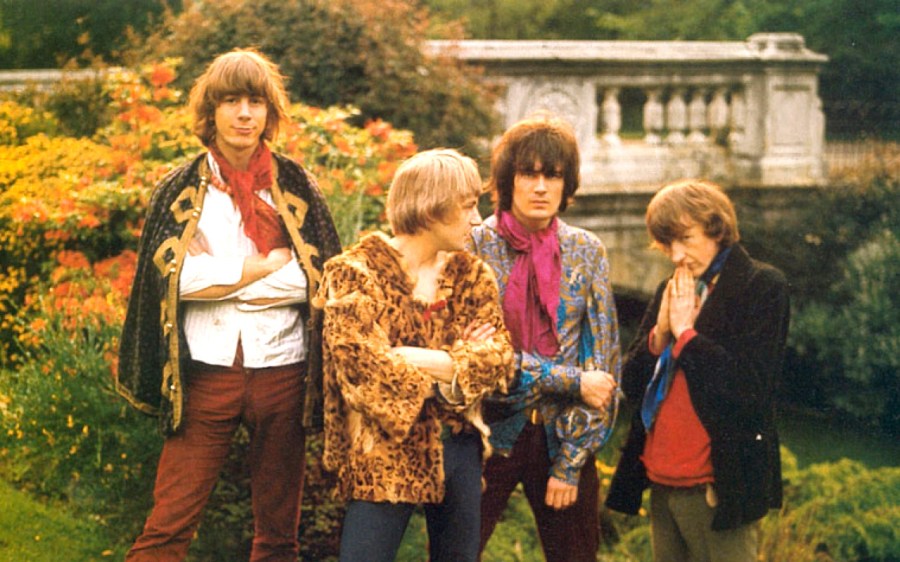
Soft Machine were formed in mid-1966 by Robert Wyatt (drums, vocals), Kevin Ayers (bass, guitar, vocals), Daevid Allen (guitar) and Mike Ratledge (organ) …
This first Soft Machine line-up became involved in the early UK underground, featuring prominently at the UFO Club, and subsequently other London clubs like the Speakeasy Club and Middle Earth. .. They also played in the Netherlands, Germany and on the French Riviera. … Upon their return from their sojourn in France, Allen (an Australian) was denied re-entry to the United Kingdom, so the group continued as a trio, while he returned to Paris to form Gong.
The archival recording Middle Earth Masters, one of a fine series from Washington DC’s Cuneiform Records, captures the remaining trio a month after Allen’s departure. Easing in with relatively conventional (though absurdist) pop tunes like “Clarence in Wonderland” by Ayers, the Softs quickly slip the reins. Wyatt repetitively chews on the words of “Hope for Happiness” like they’re an Indian raga, the trio kicks into a high-energy riff — and Ratledge takes off. With his Lowrey organ run through a fuzzbox and a Marshall stack, he bashes out speedy pyrotechnics, grinding harmony pads, and distorted pitch-bent chords; underneath him, Ayers and Wyatt slip and slide from sparse grooves through splattery swing to bludgeoning stop time. Ratledge’s solo “Disorganization” is even wilder, a tornado of phenomenal technique, overdriven amplification, and rhythmic attack echoing free-jazz pianist Cecil Taylor. Then the Softs slam into another extended medley, kicked off by the goofy, minimalist “We Did It Again” (four words, one riff, six minutes), climaxing with a clattering drum solo and feedback all around before Wyatt winds down with a hushed falsetto benediction. Cliche though it might be by now, in 1967 sets like this were a serious trip.
Sharing management with the Jimi Hendrix Experience, the Softs gained a support slot on that band’s 1968 North American tour. Between tour legs, they piggybacked on studio time for Hendrix’s Electric Ladyland to record an album for ABC/Probe, with Tom Wilson (Simon and Garfunkel, Bob Dylan, The Velvet Underground) producing. While the record sat in the can, lots happened: Andy Summers (yeah, the future Police guitarist) joined, only to be summarily fired at Ayers’ insistence; then Ayers himself quit after another US tour, feeling the Softs were heading towards playing (shudder) jazz. Wyatt remained in the States, Ratledge returned to England, and the band seemed finished — the perfect moment for ABC/Probe to release the first album!
How do you solve a problem like Spawton?
Yes, that Spawton.
Gregory Marcus Aurelius Spawton.
The guy just doesn’t give an inch. He doesn’t compromise. He doesn’t meet anyone half way. He wants nothing but excellence in a world defined by shoddiness. So, again, how do you solve a problem like Spawton?
What would Harrison Bergeron do?

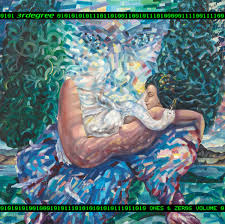
A few years back, 3rDegree’s Ones and Zeros, Vol. 1 took the prog world by storm, being
one of the highest rated and reviewed albums of that year. For good reason too. Combining excellent music with contemporaneous subject matter of very high relevance, it did – extremely well – what prog does better than any other genre. Namely, it provided music and lyrics that, in addition to being entertaining, made the engaged listener think. But Vol. 1 was not the whole story – there was another one to come. And here, in 2018, Ones and Zeros, Vol. 0 has now arrived. And we can happily say that 3rDegree has done it again, providing another album that builds upon and maintains the excellence of its predecessor.
Both this album and its predecessor combine excellent prog rock music with timely subject matter. Musically, the album both pays homage to the classic prog movement while still providing a modern, unique sound. Topically, the lyrics explore our modern, digital, technological world, with a particular focus on its dark underbelly. For these reasons, Vol. 0 – along with its predecessor – pull off perfectly what exemplifies one of the best aspects of the current prog scene, namely complex, engaging music combined with a biting but (very) necessary cultural critique.
The songs on this album flow together nicely, with the instrumental track Re1nstall_Overture providing a charging-out-of-the-gate musical opening. Connecting follows, with some biting lyrics regarding social media, trolling, and addiction to the same. Olympia follows with some great melodies and lyrics about android love … cue Rachel from Blade Runner.
Most of the next song, The Future Doesn’t Need You, as an easy, breezy feel, while lyrically hammering home the theme of technology addiction and its effects on the wider culture. I’m wondering if they drew inspiration from this essay, which is similarly titled. Unintended Consequence musically has an early-to-mid 80’s feel, while lyrically mocking the hubris of those who believe tech is all that is needed to make the world a better place.
Perfect Babies is chock full of excellent lyrics that explore the understandable desire of every parent to give their kids as many advantages in life as possible, juxtaposed with a subtle warning against the temptation of taking biotech shortcuts. Logical Conclusion meanwhile explores one of the drivers of human need for technological master – the uncontrolled whims of nature – extending into the conceit that we might be able to pull it off (hint: we can’t).
The epic Click Away! comes up next, and it’s a doozy, divided into multiple movements. There are so many different musical moods and styles throughout it would be more efficient to simply listen to the track than to try and list them here. This one is best listened to at your computer, as the lyrics are found on the Valhalla Biotech website. It’s great to sit back, read the lyrics off the website while listening to a clever critique of social media and its attendant addictions.
The title track, , closes the album, with the question “are you a one or are you a zero.”
Making a concept album hold together is tough enough. Doing it over multiple albums is even harder. In the wake of the standard set by Ones and Zeros, Vol. 1, the pressure to deliver a worthy follow-up could have weighed heavily on 3rDegree. And yet, as
evidenced by Vol. 0, the band seemed impervious, delivering exactly the sequel that a fan of its predecessor would have hoped for. In what is shaping up to be a very good year in the prog scene, 3rDegee has delivered one of the best albums of the year, combining interesting music and topical lyrics. Well done, guys.

So, after several months of curious postings and even a rather great music video, it seems that Tom Timely, aka “The Elf King,” is the Tom of Glass Hammer’s 2000 masterpiece, CHRONOMETREE.
Here’s Tom, himself, from 1983.
Notice the date! Just about three months before season 1 of Stranger Things begins. Tom never admits it, but I’m guessing that he lived in Hawkins, Indiana.
Enjoy the mystery!
This awesome video retrospective by Razörfist makes the definitive profane case for Stryper, one of the all-time greatest — but most criminally underrated — metal bands.
The history of the band is covered his video all the way up to 2015’s Fallen. In light of 2018’s equally superb release, God Damn Evil (banned at Walmart), it is a history very much worth revisiting.
Stryper have now remained at the top of their game ever since 2013 saw them kick off their contemporary trilogy of greatness (2013, 2015, 2018) with the excellence that is No More Hell to Pay.
Hell, even Mike Portnoy sat up and paid attention and recognized the achievement.
In the beginning, the band’s classic trilogy of killer metal from the early days of the 80s consisted of The Yellow and Black Attack (1984), Soldiers Under Command (1985), and To Hell with the Devil (1986).
In God We Trust (1988) and Against the Law (1990) were then the two albums of searching for the way forward, after having achieved platinum status and MTV fame with To Hell with the Devil. And, in the changing musical landscape of the 90s, the path wasn’t clear, so they broke up.
But with the metal renaissance of the new century, Stryper came back with two bold steps forward that reasserted their capacity for rocking hard: Reborn (2005) and Murder by Pride (2009).
Yet who would know that these two efforts were only the beginning of a new era, one about to give birth to their most consistently great music? But first, the way into their latter day trilogy of greatness (2013, 2015, 2018) was carefully prepared for, by a back-to-metal-roots album of excellent covers, The Covering (2011), and also by a sonic updating of their glory days, with the re-recording of classic Stryper songs on Second Coming (2013) .
If you’re a skeptic or an agnostic about Stryper’s preeminence, then watch the video below. Spin the albums, and mark my words: if you have an ounce of taste, you will find yourself turning into a believer — because Stryper has more than earned their place in the pantheon of metal greats.

Great profile of Andy Sneap in the WSJ today. It includes this interesting statistic about metal versus rap:
[Andy Sneap] and old-school producer Tom Allom co-produced Judas Priest’s 18th full-length studio album, which was released in March. “Firepower” won critical praise and sold nearly 100,000 copies in the U.S., according to Nielsen Music. It also rose to No. 5 on the Billboard album chart—the highest spot in Judas Priest’s 50-year career. “Andy had always been a big fan of Judas Priest,” the group said by email. “He brought all of that love and sound knowledge into the studio.”
Mr. Sneap’s success reflects the enduring appeal of classic metal in the age of hip-hop. In the first half of 2018, rock, including metal, accounted for 41% of U.S. physical and digital album sales, compared with 16% for hip-hop/R&B, according to Nielsen Music. Including streaming, Metallica was America’s third-most popular rock act, after the Beatles and Imagine Dragons.
The resurgence of bands like Judas Priest comes amid a swing back to the traditional in metal. For years, younger acts enlisted dizzying chord changes and growly vocals in a bid to sound less commercial. Now, bands like Ghost, Kvelertak and Deafheaven are re-embracing the hummable melodies of metal’s glory days.
The future belongs to rock! Keep making great albums, dude. The metal-heads will be there for you.

This album, Lucifer II, came as a refreshing surprise. After a number of disappointments — albums I had been awaiting from artists with eager expectation, that only turned out not to be as good as I hoped — I was surprised when I discovered a new band, whose sophomore release was nothing less than superb. (And do you notice the homage their band logo plays to the font on the first Rush album? Attention, all planets!)
Hailing from Stockholm and Berlin, Lucifer is fronted by the extremely talented Johanna Sadonis. After previous exploratory work with The Oath, and the first incarnation of Lucifer with Gaz Jennings, Johanna has now found the ultimate magical combination with Nicke Andersson on drums and Robin Tidebrink on guitars and (newly added for touring purposes and as permanent members going forward) Martin Nordin on guitars and Alexander Mayr on bass. This new album was recorded at Nicke’s studio in Stockholm, where he did all the drums, bass, and half the guitar parts himself, and then lead guitarist Robin came in to do the rest of the guitar work.
The album opens with the fairly straightforward blues boogie “California Son,” which didn’t really cause me to get too excited. Johanna’s vocals are fantastic, but the song is pretty conventional, although the excellent guitar solos caused me to perk up on first listen, along with the nifty organ chords riding out that exhilarating guitar solo break.
But it was the second track, “Dreamer,” that instantly blew me away. Along with the third track, “Phoenix,” it is one of the two best songs on the album. The complexity, nuance, supremely intelligent songwriting, and impeccable instrumental performance on these two tracks place the album irreversibly into the upper echelon of rock and roll achievement.
The Rolling Stones cover, “Dancing With Mr. D,” is even better than the original, infused as Lucifer’s version is with a Black Sabbath sensibility. “Reaper on Your Heels” then shows that the magisterial songwriting skill displayed on “Dreamer” and “Phoenix” will abide, making it a perfect closer to an impeccable A-side.
The album B-side of “Eyes In The Sky,” “Before The Sun,” “Aton,” and “Faux Pharaoh” offers a swirling cauldron of excellent sounds, brewed from a recipe that tastes mostly like classic Heart mixed with the best of Black Sabbath. At times I even detect the timbre of a Karen Carpenter gone over to the dark side in Johanna’s enchanting voice. While the A-side is immediately convincing, appreciation for these B-side tracks grows more slowly, over repeated listens, and you eventually come to realize fully that with this album you are in the presence of contemporary rock greatness.
The closing track “Faux Pharaoh” offers an instructive contrast with the album’s conventional radio-friendly opener, proving that Lucifer is actually a serious doom prog force to be reckoned with. It’s perhaps their most original composition, showing that they are capable of doing whatever they want with the utmost of skill. Here’s hoping they get the recognition they deserve for their carefully cultivated talents.
This album has catapulted itself into my top ten list for 2018, and there is no way it will be removed from that ranking. Get a copy of Lucifer II and hear for yourself a band that, inspired by the best of 70s rock, is creating utterly compelling original music today, to be savored by those with only the most developed taste in rock.
My progarchist album rating is: FIVE pentagrams. ☆☆☆☆☆
LUCIFER II tracklist (42:00)
01. California Son (03:26)
02. Dreamer (04:46)
03. Phoenix (05:47)
04. Dancing With Mr. D (04:11)
05. Reaper On Your Heels (05:06)
06. Eyes In The Sky (04:30)
07. Before The Sun (03:38)
08. Aton (05:05)
09. Faux Pharaoh (05:25)
Johanna Sadonis – Vocals
Nicke Andersson – Drums
Robin Tidebrink – Guitar
Martin Nordin – Live Guitar
Alexander Mayr – Live Bass
… If you’re a prog fan, that is. Some of what’s in the forecast for the rest of the year:
3.2, The Rules Have Changed, Robert Berry’s one-man tribute to and posthumous collaboration with Keith Emerson; released August 10. Details and a teaser track here.
Dave Stewart & Barbara Gaskin, Star Clocks. I’ll be writing more about Stewart & Gaskin’s music soon; suffice to say it’s some of the best intellipop you’ve probably never heard. (With Gavin Harrison on drums, no less.) The new album is out August 17; pre-order it and investigate their back catalog at Burning Shed.
The Pineapple Thief, Dissolution. Bruce Soord and the TPT crew are joined by Gavin Harrison — him again! — as drummer and co-writer. Released August 31. Details and a teaser track here; check out Sonic Perspectives’ interview with Soord (which hints at a possible 2019 US mini-tour) here.
Soft Machine, Hidden Details. The pioneer psych/prog/jazz-rock collective is back for a 50th anniversary world tour — and they’re bringing a new album with them! Three members from the 1970s versions of the band plus sax/flute progger Theo Travis (Robert Fripp, Steven Wilson, David Gilmour) tackle new compositions and a couple of vintage classics. Released September 9; watch for a Soft Machine retrospective series from me during the run-up. Tour info here; pre-order options for the album and a sample track here;
Yes featuring Jon Anderson, Trevor Rabin & Rick Wakeman, Live at the Apollo. The “unofficial” version of the band (albeit one with two “classic era” members plus the musical mastermind of 90125) weighs in for the band’s 50th anniversary year. Released September 9 in various audio and video formats; details and a teaser here.
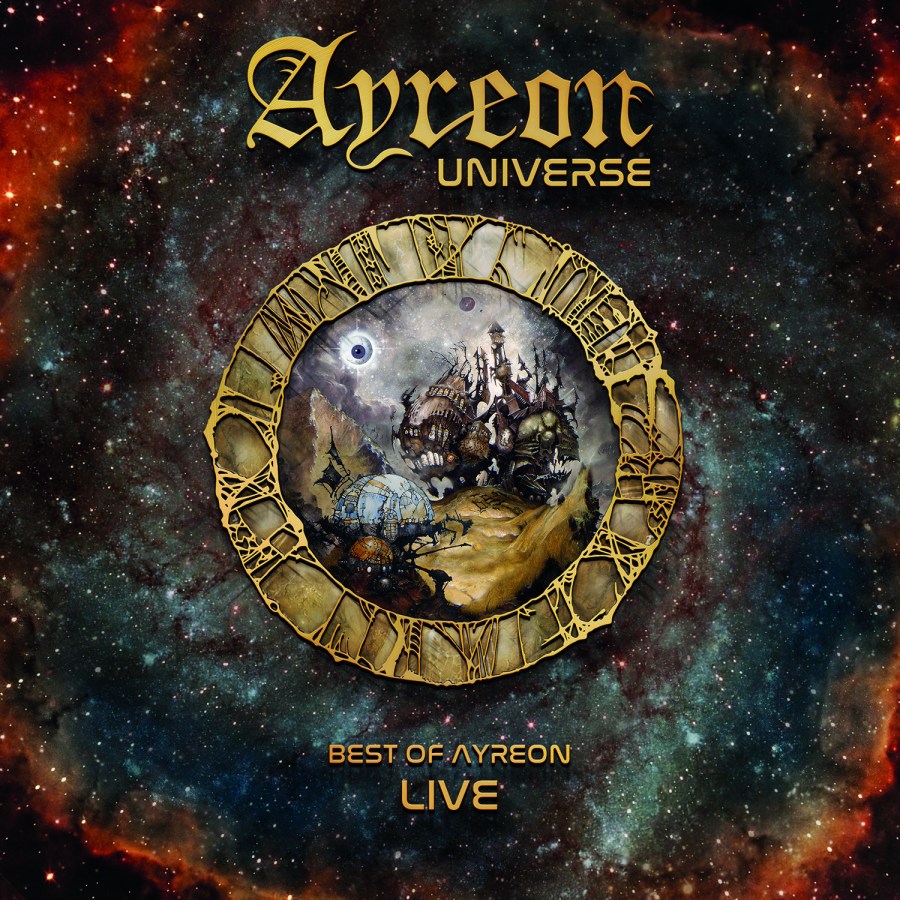
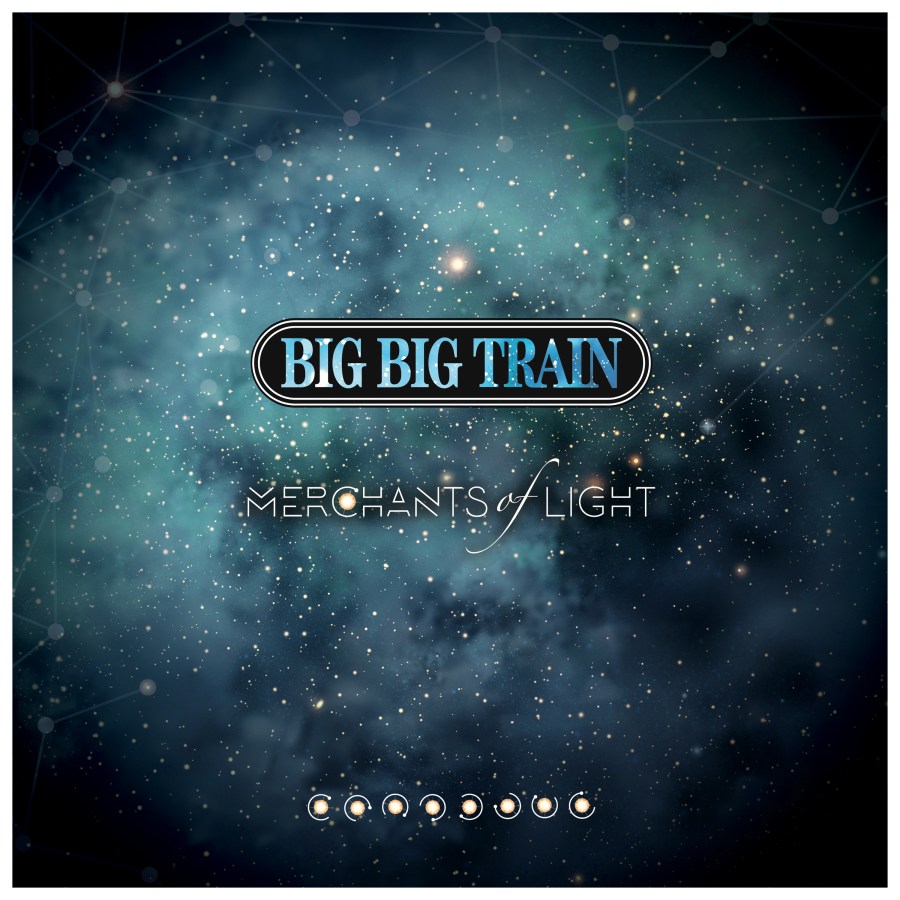
Coming soon from In Continuum: the debut album by Dave Kerzner’s new supergroup, with contributions from: vocalist Gabriel Agudo (Steve Rothery Band / Bad Dreams); guitarists Fernando Perdomo (Dave Kerzner Band), Matt Dorsey (Sound of Contact) Randy McStine (Sound of Contact, The Fringe) and John Wesley (Porcupine Tree); drummers Marco Minnemann (Steven Wilson, The Aristocrats), Nick D’Virgilio (Big Big Train, Spock’s Beard) and Derek Cintron; and special guests singer Jon Davison (Yes) and guitarist Steve Rothery. Release date TBA; more info here.
Coming soon from King Crimson: Based on the liner notes in Crimson’s 2018 Tourbox, we can anticipate: a reissue/revamp of the band’s 2001 album, The ReConstruKction of Light; a related, more exhaustive box focusing on the era of the ProjeKcts and the Double Duo Crimson, Heaven and Earth; and a fresh concert set from the current Crims, Live in Mexico. Release dates TBA. Meanwhile there have been rumblings from Robert Fripp ruling out Europe for Crimson’s 50th anniversary tour in 2019. Does that rule in the USA? Stay tuned …
Coming soon from Marillion: deluxe edition of Clutching at Straws (release date TBA); mass market reissues of the Racket Records live sets Happiness is Cologne, Popular Music (U.S. release in September), Live in Glasgow and Brave Live (U.S. release in November). Clutching rumors to be found in the Lucy’s Friday Questions group on Facebook; live reissue info is here and here.
Coming soon from Steven Wilson: Home Invasion Live at the Royal Albert Hall, with guest appearances by Richard Barbieri (Porcupine Tree), Mark Feltham (Talk Talk), Dave Kilminster and Ninet Tayeb. (Oh, and a Bollywood dance company). Release info for the video TBA; details here.
Bonus round from the Pink Floyd camp: Nick Mason expects to tour the USA next year with his new band Saucerful of Secrets. The group’s set of early Pink Floyd classics (from the albums Piper at the Gates of Dawn through Obscured By Clouds) went down a storm in London earlier this summer; they embark on a European tour in September. More info on the band and Mason’s box set reissuing his solo albums here.
— Rick Krueger