Rick’s Quick Takes: Progging and Jamming and Twanging, Oh My!

Due to circumstances beyond my control — thanks to everybody who helped out! — this edition of Quick Takes is playing catch-up. This time around, purchase links are embedded in the release title, with any additional sample/streaming links labelled (LISTEN HERE).

The last few months’ progressive rock releases have skewed heavily toward reissues — for example, Keith Emerson and Greg Lake’s mid-1980s reunion with hard-rocker Cozy Powell in the drummer’s chair. Triple-cd box Emerson, Lake & Powell: The Complete Collection (LISTEN HERE) is a compact, yet worthy appendix to the ELP canon. The main album, ranging from extended throwbacks “The Score” and “The Miracle” through jazzy diversion “Step Aside” to souped-up classical gas like the single “Touch and Go” and Holst’s “Mars, the Bringer of War” is big, brash, widescreen stuff; both in the studio and on the two live discs included, Emerson’s thrusting digital synthesizer upgrades, Lake’s full-throated bravura vocals and Powell’s sleek percussive drive come on like gangbusters on new material and vintage classics such as “Pictures at an Exhibition” and “Pirates”. ELP’s mass appeal remained in the rear view mirror, but Emerson, Lake and Powell was a game try at reinvention for a different time.

Carl Palmer was playing drums for Asia during ELPowell’s flare and fade, but he’s remained engaged with his biggest band’s work, stepping up as legacy guardian after Emerson and Lake’s passing. Disc 1 of Palmer’s solo box Fanfare for the Common Man (a reissue/expansion of 2001’s Do You Wanna Play, Carl?) shows how he emerged from his bandmates’ shadows in the later 1970s, asserting himself in spellbinding trio jams, big band blowouts and a stylish, eclectic percussion concerto; disc 2 covers his roots in British R&B and psychedelia plus his later collaborations with Asia and others, while a new 3rd disc documents live work reinventing the ELP repertoire for guitar-based power trio. The accompanying BluRay video and biography are revealing, though scattered and even self-contradictory. But that’s a minor blemish: Palmer remains rightly admired and respected by musical peers and fans, and still on the road in his 70s, he retains the rhythmic fire and momentum that this set amply demonstrates.

ELP weren’t the only proggers trying to reinvent themselves after the mid-70s; on side one of 1977’s The Missing Piece (LISTEN HERE), the manic British sextet Gentle Giant made ever so coy feints at co-opting the energy of punk and New Wave (especially on the self-conscious spoof “Betcha Thought We Couldn’t Do It”). Side two was more relaxed; reaching for the soul-inflected art-pop that Genesis and Yes later rode to the top of the charts, the Shulman brothers & company still stirred in Baroque cross-rhythms (“As Old As You’re Young”), stately balladry (“Memories of Old Days”) and breakneck instrumental and vocal twists and turns (“Winning”). With Steven Wilson providing fresh stereo and spatial audio remixes, this is another delightful installment in the Giant’s ongoing series of album upgrades.

English folk-classicalists Renaissance kept plugging through the decades, with operatic lead singer Annie Haslam at the helm. 2000’s Tuscany (LISTEN HERE) was Haslam’s last go-round with key members guitarist Michael Dunford and drummer Terence Sullivan (plus limpid guest piano work from former keyboardist Jon Tout). Not as urgent as their 1970s work, it’s still a lovely, impressionistic album, gently meditating on the nexus of art (“Lady from Tuscany”, “Dear Landseer”), nature (“Pearls of Wisdom,” “Dolphin’ s Prayer”) and love (“In the Sunshine”, “One Thousand Roses”). A complete live show from Renaissance’s 2001 tour of Japan included as a bonus mixes new tunes with career standbys such as “Carpet of the Sun,” “Northern Lights” and “Mother Russia”, showing off Haslam and company’s musicality and consistency. As usual, Esoteric Recordings’ latest Renaissance reissue provides the context to better assess the work of this underrated band.

And in the wake of its new reissue, I now consider Yes’ 1994 album Talk the most unified effort of their post-prog decade. (It was also the least well-known, due to grunge taking over rock radio and Yes’ record company collapsing.) The only full-blown songwriting team-up of hippie muse Jon Anderson and guitarist/keyboardist/composer Trevor Rabin, Talk’s tunes ooze out-there ambition and hi-gloss appeal; the choral kick of “The Calling” and “Walls”, “Real Love’ jangle-pop/heavy metal synergy, the skip-hopping “State of Play” and the closing multi-part epic “Endless Dream” are stunningly remastered to devastating impact. Rhythm section Chris Squire and Alan White are at their most down and dirty; Tony Kaye leans in with expressive, gnarly organ work. And a bonus live set (from the soundboard at a 1994s tour stop) showed that this lineup could conjure a fairly close approximation of the classic sound on standbys like “Heart of the Sunrise” and “I’ve Seen All Good People”. If you loved Yes but wrote them off between 90125 and Union, I’m serious; give Talk a shot.

There have also been plenty of ear-opening new releases, mostly rooted in improvisation rather than composition. The latest posthumous set from piano legend Chick Corea has its source in a 2019 tour and follow-up sessions with eclectic banjo virtuoso Bela Fleck; the aptly-titled Remembrance (LISTEN HERE) covers an incredible range of sonic possibilities, with the duo wailing on Thelonious Monk’s “Bemsha Swing”, Scarlatti sonatas, brand new compositions and impromptus pulled from thin air. Impeccably tasty and always in the moment, Corea and Fleck spark off each other constantly, caught up in an unending sense of play and delight. Fans of either player will love this, and folks who dig acoustic jazz, bluegrass or both will find themselves smiling again and again when they hear it.

While Brad Mehldau is one of the numerous young lions who followed in Corea’s wake on piano, his sound and vision are uniquely his own, as a fresh pair of solo discs make clear. On After Bach II, Mehldau brings his love for the classical piano tradition and his improvisational chops to bear on a second set of J.S. Bach’s richly poised keyboard works, mingling preludes and fugues played straight with jazzier extrapolations (“Between Bach”) and superimposed twists of rhythm and counterpoint based on one of Bach’s pinnacles, the Goldberg Variations. Apres Fauré brings a similar freedom to the music of Gabriel Fauré, the French composer who became a unique bridge between the late Romantic and Impressionist schools; Mehldau responds to Fauré’s sense of adventure with sweeping repetitious bass lines, long-spun singing melodies, and thick two-handed harmonies. Plenty of rigorous development to chew on, plenty of knotty invention and lush sound to bask in on both of these!

On their new EP Tropic of Cancer, Chicago’s heavy-prog-jazzers Sons of Ra show how they can unspool variations on a theme with staggering impact. Setting a nimble, dancing idea with roots in fusion’s golden age into motion, multi-instrumentalists Erik Oldman and Keith Wakefield and drummer Michael Rataj put it through exhilarating paces over 23 minutes: you get wah-wah electric piano extrapolations, a sax/bass duet over a bed of guitar/sax noise; a wonderfully idiomatic folk/Celtic throwdown (complete with guests on violin, flute and pipa); a Santanesque guitar jam that spirals up dizzingly before it goes off like a fireworks display; and a gargantuan finish with hypnotic sax wailing over a shuddering guitar army. No jive; this is great stuff, and Sons of Ra are a band to which attention must be paid!

King Crimson-adjacent power trio Markus Reuter, Trey Gunn and Pat Mastelotto are also back with the ironically titled Tu-Ner for Lovers, another heaping helping of rich, doomy thrash. Sculpted from improvs recorded on their 2023 tour, the trio scrape, scratch and scrawl from the get-go, with Mastelotto laying down off-kilter tribal beats, Gunn rattling listeners’ innards with sludgy bass lines and Reuter slapping down arresting leads and color clusters on touch guitar. Stalking the abstract sublime, the music coalesces as the album progresses, locking in to galvanizing effect on closing stompers “They Call Him Threnody” and “Transistor Valentine”, wispily floater “I Put a Crush on You” and skittering finale “Combat and Courtship”. You may need to be in the right mood for this to grab you — alienation? Righteous anger? — but when you are, boy, does it hit home!

Kamasi Washington’s long-awaited double album Fearless Movement is every bit as kickass and sprawling as previous spectaculars The Epic and Heaven and Earth (the latter my 2018 Album of the Year), but somehow settles in a gentler, more welcoming vein. It kicks off with “Lesanu”, an Egyptian Orthodox chant of Psalm 96 riding first a free-jazz slam, then a finger-snapping, hand-clapping vamp and ends with “Prologue”, an Astor Piazzolla tango that morphs into a blaxploitation movie theme; at all points within and between, Washington on tenor sax, keyboardists Cameron Graves and Brandon Coleman, Ryan Porter and Dontae Winslow on brass, and a platoon of guests play and sing up a storm. But slower burning tracks like “Asha the First” and “Together” provide respite from the intensity of Washington’s sweep and surge, and a looser, relaxed sense of momentum on the Zapp cover “Computer Love” and the extended workout “Road to Self (KO)” helps you catch your breath. Washington and his friends are still making audacious spiritual jazz, building from whispers to screams again and again and dancing across barlines like they don’t exist; but somehow this set feels more like a place to make a home than a monument to visit. And yes, this one’s gonna be on my Favorites list this time around, too . . .

And sometimes, you just need some down-home picking and singing. On the heels of selling out the Ryman Auditorium (documented on record to great effect last year) and duetting with Willie Nelson, Charley Crockett pitches a passel of new songs our way on $10 Cowboy (LISTEN HERE) As with much of Crockett’s recent work, this album leans into soul nearly as much as country; the choogling brass and choral vocals of “America”, the piano-with-strings heartbreaker “Gettin’ Tired Again” and the funky “Diamond in the Rough” can’t help but call Motown and Memphis to mind. But there’s plenty of Nashville/Austin classicism too, in the steel guitar-laced single “Hard Luck and Circumstances”, the Latin-flavored acoustic revenge ballad “Spade” and the honky tonk shuffle “Ain’t Done Losing It” Whether this is the long-predicted breakthrough for Crockett or not, $10 Cowboy is a thoroughly satisfying album, capturing sharply defined snapshots of a nation wondering when things will get better.

And (thanks to the copious music collection found at the main branch of the Grand Rapids Public Library), I discovered that Sierra Ferrell’s 2021 debut Long Time Coming is every bit as good as her new one (Trail of Flowers, reviewed last time). My entire notes for this one consisted of the word “WOW!!”, so I’ll just point you in the direction of this review (from my go-to site for genre news and reviews, Saving Country Music), add Long Time Coming to my 2024 Favorites list and look forward to hearing her live in September!

— Rick Krueger

Welcome Back My Friends – The Return of Emerson Lake & Palmer

Welcome Back My Friends: The Return of Emerson, Lake and Palmer
50th Anniversary Tour

Penn’s Peak, Jim Thorpe, Pennsylvania
November 20, 2022
Concert Review By Bob Turri

Having never seen Emerson, Lake and Palmer during their peak of popularity in the 70s, I jumped at an opportunity to see Carl Palmer billed with Emerson and Lake holographically on a special tour. Carl Palmer is one of the greatest rock drummers still playing today. At 72 years of age my mouth dropped for most of the concert watching his polyrhythmic attacks take place. The show I witnessed was at Penn’s Peak, a really nice venue in Jim Thorpe, Pennsylvania. For those of you who have never been there or maybe never been to PA, Jim Thorpe is a mountainous northeast Pennsylvania town, known today for numerous shops and tourists from New York and elsewhere coming to enjoy a small-town vibe in an idyllic setting. There are nature trails and mountains everywhere. The town has an extensive history like a lot of northeastern Pennsylvania towns but now mostly relies on the tourist trade and small business owners.

Penn’s Peak, the concert venue, sits high on a mountaintop, hence its name, and has an interior wooden structure that reminds one of being in huge log cabin. The show was scheduled for 8 pm and looking around the crowd was mostly male, not surprising, but a fair number of women were in attendance as well, hopefully not against their will. The show started pretty much on time, with some interesting and funny video clips of the Simpsons, Cheers, and one other. A little humor is a good thing.

The images of Keith Emerson and Greg Lake were projected onto the screens, not holographically, but real video images, and “ELP” broke into their first song. The guitarist and bass player in Carl Palmer’s band also joined the stage and the night began. Carl Palmer played the MC as well as in my estimation one of rock’s all-time great drummers, and they played a handful of ELP songs, some quirky some consistently challenging, such as a rousing rendition of “Tarkus” for most of the evening.

Early on Carl explained as he left the drum throne after every song to address the audience, that the idea of representing Keith Emerson and Greg Lake holographically really didn’t work and instead they had decided to use live concert footage of the two performers from a Royal Albert Hall concert performance. You could tell as he reiterated a few times that this tour was very near to his heart, and he was able to evoke the memory of his bandmates in a touching way. One couldn’t help feeling at various times during the show though a feeling of being frozen in time with only one third of these three musical giants still with us.

My original interest in ELP was developed listening to the Pictures at an Exhibition album about a thousand times during my high school days. I was struck by Keith Emerson’s excellent arrangement of the Mussorgsky classic, which more than likely having never have heard the original, I was spellbound. The band didn’t play anything from that album. I was expecting this, but the rendition of “Tarkus” was stunning. Palmer’s drumming was frenetic but controlled, and he never broke a sweat! Not sure how he does it, but it might have something to do with his English blood. The two musicians who accompanied him were also excellent, and each got a chance to step out and play a solo tune on their own.

Simon Fitzpatrick was on bass and the Chapman stick. I had never seen anyone play the Chapman stick before, and I didn’t realize the range of tones and beautiful sounds that could come out of it. He played “Take a Pebble,” and it was majestic. The guitar player and vocalist, Paul Bielatowicz, also shined, and he also contributed an Emerson Lake and Palmer song on solo guitar. He displayed a very cool smile for most of the show which made you realize how much fun these guys were having. The bass player also had a unique style and some of his facial expressions were hilarious.

When it came down to it, the interplay between live onstage Carl Palmer and via video Keith Emerson and Greg Lake was uncanny, leaving you wondering what was this like when the three of them played together. Palmer had his moment to shine with a very interesting drum solo that utilized his entire kit, different shapes and sizes of cymbals and even at one point played his sticks, which I had never seen before! All in all, it was a master class on drums. No dry ice, no smoke, very little or no smell of pot anywhere, an incredible night for all.

News of the World … of Prog

Big Big Train’s announcement of the Passengers Club and North American tour dates were just the tip of the iceberg this week!  In other progressive rock-related news:

King Crimson and The Zappa Band (the latter an authorized project of Frank Zappa’s estate, featuring alumni from his 1980s bands) will tour the USA and Canada in June & July.  One tour date (at Wolf Trap National Park for the Performing Arts) in Virginia has been announced for June 30th; others will be announced soon.

The three-part Emerson Lake & Palmer epic “Karn Evil 9” is being developed as a science-fiction movie, to start production later this year.  ELP managers Stewart Young & Bruce Pilato will serve as producers, along with Carl Palmer and Radar Pictures (developers of the Jumanji and Riddick franchises).

Plenty of great album releases are on the way as well, including:

Tiger Moth Tales’ live CD/DVD A Visit to Zoetermeer, out on February 21 and available to pre-order on Bandcamp;

John Holden’s Rise and Fall, the follow-up to 2018’s well received Capture Light, out on February 29;

Fernando Perdomo’s Out to Sea 3: The Stormout on March 6;

Rick Wakeman & The English Rock Ensemble’s The Red Planetout in April.

Time, it would seem, for the world of prog rock to awaken from its long winter’s nap!

— Rick Krueger


“Eight Miles High” — Three Views

The Byrds’ “Eight Miles High” was released as a single on March 14, 1966, eventually reaching number 14 on Billboard’s Hot 100 chart.   Influenced by Indian sitar master Ravi Shankar and John Coltrane’s Africa/Brass album, it was one of the first (if not the first) glimmerings of psychedelic rock.  And thus a progenitor of prog?  I think so.

Check out three views of this pioneering tune for yourself.  First, a Byrds promo appearance lip-syncing for an unknown TV show.  Note David Crosby’s brilliant outfit, complete with Russian hat:

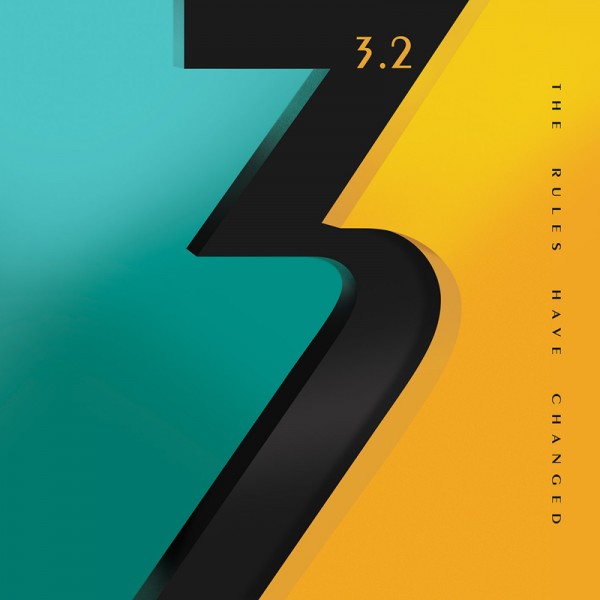
Of course, “Eight Miles High” has been covered numerous times.  Back in 1988, it was the one of the key tracks on To The Power of Three, the collaboration of Keith Emerson, Carl Palmer and Robert Berry.  How Eighties is this?  Check out Berry’s headless Steinberger bass!  Emerson’s keytar!  Palmer wielding a Dynacord electronic drum controller at the front of the stage!  Plus the, uh, dancers “playing” snare drums in the background.  Goodness!  (Though it does serve as a reminder that Robert Berry releases his posthumous collaboration with Keith Emerson, 3.2: The Rules Have Changed, on August 10.)

Three years later (ouch) in 1991, “Eight Miles High” was one of the cover tunes on Dave Stewart and Barbara Gaskin’s album Spin.  Since their 1981 version of Lesley Gore’s “It’s My Party” had snagged number one on the British single charts, Stewart and Gaskin had been bringing a thoroughly proggy attitude to the synth-pop duo format.  Spin is no different, mixing quirky originals with fresh takes on Rufus Thomas’ “Walking the Dog,” Joni Mitchell’s “Amelia,” Bob Dylan’s “Subterranean Homesick Blues” — and the Byrds.  One bonus feature of the album: the precocious pre-Porcupine Tree percussion of Gavin Harrison.  Check out the spectacular drum fill that kicks off this version!

Dave Stewart and Barbara Gaskin’s new album Star Clocks, featuring “eight Dave Stewart originals alongside a cover of an iconic 1960s song,” is out on August 17.  Pre-order it at Burning Shed.

Bonus track: Stewart & Gaskin’s samurai/Beach Boys/cathedral bells version of “It’s My Party,” with special guest video appearance by … Thomas Dolby?

— Rick Krueger

3.2, The Rules Have Changed

After Emerson Lake & Palmer’s late-1970s collapse, the separate members of the trio didn’t stop making music, releasing solo projects, launching new bands — and often working with one (but never both!) of their former colleagues.

The last such project before ELP’s 1990’s reunion was 3, a Geffen Records brainstorm to bring together the post-Lake & Powell Keith Emerson, the post-Asia Carl Palmer and guitarist/vocalist Robert Berry, a hot young gun from Los Angeles in the Trevor Rabin mold.  Aiming for another 90125 (or at least another GTR), the 1988 album To the Power of Three had some solid, intriguing moments — but it wasn’t pop enough to yield a substantial hit, or prog enough to reactivate ELP’s fanbase.  When Geffen cut off tour support and ordered 3 back into the studio for another album, Emerson pulled the plug on the band.

Fast forward to March 2016.   With an archive live release from 3’s US tour stirring fresh interest, Berry and Emerson planned to collaborate on a duo album, updating and re-energizing their sound for an environment where prog of all stripes had found an audience again.  Then, succumbing to depression on the eve of a Japanese solo tour, Emerson killed himself.

Nevertheless, using co-written songs and musical ideas Keith Emerson left behind, Robert Berry (also a classically trained pianist) persisted, playing all the instruments himself for the now-solo project 3.2.  The result is The Rules Have Changeddue for release on August 10 from Frontiers Records.  No less of a progressive music authority than Innerviews editor Anil Prasad calls it “an expertly-executed and performed album that takes the spirit of the first 3 release and propels it into edgier and more adventurous territory, while retaining the melodic qualities of its predecessor.”

I got to meet Robert Berry a couple years back, when his charity band December People (playing Christmas songs in the styles of classic rock and prog artists) toured Michigan for the holidays.  Our brief conversation revealed him as a down to earth guy, with fond memories of his time in 3 and deep respect for Keith Emerson.  Based on the sample track “Somebody’s Watching,” which absolutely captures the sound of the original band at their most daring and delightful, I’m definitely looking forward to The Rules Have Changed, and I wish Berry’s 3.2 project all the success in the world.

— Rick Krueger


Rick’s Retroarchy: Favorite 2017 Reissues

by Rick Krueger

I still have a few more albums to listen to before finalizing my favorite new releases of 2017.  To warm up, here are the reissues from this past year that:

  1. I absolutely had to buy, and
  2. That grabbed me on first listen (whether I’d previously owned a copy or not) and didn’t let go through repeated plays.  Except for my “top favorite” at the end of the post, I haven’t ranked ’em — in my opinion, they’re all equally worth your time.

Continue reading “Rick’s Retroarchy: Favorite 2017 Reissues”

The Albums That Changed My Life: #1, Brain Salad Surgery by Emerson Lake and Palmer

by Rick Krueger

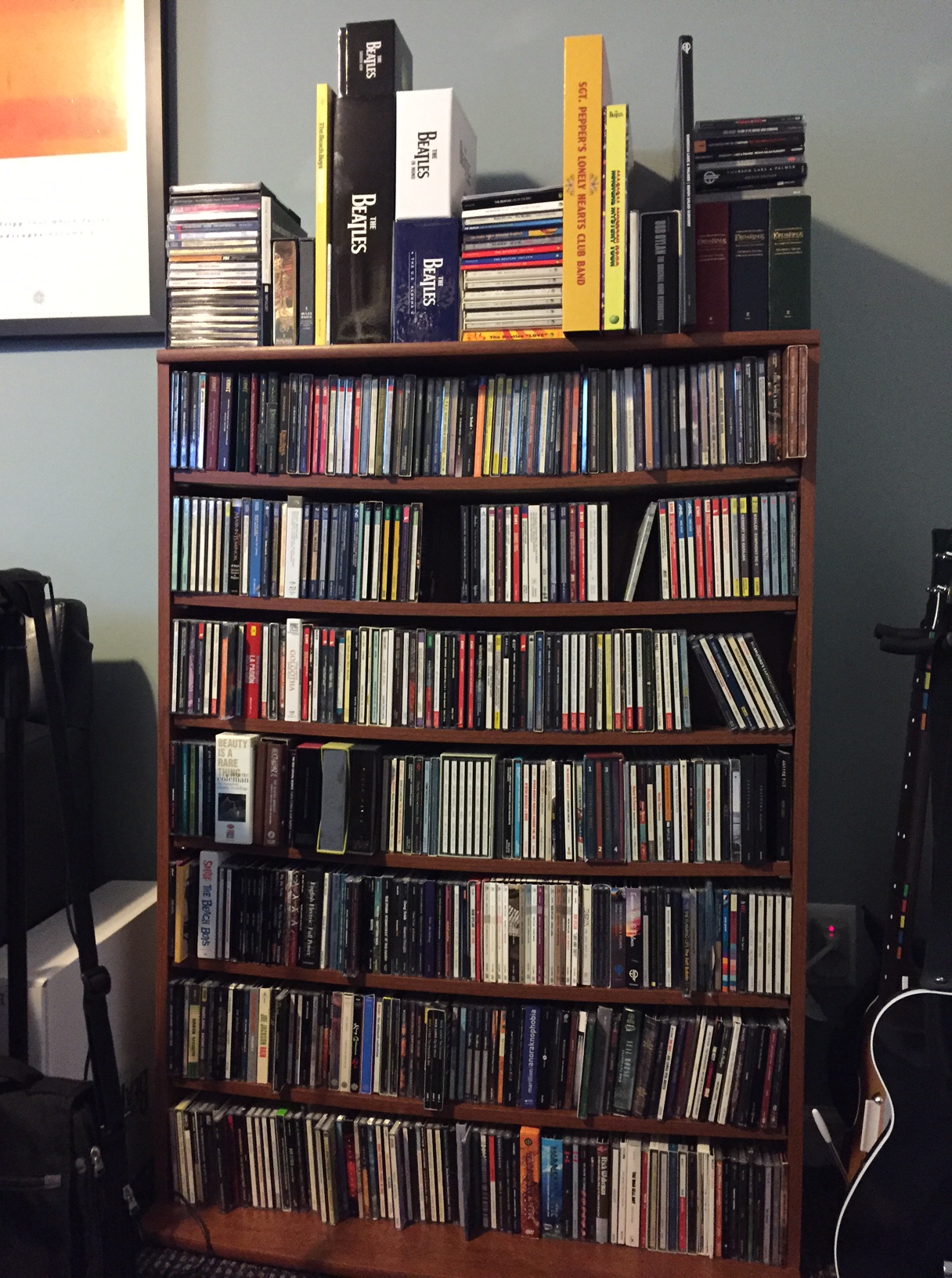
I’ve been seriously collecting recorded music (on vinyl, cassette, compact disc, DVD and Blu-Ray) for just over 40 years.  As you do, I’ve organized my collection in various ways.  For about the last 15 years, I’ve separated my favorites, regardless of genre, out into their own storage unit.  It looks like this as of today:

IMG_3523I used to refer to what’s on the top shelf — my very favorite recordings — as “the music I would save if the house caught on fire.”  Never mind that: 1) people matter more than stuff, and; 2) there’s no way that, if the house caught fire, I could actually pull it off.
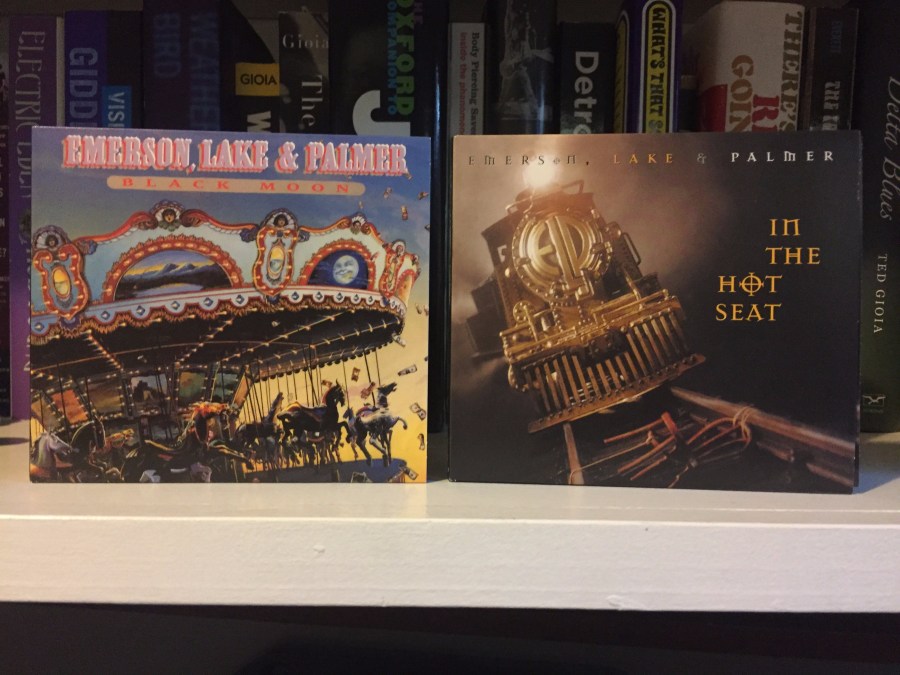
Ultimately, it occurred to me that a better name for that top shelf’s contents is “the music that changed my life.”  In retrospect, every one of the albums perched there set me off in fresh musical directions and shaped what I listen to most, what I choose to collect, and even my vocation as a professional church organist and volunteer singer.  Sounds like a blog series in the making …

I plan to focus on one album in each post, starting with what I heard earliest and working forward.  I hope to distill what I love about the album, and reflect on how it’s influenced my listening (and my playing) over the years.  I’ll also list my other favorite albums from the same artist, along with selected faves in the same vein from other musicians.

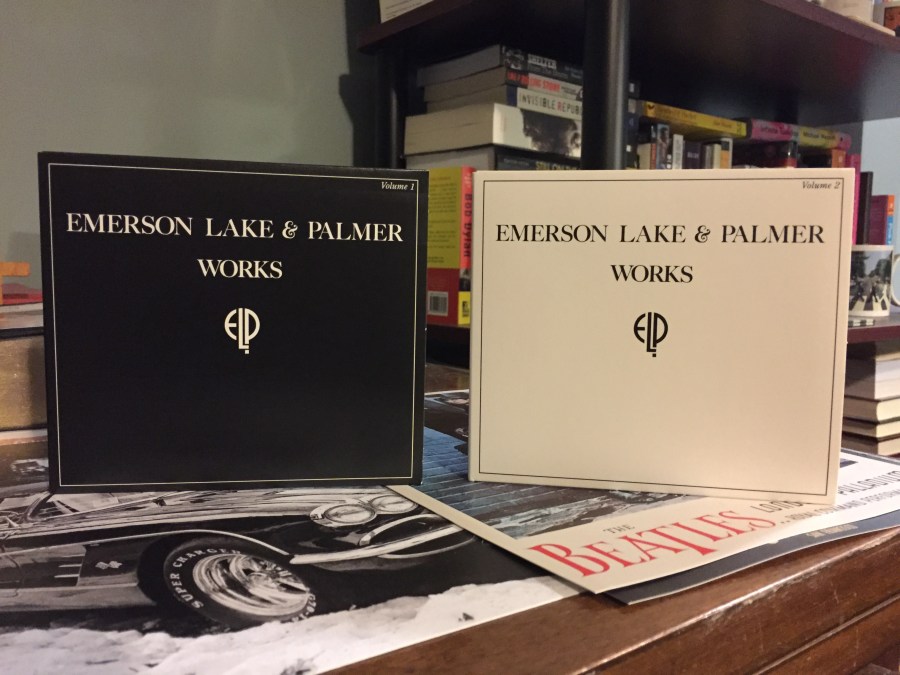
Given how much I’ve written about Emerson Lake & Palmer here, it’s probably no surprise that, while Works Volume 1 was the first ELP album I bought, Brain Salad Surgery was my real gateway drug into progressive rock.   For starters, I’d already heard “Karn Evil 9, First Impression, Part Two,” “Jerusalem” and “Still … You Turn Me On” over the Detroit airwaves.  What was this stuff?  Utterly bizarre titles, a giddily deployed spectrum of musical colors colliding with each other, seemingly at random (harpsichord, accordion and wah-wah guitar in the same ballad?) and more keyboards in five minutes than in some bands’ entire recorded output — after assimilating the bombast of the Works 1 material, I had to check it out!

I was flabbergasted.  Brain Salad Surgery defined eclecticism for me, sweeping up an astonishingly broad range of styles. On the first four tracks, ELP attacked a hymn (“Jerusalem”), a contemporary classical concerto movement interrupted by an extended tympani cadenza (Alberto Ginastera’s “Toccata”), a lyrical ballad with oddball instrumental touches (“Still …”) and a 12-bar boogie with music hall lyrics and an utterly wild piano solo (“Benny the Bouncer”).  And that was just the warm-up for the epic “Karn Evil 9.”  Over the course of three impressions, split into four tracks by the side change, the band garnished their core sound with rare solo electric guitar from Lake, manic piano trio jazz, Emerson’s steel drum synthesizer (quoting sax giant Sonny Rollins’ “St. Thomas,” as I later discovered), gonzo military marches powered by Palmer, and a loose anti-war narrative that castigated modern politics and religion, only to succumb to absolute rule by sentient supercomputer.   Mind.  Blown.

I later came to understand why Brain Salad Surgery was where some longtime ELP fans got off the bandwagon.  Compared to more direct albums like their debut and Pictures at an Exhibition, this one goes over the top without looking back.  The dizzying musical whiplash, the often-obscure lyrics, knockabout and messianic by turns (Lake’s first collaborations with original King Crimson wordsmith Peter Sinfield), the aggressive high-velocity playing — it could all seem like Keith, Greg and Carl had taken the hype too seriously, and were about to vanish up their own backsides in their pursuit of world domination.  Given the arc of their career after the massive Welcome Back My Friends world tour, you could even argue that’s what happened.

But for me, the reckless abandon of Brain Salad Surgery is the secret of its appeal.   ELP’s music here is a mite undisciplined and overstuffed, sure — but it’s also virtuosic, tightly structured, fearless, and exhilarating.  Those qualities, held together in suspension by the trio’s undeniable musical chemistry, have made this album compelling listening for me for the last 40 years.  Not only do I play it again and again, I’ve grabbed almost every CD re-release over the years (including Jakko Jakszyk’s oddly askew 2014 remix). Plus, instead of settling into the status of beloved novelty, Brain Salad Surgery whetted my appetite for more music like it — not just prog, but jazz, jazz-rock, modern classical music — even folk ballads!  And every once in a while, when I need a particularly powerful organ prelude or postlude for Sunday morning, it’s still a blast to pull out all the stops and dive into “Jerusalem.”

Listen to the latest re-release of Brain Salad Surgery here:

More Faves by ELP: Tarkus, Trilogy, and Works Volume 1.  Plus Encores, Legends and Paradox, a Magna Carta tribute album from the 1990s; this features Robert Berry, John Wetton, Glenn Hughes and James Labrie on vocals, with members of Dream Theater, Yes, King Crimson, Magellan and Emerson’s buddy Marc Bonilla laying down backing tracks.

Still There’ll Be More: I have 100+ prog and prog-related discs on my favorites shelf, from proto-proggers like The Nice and Procol Harum to 21st-century giants such as Neal Morse, Steven Wilson and Big Big Train.  Here are the ten albums that are probably the closest to my heart, and that opened the doors widest for future exploration:

Bruford, One of A Kind

Robert Fripp, Exposure (combined with RF’s 1979 in-store Frippertronics concert at Peaches Records in Fraser, Michigan)

Genesis, Foxtrot and Wind & Wuthering

King Crimson, In the Court of the Crimson King and Red

Porcupine Tree, Deadwing

Transatlantic, SMPT:e

UK, UK

Yes, Close to the Edge


Rick’s Retroarchy: Emerson, Lake and Palmer in the 1990s

by Rick Krueger

Interviewer: “Would you characterize the new album …  as a reunion? A comeback? Or something else?”

Derek St. Hubbins: “It’s both, really. We reuned and we came back.”

— interview with Spinal Tap, Guitar World magazine, April 1992

When Emerson, Lake & Palmer reformed in 1992, it wasn’t really a surprise.

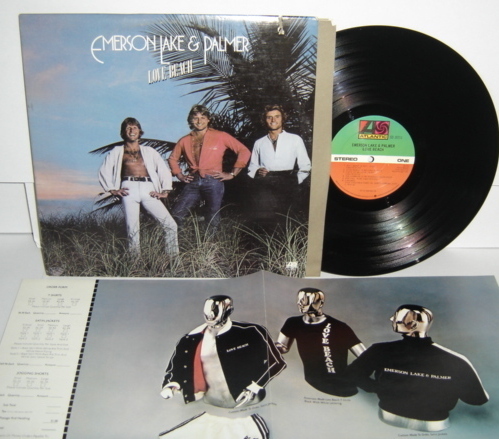
Since the debacle of Love BeachCarl Palmer had recruited Greg Lake to pinch hit as Asia’s bassist and vocalist for a MTV broadcast from Japan.  Then Keith Emerson had reconnected with Lake, drafting Cozy Powell as drummer for a well-received album that both evoked and modernized the classic ELP sound.  Then a post-Asia Palmer and singer/songwriter Robert Berry had partnered with Emerson in the more commercial (though less successful) AOR band 3.  All the possible pairings had played out: the only other option, as Spinal Tap put it, was to reune.  And at least attempt a comeback.

Continue reading “Rick’s Retroarchy: Emerson, Lake and Palmer in the 1990s”

Rick’s Retroarchy: Love Beach by Emerson, Lake and Palmer

by Rick Krueger.  (Third in a series; you can also check out reviews of Works Volume 1 and Works Volume 2.)

My first reaction to Love Beach (purchased at the Grosse Pointe location of Harmony House, after hearing “The Gambler” on Detroit rock radio in November 1978) wasn’t about the music.  It was about the merchandising insert included with the first pressing.  I think my actual thoughts were something along the lines of, “They’re selling satin Love Beach jogging shorts?!?”

Continue reading “Rick’s Retroarchy: Love Beach by Emerson, Lake and Palmer”

Rick’s Retroarchy: Works Volume 2 by Emerson, Lake and Palmer

by Rick Krueger

When I picked up Works Volume 2 (on the day after Thanksgiving 1977, at Hansen’s Music Store in Greenville, Michigan — thanks for taking me along, Mom!), it didn’t feel like a disappointment.  In fact, on first listen it was a nifty change of pace from the orchestral bombast of Volume 1 — 12 shorter tracks, all new to me, exploring the jazz, blues and boogie that only occasionally showed up on ELP’s earlier records.

Continue reading “Rick’s Retroarchy: Works Volume 2 by Emerson, Lake and Palmer”