This Is All the Fault of Stranger Things …

So apparently, a Twitter user wanted Weezer to cover Toto’s “Africa,” after hearing the iconic 1980s yacht-rock classic on the season 1 soundtrack of Stranger Things.  After the meme went viral, in very short order:

  • Weezer tried to troll Twitter with a cover of “Rosanna.”  The masses were not appeased.
  • Four days later, the inevitable Weezer version of “Africa” dropped.  And it was a hit, scoring their first Alternative No. 1 song in 10 years.
  • Of course, Weezer now had to play “Africa” in concert; Toto synthesizer whiz Steve Porcaro even joined in the fun for the keyboard solo on “Jimmy Kimmel Live.”  And last night, Weezer was joined by a very special guest for a even more very special solo:


  • Clearly enjoying the whole thing, Toto (currently on the US leg of their 40 Trips Around the Sun tour), have started covering a Weezer song for their encore:


  • And of course, Toto’s single of “Hash Pipe” will be released tomorrow.

All of which, to quote Robert Plant, makes me wonder:

  • Will Rivers Cuomo crash the stage when I see Toto live in a couple of weeks?
  • Are we witnessing the birth of a new supergroup, the likes of which the world has never seen?  Is a mashup of “Buddy Holly” and “Hold the Line” inevitable?
  • Is all this really the Upside Down’s revenge?
  • Can this astonishing turn of events be stopped before it’s too late?  Should we be frightened of this thing that it’s become?

On the other hand, perhaps we should all just relax.  And plan to tune in to season 3 of Stranger Things.  If only to see what music is hot in Sam Goody’s at … the Starcourt Mall …


— Rick Krueger

Soft Machine: The Jazz-Rock Years

Continuing the saga of Soft Machine, who’ve already kicked off a 50th anniversary world tour (coming to North America this fall), and whose new album Hidden Details can be ordered at Bandcamp.  Click here for Part One of this series, covering the band’s psychedelic years of 1966-69.

When last we left our heroes, quoting their website,

The base trio [of Mike Ratledge on organ, Hugh Hopper on bass and Robert Wyatt on drums and vocals] was, later in 1969, expanded to a septet with the addition of four horn players, though only saxophonist Elton Dean remained beyond a few months …

Cuneiform’s archive release Noisette reveals Soft Machine shaping a new sound onstage.  Recorded live at Croydon in January 1970, this quintet set is dominated by Dean’s and saxophonist/flutist Lyn Dobson’s uninhibited blowing.  The psychedelic song suites have nearly vanished; Wyatt only sings on “Hibou, Anemone and Bear,” where he’s given a completely solo moment, and material from the first two albums is exiled to the end of the show.

With Dobson out, the remaining quartet pulled together live recordings, studio inserts and tape experimentation to produce the four suites (one per side) on 1970’s double album Third — their first for Columbia Records.   Hopper’s “Facelift” and Ratledge’s “Out-Bloody-Rageous” sandwich upbeat jazz workouts (asymmetric rhythms, harmonized sax sections, fired-up, skittery solos from Ratledge, Dean and guests) between Wyatt-less intros and codas — avant-garde improvs, classical fanfares, minimalist cycling keyboard riffs.  Wyatt’s vulnerable, stream of consciousness epic “Moon in June” was the only vocal piece — and he played most of it (drums and keys) himself, with Ratledge and Hopper tacked on for the playout.  Ratledge’s “Slightly All the Time” is the most integrated piece here, with the core group and guests swinging over appealing grooves and ratcheting up the excitement via Ratledge and Dean’s solo work.

Rough-edged it may have been, but Third was perfectly timed; with Miles Davis’ Bitches Brew pulling jazz toward rock, Soft Machine was heading for the same destination from the opposite direction.  The album gained attention, kudos and sales across Europe and the US, and the Softs became the first band to play at the Royal Albert Hall’s classical Promenade Concerts.

Continue reading “Soft Machine: The Jazz-Rock Years”

Yes’ Golden Anniversary

From Blogdegezou:

On 3 August 1968, Yes played their first show under that name, having evolved from a succession of Mabel Greer’s Toyshop line-ups. Before that first show, they hired a basement room under The Lucky Horseshoe Café in Soho (now the Wildwood restaurant) and it was from there they set off for their debut.

50 years later, Bill Bruford returned to that room to unveil a plaque on the wall commemorating the event …

More here.   Hat tip to Sean Tonar!

— Rick Krueger

“Eight Miles High” — Three Views

The Byrds’ “Eight Miles High” was released as a single on March 14, 1966, eventually reaching number 14 on Billboard’s Hot 100 chart.   Influenced by Indian sitar master Ravi Shankar and John Coltrane’s Africa/Brass album, it was one of the first (if not the first) glimmerings of psychedelic rock.  And thus a progenitor of prog?  I think so.

Check out three views of this pioneering tune for yourself.  First, a Byrds promo appearance lip-syncing for an unknown TV show.  Note David Crosby’s brilliant outfit, complete with Russian hat:

Of course, “Eight Miles High” has been covered numerous times.  Back in 1988, it was the one of the key tracks on To The Power of Three, the collaboration of Keith Emerson, Carl Palmer and Robert Berry.  How Eighties is this?  Check out Berry’s headless Steinberger bass!  Emerson’s keytar!  Palmer wielding a Dynacord electronic drum controller at the front of the stage!  Plus the, uh, dancers “playing” snare drums in the background.  Goodness!  (Though it does serve as a reminder that Robert Berry releases his posthumous collaboration with Keith Emerson, 3.2: The Rules Have Changed, on August 10.)

Three years later (ouch) in 1991, “Eight Miles High” was one of the cover tunes on Dave Stewart and Barbara Gaskin’s album Spin.  Since their 1981 version of Lesley Gore’s “It’s My Party” had snagged number one on the British single charts, Stewart and Gaskin had been bringing a thoroughly proggy attitude to the synth-pop duo format.  Spin is no different, mixing quirky originals with fresh takes on Rufus Thomas’ “Walking the Dog,” Joni Mitchell’s “Amelia,” Bob Dylan’s “Subterranean Homesick Blues” — and the Byrds.  One bonus feature of the album: the precocious pre-Porcupine Tree percussion of Gavin Harrison.  Check out the spectacular drum fill that kicks off this version!

Dave Stewart and Barbara Gaskin’s new album Star Clocks, featuring “eight Dave Stewart originals alongside a cover of an iconic 1960s song,” is out on August 17.  Pre-order it at Burning Shed.

Bonus track: Stewart & Gaskin’s samurai/Beach Boys/cathedral bells version of “It’s My Party,” with special guest video appearance by … Thomas Dolby?

— Rick Krueger

Soft Machine: The Psychedelic Years

The seminal British collective Soft Machine were many things in their history — psychedelic pioneers, proto-progressive rockers, avant-garde explorers, always bobbing and weaving in the borderlands between jazz and rock.  One thing they were not was stable; by biographer Graham Bennett’s reckoning, the Softs had 24 separate line-ups during their original run of 1966-1984!  As the band’s current incarnation embarks on a 50th anniversary world tour and releases the new Hidden Details album, I’m listening to their studio catalog along with selected live recordings, tracing the long, strange road they’ve traveled from then to now.

Per the band’s new website,

Soft Machine were formed in mid-1966 by Robert Wyatt (drums, vocals), Kevin Ayers (bass, guitar, vocals), Daevid Allen (guitar) and Mike Ratledge (organ) …

This first Soft Machine line-up became involved in the early UK underground, featuring prominently at the UFO Club, and subsequently other London clubs like the Speakeasy Club and Middle Earth. .. They also played in the Netherlands, Germany and on the French Riviera.  … Upon their return from their sojourn in France, Allen (an Australian) was denied re-entry to the United Kingdom, so the group continued as a trio, while he returned to Paris to form Gong.

The archival recording Middle Earth Mastersone of a fine series from Washington DC’s Cuneiform Records, captures the remaining trio a month after Allen’s departure.  Easing in with relatively conventional (though absurdist) pop tunes like “Clarence in Wonderland” by Ayers, the Softs quickly slip the reins.  Wyatt repetitively chews on the words of “Hope for Happiness” like they’re an Indian raga, the trio kicks into a high-energy riff — and Ratledge takes off.  With his Lowrey organ run through a fuzzbox and a Marshall stack, he bashes out speedy pyrotechnics, grinding harmony pads, and distorted pitch-bent chords; underneath him, Ayers and Wyatt slip and slide from sparse grooves through splattery swing to bludgeoning stop time.  Ratledge’s solo “Disorganization” is even wilder, a tornado of phenomenal technique, overdriven amplification, and rhythmic attack echoing free-jazz pianist Cecil Taylor.  Then the Softs slam into another extended medley, kicked off by the goofy, minimalist “We Did It Again” (four words, one riff, six minutes), climaxing with a clattering drum solo and feedback all around before Wyatt winds down with a hushed falsetto benediction.  Cliche though it might be by now,  in 1967 sets like this were a serious trip.

Sharing management with the Jimi Hendrix Experience, the Softs gained a support slot on that band’s 1968 North American tour.  Between tour legs, they piggybacked on studio time for Hendrix’s Electric Ladyland to record an album for ABC/Probe, with Tom Wilson (Simon and Garfunkel, Bob Dylan, The Velvet Underground) producing.  While the record sat in the can, lots happened: Andy Summers (yeah, the future Police guitarist) joined, only to be summarily fired at Ayers’ insistence; then Ayers himself quit after another US tour, feeling the Softs were heading towards playing (shudder) jazz. Wyatt remained in the States, Ratledge returned to England, and the band seemed finished — the perfect moment for ABC/Probe to release the first album!

Continue reading “Soft Machine: The Psychedelic Years”

2018: Reasons to Be Cheerful …

… If you’re a prog fan, that is.  Some of what’s in the forecast for the rest of the year:

3.2, The Rules Have Changed Robert Berry’s one-man tribute to and posthumous collaboration with Keith Emerson; released August 10.  Details and a teaser track here.

Dave Stewart & Barbara Gaskin, Star Clocks.  I’ll be writing more about Stewart & Gaskin’s music soon; suffice to say it’s some of the best intellipop you’ve probably never heard.  (With Gavin Harrison on drums, no less.) The new album is out August 17; pre-order it and investigate their back catalog at Burning Shed.

The Pineapple Thief, Dissolution.  Bruce Soord and the TPT crew are joined by Gavin Harrison — him again! — as drummer and co-writer.  Released August 31. Details and a teaser track here; check out Sonic Perspectives’ interview with Soord (which hints at a possible 2019 US mini-tour) here.

Soft Machine, Hidden Details.  The pioneer psych/prog/jazz-rock collective is back for a 50th anniversary world tour — and they’re bringing a new album with them!  Three members from the 1970s versions of the band plus sax/flute progger Theo Travis (Robert Fripp, Steven Wilson, David Gilmour) tackle new compositions and a couple of vintage classics.  Released September 9; watch for a Soft Machine retrospective series from me during the run-up. Tour info herepre-order options for the album and a sample track here;

Yes featuring Jon Anderson, Trevor Rabin & Rick Wakeman, Live at the Apollo.  The “unofficial” version of the band (albeit one with two “classic era” members plus the musical mastermind of 90125) weighs in for the band’s 50th anniversary year.  Released September 9 in various audio and video formats; details and a teaser here. 

Coming soon from In Continuum: the debut album by Dave Kerzner’s new supergroup, with contributions from: vocalist Gabriel Agudo (Steve Rothery Band / Bad Dreams); guitarists Fernando Perdomo (Dave Kerzner Band), Matt Dorsey (Sound of Contact) Randy McStine (Sound of Contact, The Fringe) and John Wesley (Porcupine Tree); drummers Marco Minnemann (Steven Wilson, The Aristocrats), Nick D’Virgilio (Big Big Train, Spock’s Beard) and Derek Cintron; and special guests singer Jon Davison (Yes) and guitarist Steve Rothery.  Release date TBA; more info here. 

Coming soon from King Crimson: Based on the liner notes in Crimson’s 2018 Tourbox, we can anticipate: a reissue/revamp of the band’s 2001 album, The ReConstruKction of Light; a related, more exhaustive box focusing on the era of the ProjeKcts and the Double Duo Crimson, Heaven and Earth; and a fresh concert set from the current Crims, Live in Mexico. Release dates TBA.  Meanwhile there have been rumblings from Robert Fripp ruling out Europe for Crimson’s 50th anniversary tour in 2019.  Does that rule in the USA?  Stay tuned …

Coming soon from Marillion: deluxe edition of Clutching at Straws (release date TBA); mass market reissues of the Racket Records live sets Happiness is Cologne, Popular Music (U.S. release in September), Live in Glasgow and Brave Live (U.S. release in November).  Clutching rumors to be found in the Lucy’s Friday Questions group on Facebook; live reissue info is here and here.

Coming soon from Steven Wilson: Home Invasion Live at the Royal Albert Hall, with guest appearances by Richard Barbieri (Porcupine Tree), Mark Feltham (Talk Talk), Dave Kilminster and Ninet Tayeb.  (Oh, and a Bollywood dance company).  Release info for the video TBA;  details here.

Bonus round from the Pink Floyd camp: Nick Mason expects to tour the USA next year with his new band Saucerful of Secrets.  The group’s set of early Pink Floyd classics (from the albums Piper at the Gates of Dawn through Obscured By Clouds) went down a storm in London earlier this summer; they embark on a European tour in September.  More info on the band and Mason’s box set reissuing his solo albums here.

— Rick Krueger

Three from Procol Harum: Rick’s Retroarchy

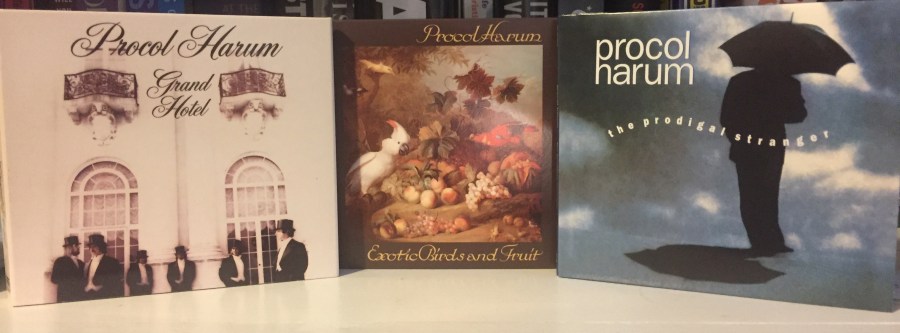
Trailing the superior box set Still There’ll Be MoreEsoteric Recordings has unleashed three further Procol Harum reissues — two underrated classics from the 1970s, plus the first of the group’s periodic reunion albums.

1972’s Live In Concert with the Edmonton Symphony Orchestra and its swaggering single “Conquistador” propelled Procol Harum into the Top 20 for the first time since “A Whiter Shade of Pale;” in response, Chrysalis Records threw money at the follow-up.  When guitarist Dave Ball and the band parted ways in the studio, the new material was re-recorded with successor Mick Grabham; Gary Brooker went all in on orchestral and choral arrangements; producer Chris Thomas got free rein with further bells and whistles; and the group was flown to Manhattan in top hats and tails for the new album’s over the top launch party.

To their credit, Procol Harum didn’t succumb to the excess; on Grand Hotel they harnessed it, examining the pursuit of pleasure from the perspective of the morning after, and counting the cost without flinching.

Continue reading “Three from Procol Harum: Rick’s Retroarchy”

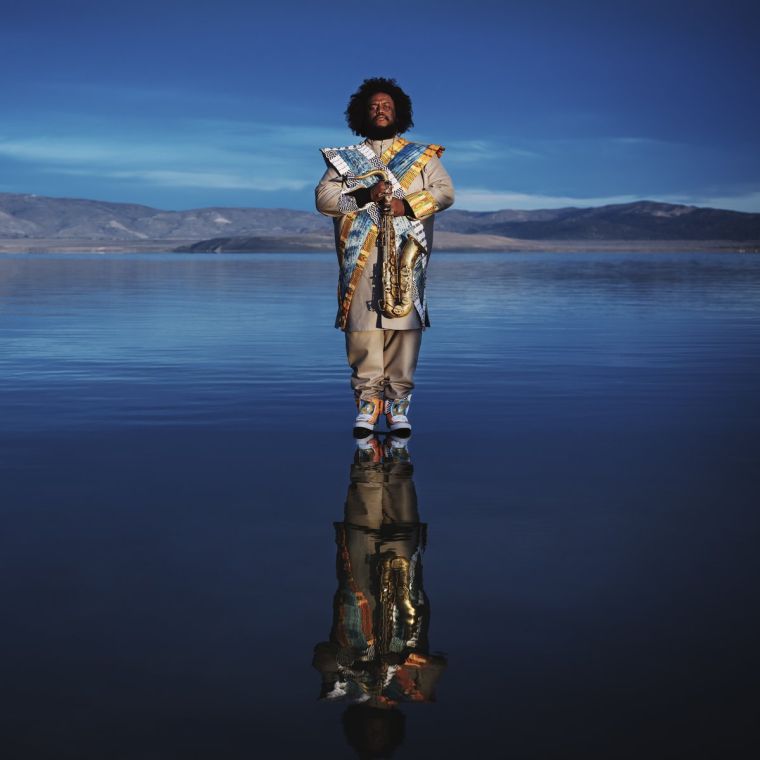
Kamasi Washington, Heaven and Earth

“There are dark parts to life.  We all want to tuck our heads down and cry somewhere.  But there’s a lot that’s really beautiful.  It’s amazing, a blessing, that we have all these influences.  That’s what this album is saying: you don’t have to be overwhelmed.” — Kamasi Washington, quoted in July 2018’s MOJO magazine.

If you take mainstream American media seriously (just once, for fun), Kamasi Washington is the latest Savior Of Jazz.  Leading a vanguard of hot young musicians from South Central Los Angeles, Washington has been everywhere at once since he emerged in 2004, working in the bands Young Jazz Giants and Throttle Elevator Music, playing with R&B/hip-hop stars like Snoop Dogg and Flying Lotus, even writing string charts for Kendrick Lamar’s To Pimp a Butterfly.

In 2015, Washington unleashed his first solo statement, The Epic, and the jazz world was understandably blown away.  The 3 hour, 3-CD concept album, performed by The West Coast Get Down (Washington’s 13-piece, double-rhythm section band) with strings and choir, channels the “spiritual jazz” of 1960s heroes like John Coltrane and Sun Ra into a fluid, expansive historical survey of black consciousness.  One example of the man’s range and ambition: Disc Three, subtitled The Historic Repetition, whipsaws from Charlie Parker’s “Cherokee” through Claude Debussy’s “Clair de lune” to Terence Blanchard’s “Theme for Malcolm,” moving from a whisper to a scream, contentment to anguish, simplicity to maximum overdrive with seemingly effortless mastery and power.

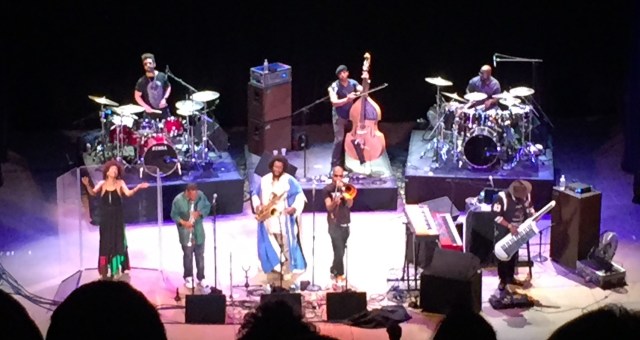
Crossing over to a wider public, Kamasi Washington had it all, and everyone wanted him on their side (critic Greg Tate, riffing on Washington’s work with Kendrick Lamar, tagged him as “the jazz voice of Black Lives Matter”).  After The Epic, the floodgates opened: Washington composed a suite for New York’s Whitney Biennial, guested across the modern musical spectrum, and toured worldwide — including a stop in Ann Arbor, where I heard his 8-piece band The Next Step live in 2016. 

img_27011.jpg

So when you’re on top of the heap, or in the center of the storm, where do you go next?  With Heaven and Earth (only a double album — but hold that thought!) Washington makes a classic move, diving deep into a personal take on African-American spirituality, with new music informed by the gospel tradition and the blues.  As he said to the British magazine Dazed:

The inspiration for that is this idea I had that the world is the way we imagine it to be, but it’s also informed by the way we experience it … The journey, you realise, is one and the same: how you imagine the world affects how you experience it. The world your mind lives in, lives in your mind.

Continue reading “Kamasi Washington, Heaven and Earth”

Travis & Fripp Appdate

From Discipline Global Mobile:

Three new [IPhone/IPad] apps featuring Theo Travis & Robert Fripp go on sale today.

Each app features a different selection of performances by Travis and Fripp, contrasting in mood and key. This trilogy recreates the unpredictable dynamics of live performance, creating a new experience on each listen.

The three apps utilise a wide selection of performances by the pair ingeniously designed to work together in infinite permutations. Both Travis and Fripp have recorded brand new music for the apps in the studio in 2018, but these performances blend and combine with others gathered from live multi-tracks from the albums: Live at Coventry Cathedral, Thread, Discretion and Between the Silence (2018 3CD) and also concert recordings from Malaga, Madrid, Newlyn, Rome, Broad Chalke and the Bath Festival.

Developed by [Burning Shed founder] Peter Chilvers, who has previously collaborated with Brian Eno on the apps Bloom, Trope and Reflection, each recombines a selection of performances painstaking assembled by Travis from multi-track recordings from over a decade of collaboration, enabling old performances to mix with new, studio recordings to mix with live, and exclusive unreleased material to play with familiar performances.

The apps present a unique type of performance of musical texture and space, the building of long slow melodies, and the creation of slowly shifting harmonic soundscapes. Once the apps are started they will play continuously allowing endless performances by this remarkable duo.

As DGM head honcho David Singleton says in his latest diary entry:

[The apps feature] improvisations and multiple layers that will randomize in glorious ways to create a unique performance every time you listen.

Anyone who has been reading my diaries will know that I am something of a “broken record” in my passion to liberate music from the single “frozen recording” into something more fresh and exciting. Not computer-generated music, which holds limited appeal for me, but recordings no longer frozen into a single artefact …

This is not for everyone, or for all music … I am a huge fan of the well-made recording. But just imagine if you did not have to choose between a number of different, but equally good, guitar solos. Or vocal takes. Or drum parts. They could be subtly combined so that you captured an extended present moment. Perhaps think animated GIF, not a full movie. Here’s to dreaming! In the meantime, anyone listening to the Travis & Fripp Apps will be hearing something that no-one has heard before or will ever hear again.

Not unlike a King Crimson concert …

Having been a stone fan of Robert Fripp’s ambient efforts since I attended a 1979 Frippertronics performance at Detroit’s Peaches Records, I give all three of these apps my heartiest recommendation.  Firing them all up today provided a marvelous musical experience while going about my daily business, reading, writing a blog post — or just relaxing and letting two master players do their thing in ways even they didn’t anticipate at the time …

— Rick Krueger

In Concert: #Yes50

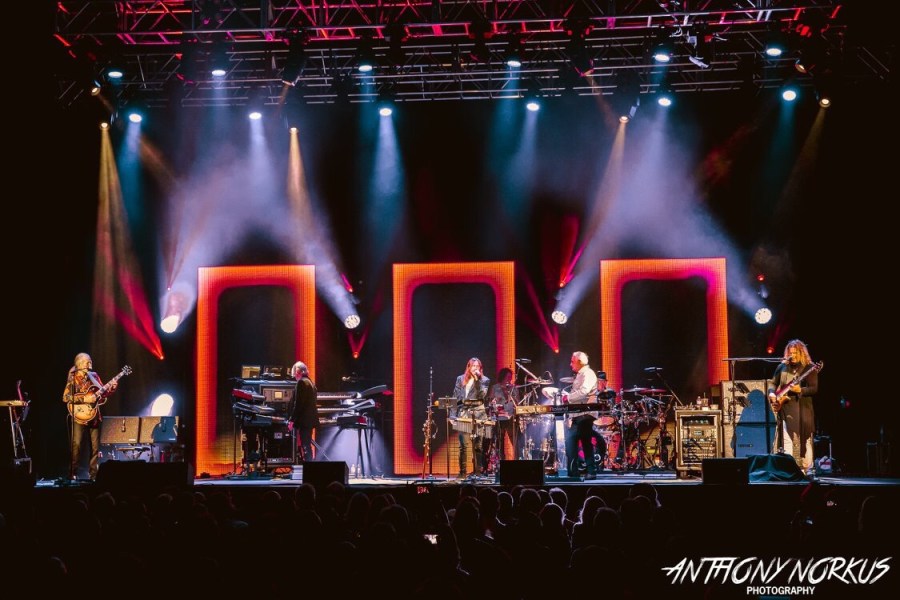
Yes at 20 Monroe Live, Grand Rapids Michigan, June 29, 2018

Before this past Friday, I’d seen Yes live three times: back in 1984 on the second leg of the 90125 tour; twenty years later on their 35th anniversary tour, which featured Rick Wakeman on keyboards and culminated with the recording of the Songs from Tsongas video; and at a 2011 club show with Benoit David singing that started rough, then picked up steam to become a genuinely thrilling night.

It was great to join fellow Progarchist Bryan Morey at Grand Rapids’ hot new club, where I’ve recently heard Marillion and Utopia, to catch Yes barnstorming through “Mitchigan” (Steve Howe’s onstage pronunciation) on their 50th anniversary tour. As Bryan mentioned in his review, they brought an excellent show to town — well structured and paced, showing off each band member to best advantage, wowing listeners with great ensemble playing and building to an encore that was tons of fun. My personal impressions follow:

Continue reading “In Concert: #Yes50”