Daniel James’ Brass Camel honours progressive rock legends tonight, underneath the unreal visuals of the HR MacMillan Space Centre’s 360 degree Star Theatre: Pink Floyd, King Crimson, Genesis, Yes, Rush, and more!
Video from the rehearsals is viewable here and here.
Dave Kerzner’s In Continuum has unveiled “Crash Landing,” which features Steve Hackett of Genesis fame, and also Jon Davison of Yes, who sings on it with Kerzner.
It’s a prog dream come true! The excitement builds for the Acceleration Theory release…
So quipped Sheriff Leigh Brackett in John Carpenter’s classic Halloween (1978). After seeing the new sequel to Carpenter’s seminal slasher film this past weekend, I find myself now recalling not the theme (good vs. evil) or the setting (small town Midwest) or the Shape (Michael Myers), but the music. Carpenter’s iconic score, reimagined for the 2018 film, appears to be the product of a “proggy” mind. Born to the chair of the music department at Western Kentucky University, Carpenter was certainly exposed to various genres of music from a young age. In fact, Carpenter has released three albums himself – primarily instrumental and definitely progressive. Take a listen below:
Ran into this Scientific American article on Death Metal.
“Those positive emotions, as reported by death metal fans in an online survey that Thompson and his team conducted, include feelings of empowerment, joy, peace and transcendence. So far, almost all of the anger and tension Thompson has documented in his death metal studies has been expressed by non-fans after listening to samples of the music.”
Probably, psychologists should be studying the non-fans, on why they are unable to decipher that grand symphony.
The most complex of patterns is comfortably buried beneath a wall of rich chaotic sound. So, in spite of being substantive, intellectually and physically demanding, the uninitiated simply may not have the ear. We can appreciate the textures and the grand symphony only with some ability to abstract away that pulverizing sound. Actually mandates higher levels of cognition – sort of the mark of an ageing and civilized genre.
As I exited the CTA Green Line on a crisp, clear Chicago Sunday, Reggie’s Rock Club and Music Joint beckoned with the promise of Progtoberfest’s final day: twelve hours of sixteen bands on two stages. Constantly unfolding delight or endless endurance test? Only one way to find out.
(Notes for after the jump: links are provided to bands’ online presence — website, Facebook or Bandcamp pages — wherever possible. An asterisk [*] by a band’s name means I bought one or more of their CDs at the event; A cross [+] means the band didn’t have CDs for sale — but their music is now on my want list. Here we go …)
Evership are probably a band that you’ve not come across before. If you have, you will know they represent a high watermark in melodic, richly-layered progressive rock.
With their debut, ‘Evership’ in 2016, a lengthy period of gestation of material was finally brought to fruition after ten or more years of development by the writer and producer Shane Atkinson. A real labour of love and devotion, Evership have since continued to thrive with their second album, Evership 2 following on with a more palatable waiting time of two years in-between.
Musically they one of the rare breed of bands in the progressive rock genre that successfully straddle the old with the new, producing something that is both fresh and feels like work of their own distillation. Much of this is in part to the quality of songwriting and musicianship as well as a real energetic immediacy in their material. In a world where there is so much content, and so little time to visit it all – music that grabs the listener from the off is king.
Atkinson wears his influences on his sleeve and fans of Rush, Kansas, Genesis and Queen will not be disappointed to hear echoes of them within the five tracks on Evership 2. Hailing from Tennessee (the home of Glass Hammer) there is a real distinctive hard rocking (and honest) American sensibility to the sound which also aligns itself with its peers in the U.S. too.
Firmly planted in the ‘epic’ camp Evership 2’s shortest numbers are over seven minutes long with the highlight being a half hour monster split down into six manageable chapters. ‘Isle of the Broken Tree’ is all that a progressive rock opus should be. Etherial and majestic tones give way to cinematic grandeur that can shake the speakers in a very satisfying way. The haunting vocal of singer Beau West is a real treat and his huge range throughout the song and the rest of the album is one of the elements that underpins their class in their field. The interplay between the piano and acoustic guitar is superb in the opening segments until the hard punch comes into play. Midway through the piece, gutsy guitar delights in its distorted 70’s edge, again backed by some superb keys. The intricate weaving of these structures has to be down in many ways to Atkinson owning the song writing and performing duties on much of the album.
As impressive as Isle is the real gem within Evership 2 is the emotional ‘Wanderer’ which tugs at the toughest of souls with West’s stellar delivery…`took a little time to work out what I lost.’ The song makes a number of emotional punches, which culminate in a powerful uplifting peak. Prog can sometimes (and rightly) be accused of being too remote and impassive but Evership have shown their power in bringing into play the moments that make the hairs on the back of the neck stand on end.
The sentiment that an album deserves more attention is one that is used often however in the case of Evership 2 is it thoroughly deserved. It’s a stunning second album that continues to delight with every play. There is no doubt this album will appeal to many if the aim of the album is good enough to hit its target audience. Hopefully there are good things ahead for Evership in the wake of this release.
Check out the new album on release now!
Available from the website – and via iTunes, Spotify and currently on Progstreaming
Track List
The Serious Room
Monomyth
Real or Imagined
Wanderer
Isle of the Broken Tree:
I. Castaway
II. Meadow of Shades
III. My Father’s Friend
IV. Hall of Visions
V. My Own Worst Enemy
VI. The Tree and the Door
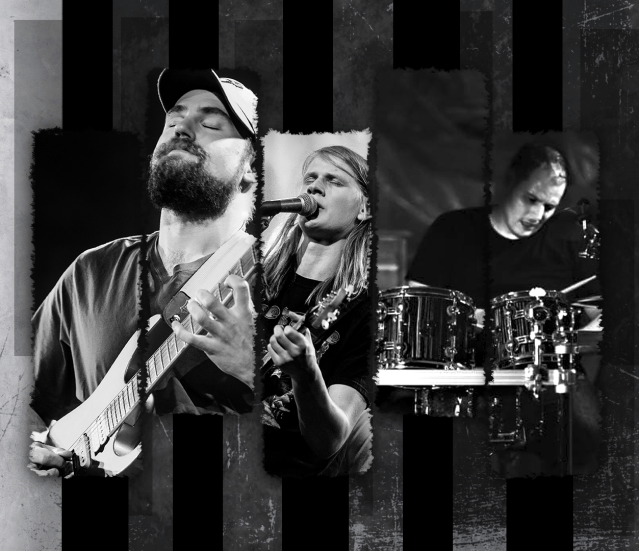
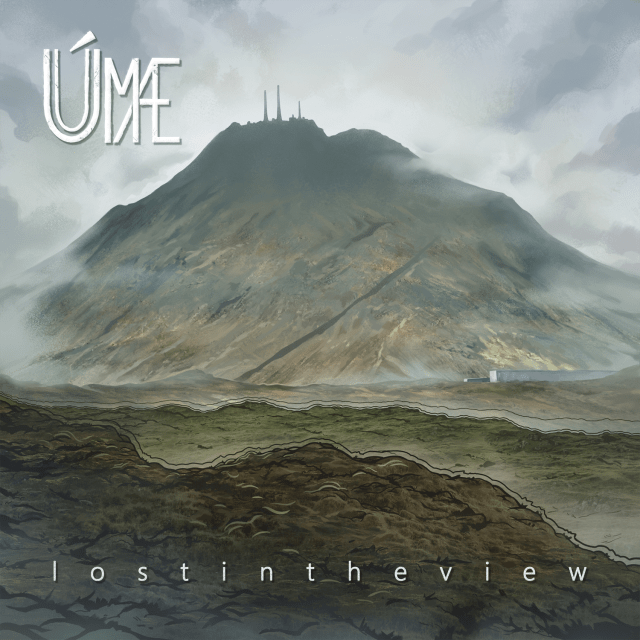
Now here is an interesting and promising new Prog band. UMÆ is an internation trio featuring guitarist Guðjón Sveinsson, singer/guitarist Anthony Cliplef, and drummer Samy George-Salib. The band has recently launched a debut single “Turn Back Time” via Prog Magazine which features guest contributions by John Wesley (Porcuine Tree) and Haken bassist Conner Green. Their debut album “Lost in the View” is out in December, and beside mentioned gentlemen it also features Adam Holzman (Steven Wilson, Miles Davis) and Eric Gillette (Neal Morse Band).
Read an interview with Anthony and Guðjón below.
Hello! Thanks for responding to this interview. How have you guys been lately?
G: We’ve been great thank you! Excited for the release, and hard at work preparing for it.
How might you introduce yourselves to new potential listeners?
A: UMÆ is an experience; emotional; meaningful; energetic; somber; melancholic. We are all over the board, but I swear it is cohesive. [laughs]
What inspired the name of the band — UMÆ?
A: Guðjón and I were spitballing a lot of ideas during the demoing phase, some more jokingly than others, but we settled on this one, which uses Icelandic characters, but doesn’t mean anything in Icelandic. I like the idea of a word that isn’t already defined. It gives us the opportunity to define it by the music and artwork we create and associate with it.
How did UMÆ initially form as a creative unit?
A: Well, I went on a trip to a prog festival, where I ended up meeting and playing music with Guðjón, Samy, and many other people. We all had similar interests in music, and we all enjoyed sharing the stage together.
After I returned home from the trip, I was inspired by the jamming, so I decided to contact Guðjón about possibly collaborating on some music. I sent some rough demos, he shared some examples of his own, we shared bands with each other. From there, we laid out plans for me to travel across the ocean to Iceland and start writing. Very soon we sent demos over to Samy and convinced him to commit to the project.
You are about to release a debut album titled “Lost in the View.” Where did the inspiration for it come from and how did you go about the whole process of writing and recording it?
G: In essence it just comes down to our love of music, and willingness to create. It’s hard to pinpoint a specific inspiration for the exact music featured on the album. Some of it was written well before we started working on it together, as far back as 10 years, which was the case for the already-released single “Turn Back Time”. The lyrical concept came as a sort of reaction to the music, and we soon found ourselves writing around that concept.
Over the 6 initial weeks that Anth spent in Iceland, we recorded and arranged demos for the whole album. We started in my living room; plugged in a guitar and played whatever was on our minds. In about three weeks we already had the basis to all the songs. The remaining three weeks were spent arranging the song structures, filling in blanks and sculpting the general vision for the sound of the record. Some of these early demo recordings even made it into the final product. We focused on retaining the initial feeling we got from each and every part, and enhancing it further with the arrangements, and later on lyrics.
The recording process took place literally over the world. We recorded drums with Samy in Toronto over an intense 3 day session. Over the course of a year, we’ve built the layers on top of these bed tracks, with recording taking place in 4 locations in Iceland, 5 different home studios in the US, and more recently, in Sweden. We’ve been tweaking and adding stuff along the way down to these very last days.
UMÆ is a trio in its core but the upcoming full-length release features quite a number of guest musicians, including John Wesley (Porcupine Tree), Conner Green (Haken), Adam Holzman (Steven Wilson) and Eric Gillette (Neal Morse Band). How did the collaboration with each of them come about? How much did they actually contribute in the writing phase?
G: Once the music started coming together, we soon started looking at people that we thought would be a good fit for various parts of the album. We had a good feeling about the music, and decided to aim high from the get-go.
Fairly early in the process we reached out to Conner, who was up for the task, and eventually played on most of the album. At that time all the foundations to the songs were already laid out on guitar and drums, along with some of the main melodies. We left it up to him to interpret the bass parts, and were really happy with the end results.
On the keyboard front, most of the album features Magnús Jóhann, a brilliant young player from Iceland who we worked closely with. On two of the heavier songs however, we wanted to try a little different “flavor”, and figured Adam Holzman might be good fit. So we contacted him; thankfully he was up for it and was able to find a time within his touring schedule to record it. Similarly there the songs were already laid out, and we presented our rough idea of the sounds we were going for. His take on it ended up being just right.
We wrote and recorded all the vocals initially, but didn’t feel our voices were the right fit for certain songs. Samy had encountered John Wesley around the time we were exploring options for these songs, and presented the idea of his involvement. He was up for giving it a shot, and when we heard his take on “Turn Back Time” we were immediately sold.
On one of the tracks we entertained the idea of having a guest solo spot. Eric Gillette responded quickly to our inquiry, and before we knew it we had a killer solo in our hands! He’s such an amazing player, and we’re really stoked to have him appear on the track.
What can be expected from the upcoming album? Would you say the released single for “Turn Back Time” is an accurate sample?
G: Yes and no. The track contains some of the main themes from the album, and lyrically is somewhat representative of the concept, but definitely does not cover the wide range of influences we tap into throughout the album. It’s a good start of the journey that gets a nod here and there, but the atmosphere shifts to a bleaker tone as the album progresses.
What’s your songwriting process like?
A: Guðjón kind of touched on that already, but I’ll elaborate a bit. When I compose a piece from beginning to end, like our aforementioned single, I typically work from a melody and or chord idea, and sometimes just a rhythmic idea. I like to use programming software to document the guitar I’ve come up with, then build the other instruments around it. It’s all midi programmed, but it gives me a good sense of what the song could sound like.
When Guðjón and I were co-writing songs, there were many times where he had a riff or two, I had a riff or two, we placed them in order, and basically connected the dots by filling in the middle. Sometimes we had no idea how we were going to make two parts connect, but we managed to pull them together. So that’s a bit of a deeper glimpse into the process.
What are your ultimate hopes for UMÆ as a band?
G: Hopefully we’ll eventually manage to make a living out of making and performing music. Anything beyond that is a bonus really.
I’m kidding, world domination of course.
Do you have any bigger plans for the future?
G: Bigger? For sure, although we can’t really say much at this point, other than that these plans are currently in formation.
The last words are yours.
A: To keep up with UMÆ, our single releases, album release, touring plans, and all other major news, go to https://www.umaeband.com/
True art eschews politics, and so will I in this post.
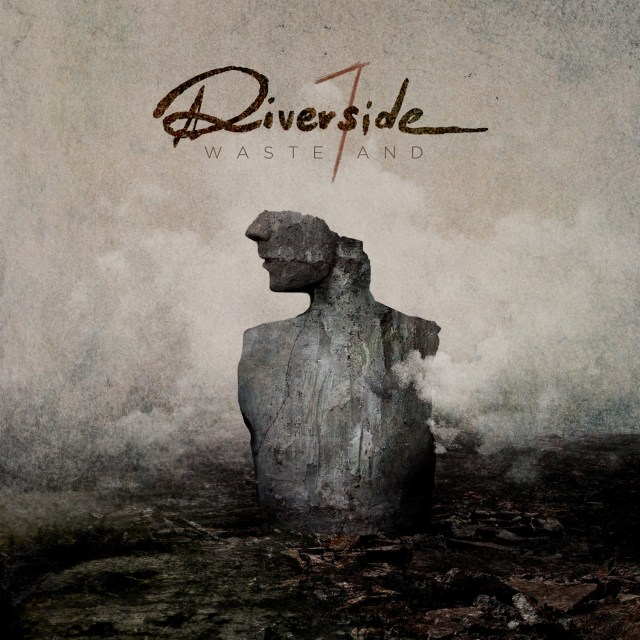
By now, I hope you have all had a chance to listen to Riverside’s brilliant new album, Wasteland. It was magnificently reviewed here at Progarchy by Erik Heter and Brad Birzer. This album is beautiful. It is devastating. It is art at its finest.
Just as T. S. Eliot’s masterpiece “The Wasteland” was written in the depths of pain and despair, Riverside’s new masterpiece was written as the band dealt with pain and loss. The 2016 deaths of guitarist Piotr Grudzinski and Mariusz Duda’s father hang heavy over this album, but they do not weigh it down. Rather, they inform its brilliance. Yes, Riverside’s metal moments are here, and Duda does a great job on guitar when needed. But it is the quiet moments that shine like the star Sam and Frodo saw shining through the gloom and dark of Mordor (an allusion I have shamelessly stolen from Brad… and Tolkien).
Much like the recent Oak album, “False Memory Archive,” “Wasteland” embraces the good, the true, and the beautiful. The lyrics are timeless. They get at the what it means to be human. Our lives are filled with happiness, pain, joy, and immense suffering. Riverside don’t hide this fact. They face it head on, and in doing so, they have created true art. Art should move beyond the mundane and fleeting. In 100 years, no one will be remember or be amused by the political ramblings of Roger Waters, Andy Tillison, or Nick Beggs. They will probably remember “Supper’s Ready” and hopefully they will remember “The Underfall Yard” because that song and album deal with issues of lasting importance. “Wasteland” fits into that category. These concepts transcend time. In 1000 years, the lyrics to “The Night Before” will remain relevant.
Close your eyes
Don’t be afraid
I’m with you
This place is safe
We found a camp
We have supplies
They will let us stay the night
Close your eyes
I’ll tuck you in
Mum will sing to make you sleep
Don’t mind the noise
There’re just the bombs
A part of music for this song
When the night begins to fall
You and I
In a safety zone
The former world shall not return
But we’ll survive intact
Again
Embrace beauty and art in music. Reject the ephemeral in favor of the ethereal.
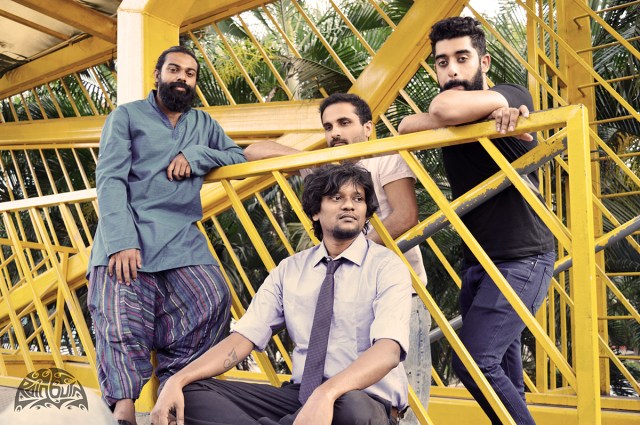
Indian prog rockers Rainburn return on November 7th with the release of a new album “Insignify” (read our review here). In an interview for Progarchy, singer and guitarist Vats Iyengar tells us about the meaning behind the band’s name, their working process, new songs, and more.
Hello! Thanks for responding to this interview. How have you guys been lately?
Thank you for hosting us! We’ve been good. Gearing up for the album release, and also starting rehearsals for the tour soon.
How might you introduce yourselves to new potential listeners?
I’d say our music covers a lot of ground and touches upon many different styles without sounding forced or gimmicky. We also have a nice mix of the old and the new, some modern music and some classic influences. If you like emotionally-heavy music that is creative and diverse, you should check us out.
What inspired the name of the band — Rainburn?
We wanted an oxymoron, to suggest that we cover a wide spectrum of music, from soft to heavy, moments of light and darkness – and everything in-between – in our music, so we went with this name. Our drummer, Praveen, came up with the name. It’s a pretty established tradition as far as band names go. Like Black Sabbath, for example.
How did Rainburn initially form as a creative unit?
We had a keyboard player in the beginning and only one guitarist (me). It was actually his idea that we form a band together. We added a bassist and a drummer soon after, played quite a few gigs with that lineup, even recorded a couple of demos. But as we started finding our sound, we decided two guitars worked better.
You are about to release a new album titled “Insignify.” Where did the inspiration for it come from and how did you go about the whole process of writing and recording it?
‘Insignify’ has been a two-and-a-half-year labour of love that started as a seed in my head. It took a long time to take shape and form fully but once it did, the music was created very quickly, because the concept was so clear and detailed. I think it’d take a few listens, at least, to fully digest and “get” the album. The record was mixed by Thejus Nair, a brilliant young engineer who operates Eleven Gauge Recordings in Bangalore, our hometown. Mastering was done by Tony Lindgren at Sweden’s Fascination Street Studios, where so much good progressive music comes out of these days.
What can be expected from the upcoming album? Would you say the released singles (“Suicide Note” and “Mirrors”) are accurate samples?
They’re fairly good samplers but as to whether they’re completely representative of the album – not by a long way. Apart from what’s in those songs, we have moments of funk, fusion, a bit of jazz, even a vocal fugue on the record. No two songs really sound alike.
What’s your songwriting process like?
It’s usually me writing and making demos at home that I then present to the band, and they tailor or modify their parts according to their style. But for some stuff, we changed the formula. Like, ‘Someone New’ started with Praveen composing an entire drum track that I then wrote riffs and melodies over. That was a very interesting way to write!
What are your ultimate hopes for Rainburn as a band?
To be an internationally touring band, to make some great records so we can leave a musical legacy behind and – the holy grail – to be able to sustain ourselves, financially, with our music.
Do you have any bigger plans for the future?
Well, we’ll be going on a national tour early next year – our second one. And hope to play some gigs outside India next year as well.
The last words are yours.
To your readers – If you’ve somehow managed to read this far, I hope you’ll check out our album when it’s out (November 7th). Listen to the two singles for a taste, and also to the snippets we’ve been posting on our Facebook page of various songs from the record.
To Progarchy – thank you for supporting our music.
Due to the delights and demands of daily life, my second annual visit to Chicago’s Progtoberfest couldn’t be as extensive as last year’s threedayblowout. Originally, I was only going to take in Sunday, in order to experience Soft Machine’s 50th anniversary tour of the USA. But an unexpected schedule opening let me check out the Saturday night action at Reggie’s Rock Club on the Windy (and Sleety) City’s south side.
One of the reasons I added Saturday night to my itinerary was the return of North Carolina’s ABACAB – The Music of Genesis. This ambitious tribute band charmed Progtoberfest 3 with a complete run-through of 1977’s live Genesis album, Seconds Out. This year, the brief was even more demanding: celebrating Genesis’ 50th anniversary by counting back down the years a la Rush’s R40 tour.
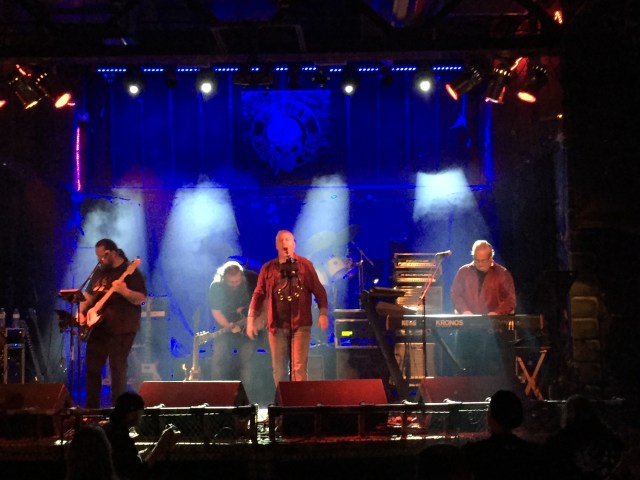
Given their time constraints, ABACAB opted to start with the 1981 Genesis track that gave them their name, then go back, back, back … Jaws dropped throughout the audience as they scaled the challenging heights of And Then There Were Three’s “Burning Rope,” Wind and Wuthering’s “Eleventh Earl of Mar” and the title track from A Trick of the Tail, never originally performed onstage. These choices all had special meanings for me: not only did I play “ABACAB” with my Alma College band The Run-Outs (shout out to Gadz, Jenny, Beef and the late great Joel Kimball), but “Burning Rope” and “Earl of Mar” were highlights of Genesis’ set when I saw them in 1978 at my first rock concert (also my first date)!
And the upward climb continued — Nick D’Virgilio (among his numerous credits, drummer on the final Genesis album Calling All Stations) hopped onstage, taking command to sing “In the Cage” from The Lamb Lies Down on Broadway with flair and power:
From that point on, ABACAB had the audience completely in their grasp, cruising through highlights of the Peter Gabriel years in high style, then finishing with “In the Beginning” from the 1968 schoolboy album From Genesis to Revelation. Singer Pete Lents, bassist/guitarist Cliff Stankiewicz, new guitarist James Nelson, keys man Patrick Raymaker and drummer Matthew Hedrick played with brio and precision throughout, and got an enthusiastic standing ovation for their sterling effort.
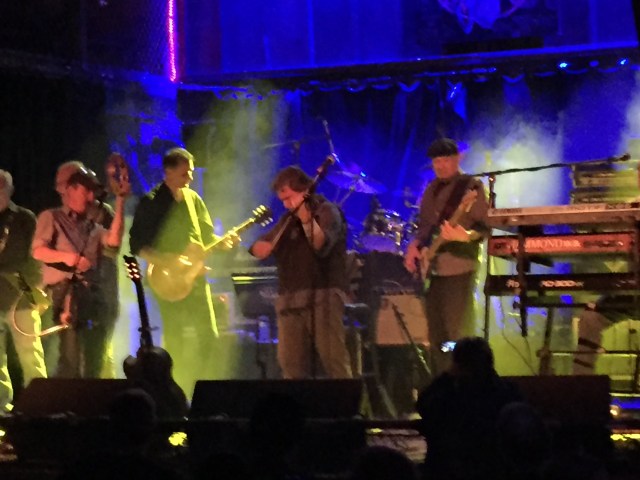
Another cool thing about Progtoberfest: how organizer Kevin Pollack draws on the incredibly talented musicians based in Chicago, including many who’ve played crucial roles in the development of jazz, rock and prog. Dinosaur Exhibit was a shining example of that talent on display — a seasoned “where are they now” octet featuring members of area bands The Flock, Aura and The Mauds; the prime draw was violinist Jerry Goodman, best known for his founding stint with John McLaughlin’s Mahavishnu Orchestra.
Given Goodman’s pedigree and track record, I’m not sure the Rock Club crowd (including members of Soft Machine leaning back against the soundboard) were ready for the horn-powered blue-eyed soul that kicked off Dinosaur Exhibit’s set. It was driving, vivid stuff , as vocalist Ben Cothran testified with the best and Goodman fiddled up a storm — but you could almost see the “is this really prog?” thought balloons forming over the audience’s heads. The rest of the set (pioneering Goodman fusion originals like “Brick Chicken”, an admirably psychedelic take on “I Am the Walrus” and a viciously swinging “Theme from ‘Perry Mason'” finale) were more in that expected wheelhouse, though, and DE ultimately got the extended applause they deserved.
Which left Neal Morse as the evening’s closer, climbing onstage for a solo set on vocals, acoustic guitar, keyboard, percussion and looping software. As always, Morse was engaging and impressive, using his sonic arsenal to present songs from his new Life and Times, along with impressive takes on solo material (the multi-layered overture/finale sequence from ?), tunes by Transatlantic (“Stranger in Your Soul,” an impromptu “We All Need Some Light”) and Spock’s Beard (“Thoughts Pt. I & II,” done entirely with vocal loops).
Morse’s improvisatory opener “Songs of Freedom,” incorporating riffs from both Black Sabbath and Yes, established a loose, fun tone for the set — best encapsulated when he brought “Selfie in the Square” to a shuddering halt, then spent 10 minutes pulling tunes by Coldplay, Donovan and The Beatles out of his head, all because he couldn’t help singing the word “yellow” with an British accent! This wasn’t the high-energy, goal-directed path of concept albums like Testimony and The Similitude of a Dream; it was a relaxed, meandering vibe, in keeping with the smaller crowd, the quieter sound palette and the lateness of the hour. It was delightful to catch Morse off his guard and having more sheer fun than usual, with every bit of his heartfelt lyricism and musical brilliance still there for us to enjoy. (After I left to catch the train, Nick D’Virgilio hopped back onstage to harmonize with Neal on Spock’s Beard standards “The Doorway” and “Wind at My Back.”)
The other great part of my Progtoberfest sojourn was catching up with fellow fans I connected with last year from West Michigan, Kentucky, St. Louis, Wisconsin and beyond. More about that next time, as well as covering the lineup for Day 3 — sixteen bands on two stages in twelve hours. Stay tuned …

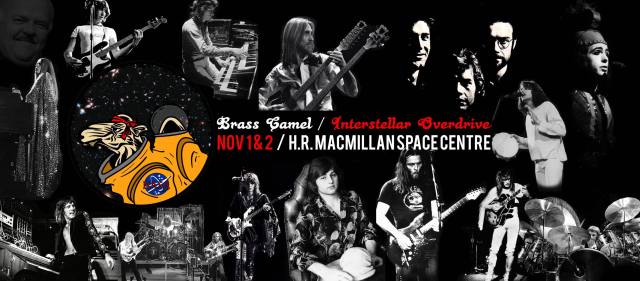 Daniel James’ Brass Camel honours progressive rock legends tonight, underneath the unreal visuals of the HR MacMillan Space Centre’s 360 degree Star Theatre: Pink Floyd, King Crimson, Genesis, Yes, Rush, and more!




 Given their time constraints, ABACAB opted to start with the 1981 Genesis track that gave them their name, then go back, back, back … Jaws dropped throughout the audience as they scaled the challenging heights of And Then There Were Three’s “Burning Rope,” Wind and Wuthering’s “Eleventh Earl of Mar” and the title track from A Trick of the Tail, never originally performed onstage. These choices all had special meanings for me: not only did I play “ABACAB” with my Alma College band The Run-Outs (shout out to Gadz, Jenny, Beef and the late great Joel Kimball), but “Burning Rope” and “Earl of Mar” were highlights of Genesis’ set when I saw them in 1978 at my first rock concert (also my first date)!
 From that point on, ABACAB had the audience completely in their grasp, cruising through highlights of the Peter Gabriel years in high style, then finishing with “In the Beginning” from the 1968 schoolboy album From Genesis to Revelation. Singer Pete Lents, bassist/guitarist Cliff Stankiewicz, new guitarist James Nelson, keys man Patrick Raymaker and drummer Matthew Hedrick played with brio and precision throughout, and got an enthusiastic standing ovation for their sterling effort.
 Given Goodman’s pedigree and track record, I’m not sure the Rock Club crowd (including members of Soft Machine leaning back against the soundboard) were ready for the horn-powered blue-eyed soul that kicked off Dinosaur Exhibit’s set. It was driving, vivid stuff , as vocalist Ben Cothran testified with the best and Goodman fiddled up a storm — but you could almost see the “is this really prog?” thought balloons forming over the audience’s heads. The rest of the set (pioneering Goodman fusion originals like “Brick Chicken”, an admirably psychedelic take on “I Am the Walrus” and a viciously swinging “Theme from ‘Perry Mason'” finale) were more in that expected wheelhouse, though, and DE ultimately got the extended applause they deserved.

 Progarchy
