Cruise to the Edge 2024, also known as Cruise to the Edge Awakening takes place from March 8 – 13, 2024.
Sailing on the Norwegian Pearl, which some might remember from the Progressive Nation at Sea Cruise, ports out of Miami and will visit Ocho Rios, Jamaica and George Town.
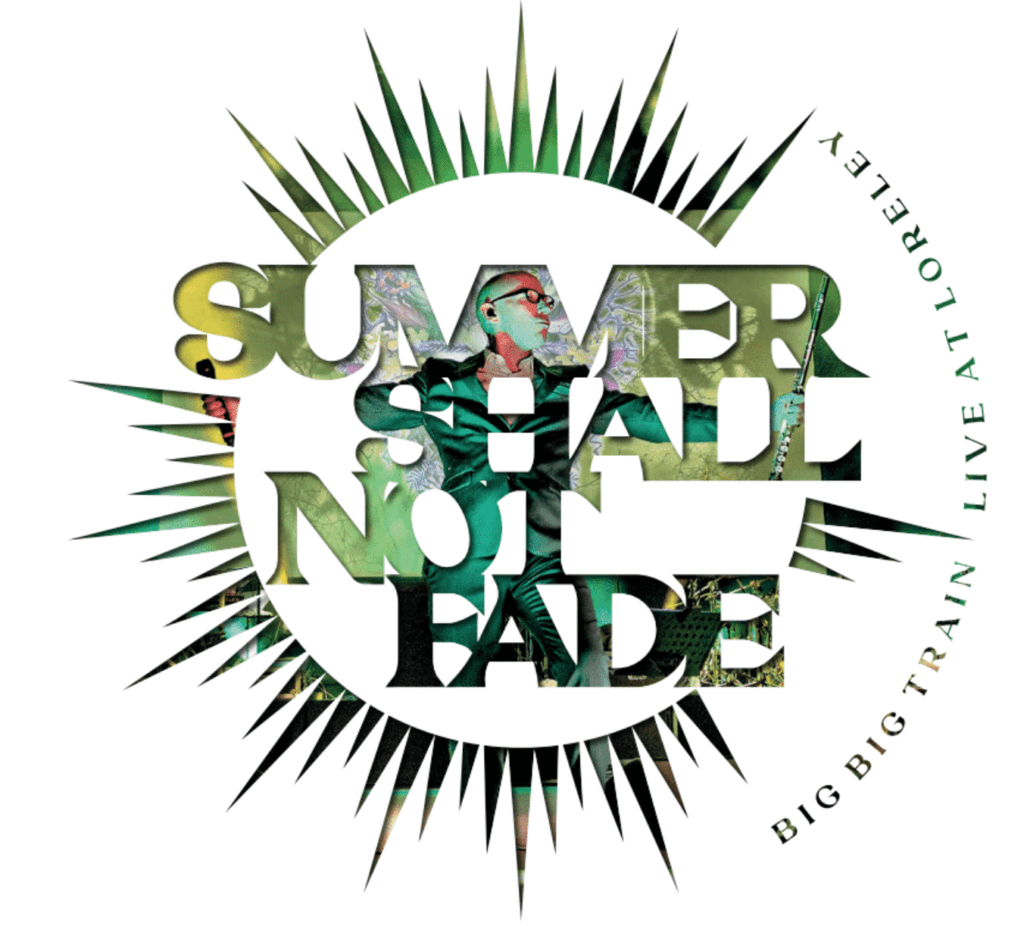
Big Big Train, Summer Shall Not Fade: Big Big Train Live At Loreley, 2022 (concert recorded July 13, 2018), Blu-Ray/2CD Tracks: The First Rebreather, Folklore, A Mead Hall In Winter, Kingmaker, Summer’s Lease, Brave Captain, Prelude and Fugue, Judas Unrepentant, The Transit of Venus Across the Sun, The Permanent Way, East Coast Racer, Drums and Brass, Wassail
Big Big Train never cease to amaze me. While this release has been out for a couple weeks now, I’ve just gotten time to sit down and enjoy the band’s latest live recording, Summer Shall Not Fade. The live show marks the band’s first time playing in Europe, at the prestigious Night of the Prog festival in Loreley, Germany on July 13, 2018. It also marks a closing of the curtain for what I consider to be the band’s “classic” lineup. Sadly, David Longdon passed away just under a year ago, and Dave Gregory, Danny Manners, and Rachel Hall all left the band in 2020. With everyone present, this show really finds the band at their peak.
Musically, this show sounds good enough to be a studio recording. There may be a few hiccups, but they are indeed few and far between. Be it Nick D’Virgilio’s intricate and soulful drumming, Rikard Sjöblom’s rocking Hammond and guitar, Dave Gregory’s shredding… I could go on. They all sound great.
One of the things that really stands out to me in this performance is how David Longdon really came into his own as a frontman. Since the show was at an outdoor festival, the stage was pretty big, allowing this Big Big Band to spread out more than in their other live recordings. There is also a small runway, which allowed Longdon to get out closer to the audience. Rachel Hall even used it at one point during “A Mead Hall In Winter.”
An example of Longdon’s showmanship appears during the first track, “The First Rebreather,” when he breaks into maniacal laughter after the lyrics, “This man will walk into darkness / Without fear of what lurks in the shadows.” The editor of the Blu-Ray zooms the view in on David’s face, which is lit with red light. It also appears like his head gets bigger, exaggerating the impact of his disturbing laughter. It’s a small moment, but it brought a whole new element to the song, bringing the terror of the darkness to the forefront.
The performances themselves are stellar. D’Virgilio is ever the champ on the drum kit, as well as with his backing vocals. Danny Manners shined on the instrumental “Prelude & Fugue” leading up to “Judas Unrepentant.” It’s a nice way to remember his time in the band. Dave Gregory, who also left the band in 2020, shines throughout with his guitar-work. His work will certainly be missed moving forward, although I have full faith in Rikard Sjöblom and Dave Foster.
Speaking of Rikard, he was so much fun to watch. His Hammond solo in “A Mead Hall in Winter” demonstrates his importance in this band, and watching him headbang during “East Coast Racer” was total fun. Since Longdon’s tragic passing, I’ve come to see that the new core of the band moving forward is Greg Spawton, Nick D’Virgilio, and Rikard. Obviously the others will (and already have) contribute, but these will be the mainstays (I hope).
Rachel Hall also really came into her own as a performer in this show. She was connecting really well with the audience, and her vocals and violin added a lot to the overall sound.
The visuals on the recording are quite good. At the beginning of the show, the stage was poorly lit by the passing light of day (I know, I know, wrong band reference), causing the camera-work and editing to look somewhat amateurish. This went away a few minutes in after the sun fully set, allowing the stage lighting to bring a professional feel to the performance. The editor also made good use of cuts and split screens without making the show feel overworked. It all felt natural, especially with how they were able to include shots of the large screen of images behind the band.
The audio is stellar, especially for an outdoor venue. That’s either a credit to the mixing crew during the show or to Rob Aubrey in the mixing booth in preparation for this release – or both as I believe Aubrey handles mixing for their live shows as well. I haven’t heard the 5.1 mix since I sadly don’t have that setup, but the stereo mix sounds great. Both Gregory Spawton’s intricate deep end and the crystal-clear high end of the brass sound wonderful, and most importantly, they sound clear.
Summer Shall Not Fade is an excellent performance from the definitive and now lost lineup of one of the most important bands in the progressive music scene today. Any progressive rock fan should certainly give this a look, but fans of well-composed and expertly performed music should also take note. While it’s sad to say goodbye to Longdon, as well as the other members of the band who have left, I’m happy we get this live album to remember this chapter in the band’s memorable history.
Keith Emerson was one of my most lasting musical heroes. His swashbuckling performance style, his virtuosic playing and his remarkable compositional mix of aggression and lyricism turned my head at the tender age of 16, sending me headlong into the vintage highlights of Emerson Lake and Palmer’s catalog, along with their numerous attempts to recapture lightning in a bottle over the decades. So when Emerson committed suicide on the eve of a Japanese tour in early 2016, it hurt — and none of the tributes to the musician and the man that followed could completely take away the sting.
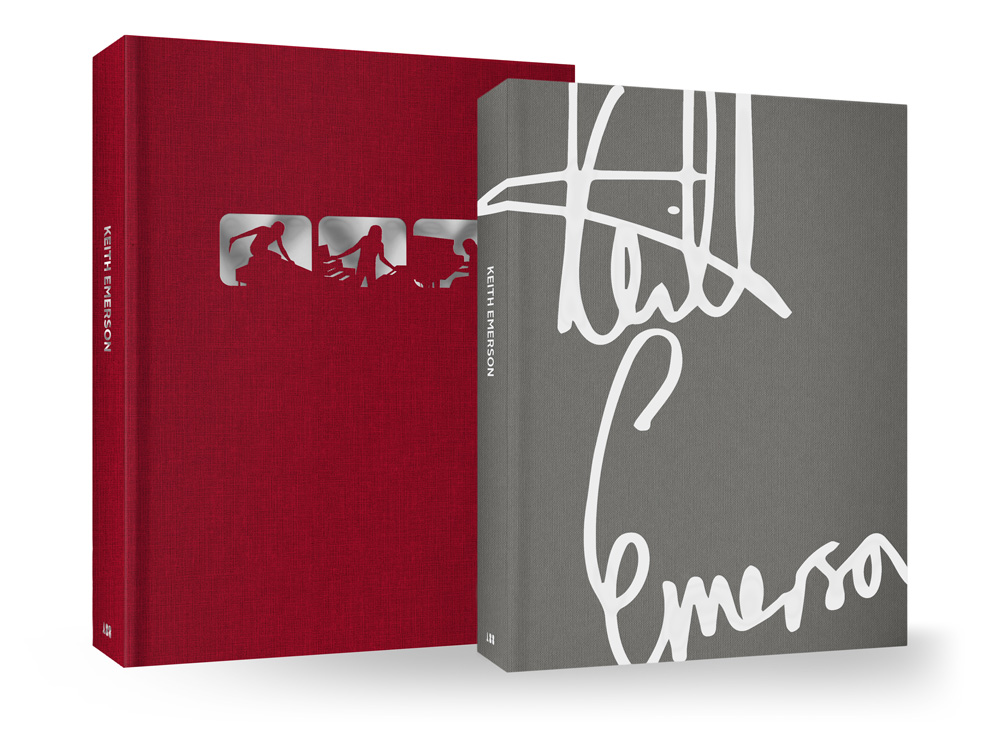
Emerson’s career in and contributions to ELP have been well served in print throughout the years – there’s the fan-based band bio The Show That Never Ends, Edward Macan’s in-depth musical analysis Endless Enigma and Emo’s own bawdy, devil-may-care memoir Pictures of an Exhibitionist. Now, the British publishers Rocket 88 (who issued an “as-told-by” ELP book last year) are about to release Keith Emerson,“A lavish, fully illustrated book in which family, friends, colleagues, and fans talk to author Chris Welch about [his] life, work, and legacy.”
Rocket 88, whose fine books on Porcupine Tree and Talk Talk already grace my shelves, have done a first-class job. Scoff at the coffee table book format if you choose, but the mouthwateringly rich treasury of images — ranging from family and early professional snaps of a young Keith to widescreen shots of him in his pomp onstage — turns out to be utterly essential to the story told here. Long-standing rock journalist Welch, who knew Emerson throughout his career, proves a strong enough focal figure for the narrative to hold its own; without putting himself forward, he’s consistently able to coax out both the outline of Emo’s life and the raw material behind his myth through interviews with his partners, children and grandchildren (two of whom have followed in his footsteps as piano players), relatives, colleagues and peers in the music industry.
The tale told here is one of a life lived with bracing gusto and deep devotion to the muse — but also a life into which shadows fell, then gathered. In the wake of ELP’s late-1970s meltdown, Emerson bounced from project to project — solo albums, film soundtracks, a joint project with Greg Lake and drummer Cozy Powell (who I caught live in 1986), the trio 3 with Carl Palmer and Robert Berry — none of which gained lasting traction. The ELP reunion in the early 1990s (which I saw in concert in 1993) showed promise; but brought down by the rise of grunge and cumulative nerve damage to Emerson’s right hand from years of driven playing, it shrank to opening act status for Jethro Tull and Dream Theater, with the plug pulled after the trio disagreed on production credits for a comeback album.
Here’s where the book becomes most revealing, especially as Emerson’s later partners, guitarist/vocalists Dave Kilminster and Marc Bonilla, detail their experiences. Briefly reviving his innovative late-60s band The Nice, then manfully working to re-establish himself as a solo artist, Emerson’s stars refused to align; first Kilminster (who I saw with Emerson opening for Scorpions and Tesla in 2004) was poached by Pink Floyd’s Roger Waters, then Emo’s follow-up tour with Bonilla (promoting an excellent 2008 album) was cut short by focal dystonia in his right hand. From out of the blue, ELP pulled together one more time for a London festival show in 2010, winning acclaim despite Emerson’s physical problems and growing stage fright. But in the wake of Palmer’s refusal to continue and unexpected major illness for Emerson, nothing further followed.
There were alternatives afoot, as Emerson began an intriguing transition to orchestral conducting. And he continued to be loved and valued by the musical community in Los Angeles, where he’d settled with longtime partner Mari Kawaguchi. His spontaneous sense of fun, his love for his family, and his constant flow of new musical ideas all remained. But growing depression poorly treated, an increasing aversion to demanding Internet-based fans, and a hectic schedule with little to show for it all took their toll — and on March 11, 2016, a final spiral of despair led to tragedy in the classic sense. Keith Emerson, brought low by the thought of the heights he’d once scaled and his inability to live up to the standards he’d previously set, took his own life.
The impact of that tragedy still lingers, and it undeniably colors the final chapter of Keith Emerson, as his family and friends struggle to make sense of life without Emerson and remember the joy he brought into their lives as a musician and a human being. Their reminiscences and their mourning, as much as anything in this compelling book, bring the man out from behind the shadows of the myth, where he ultimately wins our respect and empathy. In the end, it’s this eyewitness testimony of Emerson’s triumphs and struggles — the highs and lows of a regular guy thrust into a larger than life story — that make the book well worth reading for fans of ELP in particular and of progressive rock in general.
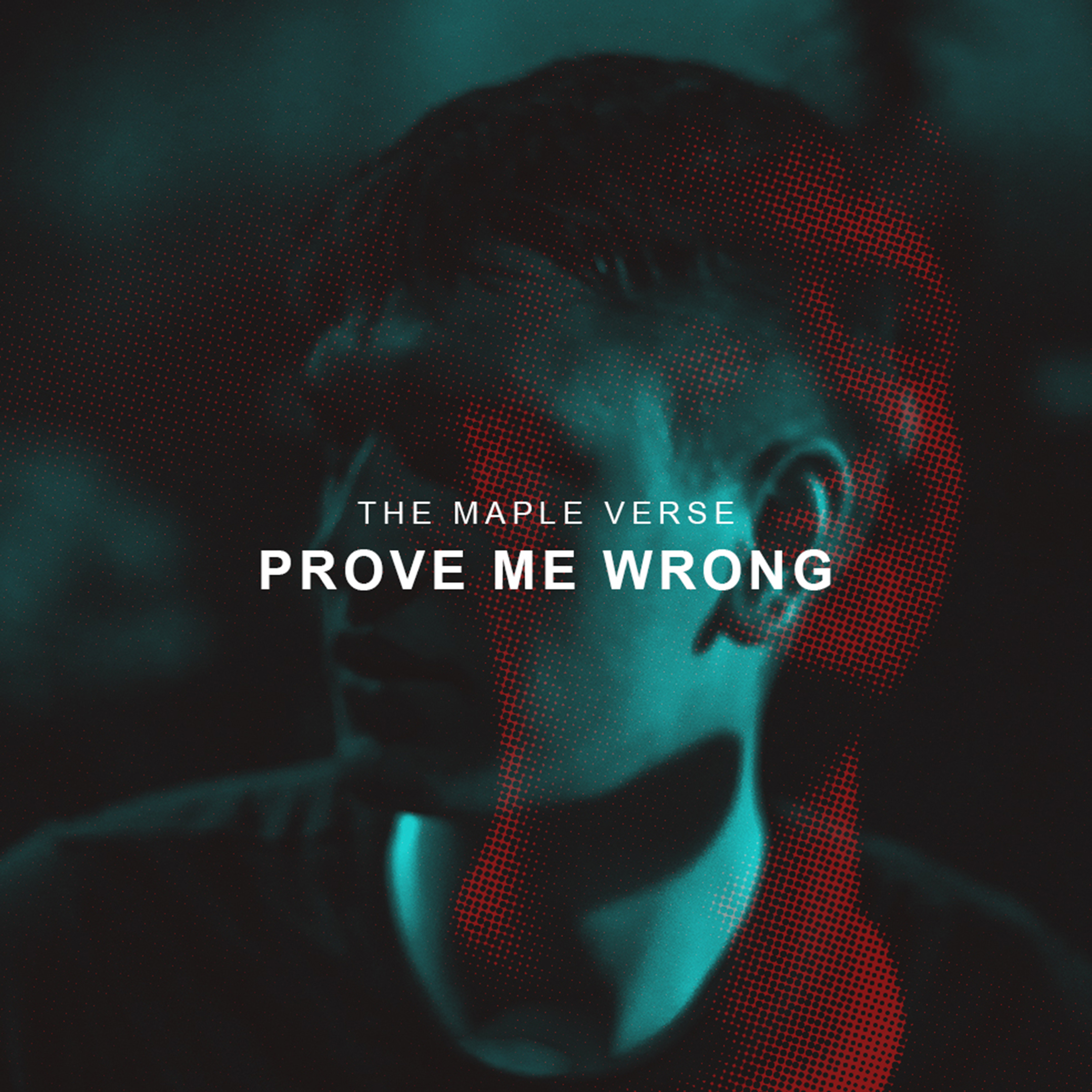
Listening to the debut album by UK project The Maple Verse entitled “Prove Me Wrong” ultimately brings a thought to one’s mind that Bartek Kosinski’s brainchild is one of the most promising acts in the alternative rock today. With The Maple Verse, Kosinski has a knack for soaring, glowing mixture of genres thanks to passionate musicianship and directness, but also a tender, intimate delivery in the vocals and guitar as well as an ability to venture into various emotions, even if sonically not much changes.
“Sounds and Voices” kicks this thing off being sunny but ghostly with floating strings that just wander, like they and the ethereal vocals are lost in the world creating a wide-eyed outlook. Towards the middle the guitar/bass combination becomes more direct, making for a liberating sensation. “A Midnight Contemplation” is just an extra level of bombast this time around in the thick, punchy chords, but the overall vibe remains serene. “Just a Bit” is like having your legs in the shallow end of the ocean, the way the reverb-drenched guitars and almost spoken vocals wash over you like you’re in a life-affirming scene in a film and the lavish keyboard bends truly make it cinematic.
Album closer “Human Ways” on the other hand is more comatose with brooding, sparse notes at the start. However, the song gradually ascends with more direct, pouring playing thrown in and its flourishing sneaks up on you due to how close the whole track is. One minute you’re being put to sleep with aesthetic for an operation and the next you’ve woken up repaired. Before that “Fall and Ascend” however injects some liveliness with more swift picking and stompy moments combined with the glimmering tone that defines much of the record.
“Prove Me Wrong” sees The Maple Verse carrying the beauty and skill, and a huge dose of talent. That is to say, this album certainly makes for one of the prettiest records put out in 2022. Grab it from Bandcamp.
For your ease and reading pleasure, I decided to compile all the links to Progarchy’s 10th anniversary posts into one post. We had a lot of fun writing them, and I hope you have enjoyed this look back at the last ten years in prog. Here they are in the order they appeared:
Progarchy’s Artists of the Decade: Neal Morse and Mike Portnoy (This one had the most views over the course of a couple days that we’ve had in years, thanks to Mr. Portnoy sharing it on his social media. It’s a great rundown at the sheer volume of music these gentlemen have produced over the last ten years.)
As we wind down our month-long celebration of Progarchy’s tenth birthday, we bring you our pick for the band of the decade – Big Big Train. For long term readers, this pick should come as no surprise. The original inspiration for this website came from a love and appreciation for Big Big Train and what they were doing.
To celebrate this Big Big Band, Progarchy’s editors (Chris Morrissey, myself, and Rick Krueger) have each written short essays that we hope touch on the band’s brilliance and importance in the progressive music scene today.
Chris Morrissey A Grand Decade of Big Big Train: Reflections from Progarchy’s Resident Time Lord
It was the band’s freely offered download of “The Underfall Yard” that exercised a magnetic pull on so many potential listeners to Big Big Train. And then, once the track was downloaded and digested, those explorers were hooked for life.
That was back in 2009. For me, it was the magic of David Longdon, now added to the band, that pushed their work into the upper echelon of prog artistry.
And then, for me especially, “The Wide Open Sea” track on the Far Skies, Deep Time EP (2010) offered further proof that this was a band destined for eternal greatness.
And then the grand decade of Big Big Train ensued, from 2012 to 2022, which saw them soar ever higher. No wonder, then, that Progarchy.com came into co-existence, and rode along as prog passengers, chronicling this glorious time in prog music history
Big Big Train has been the engine drawing us all forward. It’s been an honor to track their musical arc here at Prograchy.com for the past ten years of glory.
Thank you, everyone, for celebrating this, during our site’s anniversary month of Progtober, which has included celebration of the decade’s top albums, and also its top artists: Hackett; Wilson; and Morse & Portnoy.
I urge you now to kick back, take time off, and play through BBT’s back catalogue.
To help further your enjoyment of these happy musical memories, I point you to the wide collection of commentary which I have authored that resides here in the Progarchy archives:
As you can infer from the above, The Underfall Yard (2009), Far Skies Deep Time (2010), English Electric Part One(2012), English Electric Part Two (2013), Folklore (2016), and Grimspound (2017) are the six albums that will always be my favorite BBT albums.
I was mildly annoyed when BBT again reworked material on The Second Brightest Star (2017) since it seemed to confirm some of my earlier misgivings. In retrospect, I see my complaints did not adequately take into account the sheer generosity of the band, a band which was being kind enough to admit us into the inner sanctum of the artist’s musical process. Musical excellence is always a work in progress—by constantly being workshopped and refined. I see now that BBT’s superabundant dynamism was something to celebrate, rather than quibble too much about.
I confess I took them for granted in the past few years, only to be shocked by David Longdon’s untimely death. Now I find myself returning to their superb recent albums that I didn’t appreciate enough to write about adequately on Progarchy.com: Grand Tour (2019), Common Ground (2021), and Welcome to the Planet (2022).
Over the past decade, if I had to pick a “top ten” list of ten albums that we editors of Progarchy could collectively designate as our officially designated and editorially endorsed canon, then I would simply gesture to the ten BBT albums I have just named above. I suspect my bandmates would agree.
—Chris “Time Lord” M. (on drums), who dedicates these BBT-focused musings on the grand decade (2012–2022) with gratitude to: Bryan M. (on lead guitar); Rick K. (on organ and keyboards)
Bryan Morey “Following a Dream of the West”
I discovered Big Big Train back in 2013 with English Electric: Full Power. I was blown away, and I still am. A bit later I dug into The Underfall Yard, and then Folklore came out and I was really hooked. Ever since, their albums – both live and studio – have been at or near the top of my yearly best-of lists. They have always remained true to the nature of progressive music by mixing in splashes of folk, pastoral themes, haunting brass, and even pop.
We’ve talked about all that at length over the years here at Progarchy. I want to talk briefly about why I think Big Big Train matters so much, beyond merely the brilliance of their music and lyrics.
Big Big Train stand for something much bigger. They stand, to steal from their own lyrics, for “science and art / And beauty and music / And friendship and love.” In a world that shuns anything connected to the past or tradition, Big Big Train have managed to embrace both that and hope for the future. They recognize the need for both, which is what the Western tradition has always been about. We take what is good from the past and use it to guide our steps forward. And we also learn from the mistakes of the past to influence our way forward.
Big Big Train recognize that “The poets and painters and writers and dreamers” matter. Without them, the world becomes a dull, dreary, and despotic place. Big Big Train represent the poets, painters, writers, and dreamers in their work.
The lyrics of Gregory Spawton and David Longdon are poetry of the finest order. The paintings of Jim Trainer and Sarah Louise Ewing have been some of the finest album artwork of the last twenty years.
As writers, of course their lyrics, but also the liner notes they have included with some of their albums. The original issue of English Electric: Full Power is particularly wonderful in this regard, in addition to having some of the finest packaging of any CD released in the last decade. They showed us how even the humble CD could be presented in a beautiful form one would be proud to display on their shelf.
And dreamers… how could a band that writes about everything from King Alfred the Great to a hero carrier pigeon be anything but dreamers of the highest order?
In doing all this, Big Big Train have inspired us listeners to do the same. I’m inspired to be a better writer when writing about them or any other band. I’m inspired to practice watercolor painting. I’m inspired to dream about the good, true, and beautiful. Few other bands draw me into the sublime the way Big Big Train routinely does. For that, I name them the finest band of not just the decade, but this century.
Rick Krueger
Despite Prog Magazine’s consistent championing of Big Big Train, I managed to resist their appeal until 2016. Searching for a musical mood enhancer one afternoon at work, I came across From Stone and Steel on Spotify.
Any number of things about that set were appealing: the bracing tightness of the band, David Longdon’s adventurous vocals, the scenarios and soundscapes BBT conjured up. But it was the brass that got me. When they slammed into the choruses of “The Underfall Yard” and the lead trumpet soared heavenward at the end of “Victorian Brickwork”, I was hooked! I had to hear more.
Folklore was just out, so I grabbed it ASAP and loved it. Ditto for the back catalog, including my favorite to this day, English Electric: Full Power. And to cap it all off, I ordered the Stone and Steel Blu-Ray via BBT’s website.
Only when I got it, the thing wouldn’t play – due to technical issues with my Blu-Ray player that had already caused fellow fans in the USA headaches aplenty. What to do? Enter Big Big Train’s amazing Facebook group, better known as the Passengers. With an enthusiastic welcome and all the kindness in the world, they steered me toward both a downloadable version of the video and a Blu-Ray player that would play S&S. I was so moved, I figured out how to burn the download version to DVD and shared instructions for doing so with the group – gathering kudos even from band members!
This was a band and a fandom where you could feel at home, and I started proclaiming the wonders of BBT to anyone who would listen. When a friend saw Sarah Ewing’s Folklore-era band portrait functioning as my laptop’s background screen, he said, “I need to introduce you to another friend of mine – he writes for this website called Progarchy.”
Which is how I started here, five years ago. Since then, I’ve followed the ups and downs of Big Big Train’s career with all of you. I’ve delighted in hearing them break new musical ground with every release; my wife and I were thrilled to get BBT tickets in early 2020, then disappointed when that trek became The Tour That Never Was; I had the privilege of interviewing the late David Longdon in the summer of 2021, as he touted Common Ground and eagerly anticipated the long-delayed Stateside tour. In the wake of his death, even as that interview reached a worldwide audience via a link from The Guardian, all of these thrills , ever so briefly, seemed completely hollow.
But in line with Longdon’s wishes, Big Big Train perseveres, and we are the better for it. Their unique blend of pastoral atmosphere, historical narrative, mellifluous harmony and hypermodern groove is moving forward, with Alberto Bravin fronting the band onstage this fall and new music promised for 2023. Saluting them as Progarchy’s Band of the Decade, I can only say, long may their journey continue!
Commemorating Progarchy’s anniversary month in Progtober, we have seen Bryan’s celebration of the decade’s best discs, as well as Rick’s top albums.
At the same time, too, we have been debating who the top artists of the past ten years are. Check out Bryan’s case for Steve Hackett; Rick’s case for Steven Wilson; and my case for Neal Morse & Mike Portnoy.
Soon to follow (on the last day of October) will be our collective editorial vote for Big Big Train as being Progarchy’s defining band of the decade.
But, for today, allow me to name my ten favorite albums of the past ten years.
Revisiting my top ten lists from years past, I was surprised to see that my #1 albums were usually not the ones that I returned to in subsequent years. Instead, here are the idiosyncratic picks that give you a good idea of my most permanent musical taste. These are the albums that I have returned to more often than not, as the years have slipped by.
2021—Arc of Life, Arc of Life: As I said in my review of Dave Kerzner’sThe Traveler (2022), Kerzner here collaborated on the best Yes album of the past decade, despite the ABWH-like absurdity whereby the musicians creating the masterpiece don’t call themselves Yes.
2020—Unleash the Archers, Abyss: Unleash the Archers puts the prog storytelling back into prog metal on this amazing release, which includes “Through Stars” (nicely taking us all the way back to the 80s), “The Wind That Shapes the Land” (a sprawling prog-metal masterpiece), and “Carry the Flame” (an absolutely killer duet). Unleash the Archers did a livestream concert during the pandemic that was so fantastic I watched it twice, as my ticket allowed me to do over the weekend. I would love to see it again. Maybe the band can offer a digital copy for sale?
2019—Tool, Fear Inoculum: This disc blew me away with its devastating sonic blast. There is so much happening here that must be celebrated. It is not only the greatest thing Tool has ever done, it attains the heights of the greatest and most compelling prog metal of all time. I agree with Rick K. that Tool has indeed here given us the album of the year for 2019.
2018—Brass Camel, Daniel James’ Brass Camel: Brass Camel rented space in our local planetarium to put on one of the greatest tribute concerts to the glory days of prog that I have ever seen. I wrote a review of this once-in-a-lifetime experience for Progarchy. That same year they released this CD, which I had to track down in a local vinyl record store that announced to the world their talent. Now, in this anniversary year of 2022 for Progarchy, Brass Camel has released Brass, which is currently in the running for the best prog album of the year. Check out “Last Flight of the Vulcan” if you want proof that this is a band to be reckoned with: While you’re on their Bandcamp page, give “King for a Day” and “Easy” and “Only Love” a spin. But take note: their prog supernova started back here with this hard-to-find disc, back in 2018. Don’t wait too long to let it reach your ears.
2017—Schooltree, Heterotopia: Adam Sears of Lobate Scarp, an impeccable musician with impeccable taste, tipped me off to this stunningly brilliant epic album. You can tell from my rapturous review what ecstasy it imparts. Also, thanks to that review, the mighty Rick K. found his way to write for Progarchy, if you have ever heard his origin story.
2016—Headspace, All That You Fear Is Gone: Damian Wilson is an incredible talent and this disc is the perfect prog metal venue for his gifts to shine at their brightest. But everyone on the album is amazing. This uplifting record never gets old for me.
2015—The Gentle Storm, The Diary: Anneke van Giersbergen does unbelievable work on this masterpiece. Teamed up with her metalhead pal Arjen Anthony Lucassen, the story is nonetheless told best on the disc marked as “The Gentle Version.” Check out Anneke’s work with Vuur if you want a harder-edged metal experience. But here, it’s her acoustic side that works best, especially as beautifully complemented by Arjen’s classical and exotic instrumentation.
2014—Sloan, Commonwealth: Sloan is one of my favorite bands of all time. They are essentially Canada’s version of the Beatles, but with an ability to rock even harder when appropriate. Back in 2014, they did this double album, where each member (similar to the unrestrained experimentation of the Pink Floyd of the early years) gets a whole album side devoted to their individual compositions. As Mike Portnoy has recognized, Sloan has released in 2022 a blast of power pop perfection that is an undisputed contender for album of the year (Steady), but back in 2014 I noted their turn to a prog aesthetic with that 17:40 song.
Another contender for my fav album of the year! Sloan have released their very own Revolver. I love that they are a band of 4 distinctly different writers, singers & personalities…similar to some of my fav bands of all time: Beatles, Queen, The Who, Kiss, etc 👏🙌 @Sloanmusicpic.twitter.com/rYS8zMSkOt
Note that Sloan only stole the 2014 album slot from Haken because Restoration was an EP, even though it has one of my favorite Haken songs, “Crystallized.” I’ll never forget seeing Haken perform that song live.
2013—Steven Wilson, The Raven That Refused to Sing and other stories: There’s not much I can say about Steven Wilson that Rick or Bryan has left unsaid. But I have to admit that Wilson and Porcupine Tree did nothing for me until this Raven album came out. It master the idioms of my favorite prog bands. Thus, Wilson has had my attention forever after. So, even though Hand Cannot Erase (I choose to erase the dopey periods) is the Wilson album I have probably listened to the most (and I loved the concert tour for that album which I was lucky enough to see live here in Vancouver and then review), I still choose Raven as the Wilson disc for my decade-long list of 10.
2012—Flying Colors, Flying Colors: As I have already noted, “Infinite Fire” is the track that sealed the deal to make me inescapably devoted to Neal Morse and Mike Portnoy. It’s a nice bonus, too, that Steve Morse adds his signature guitar stylings to this album, since I had been a big fan of that other Morse since his Dixie Dregs and Steve Morse Band days. But wow, with BBT on the other side of the Atlantic, and Morse and Portnoy and pals on this side, it is clear that, after decade, prog rock has achieved, if not world domination, at least residence in the hearts of all the citizens of Progarchy, our everlasting republic of musical freedom.
Much to my shame, I have listened little to the latest offerings from the eclectic world of prog. I am currently working on changing this bad habit of mine, but I confess it has been difficult, as I still have many obscure gems to unearth (and I will continue my list soon – I promise!). Anyway, in no particular order, here are my top ten obscure prog artists (out of an ongoing list currently standing at thirty-four):
Cathedral – Stained Glass Stories: the first album review I ever wrote for Progarchy just so happened to concern one of the better obscure gems I have discovered thus far, a symphonic masterpiece evocative of Yes or Genesis.
Universe – Universe: psychedelia mixed with a dash of Christianity makes for a rare but beautiful bird of an album in the rich world of 1970s music.
Alloy Now – Twin Sister of the Milky Way: space prog at its finest. Major Tom would have been better off if he had this album on his final journey through the heavens.
Jan Dukes de Grey – Mice and Rats in the Loft: Nursery Cryme‘s obscure cousin, an album both comical and horrifying at the same time. Also, Derek Noy shreds on twelve-string guitar. Shreds.
Island – Pictures: a cover designed by Giger and music blending the darkness of Van der Graaf Generator with the dexterity of Gentle Giant? These chaps certainly offer one of the more complex obscurities out there.
Hands – Hands: America’s answer to Gentle Giant. But these chaps are no copy cats: they are top notch musicians who gave to the world their own idiosyncratic sound.
Lift – Caverns of Your Brain: a superb effort by a group of young American musicians. Aficionados of symphonic and space prog will love this gem.
Fruupp – The Prince of Heaven’s Eyes: as a chap of Irish descent, I suppose I have a soft spot for young Mud Flanagan and his adventures. And if this band were talented enough to open for Queen and King Crimson back in the day, they’re probably worth a listen or two.
Touch – Touch: one of those groups that could have been a contender: Jimi Hendrix and Mick Jagger were fans. Alas, it was not to be. But thanks to YouTube, you can listen for free to some incredible vocals and even more impressive work on the keyboards.
Circus – Circus: Mel Collins in the days before he was cool (I joke of course; Mel Collins has always been cool). But it is Mel Collins in the days before King Crimson – and his band, although not entirely original, was really good.
Renaissance The Legacy Tour 2022 Keswick Theatre, Glenside, PA 10/21/2022
Guest concert review by Bob Turri
The crowd was mostly made up of boomers, but there was a fair amount of young people there, maybe accompanying their boomer parents who turned them onto Renaissance. The Renaissance Orchestra played behind a clear-walled partition and the band consisting of two keyboard players, acoustic guitar, electric bass, and drums came on first together, the band played in front of the orchestra who were on an elevated platform.
Annie Haslam strolled out at some point to a thunderous welcome in a flowing floral dress and immediately broke into the first song, but it sounded like there was something wrong with the microphone as her voice crackled. After the song ended, she motioned to the soundman off stage to fix the sound and he or she did. The audience immediately started shouting out song titles which were met by an emphatic no from Annie Haslam multiple times. I began to wonder if she planned to play any Renaissance songs. Her voice still majestic after all these years was quite capable of hitting all the notes, but sometimes the force was lacking. There were a few glitches, band starts and stops, and she was reading some of the lyrics from printed pages, not that surprising considering her septuagenarian status.
Was the band unrehearsed, tired, I’m not sure. Annie provided lengthy intros to most of the songs, giving a background for songs I did not recognize from her solo career or collaborations with other artists. She did sing a song from the “Intergalactic Touring Band” that true prog fans would have in their collections on Passport Records. Anthony Phillips from early Genesis fame played guitar on the cut from the album she sang.
After an opening set the band took an intermission which seemed longer than 20 minutes and Annie came out in a new outfit, made by a dress designer friend, and proceeded to play more solo and collaborative works and in my estimation not enough Renaissance material. Most of the Renaissance songs played were from the “Turn of the Cards” album.
Towards the end of the second set the band members and orchestra were introduced. Annie quickly pointed out that this was done in the wrong order and introduced the last song, “I Think of You,” as the encore. Strange. The band and orchestra took a bow together and the lights came on.
One comment about the Keswick Theatre in Glenside, PA. It’s great that there is a local suburban Philadelphia based theatre that hosts prog acts and many other genres of music and even comedy acts. The seats have never been upgraded for as long as I’ve been attending concerts, which could be close to 40 years. Yes, they would encounter a loss of revenue if they had to shut down completely for a few months, but they would be doing the community who has supported them all these years a huge service by doing so, especially the audience members who have bad backs.






 Progarchy